How to Choose a Pregnancy-Safe Toothpaste
Why gums bleed in pregnancy, what to look for in a toothpaste, how to brush when nausea makes it impossible, and where to get dental care here.

A pregnancy-safe toothpaste is a mild one you can tolerate twice a day without gagging, with fluoride unless a dentist has given you a reason to skip it. ACOG supports topical fluoride in pregnancy, since it is spat out. The bigger risks to your teeth over these nine months are nausea, acid and skipped brushing.
Bleeding gums are the symptom that brings most Mamas to this question, so start there.
Why pregnancy is hard on your mouth
Hormonal changes increase blood flow to the gums and alter how they react to plaque, so the same amount of plaque that caused nothing last year now causes swelling and bleeding. HealthHub and ACOG both describe this as pregnancy gingivitis, and it is common enough to be unremarkable.
Several other things pile on. Morning sickness brings stomach acid across your enamel repeatedly. Cravings run towards sweet things and towards grazing, which keeps acid levels up between meals. And brushing itself becomes unpleasant, so it gets shorter and less frequent exactly when it matters more.
Left alone, gingivitis can progress to periodontal disease, which affects the bone supporting the teeth. Whether treating gum disease during pregnancy reduces the risk of preterm birth has not been established. Keeping your own teeth is reason enough.
What to look for in the tube
- Fluoride, with the concentration printed in ppm. For an adult, at least 1,350 ppm. A tube that only says "with fluoride" is telling you nothing.
- A flavour you can stand. This outranks nearly everything else during the first trimester.
- No sodium lauryl sulfate if your mouth is ulcer-prone, which pregnancy sometimes makes it.
- No triclosan, if you would rather avoid it. It is still permitted in toothpaste in this region within a set limit, so check the label. Our piece on triclosan covers what the evidence does and does not show.
- Low abrasion. Whitening and smoker's pastes scrub, and pregnancy enamel softened by acid does not need scrubbing.
- Nothing whitening in particular. It achieves little and it is harsher than you want right now.
The fluoride question, answered properly
Fluoride has more evidence behind it for preventing decay than any other toothpaste ingredient. The concern that circulates online comes from studies of fluoride swallowed in quantity over long periods, usually from drinking water in regions with naturally high levels. Toothpaste is rinsed and spat.
Singapore adds a relevant fact. Our public water supply is fluoridated, a long-standing Ministry of Health policy, so you already take in a small amount through the tap whatever paste you buy.
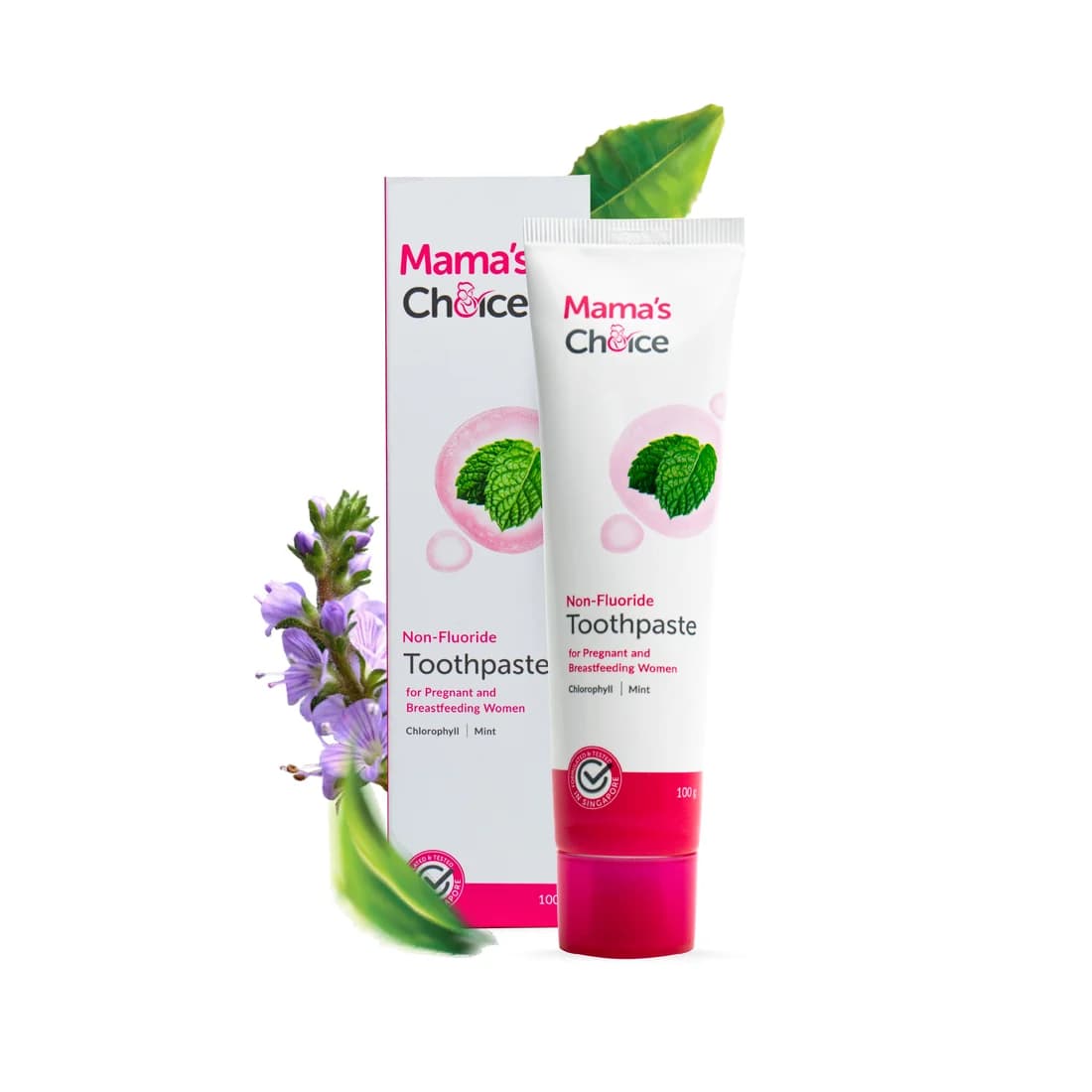
That makes a fluoride-free paste a reasonable personal choice in a few situations rather than a safety upgrade. If nausea makes every paste you have tried unusable, an alternative that actually gets used beats a better paste sitting in the cupboard. Our Non-Fluoride Toothpaste exists for that reason: a mint paste with miswak extract, made without fluoride or SLS, for Mamas who prefer a fluoride-free formula while expecting. It cannot give your enamel the protection fluoride does, which is why the next paragraph matters.
Where fluoride should stay is any history of decay, any white spots a dentist has flagged, or any gap since your last check-up longer than you want to admit. We set out the whole argument in the fluoride debate, and the miswak question in why miswak toothpaste.
Brushing when you feel sick
The practical problem is not which paste. It is getting a brush into your mouth at all.
- Brush at the time of day you feel steadiest, even if that is mid-afternoon
- Use a small, soft brush head, which triggers the gag reflex less
- Try a tiny amount of paste, or water alone, on a bad morning
- Breathe through your nose and keep your eyes open
- Brush your tongue last, or skip it until the nausea passes
- Leave the brush out of the bathroom if the smell of the bathroom is the trigger
Water alone with a soft brush is far better than nothing. Perfect is not available for a few months.
After vomiting, do not brush
This is the single most useful habit on this page. Stomach acid softens enamel temporarily, and brushing straight afterwards drags that acid across a softened surface and wears it down.
Instead, rinse with plain water, or stir a teaspoon of baking soda into a cup of water and rinse with that to neutralise the acid. Wait about an hour, then brush.
Between bouts, sip water rather than juice, and if you are grazing on crackers through the day, rinse afterwards. Our page on toothaches during pregnancy covers what to do when it has already progressed to pain.
Mouthwash, flossing and the rest
Flossing matters more than any product choice, because bleeding gums are inflamed by plaque sitting between teeth where a brush does not reach. Gentle daily flossing or an interdental brush often reduces that bleeding within a couple of weeks.
For rinses, alcohol-free is the sensible default, and a rinse is an addition rather than a replacement for brushing. Our guide to choosing a safe mouthwash in pregnancy goes through the ingredient list in detail.
Seeing a dentist here
ACOG is explicit that dental care during pregnancy is safe and should not be deferred, including X-rays taken with appropriate shielding and treatment under local anaesthetic. Tell the clinic you are pregnant and how far along, and they will position you comfortably, which matters most in the third trimester.
In Singapore you have several routes. Private dental clinics, polyclinic dental services, and hospital care through KKH, where your obstetric team can advise if you need a referral. Subsidies apply at participating clinics for cardholders under the Community Health Assist Scheme, and the Ministry of Health publishes which ones take part.
Go once during the pregnancy even if nothing hurts. The second trimester is usually the most comfortable window, and a scaling appointment then can head off much of what would otherwise turn into a problem in the final weeks.
After the birth
Brushing slips in the first months, because everything slips. Keep a brush and paste wherever you end up feeding at night, which for most Mamas is not the bathroom.
Your own mouth also matters to your baby's. Decay bacteria can pass between people, so a parent with untreated decay can pass more of them on through shared spoons and kissed fingers. Getting your own teeth sorted in the first year is part of looking after your baby's, and when the time comes, choosing a toothpaste for your child follows the same logic as choosing one for you.
Frequently asked questions
- Is fluoride toothpaste safe during pregnancy?
- Yes. ACOG supports routine oral health care in pregnancy, including topical fluoride, because it is spat out rather than swallowed. The concerns that circulate about fluoride come from studies of large amounts ingested over long periods, which brushing does not deliver.
- Why do my gums bleed when I brush?
- Pregnancy hormones increase blood flow to the gums and change how they respond to plaque, so they swell and bleed more easily. The answer is to keep brushing gently rather than to stop, since stopping makes it worse.
- Can I see a dentist while pregnant?
- Yes, and you should. ACOG's position is that dental care, including X-rays with shielding and local anaesthetic, is safe in pregnancy and should not be postponed. Tell the clinic you are pregnant and how many weeks.
- What should I do after being sick in the morning?
- Rinse with water, or with a teaspoon of baking soda stirred into a cup of water, then wait about an hour before brushing. Brushing immediately spreads stomach acid across softened enamel.
- Does toothpaste flavour matter?
- It does when every strong mint sets off nausea. A milder flavour, a smaller brush head and brushing at a time of day when you feel steadier will all get more brushing done than willpower will.
Sources
Share this article
This article is for information only and is not a substitute for diagnosis or medical advice. Please talk to your doctor about your own situation.