Should you avoid triclosan while pregnant?
What triclosan is, why the FDA pulled it from antibacterial washes, how HSA regulates it here, and how to read a Singapore label while pregnant.
Triclosan is an antibacterial agent Singapore still permits in cosmetics within set limits, while the United States removed it from consumer antibacterial washes in 2016. Harm to a pregnancy at cosmetic levels has not been established. Avoiding it is simple anyway, because the ingredient list names it plainly.
That is the short answer. The longer one matters, because the triclosan story is usually told badly, and the bad version frightens Mamas for the wrong reasons.
What triclosan actually is
According to the FDA, triclosan is added to consumer products to reduce or prevent bacterial contamination. It has appeared in hand wash, body wash, deodorant, cosmetics, mouthwash and toothpaste, and in household goods from cutting boards to textiles.
It kills bacteria. That was never in dispute. What came under scrutiny was whether it does so better than soap, and what years of daily exposure add up to.
Why the FDA pulled it from antibacterial washes
In 2016 the FDA ruled that over-the-counter consumer antiseptic wash products containing triclosan could no longer be marketed in the United States. The agency's stated reason was that manufacturers had not shown these washes were safer or more effective than plain soap and water for daily use. A 2017 rule kept triclosan out of health care antiseptics for the same want of evidence.
A product category was withdrawn for failing to prove a benefit, which is a different thing from a proven injury. Most articles about triclosan blur those two, and the blur is where the panic comes from.
What the hormone concern does and does not say
The FDA notes that animal studies have shown triclosan can change the way some hormones work in the body, and says the relevance of those findings to people is still being studied. A regulator asking for more data has not announced a verdict.
Triclosan raises a question nobody has closed, and in pregnancy a question you can step around at no cost is worth stepping around.
What you will not find is a settled finding that triclosan in a toothpaste or a shower gel harms a fetus. Claims about miscarriage, preterm birth and cancer circulate widely online, usually traced back to a press release or an advocacy page rather than to a regulator or a completed trial. We used to repeat some of them on this page. They have been taken out.
What Singapore does about it
Cosmetics sold here are regulated by the Health Sciences Authority under the ASEAN Cosmetic Directive, which lists prohibited substances in one annex and, in others, the substances allowed only within set concentrations and product types. Triclosan is in the second group. A Singapore product may legally contain it.
That has a practical consequence. Something can be entirely legal on a Watsons shelf and still be an ingredient you would rather not use every day for nine months. Legality and preference are separate judgements, and the second one belongs to you.
The same directive requires the pack to carry its ingredient list, so you are not guessing. Turn the bottle over.
Where it still turns up on a Singapore shelf
| Where you find it | Why it is there | Easier swap |
|---|---|---|
| Antibacterial hand wash | Sold on germ-kill claims | Plain soap and water |
| Mouthwash | Plaque and gum claims | An alcohol-free rinse, or better flossing |
| Toothpaste | Gum health claims | A paste that does not use it |
| Deodorant | Targets odour-causing bacteria | A formula without antibacterial actives |
| Surface and floor cleaners | Disinfection claims | A cleaner whose label you can read |
On an ingredient list it appears as triclosan, occasionally under its chemical name, 5-chloro-2-(2,4-dichlorophenoxy)phenol. Its close relative triclocarban was caught by the same 2016 FDA rule, so it is worth recognising too.
What to use instead while you are expecting
For hands, plain soap and water. The CDC puts the time at roughly twenty seconds and the technique ahead of the chemistry, which is reassuring in a city where your hands are damp from humidity half the day anyway.
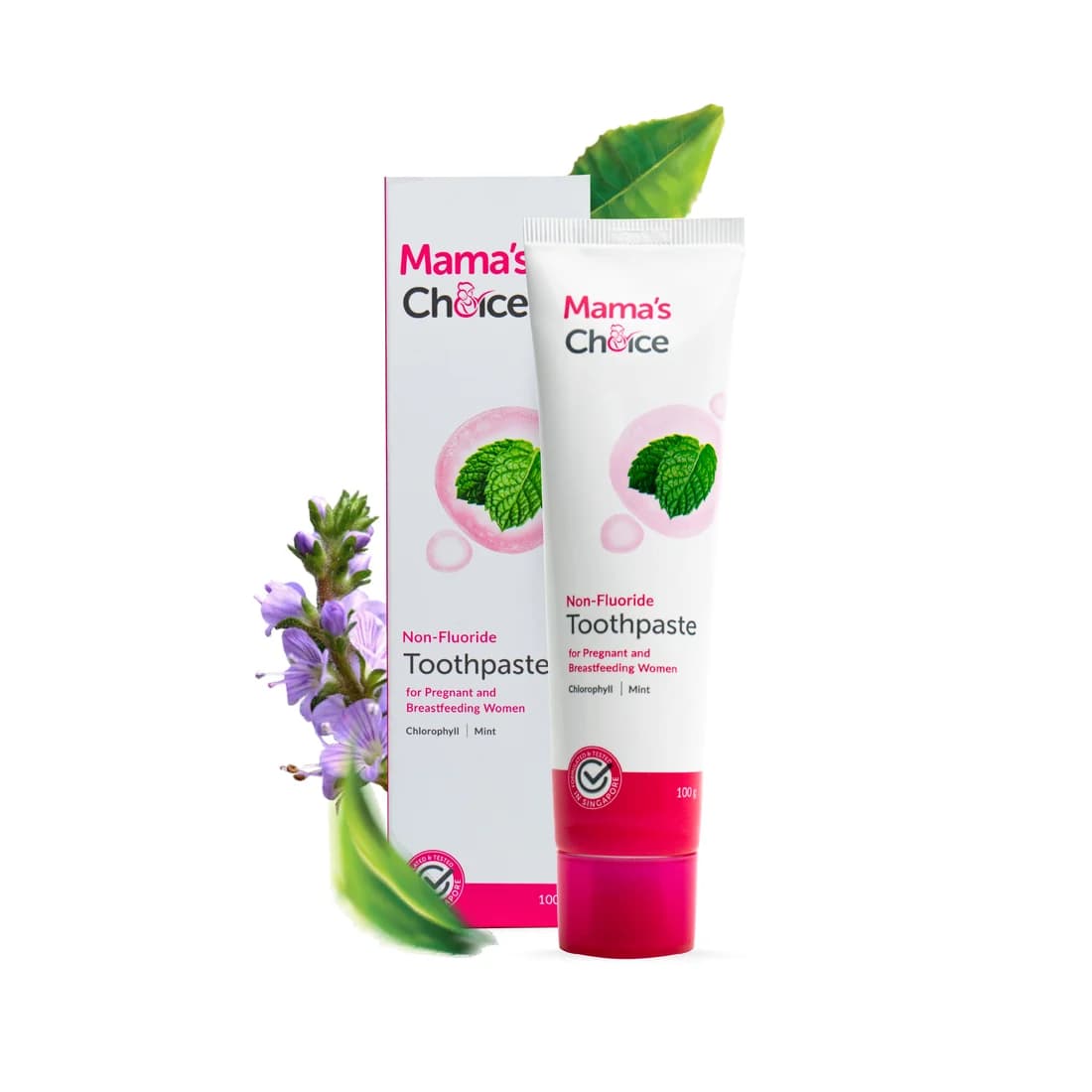
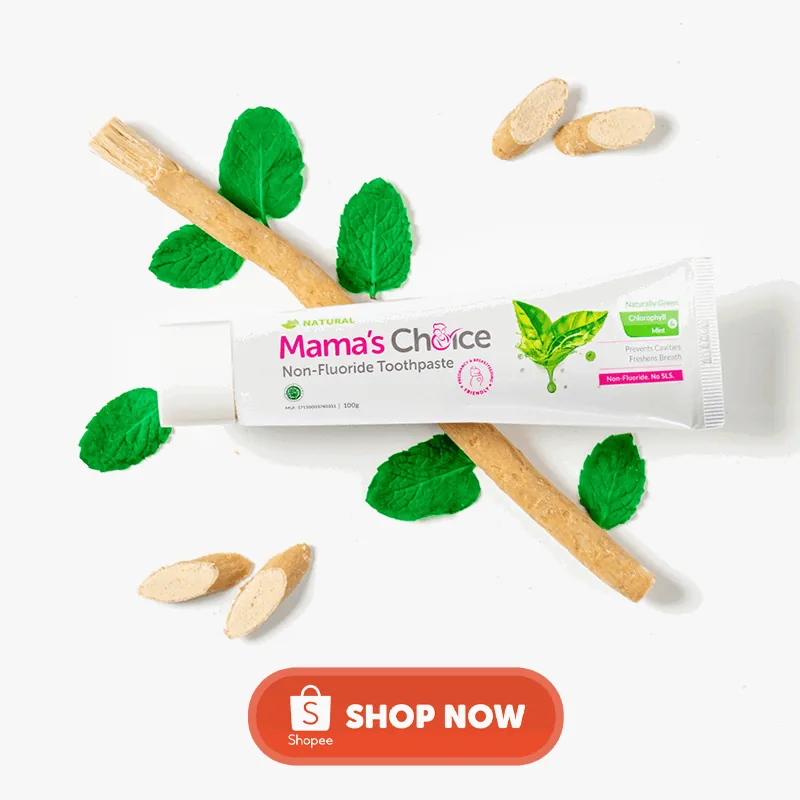
For teeth, pregnancy gums bleed and swell more easily, and HealthHub's advice on oral care during pregnancy is to keep brushing twice a day and to keep dental appointments rather than postpone them. For many women, nausea makes brushing harder than any ingredient question does, so a paste you can tolerate twice a day matters. A fluoride toothpaste is the standard dental advice in pregnancy as at any other time. If you prefer to go without fluoride, our Non-Fluoride Toothpaste was made with pregnant and breastfeeding mothers in mind. It is free from triclosan, fluoride and SLS, cleans gently and leaves your breath crisp with mint, and regular brushing with it may help fight tooth decay.
One Singapore detail deserves a mention, because it changes how you should think about fluoride specifically. Our public water supply is fluoridated, so everyone here already receives some fluoride from the tap. Dental guidance, the NHS's included, still recommends a smear of fluoride toothpaste from a child's first tooth, because that amount is small even if swallowed. Some parents prefer a fluoride-free paste until their child can spit, which is worth discussing with your dentist, and it is a poor choice for anyone with a history of decay. The longer version sits in our piece on toothpaste in pregnancy and in choosing a mouthwash during pregnancy.
Which other ingredients are worth the same attention
Triclosan rarely travels alone. The products that lean hardest on antibacterial claims tend to lean on strong fragrance and high alcohol content as well, which is a problem of its own when pregnancy has made your nose and your skin unreasonable.
Our longer lists cover that ground properly, for chemicals worth avoiding in pregnancy and breastfeeding and for what to look out for in baby products.
Who to ask when a label defeats you
Pharmacists at Guardian, Watsons and Unity will read an ingredient panel with you, and that is a faster route to an answer than an evening of searching. Bring the pack.
For anything that has crossed from preference into symptom, a rash that is spreading, gums that bleed every morning, a reaction after a new product, your polyclinic or your dentist is the right call. Book it rather than wait it out. Most of these questions turn out to have dull, manageable answers, which is exactly what you want while you are pregnant.
Frequently asked questions
- Is triclosan banned in Singapore?
- No. The Health Sciences Authority regulates cosmetics here under the ASEAN Cosmetic Directive, which lists triclosan with a maximum concentration and the product types it may be used in, rather than among the prohibited substances. A Singapore product may legally contain it within those limits.
- Should I throw away a product that contains triclosan?
- There is no need to. The FDA acted on antibacterial washes because manufacturers could not show they beat plain soap and water, and a tube you already own is not a known hazard. Finish it or set it aside, whichever you prefer.
- Does triclosan affect my baby's hormones?
- Animal studies have shown that triclosan can alter the way some hormones work, and the FDA says the relevance to humans is still under study. No settled finding links a toothpaste or body wash to harm in a human pregnancy.
- What should I wash my hands with instead?
- Plain soap and water. The CDC puts the method ahead of the chemistry and the time at about twenty seconds, which matters more in a climate where hands are damp most of the day.
Sources
Share this article
This article is for information only and is not a substitute for diagnosis or medical advice. Please talk to your doctor about your own situation.