How to clear a clogged milk duct
A blocked milk duct clears with frequent feeding and gentle handling. What the NHS supports, what to skip, and when a Singapore mother needs a doctor.
A blocked milk duct is milk that has stopped moving in one part of one breast. It usually clears within a day or two if you keep that side draining, feed often and handle the breast gently. Warmth before a feed helps. A temperature means this is no longer a simple blockage.
How do you know it is a blocked duct?
You feel a lump before you see anything. It sits in one breast, feels firm and tender, and often softens or moves after a feed. The skin over it may look pink. You feel fine otherwise.
That last part matters more than the lump does.
| Sign | Blocked duct | Engorgement | Mastitis |
|---|---|---|---|
| How many breasts | One | Usually both | One |
| Shape of the problem | A single firm lump | The whole breast, hard and tight | A red wedge or patch |
| Temperature | None | None | High, with chills |
| How you feel | Sore in one spot | Uncomfortable all over the chest | Ill, achy, flattened |
| What to do | Keep that side draining | Soften, then feed often | See a doctor the same day |
Some mothers also get a milk blister, a white or yellow dot at the nipple opening with a blocked duct sitting behind it. La Leche League International covers these, and the advice is warmth and gentle softening rather than picking at it. Do not take a needle to it at home.
What actually clears a blocked duct?
The NHS lists a small set of measures for a blocked duct, and they are the ones worth your energy.
Keep feeding, and feed often. Milk moving is the whole treatment. Start feeds on the affected side while the lump is there, because your baby sucks hardest at the beginning.
Point the chin at the lump. Whichever position puts your baby's chin closest to the blockage drains that part of the breast best. The American Academy of Pediatrics, through its HealthyChildren guidance, covers the standard holds, and switching between cradle, football and laid-back gives you different angles on the same breast.
Warmth before, cool after. A warm shower or a warm compress before a feed helps the milk let down. Something cool afterwards takes the ache out.
Massage gently towards the nipple while feeding. The NHS wording is to gently massage the lump towards the nipple as your baby feeds. Light strokes, moving milk along the duct.
Hand express if the breast is still full. If your baby comes off and the lump is still hard, a few minutes of hand expression on that side finishes the job.
Loosen everything. Tight bras, bag straps across the chest and sleeping face down all press on ducts. Give the breast room.
Rest and drink. Easy to say with a newborn. Still true.
If the same duct blocks over and over, something structural is usually behind it, such as a shallow latch or a bra that digs in. Our guide to breastfeeding pain works through the causes, and flat or inverted nipples are a common one.
What about deep massage?
This is the advice that has moved. Older articles, including the earlier version of this one, told mothers to push hard into the lump with a thumb and force it towards the nipple. Plenty of mothers still hear it from a confinement nanny or a friend.
The NHS describes gentle massage towards the nipple while feeding. Gentle is the word it uses, and it is doing real work in that sentence.
So go light. If you are leaving marks on yourself, you have gone too far, and a bruised breast is not a drained one.
The Academy of Breastfeeding Medicine went further in its 2022 mastitis protocol. It advises against deep massage altogether, suggests cold packs rather than heat to bring the swelling down, and warns that pumping extra on the sore side can make things worse by driving up supply. Some of that differs from the NHS steps above, so if a lump keeps coming back, ask your lactation consultant which approach suits you.
What about Epsom salts and lecithin?
Both turn up in the older advice, including in the version of this article we have replaced. Neither is in the guidance from the bodies cited at the foot of this page, so we have taken them out rather than repeat them.
That leaves fewer things to do at 3am.
Does the Singapore climate change the routine?
It changes the practical bits. A warm compress loses its heat fast in an air-conditioned bedroom, so most mothers here find a warm shower easier, and an HDB bathroom is small enough that the steam stays put. Stand with your back to the water and express a little while you are in there.
Expressed milk is the other thing to watch. In a kitchen sitting at 30 °C, milk left on the counter while you settle the baby spoils faster than it would in a cooler climate. Into the fridge it goes, straight away.
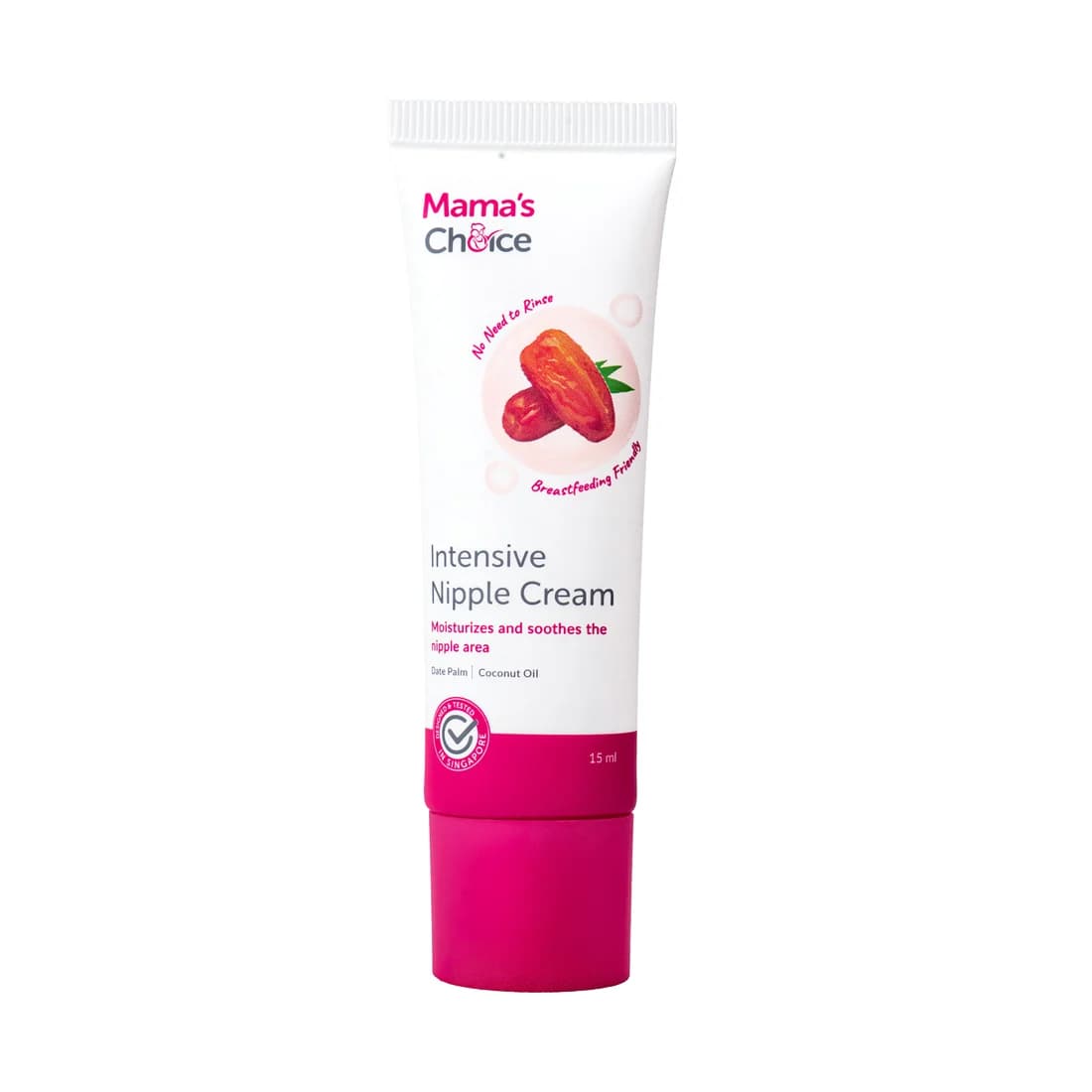
Repeated hand expressing and extra feeds can leave nipple skin dry, and humidity keeps it damp under a bra all day. Mama's Choice Intensive Nipple Cream is a lanolin-based cream with shea butter and coconut oil that moisturises and protects nipple and areola skin between feeds, and its label says it does not need wiping off before the next one. Skin that is broken or bleeding is worth showing to a doctor or lactation consultant. Our guide to using a nipple cream properly covers how much to apply.
If a blocked duct has knocked your supply on that side for a day, our piece on building supply back up naturally explains what helps and what does not.
When does a blocked duct become mastitis?
Milk sitting still in a duct can tip into inflammation and infection. The NHS describes mastitis as a red, swollen area on the breast that is hot and painful, often wedge shaped, with flu-like symptoms alongside it: a high temperature, aches, chills and shivering.
The flu-like feeling is the dividing line. A blocked duct is a sore spot on a well person. Mastitis makes you feel wiped out.
NHS advice is to see a doctor if symptoms have not improved within 12 to 24 hours, and sooner if you feel very unwell. In Singapore that means your polyclinic the same day, or a GP in the evening or at the weekend. Keep feeding while you wait. Milk from an infected breast is safe for your baby, and emptying the breast helps you recover.
Who to see, and what they can do
A polyclinic doctor can examine the breast, prescribe pain relief, start antibiotics if there is an infection, and refer you to a hospital if an abscess is suspected. Tell them you are breastfeeding so the prescription accounts for it. That is the medical side covered.
What a polyclinic appointment generally cannot give you is time. Fixing a recurring blockage means someone watching a whole feed and correcting the latch, and that is the job of a lactation consultant. KK Women's and Children's Hospital and the National University Hospital both run lactation services, including for mothers who have already been discharged. HealthHub, the Health Promotion Board's health portal, lists breastfeeding support services alongside its antenatal material.
Confinement nannies are a real asset in the first month, and many have seen hundreds of feeds. On blocked ducts their instinct is often to press harder. You are allowed to say no to that and ask for a warm shower instead.
If it keeps coming back
- Note which part of the breast blocks, and in which position you usually feed
- Check what sits across your chest all day, including bag straps and a tight bra band
- Watch for long gaps between feeds, which is often what sets it off
- Get the latch reviewed once rather than wondering about it for six weeks
Keep that note on your phone. A lactation consultant who can see that it is always the same outer quadrant, always after the long afternoon nap, will solve it in one appointment instead of three.
For the first fortnight more generally, our breastfeeding tips for new mothers covers the habits that keep milk moving before any of this starts.
Frequently asked questions
- How long does a blocked duct take to clear?
- Most soften within a day or two of feeding often on that side. The NHS advises seeing a doctor if the lump has not gone after a feed and things are not getting better, and sooner if flu-like symptoms appear. A lump that sits unchanged for several days needs examining.
- Should I massage the lump hard?
- No. The NHS describes gently massaging the lump towards the nipple while your baby feeds, and gentle is the operative word in that sentence. Forceful kneading and deep digging are no longer what the guidance asks for.
- Can I keep breastfeeding with a clogged duct?
- Yes, and that is the treatment. Milk moving through the breast is what clears the blockage. The NHS advises carrying on with breastfeeding and starting feeds on the affected side while the lump is there.
- Does a warm shower really help?
- Warmth before a feed makes letdown easier. In an HDB bathroom a warm shower is simpler than a compress, which goes cold in minutes in this climate. The NHS lists a warm bath or shower before feeding among the measures that help.
- Can a polyclinic treat a blocked duct?
- A polyclinic doctor can examine the breast, prescribe pain relief, treat an infection and refer you on if an abscess is suspected. What a polyclinic visit rarely includes is an hour spent watching your baby latch. For that you want a lactation consultant at KK Women's and Children's Hospital or the National University Hospital.
Sources
- NHS — Breast pain, blocked ducts and mastitis when breastfeeding
- La Leche League International — Plugged ducts and milk blisters
- AAP (HealthyChildren) — Breastfeeding positions and latch
- HealthHub (Health Promotion Board) — Breastfeeding support services
- KK Women's and Children's Hospital — Lactation services
- National University Hospital — Breastfeeding and lactation support
Share this article
This article is for information only and is not a substitute for diagnosis or medical advice. Please talk to your doctor about your own situation.