Why breastfeeding hurts and how to fix it
Breastfeeding pain has several causes and each needs a different fix. How to tell a shallow latch from mastitis, and where to get help in Singapore.

Most breastfeeding pain comes from one of six things: a shallow latch, engorgement, a blocked duct, mastitis, thrush or vasospasm. Each one feels different and each one needs a different fix. Working out which you have is the fastest way to feeling better, and a fever changes the answer completely.
Which kind of breastfeeding pain is this?
Pain that spikes as your baby takes the breast and then settles usually points at the latch. Pain that builds over hours, with a hard breast behind it, points at milk sitting still. Pain with a temperature points at infection.
The table is the short version. The rest of the page works through each one.
| What it feels like | Likely cause | First thing to try |
|---|---|---|
| Pinching or grazing at the start of every feed | Shallow latch | Unlatch and relatch deeper |
| Both breasts hard, hot and tight, skin shiny | Engorgement | Soften first, then feed often |
| One firm tender lump in one breast | Blocked duct | Keep feeding from that side as normal |
| Red wedge, high temperature, aching all over | Mastitis | See a doctor the same day |
| Burning that carries on after the feed ends | Possible thrush | See a doctor; you and your baby are usually treated together |
| Nipple blanches white, then throbs | Vasospasm | Warmth, and get out of the draught |
Is the latch too shallow?
A shallow latch causes most of the nipple pain in the first fortnight. The American Academy of Pediatrics, through its HealthyChildren guidance for parents, describes a good latch as a wide mouthful of breast tissue with the nipple drawn well back in the mouth. A baby gripping the nipple alone gets less milk and leaves you grazed.
Check the nipple when your baby comes off. It should look round. A nipple that comes out creased, flattened or wedge shaped was being pinched for the whole feed.
To fix it, slide a clean finger into the corner of your baby's mouth to break the suction, then start again. Wait for a wide gape before you bring your baby on. Chin pressed into the breast, nose free, lips turned out.
Cross-cradle gives you a free hand to shape the breast, which helps when the areola is firm. Laid-back positions let gravity do some of the work. If your nipples sit flat or pull inwards, our guide to breastfeeding with flat or inverted nipples covers the shaping that makes a deep latch possible.
Engorgement, or a blocked duct?
Engorgement affects both breasts and arrives when the milk comes in, usually in the first week. The breast feels hard, hot and tight, and the skin stretches shiny. A firm areola flattens the nipple, so the latch gets harder exactly when you need it to be easier.
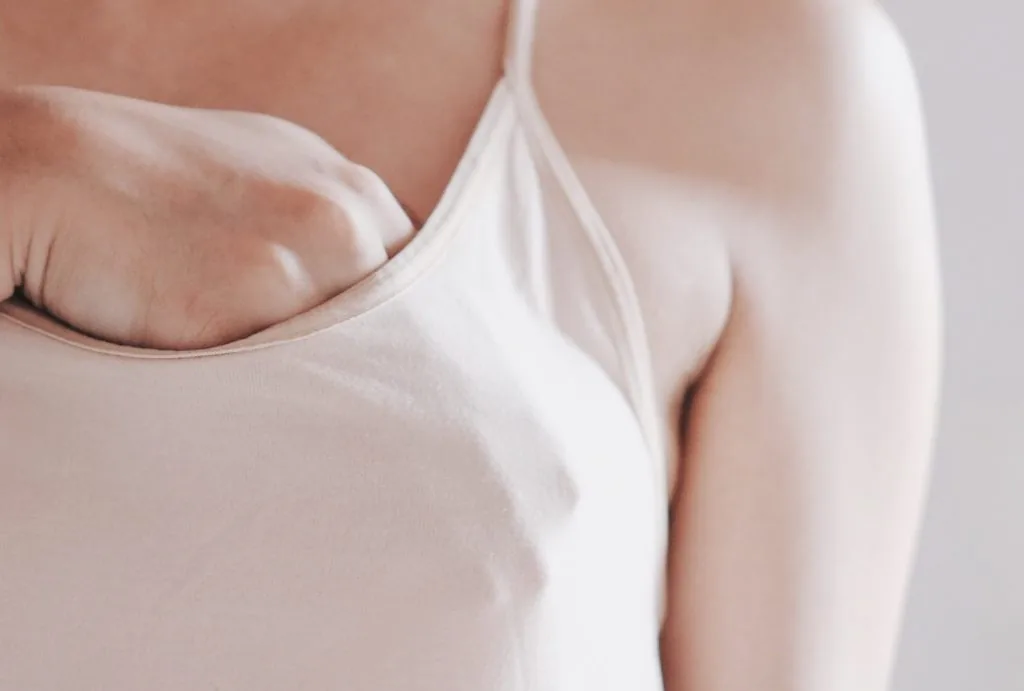
Soften before you latch. Hand express for a minute, or press gently around the areola with your fingertips for a few seconds to push the swelling back. A cold pack wrapped in a cloth between feeds can ease the swelling. Feed often, eight to twelve times in twenty-four hours for a newborn. Spacing feeds out to let the breast fill makes engorgement worse.
A blocked duct is a different animal. One breast, one firm sore lump, no temperature, and the lump usually shifts or shrinks after a feed. Keep feeding from that side as normal, without extra pumping, and see a doctor if the lump has not settled in a few days or you develop a fever. Our piece on clearing a blocked milk duct goes through what the evidence supports and what it does not.
When does it turn into mastitis?
Mastitis is the point at which you stop managing this at home. The NHS describes a red, swollen area on the breast that feels hot and painful, often in a wedge shape, with a burning pain that may be constant rather than only during feeds. Alongside that come flu-like symptoms: a high temperature, aches, chills and shivering.
Those aches are the red flag. A blocked duct hurts in one spot. Mastitis makes your whole body feel like it has been hit by a bus.
The NHS advises seeing a doctor if symptoms have not improved within 12 to 24 hours of self-care. In Singapore that is your polyclinic the same day, or a GP in the evening or at the weekend. Bring your baby's feeding pattern with you, because the doctor will ask.
Keep feeding. Milk from a breast with mastitis is safe for your baby, and stopping suddenly can make things worse. If you are prescribed antibiotics, say that you are breastfeeding so the choice accounts for it.
What helps cracked and sore nipples?
Damaged skin heals best when it is left alone, kept clean and kept comfortable. La Leche League International warns off soap and alcohol-based washes on the nipple, which strip the natural oils the areola produces for exactly this job. Plain water in the shower is enough.
A few drops of your own expressed milk rubbed in after a feed is the oldest remedy there is and costs nothing. After that, a balm.
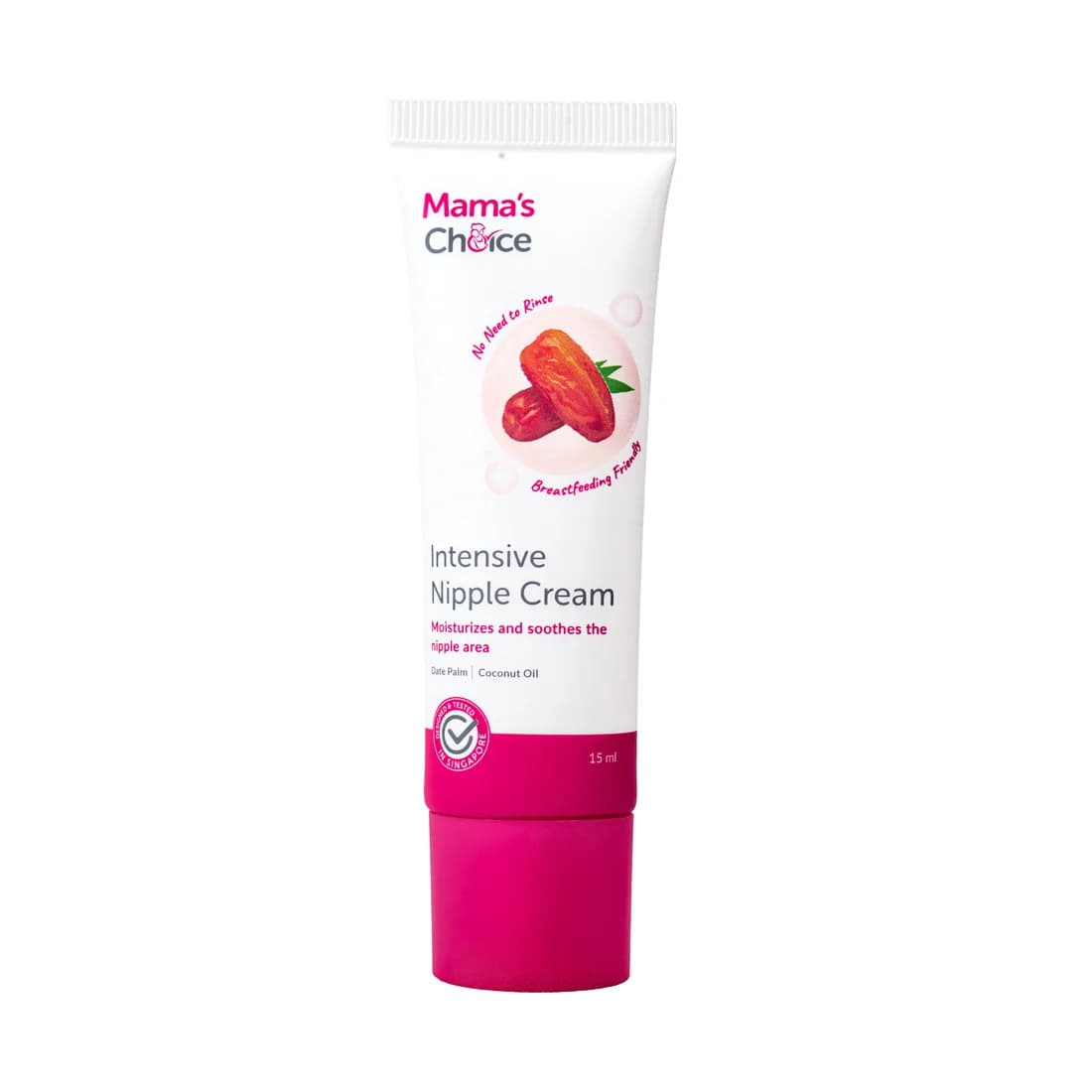
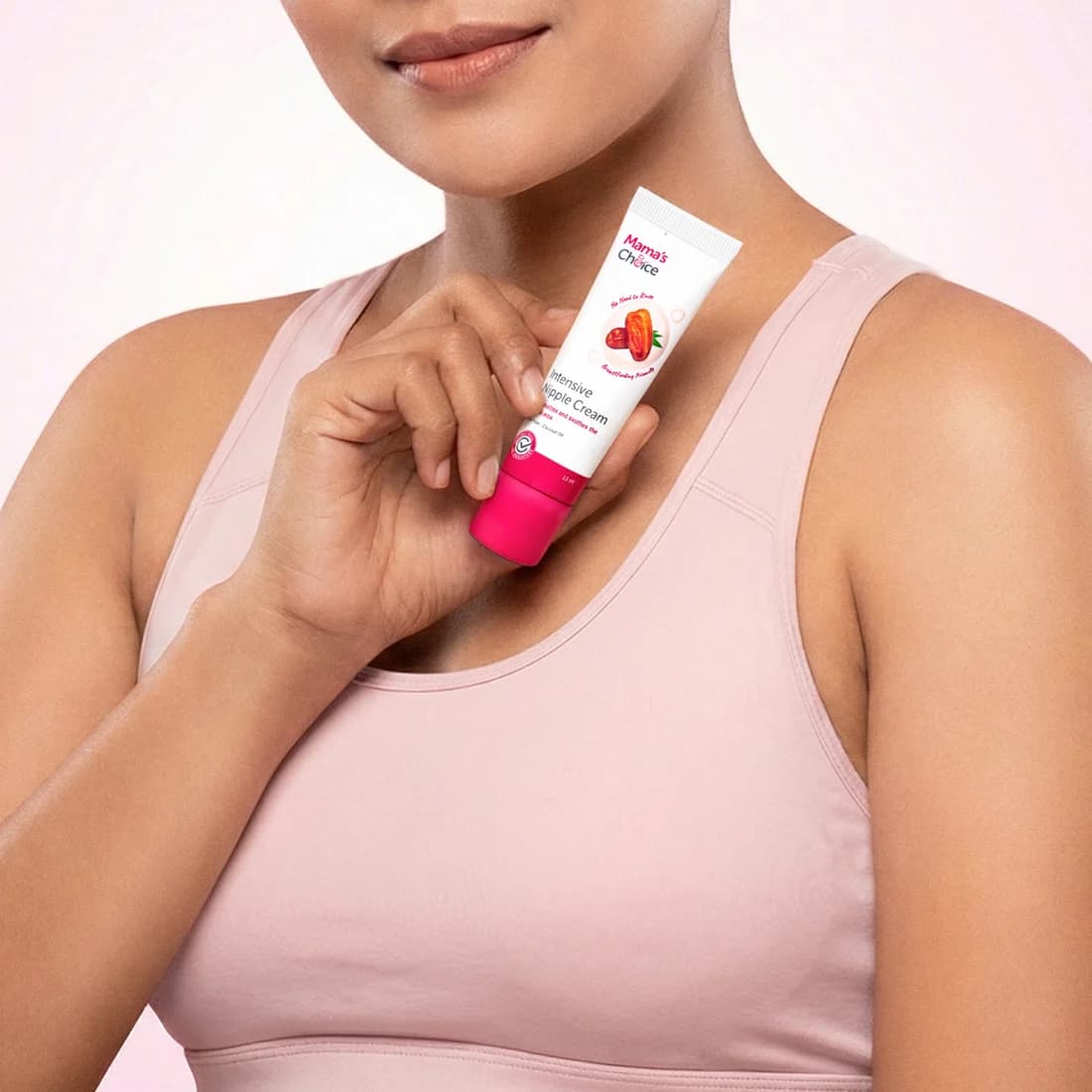
Mama's Choice Intensive Nipple Cream is our balm for exactly this stage. It is lanolin-based, with shea butter, coconut oil, vitamin E and date fruit extract, and no fragrance or alcohol. It moisturises and protects the skin of the nipple and areola, and there is no need to rinse it off before the next feed, which matters more than it sounds at 3am. In a 2022 survey of 74 mothers, 96% felt dry nipple skin became softer. (If you have a wool allergy, pick a lanolin-free balm.) Our guide to getting the most out of a nipple cream covers how much and how often.
Mind the fit of your bra too. Anything that presses the nipple against damp fabric all day will keep a crack open.
Could it be thrush or vasospasm?
Thrush feels like burning, and it carries on after your baby has finished. It often hits both sides at once. Your baby may have white patches inside the mouth or a diaper rash that will not clear. Nipple thrush is easy to confuse with other causes of pain, so let a doctor make the call. If it is thrush, the NHS advises that you and your baby are treated at the same time, or you can pass it back and forth.
Vasospasm looks dramatic and is usually less serious. The nipple blanches white after a feed, then changes colour and throbs. La Leche League International links it to cold, which in Singapore means air conditioning rather than weather. Cover up the moment your baby comes off, put something warm against the breast, and move away from the vent.
Does the heat and humidity make it worse?
It does, in a quiet way nobody warns you about. At around 30°C and 80% humidity, a damaged nipple spends the day under a bra and a damp pad, and skin that stays soggy is slow to heal. Change pads at every feed rather than when they feel full.
Then you walk into an air-conditioned office or sleep under the aircon all night, and the skin dries out and splits along the same line. Both problems are real. Both are about the layer of air sitting against your skin.
Haze season adds a third wrinkle, because windows stay shut and more hours get spent in cooled, dry air. If feeding is already exhausting you, our piece on getting through the broken nights may help more than anything you can put on your skin.
Where to find lactation help in Singapore
Nobody has ever fixed a latch by reading about it. KK Women's and Children's Hospital and the National University Hospital both run lactation services, and both see mothers after discharge, which is when the trouble usually starts. Your polyclinic can refer you and can treat an infection on the spot. HealthHub, the Health Promotion Board's health portal, lists breastfeeding support alongside its antenatal material.
Confinement nannies are often very experienced and worth listening to. Advice on latch still varies a lot between them. If yours suggests topping up with formula at every feed, take that one to a lactation consultant before you act on it, because it changes your supply.
When to be seen the same day
- A temperature with aches, chills or shivering
- A red, hot area on the breast that is spreading
- A crack that is bleeding, deep or getting worse
- Pus, or a lump that stays hard after several feeds
- Burning pain on both sides that outlasts the feed
- Your baby is feeding constantly and still wetting fewer than six diapers a day
Put a note in your phone of when the temperature started and which side hurts. A polyclinic doctor will ask both, and the answers decide whether you are treated today or reviewed tomorrow.
Book the lactation appointment before you are desperate. Slots fill, and a Tuesday morning review is a far better experience than a Saturday night.
Frequently asked questions
- Is breastfeeding supposed to hurt?
- Tenderness in the first week is common. Pain that carries on through an entire feed means something needs adjusting. A deep latch tugs rather than pinches, and La Leche League International treats continuing nipple pain as a reason to have the latch checked rather than something to put up with.
- How do I know if it is mastitis?
- The NHS describes a red, swollen, hot and painful area on the breast, often wedge shaped, together with a high temperature and aches or chills. Flu-like symptoms are the giveaway. The NHS advises seeing a doctor when things have not improved within 12 to 24 hours, and in Singapore that means your polyclinic the same day or a GP after hours.
- Can I keep feeding with cracked nipples?
- Usually yes, and draining the breast matters more than resting it. Start on the less painful side so the strongest suck lands there. A crack that is deep, bleeding or spreading needs to be looked at by a doctor or a lactation consultant.
- Where can I see a lactation consultant in Singapore?
- KK Women's and Children's Hospital and the National University Hospital both run lactation services, including for mothers who have already gone home. Your polyclinic can refer you. HealthHub, the Health Promotion Board's health portal, also lists breastfeeding support services.
- Does the humidity here slow nipple healing?
- It can. A damp pad pressed against broken skin for hours keeps the wound soft and open, so change pads at every feed. Air-conditioned bedrooms and offices do the opposite and dry the skin until it splits again.
Sources
- NHS — Breastfeeding problems, mastitis and sore nipples
- La Leche League International — Sore nipples and nipple vasospasm
- AAP (HealthyChildren) — Latch and breastfeeding positions
- CDC — Breastfeeding in special circumstances
- HealthHub (Health Promotion Board) — Breastfeeding support services
- KK Women's and Children's Hospital — Lactation services
- National University Hospital — Breastfeeding and lactation support
Share this article
This article is for information only and is not a substitute for diagnosis or medical advice. Please talk to your doctor about your own situation.