How to use nipple cream
What nipple cream can and cannot do when breastfeeding hurts, what a Cochrane review found, other uses for the balm, and where to get latch help in Singapore.

Nipple cream is a barrier balm. It can keep sore or cracked nipple skin moist while it heals and reduce friction between feeds. It does not fix a poor latch, which is the usual cause of the pain. Lanolin and plant-oil balms also work well on dry lips, cuticles and aircon-chapped patches.
What is nipple cream actually for?
The job is simple. Skin heals better when it is kept supple and protected, and a nipple that is being stretched and rubbed every two hours gets neither of those things on its own. A thin layer of ointment holds moisture in the wound bed and stops the nipple sticking to a bra pad.
That is the whole mechanism. Cosmetic nipple creams are not medicines and do not contain anything that speeds up tissue repair. If your doctor prescribes a medicated ointment, that is a different product for a different job.
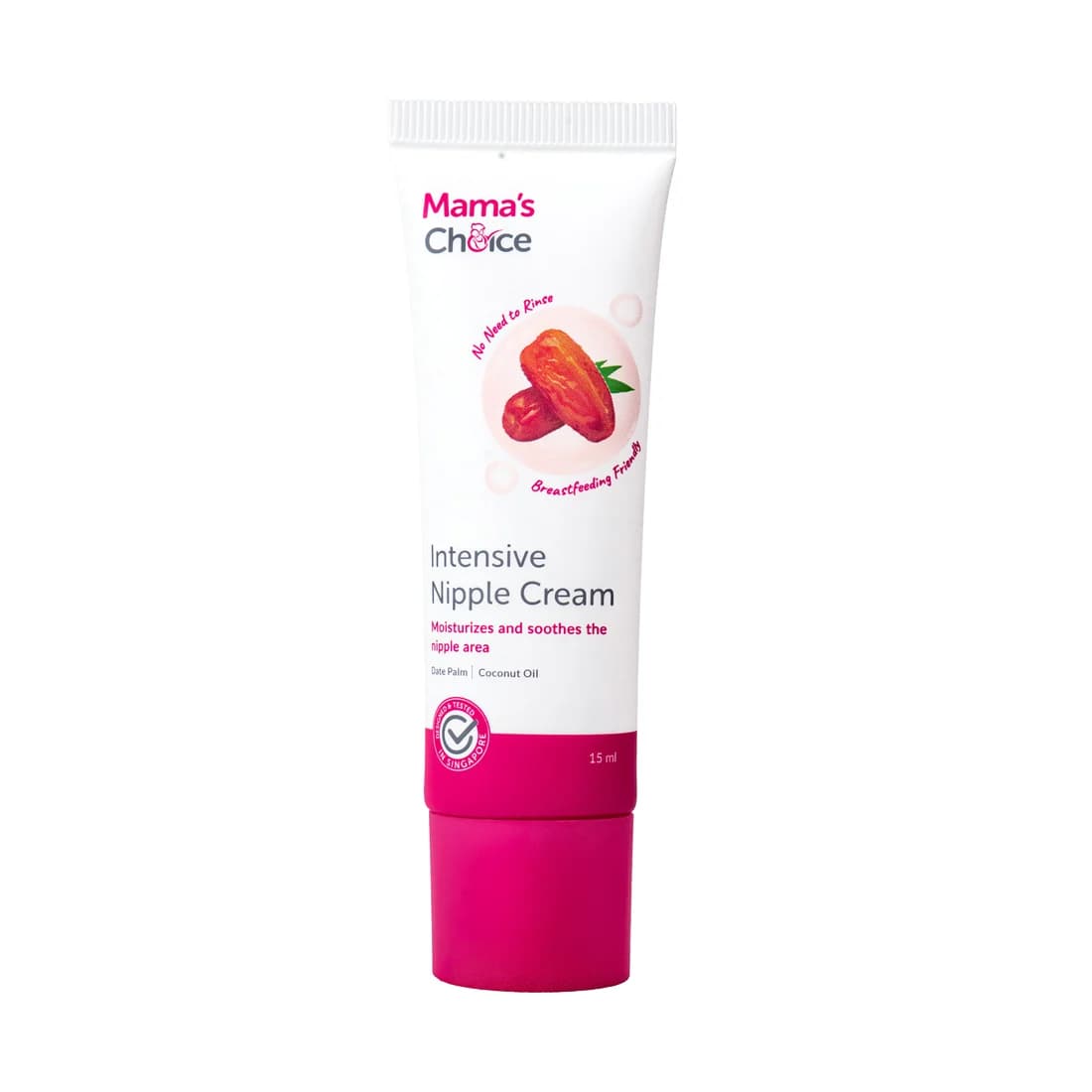
Most are built from lanolin, a waxy secretion from sheep's wool, or from plant butters and oils. Our own Intensive Nipple Cream is lanolin-based, with shea butter, coconut oil, vitamin E and date fruit extract, and no fragrance or alcohol. It moisturises and protects the skin of the nipple and areola, a 15 ml tube lasts about a month, and there is no need to rinse it off before a feed. In a 2022 survey of 74 mothers, 96% felt dry nipple skin became softer and 93% felt it looked smoother. (If you have a wool allergy, pick a lanolin-free balm.)
Does it heal cracked nipples?
A Cochrane review of interventions for painful nipples in breastfeeding women looked across the available trials and found no clear evidence that any single treatment beats the others. Lanolin, expressed breast milk, warm compresses and applying nothing at all came out broadly similar. The reviewers noted the studies were small and inconsistent.
So a nipple cream is a reasonable comfort measure with a decent safety record, and it is not a cure. What actually resolves nipple pain is correcting whatever is causing the trauma, which the NHS and La Leche League both put down, in most cases, to how the baby is attaching.
If feeding hurts beyond the first few seconds of latch, something is fixable. Get it looked at. Our guide to breastfeeding pain and its causes runs through the usual suspects, and flat or inverted nipples covers one of them.
How do you use it properly?
| When | How much | Note |
|---|---|---|
| After every feed | A thin smear, enough to look shiny | Clean, dry skin first |
| Before a shower | A heavier layer | Protects from soap and hot water |
| Under a bra pad | Thin, with a breathable pad | Change pads once damp |
| Before pumping | A little on the flange rim | Reduces friction on the areola |
Apply with clean fingers, not with the tube touching the skin, which keeps the tube from picking up bacteria from a cracked nipple.
Stop and seek help rather than reapplying if you see a crack that reopens at every feed, a nipple that turns white and throbs after feeds, burning pain that lasts long after feeding, or a red, hot wedge on the breast with fever. Those are different problems, and fever with a sore breast needs a doctor the same day. Our piece on clogged milk ducts covers the last of them.
What else can you use it on?
A food-grade nipple balm is a plain emollient, so the sensible extra uses are the ones a plain emollient is good for.
Chapped lips. Living between a 32°C street and a 22°C office leaves lips dry year round. A nipple balm does the same job as a lip balm and has a shorter ingredient list than most.
Dry cuticles and hangnails. A dab at bedtime, left overnight.
Dry heels. Not glamorous, and a rich balm is a good fit, particularly if you are in slippers and sandals most of the year.
Chafed patches on a baby. The thin dry skin at the wrists, behind the knees, or at the thigh crease where a diaper sits. Check the label for fragrance first.
Friction spots under a bra or a carrier strap. Anywhere a seam rubs in the heat.
Claims beyond that are worth ignoring. We used to list nipple cream as a remedy for shaving cuts, new tattoos, burns and insect bites. None of those uses is supported by evidence from a source we would stand behind. Broken or burned skin needs proper first aid and a pharmacist's or doctor's advice, not a balm from the nursing drawer.
How should you store it in this climate?
Lanolin and plant-butter formulas soften in Singapore's heat, and a tube left in a car or a handbag by a window will come out as liquid.
Keep the main tube indoors, air-conditioned if possible, and carry a small amount in a screw-top pot in the diaper bag. A softened cream is not spoiled and is harder to apply thinly. A tube that has separated or smells rancid has gone off, and the shelf life after opening is usually printed on the carton as a number of months.
Guardian, Watsons and Unity all carry nursing creams, which matters at 2am on day four. Buying a second tube for the hospital bag is cheaper than discovering you need one.
Where do you get breastfeeding help in Singapore?
Nipple pain is the point at which to use the support that already exists here.
KKH and NUH both run lactation services, and their lactation consultants will watch a full feed and correct the attachment rather than guess at it from a description. Polyclinics can refer you, and many private obstetric practices have a consultant they work with. The Breastfeeding Mothers' Support Group offers peer counselling and a helpline staffed by trained counsellors, which is free and often faster than waiting for an appointment.
Bring your baby, a hungry one, and the pump you are using if pumping is part of the picture. An assessment of a feed that is already going well tells nobody anything. For the wider picture, 17 breastfeeding tips collects the practical ones in a single place.
Frequently asked questions
- Do I need to wash nipple cream off before feeding?
- Usually not. Purified lanolin sold for breastfeeding is meant to stay on between feeds, and most nipple balms carry directions saying whether they need wiping off. Follow the label on yours, and wipe off any excess if your baby struggles to latch through a thick layer.
- Does nipple cream actually heal cracked nipples?
- It can keep the skin moist while it heals, and it reduces friction. A Cochrane review of treatments for painful nipples in breastfeeding women found no clear evidence that any one preparation outperforms the others, including expressed breast milk or nothing at all. Fixing the latch is what stops the damage recurring.
- How often should I apply it?
- After each feed, on clean dry skin, in a thin layer. More than that does nothing extra. If the nipple is bleeding or you can see an open crack, keep applying but get the latch checked rather than waiting for the cream to win.
- Can I use nipple cream on my baby?
- A plain lanolin or plant-oil balm is often used on dry patches, chapped cheeks and the chafed skin at the top of the thighs. Check the ingredient list for fragrance and essential oils first. For diaper rash, and especially for any broken skin, ask your pharmacist or doctor what to use.
- Where can I get help with painful breastfeeding in Singapore?
- KK Women's and Children's Hospital and the National University Hospital both run lactation services, and polyclinics can refer you. The Breastfeeding Mothers' Support Group runs peer counselling and a helpline. Ask for a latch assessment specifically, because that is what most nipple pain comes down to.
Sources
- Cochrane — Interventions for treating painful nipples among breastfeeding women
- NHS — Breastfeeding: sore or cracked nipples
- La Leche League International — nipple pain and latch
- KK Women's and Children's Hospital — lactation service
- HealthHub, Health Promotion Board — breastfeeding support in Singapore
Share this article
This article is for information only and is not a substitute for diagnosis or medical advice. Please talk to your doctor about your own situation.