When does breast milk start?
Colostrum in pregnancy, milk coming in a few days after birth, and how to tell whether your newborn is getting enough of it in Singapore.

Your breasts are making milk long before you ever see any. The question most mothers are really asking is when it will arrive in a quantity they can see.
Your body begins making colostrum during pregnancy, and high pregnancy hormones keep it from flowing freely. Once the placenta is delivered those hormones drop, prolactin takes over, and the fuller milk usually comes in between the second and fourth day after birth. Frequent feeding is what speeds it up.
When does your body start making milk?
Earlier than most mothers expect.
The glandular tissue that makes milk develops through pregnancy, which is why your breasts grow, your areolas darken, and some women find a dried bead of colostrum on a bra in the second half of pregnancy. Milk does not pour out at that stage because oestrogen and progesterone are holding the system shut, and the NHS describes the same sequence when it explains what happens in the first few days after birth.
A few drops before birth mean your body is rehearsing. No drops at all mean nothing in particular.
What is colostrum, and how much should you expect?
Colostrum is the thick golden milk of the first day or two. It is concentrated, high in protein and antibodies, and produced in small amounts, which UNICEF and the NHS both describe as being exactly matched to a newborn stomach rather than a shortfall.
Expect teaspoons instead of bottles. A baby who attaches well swallows what is there, and the volume climbs as the feeds stack up through the first days.
The World Health Organization recommends starting breastfeeding within the first hour after birth and feeding exclusively for about the first six months. That first-hour feed is partly about colostrum and partly about telling your breasts that someone has arrived.
When does your milk come in after birth?
The fall in oestrogen and progesterone after the placenta is delivered releases prolactin to act on the breast, and milk volume rises sharply with it. For most mothers the change is noticeable on the third or fourth day. Breasts feel heavier, firmer and warmer, your baby's swallows get louder, and the milk looks thinner and whiter than the colostrum did.
Some mothers feel it as a flood overnight. Others notice it only because diapers suddenly get heavier.
Both are normal. What matters in that week is how often milk is being removed, because the breast works on removal rather than on rest. Eight to twelve feeds in twenty-four hours is the figure the American Academy of Pediatrics gives on HealthyChildren.org, and it applies just as much on the night your milk arrives.
Why might milk take longer to arrive?
A caesarean, a long or difficult labour and heavy blood loss can all push the timing back by a day or more, and so can some health conditions, diabetes among them. Separation from your baby does the same thing for a simpler reason, since a baby in the nursery is not stimulating the breast.
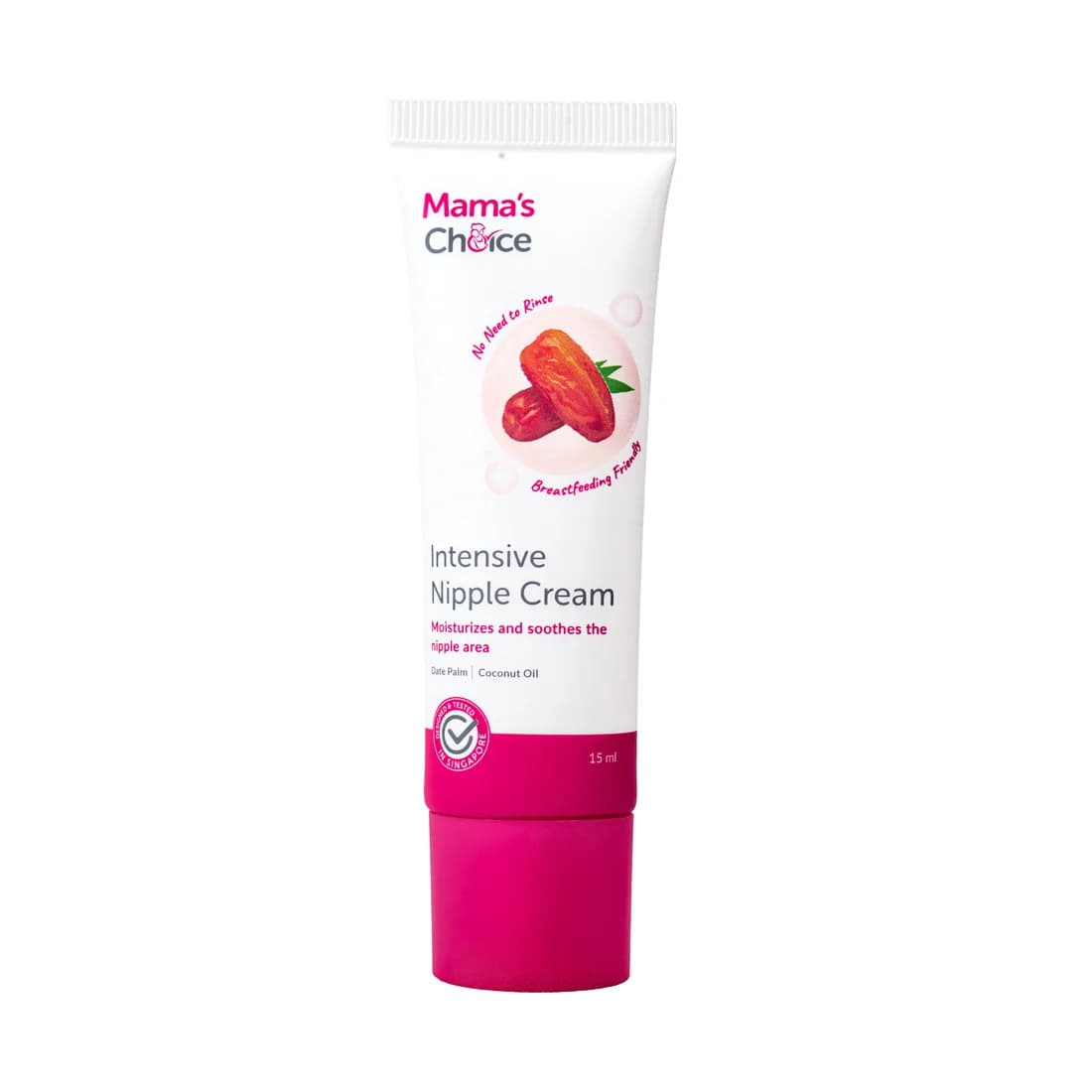
Nipple pain is the other common brake, because a mother who dreads the next feed feeds less often. Fix the attachment first, with a midwife or lactation consultant watching a feed. Broken skin usually settles once the latch improves, and pain that does not ease, or skin that looks infected, needs a doctor. For dry nipple skin in the first weeks, our Intensive Nipple Cream is a lanolin-based cream that moisturises and protects nipple and areola skin. Our guide to breastfeeding pain sorts out which pain means what.
If nothing has changed by the fourth day, ask for help that day. Lactation consultants at KK Women's and Children's Hospital and the National University Hospital see mothers who delivered elsewhere, and your polyclinic can weigh the baby and refer you on.
What actually helps milk come in?
Skin-to-skin contact, early feeds, and frequent milk removal. Hand expression is the most useful skill in that first week, and a midwife or lactation consultant can teach it in a few minutes.
A tense, rushed feed makes let-down slower, so a quiet corner, a glass of water within reach and a phone you are not holding all earn their place. Building your milk supply covers what raises volume once feeding is established.
Things that do not help: scheduled feeds by the clock, dummies in place of feeds before supply is set, and milk booster powders sold on the promise of more milk. None of them has evidence behind it that stands up.
How does the confinement month affect this?
The confinement month is when most of this happens, which makes whoever is in your flat part of the feeding plan.
A confinement nanny can be a gift in that first week, taking the baby so you sleep between feeds. The same nanny topping the baby up with formula overnight while you sleep through the hours when prolactin is highest will quietly slow your supply down, so decide in advance whether you want waking for every feed.
Confinement diets here often restrict plain water in favour of red date tea and herbal soups. Warm drinks are pleasant, and the thing your supply needs is enough fluid overall in a climate this hot. Drink to thirst and keep a bottle beside the feeding chair.
When should you get help with feeding?
Weight is the measure, not the look of your breasts. The NHS regards six or more heavy wet diapers a day from around the end of the first week, with pale urine and steady weight gain, as the sign enough milk is going in, and HealthHub says the same thing on its postnatal pages.
Ask for a review if your baby has not returned to birth weight by around a fortnight, if diapers are dry or urine is dark, if your baby is too sleepy to finish feeds, or if feeding hurts throughout. Mastitis, with a red patch, fever and aches, needs same-day care at a polyclinic or your obstetrician. Our pieces on the benefits of breastfeeding and on sleep deprivation while breastfeeding are better reading once the hard fortnight is behind you.
Photograph the weight page of the health booklet at every polyclinic visit. When a doctor at a different clinic asks how the line has moved, you can show them instead of reconstructing it, and that saves an argument about whether to top up.
Frequently asked questions
- Can I tell during pregnancy whether my milk will come in?
- Not reliably. Breast changes in pregnancy, tenderness, darker areolas, the odd drop of colostrum, show the glands are developing, and their absence predicts very little. Mothers who leak nothing at all before birth often feed without any trouble afterwards.
- Is a few drops of colostrum enough for my newborn?
- In the first day or two, yes. UNICEF and the NHS both describe colostrum as being made in small amounts because a newborn stomach is tiny, and the volume rises as your baby feeds more. What matters is that your baby is attaching and swallowing, not how much you can see.
- My milk has not come in by day four. What should I do?
- Keep your baby skin-to-skin, feed or hand express at least eight times in twenty-four hours, and ask for a lactation review the same day rather than waiting out the week. Your polyclinic, or the lactation service at KK Women’s and Children’s Hospital or the National University Hospital, can weigh your baby and watch a feed.
- Does drinking more water make more milk?
- Drinking to thirst is enough, and forcing litres beyond that has no effect on supply. Singapore’s heat means you will be thirstier than you expect, so keep a bottle wherever you feed. Milk removal is the part that changes how much you make.
Sources
- NHS — Breastfeeding in the first few days and milk coming in
- UNICEF UK Baby Friendly Initiative — Colostrum and the first feeds
- World Health Organization — Early initiation of breastfeeding and exclusive breastfeeding for six months
- HealthHub (Health Promotion Board) — Breastfeeding and postnatal care
- KK Women’s and Children’s Hospital — Lactation services and newborn weight checks
- AAP, HealthyChildren.org — How often and how much should your baby eat
Share this article
This article is for information only and is not a substitute for diagnosis or medical advice. Please talk to your doctor about your own situation.