Shea Butter vs Cocoa Butter For Stretch Marks
Shea butter and cocoa butter are both emollients, and neither prevents striae. How they differ on texture, pores, scent and Singapore’s humidity.
Two tubs on the pharmacy shelf, both promising a smooth belly, both costing about the same. The choice between them is real, though it is not the choice the packaging suggests.
Shea butter and cocoa butter are plant fats that soften skin and slow water loss. Neither has been shown to prevent stretch marks. Choose between them on how the texture behaves in humidity, whether the smell bothers you while you feel sick, and how your face reacts if you use it there.
What are these two butters?
Cocoa butter is the fat pressed out of roasted cocoa beans, the same fat that makes chocolate set. It is firm at cool temperatures and carries a distinct cocoa smell that survives most attempts to mask it.
Shea butter comes from the nut of the shea tree, grown across West Africa. Raw shea is softer, faintly nutty, and ranges from off-white to pale yellow depending on how it was processed. Refined shea has most of the scent stripped out.
Both are mixtures of fatty acids with small amounts of vitamin E and other minor compounds. Both work as emollients, filling the gaps between skin cells so the surface feels smooth, and as partial occlusives that hold water in. That is the whole mechanism. Everything else on the label is detail.
Does either one prevent stretch marks?
Cochrane has reviewed the topical preparations used to prevent striae in pregnancy. Cocoa butter cream was among the products tested in the randomised trials it looked at, and the review concluded there was insufficient evidence that any preparation works. Nothing in the shea butter literature has cleared that bar either.
Stretch marks happen in the dermis, well below the layer a butter reaches. Skin tears there when it is pulled faster than its collagen and elastin allow, and softening the surface does not change what the deeper tissue does. The NHS says the same in fewer words, describing striae as common in pregnancy and often fading to pale lines over time. Our explainer on what stretch marks actually are goes into the process.
Comfort, on the other hand, is worth buying. A stretching belly can feel tight and itchy, especially late in the day.
How do shea and cocoa butter compare?
| Shea butter | Cocoa butter | |
|---|---|---|
| Source | Nut of the shea tree | Roasted cocoa beans |
| Feel at Singapore room temperature | Soft, spreads easily, sinks in reasonably fast | Firm until warmed in the hands, stays on the surface longer |
| Scent | Faintly nutty raw, close to odourless when refined | Strong cocoa, lingers on clothing |
| On acne-prone faces | Heavy, better kept to the body | Heavier again, the one most often blamed for breakouts |
| Evidence for preventing striae | None that meets Cochrane’s bar | Trials included in the Cochrane review showed no benefit |
| Allergy notes | Tree nut origin, reactions uncommon | Reactions uncommon |
| Where it earns its place | Daily use on a dry, itchy bump | Overnight on elbows, heels and very dry patches |
Which one feels bearable in this climate?
Texture decides this, and the answer changes between the carpark and the bedroom.
On a humid afternoon, a firm cocoa butter melts onto you without soaking in, and it transfers to your waistband. Shea butter behaves better, though a thick layer is still too much at midday. Many Mamas end up using a lighter lotion or serum during the day and saving the butter for after an evening shower, when the skin is damp and there is nowhere to be.
Air-conditioning flips the problem. Cooled air pulls moisture out of skin overnight, and that is when a heavier butter actually pays for itself. During haze season, when the windows stay shut and the aircon runs for days, the dryness gets worse before it gets better.
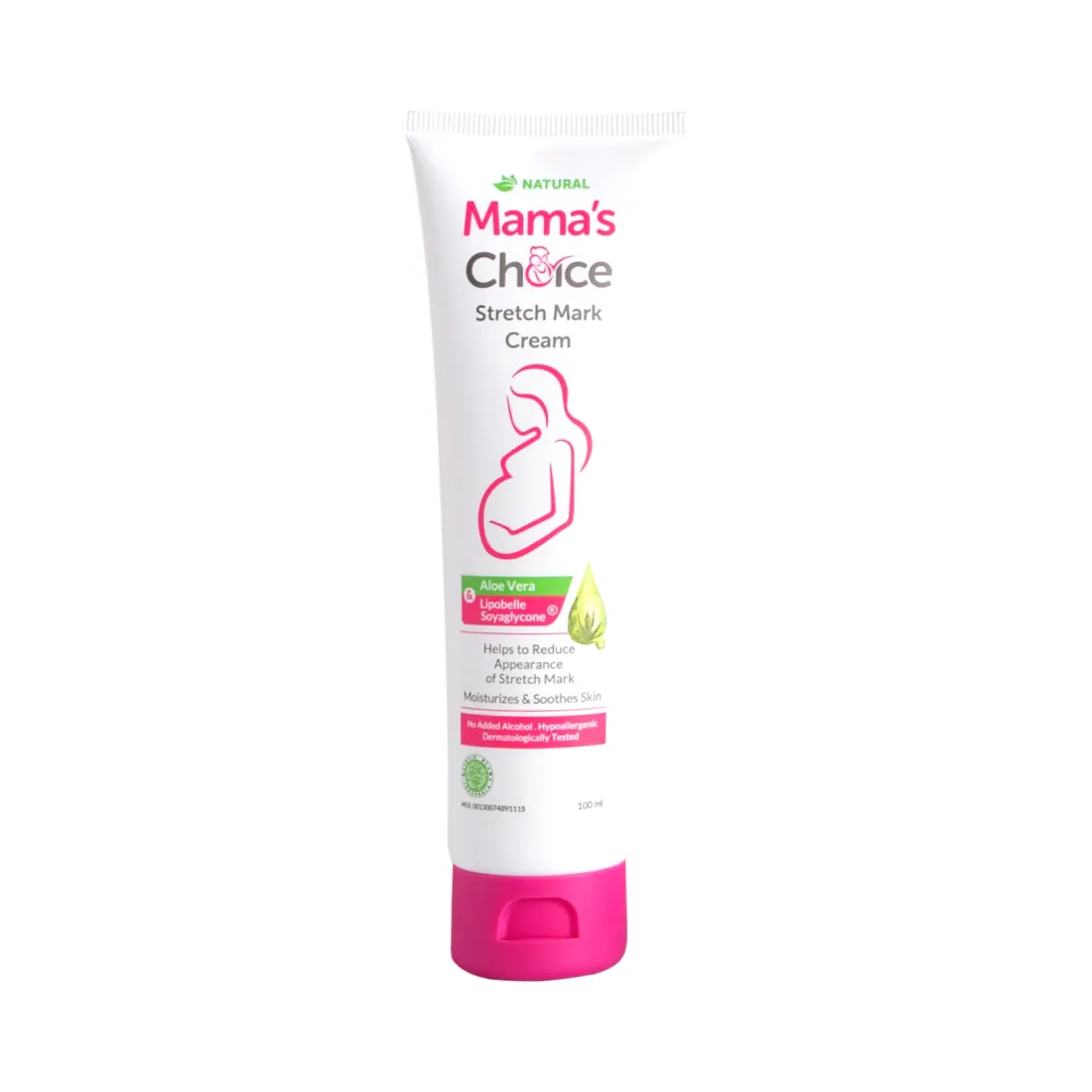
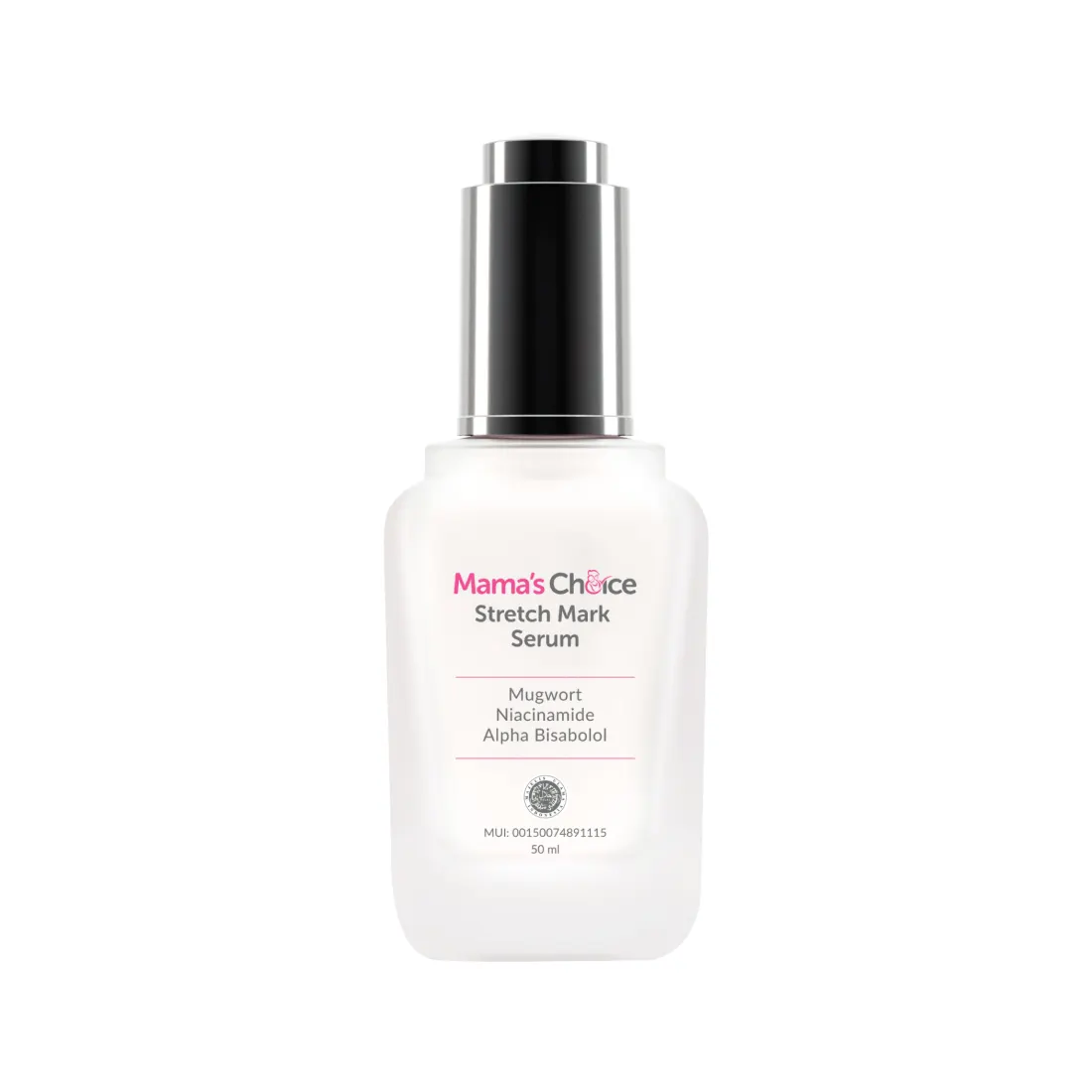
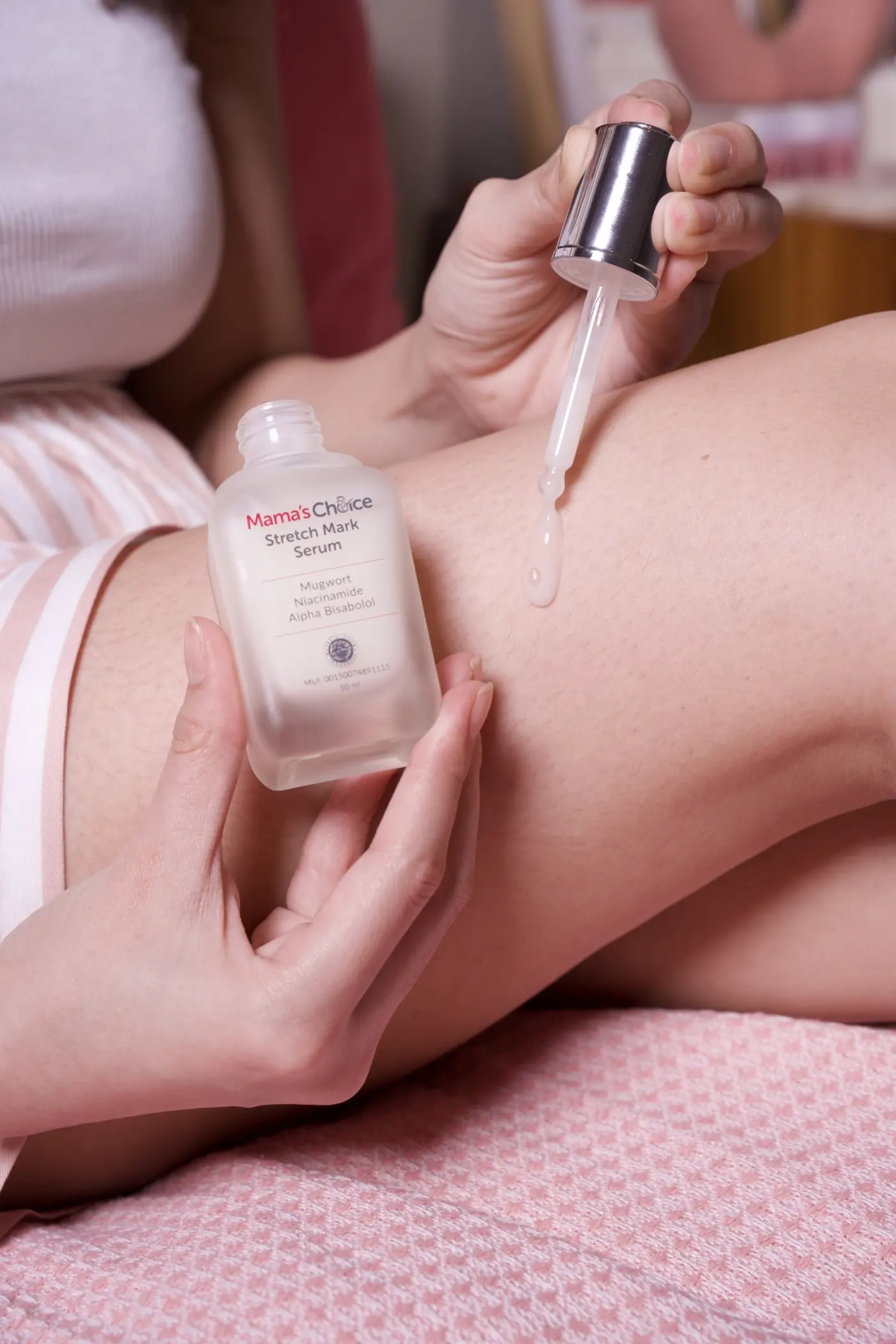
Our own Stretch Mark Cream is a cream rather than a butter, for this climate: its main moisturisers are a light emollient ester, cetyl alcohol, and jojoba and olive oils, with shea butter further down the list. The Stretch Mark Serum has no shea or cocoa butter at all and is lighter again, for daytime when anything richer would feel like too much. Neither prevents stretch marks. Both keep stretching skin moisturised and soft, so use whichever you will actually reach for twice a day.
Will either of them break out your face?
Possibly, and cocoa butter is the more likely culprit. The American Academy of Dermatology advises people with acne-prone skin to look for products labelled non-comedogenic, which neither raw butter is going to be.
Pregnancy complicates this, since hormonal changes already push some Mamas towards breakouts and others towards dryness. If your face is reacting, keep the butters below the neck and use something formulated for faces instead. We have a longer piece on facial skin problems in pregnancy if that is the part giving you trouble.
What about the smell when you feel sick?
Nobody warns you about this. In the first trimester, when nausea arrives and your sense of smell sharpens, cocoa butter is a genuine problem for some Mamas. The scent sits on your skin and your pillow for hours.
Refined shea butter is the safer bet while you are queasy. Unscented anything is safer still. Smell a tester before you commit to a 200 g tub, and ask the pharmacy whether you can open one at the counter.
What should you look for on the label?
Read the ingredient list rather than the front of the box. Cosmetics sold in Singapore must be notified to the Health Sciences Authority before they go on sale, and the pack has to carry a full ingredient list, so you can check what is actually in there. Notification is a filing, not an endorsement.
Position matters. Butyrospermum parkii, which is shea, or Theobroma cacao, which is cocoa, sitting near the top means there is a meaningful amount in the tub. Sitting last, after the fragrance, means you are paying for the word. Fatty alcohols such as cetyl alcohol often appear alongside them and are emollients too, despite how the name reads.
Keep the tub out of the car. Both butters soften, separate and turn grainy after a few afternoons in a hot boot, and a grainy butter drags on the skin instead of spreading. A cupboard away from the window is enough.
Frequently asked questions
- Is shea butter better than cocoa butter for stretch marks?
- Neither prevents them. Cochrane reviewed the topical preparations used to prevent stretch marks in pregnancy, cocoa butter cream among them, and found the evidence insufficient to recommend any. Pick on comfort instead: shea butter is the softer and less scented of the two, which matters more in Singapore’s heat than any ingredient claim.
- Will cocoa butter clog my pores?
- It can, on faces that are prone to it. The American Academy of Dermatology advises anyone with acne-prone skin to choose products labelled non-comedogenic, and a heavy butter is the opposite of that. On a belly or thighs the risk is far lower, and most Mamas use either butter on the body with no trouble at all.
- Is shea butter safe in pregnancy?
- Shea butter is a plant fat used as an emollient and is widely used through pregnancy. It comes from a tree nut, so reactions are possible even though they are uncommon. Patch test a smear on your inner forearm, leave it a day, and see what happens before you put it on a whole bump.
- Can either butter fade a stretch mark I already have?
- No. According to the American Academy of Dermatology, the treatments that make striae less visible are procedures such as fractional laser, microneedling and radiofrequency, plus prescription tretinoin on new marks, which is avoided in pregnancy. Butters soften skin and make dry, tight skin feel more comfortable, and that is the limit of what they do.
Sources
- Cochrane — Topical preparations for preventing stretch marks in pregnancy
- American Academy of Dermatology — Stretch marks and treatment options
- American Academy of Dermatology — Skin care for acne-prone skin, non-comedogenic products
- NHS — Stretch marks
- Health Sciences Authority — Cosmetic product notification and ingredient labelling
Share this article
This article is for information only and is not a substitute for diagnosis or medical advice. Please talk to your doctor about your own situation.