Facial skin problems during pregnancy
Melasma, pregnancy acne and new dryness share one root cause. What ACOG says, which products to drop, and what a Singapore routine should look like.
Pregnancy hormones change pigmentation, oil production and how well skin holds water, so melasma, acne and new dryness are all common. ACOG treats these as ordinary changes of pregnancy. Daily sun protection, a gentle cleanser and a plain moisturiser handle most of it. Retinoids come off the shelf for the duration.
Why does pregnancy change your skin?
One set of hormones, several visible consequences.
Oestrogen and progesterone rise steeply and stay high. They stimulate the cells that produce melanin, which is why pigmentation deepens. They alter sebum production, which is why some mothers break out and others go dry. And they can change the skin's barrier function, which is why products you have used for years can suddenly sting.
ACOG lists darkening of the nipples, the linea nigra down the abdomen, melasma on the face, and changes in acne among the expected skin changes of pregnancy. Most of it reverses after delivery.
The part that catches people out is the sensitivity. A cleanser that was fine in January can burn in May, and the usual conclusion that something has gone wrong with your skin is the wrong one. It is temporary.
What is melasma, and will it fade?
Melasma shows up as brownish or greyish patches, usually symmetrical, across the cheeks, forehead, upper lip and bridge of the nose. The nickname is the mask of pregnancy.
The mechanism is overactive pigment cells responding to hormones, and sunlight makes it darker. The American Academy of Dermatology is clear that sun exposure drives melasma and that protection is the foundation of any treatment.
Most cases lighten over the months after delivery. What keeps a patch going is continued UV exposure, which brings us to the problem with living here.
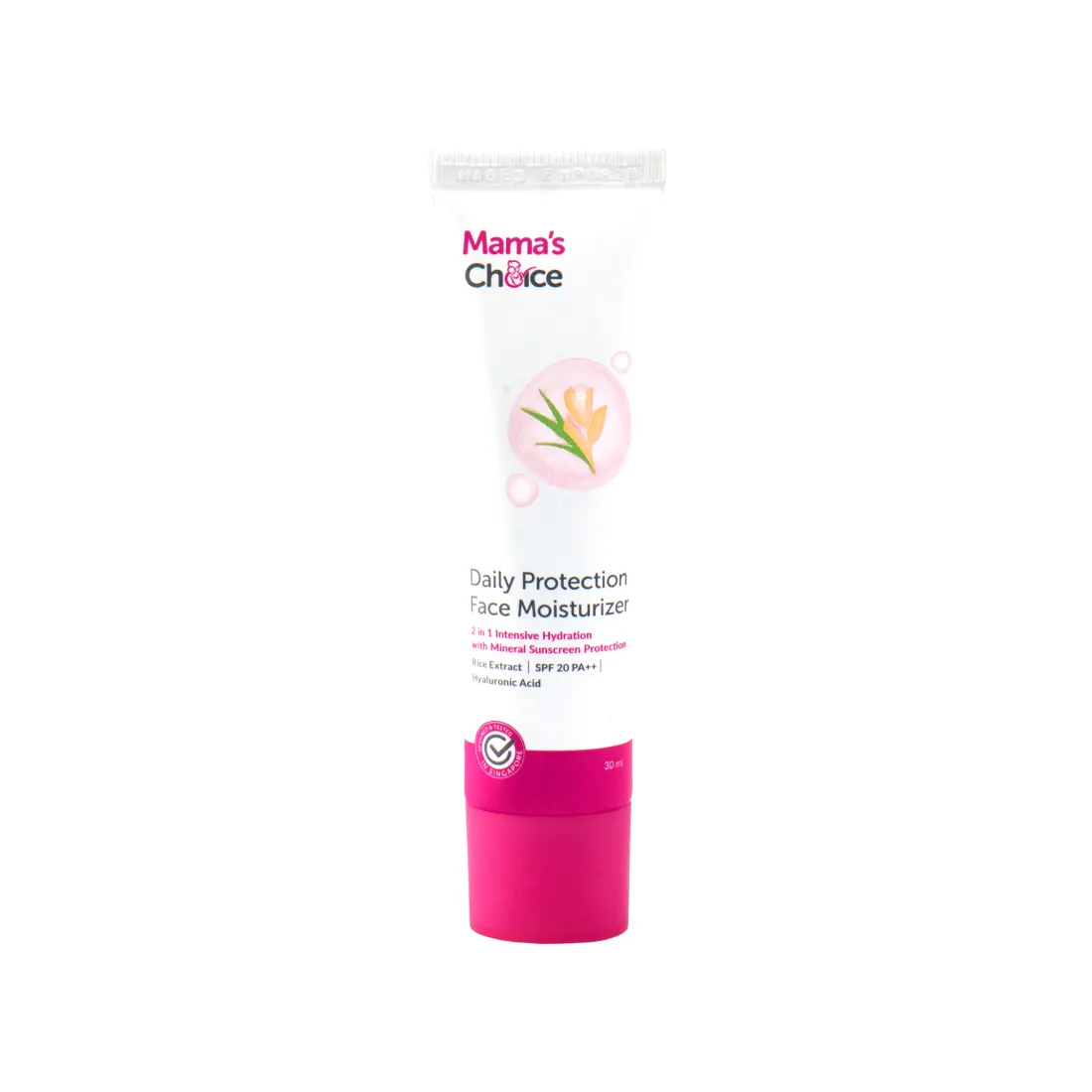
The moisturiser is labelled SPF 20 PA++, not the SPF 25 shown in this older graphic.
Why is sun protection harder in Singapore?
Because there is no low season.
Sitting 137 kilometres north of the equator, Singapore gets high UV year round, with the peak in the middle of the day whatever the month. HealthHub's sun protection guidance does not change between January and July, and neither does the sun. Cloud cover reduces the glare more than it reduces the UV.
So the routine has to be a habit rather than a response to weather. Practical version:
- Apply in the morning as part of getting dressed, not when you notice the sun.
- Reapply if you have been outdoors and sweating, which in this climate means most afternoons.
- Use the covered walkways and the underground links. Shade does more than any product.
- A wide-brimmed hat for the school run and the wet market.
- Mineral filters, zinc oxide and titanium dioxide, are what many pregnant women choose, and very little of them is absorbed through the skin. Chemical filters have not been shown to be harmful in pregnancy either.
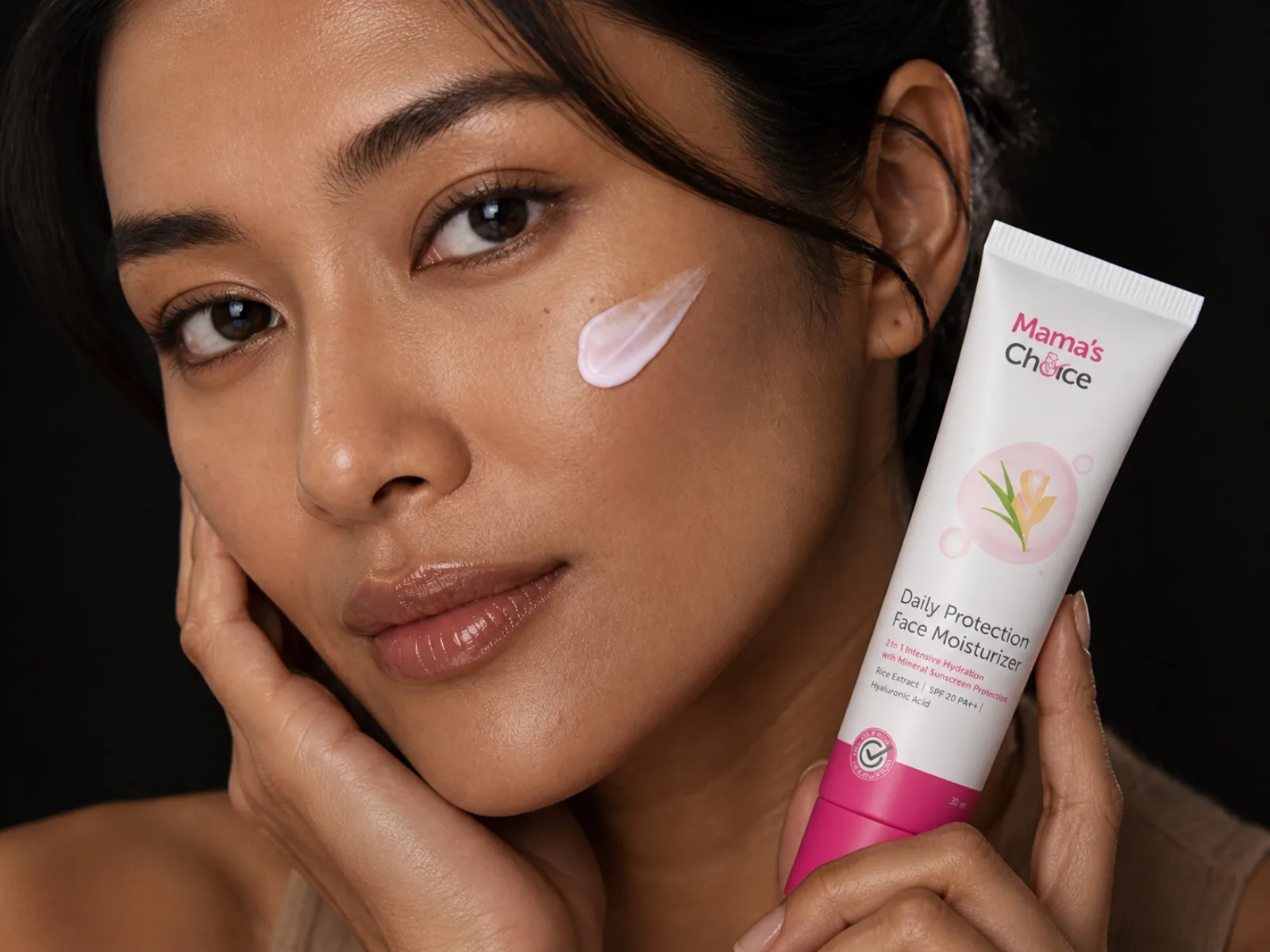
Our Daily Protection Face Moisturizer makes the morning step one product rather than two: a light moisturiser with hyaluronic acid and rice extract, plus zinc oxide and titanium dioxide filters at SPF 20 PA++ (medium protection). In a 2022 survey of 103 mothers, 95% felt their skin was more moisturised and softer. For long stretches outdoors, add a hat and shade, reapply after sweating, and bear in mind that the American Academy of Dermatology suggests SPF 30 or higher if you are prone to melasma. Do not stay too long in the sun, even while using a sunscreen product. More on the choice in our piece on mineral versus chemical filters in pregnancy.
What about acne and dryness?
They can both happen, sometimes in the same month, sometimes on different parts of the same face.
Pregnancy acne tends to appear along the jaw and chin. The treatments you might have reached for before are mostly off the table: ACOG advises against retinoids and isotretinoin, and oral tetracyclines are avoided too. Ask your doctor before continuing anything prescribed. What is left is a gentle cleanser twice a day, no scrubbing, no picking, and a light non-greasy moisturiser.
Dryness is the aircon problem. Twelve hours a day at 22°C in a building with the humidity wrung out of the air will dry anyone's face, and pregnant skin starts from a lower reserve. Moisturise within a few minutes of washing, while the skin is still damp, and keep a second tube at your desk.
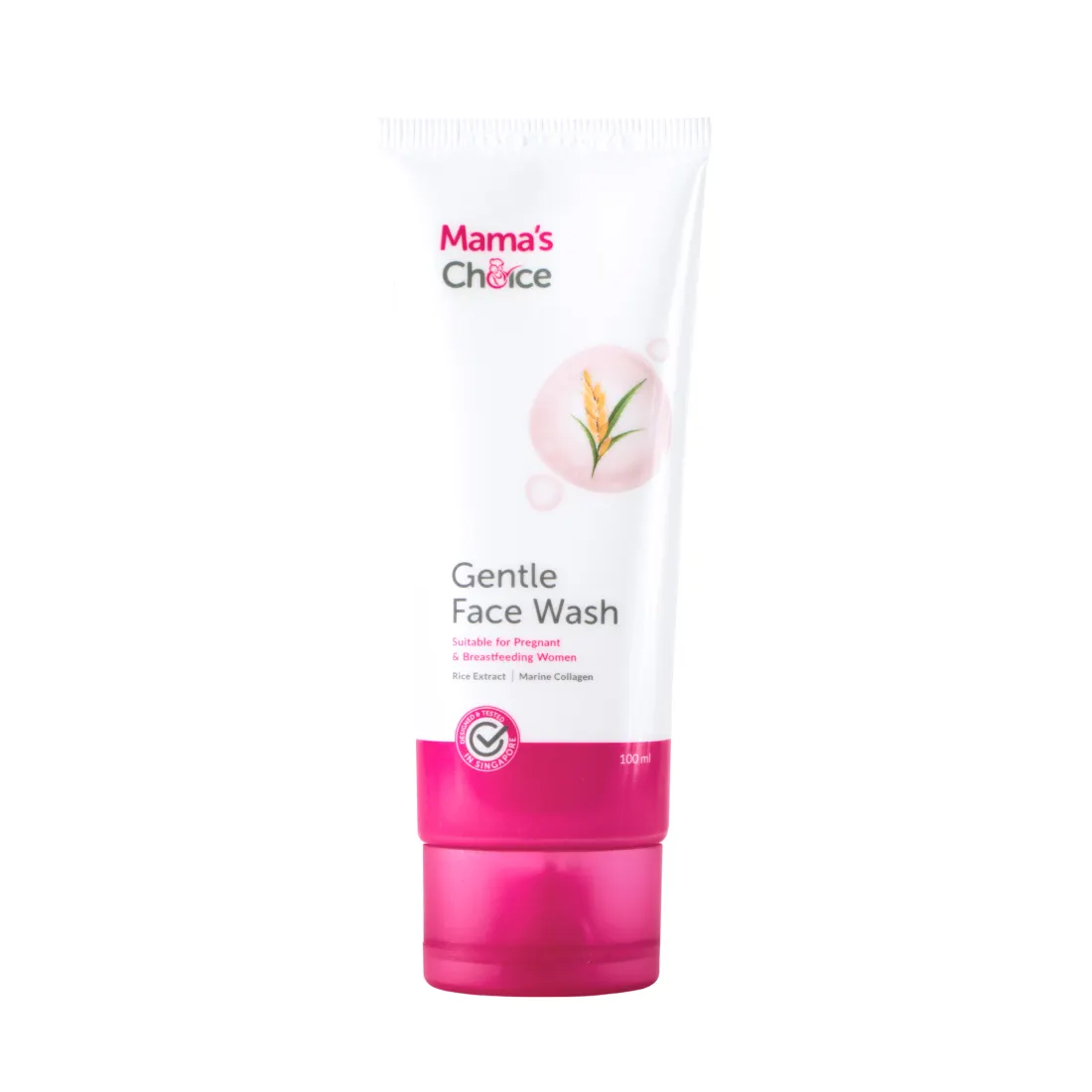
Our Gentle Face Wash is a clear, low-foam gel made without sulfates or added fragrance, with glycerin, niacinamide and rice extract, so skin feels clean without that tight, squeaky feeling. In a 2022 survey of 128 mothers, 96% felt their skin was more moisturised and softer after washing. Take makeup off first, then follow with the wash. Our guide to washing your face properly covers the technique that matters more than the bottle.
Which products should you drop?
| Keep | Drop for now | Ask your doctor |
|---|---|---|
| Mineral sunscreen filters | Retinol and all retinoids | Prescription acne treatments |
| Niacinamide, hyaluronic acid | Hydroquinone | Azelaic acid strength |
| Plain emollients and ceramides | High-strength chemical peels | Any oral medication |
| Gentle, fragrance-free cleansers | Strong fragrance and essential oils | Cosmetic procedures |
Two pieces of practical advice. Put everything you use in a bag and take it to your next antenatal appointment, where a doctor can sort it in two minutes. And resist the urge to replace your whole shelf at once; a simplified routine is better tolerated than a new one. We have written separately on whether niacinamide is safe in pregnancy, which is the question we get asked most.
When should you see a doctor?
Book an appointment for acne that is cystic, painful or scarring, because the useful prescriptions need medical supervision during pregnancy.
Also go for a rash that spreads, intense itching without a rash, blistering, or any patch that changes shape, bleeds or grows. Severe itching on the palms and soles is a specific warning sign in pregnancy. Call your doctor promptly, because it needs a blood test within a day or two.
Polyclinics handle the common cases and refer to the National Skin Centre or to the obstetric team at KKH or NUH when the pregnancy itself changes the options. Guardian, Watsons and Unity pharmacists are a reasonable first stop for a product question; they are not the right stop for a rash.
Frequently asked questions
- Will melasma go away after pregnancy?
- Often it fades within months of delivery, and ACOG describes these pigment changes as usually temporary. Some patches persist, particularly if they keep getting sun. Daily sun protection through pregnancy and the months after it is the single thing most likely to decide which way yours goes.
- Can I treat acne while pregnant?
- Some treatments yes, several no. ACOG advises against retinoids and oral isotretinoin in pregnancy, and oral tetracyclines are also avoided. Ask your doctor before continuing any prescription acne treatment. A gentle cleanser, a light moisturiser and patience cover the mild cases.
- Why is my skin suddenly dry when Singapore is this humid?
- Because you spend the day in air-conditioning, which strips moisture from the air and from your skin, while pregnancy hormones can change how well your skin holds water. The humidity outside does not reach you between 9am and 6pm.
- Do I need sunscreen indoors in Singapore?
- If you sit by a window, some UVA reaches you through the glass. The more practical point is that UV here is high every month of the year rather than seasonal, so a morning habit is easier to keep than a weather-dependent one. HealthHub's sun protection advice does not vary by month.
- Which ingredients should I avoid in pregnancy skincare?
- Retinoids and retinol, high-strength salicylic acid peels, hydroquinone, and any prescription acne medication not cleared by your doctor. Mineral sunscreen filters, niacinamide, hyaluronic acid and plain emollients are generally considered fine. Take your actual bottles to an appointment rather than guessing from a list.
Sources
- ACOG — Skin conditions during pregnancy
- American Academy of Dermatology — melasma: diagnosis and treatment
- American Academy of Dermatology — acne: dermatologists' treatment guidance
- HealthHub, Health Promotion Board — sun protection and skin care
- FDA — sunscreen: how to read the label and mineral filters
Share this article
This article is for information only and is not a substitute for diagnosis or medical advice. Please talk to your doctor about your own situation.