Is cetyl alcohol good for skin?
Cetyl alcohol is a fatty alcohol that softens and thickens, with none of the drying effect of the alcohols people worry about. What the label means.
An ingredient list that reads clean until you hit the word alcohol, halfway down, in a cream that has never once dried your skin out.
Cetyl alcohol is a fatty alcohol used to soften skin and hold creams together. It does not dry skin or strip oil, because its chemistry has little in common with the short-chain alcohols in toner and sanitiser. Seeing it on a label is no reason to put the bottle back.
What is cetyl alcohol?
Cetyl alcohol is a waxy solid with a sixteen-carbon chain, usually made from palm or coconut oil. It is also called 1-hexadecanol. At room temperature it looks like white flakes and feels like candle wax.
The long chain is the whole point. Short-chain alcohols are small, volatile molecules that evaporate off the skin and take oil with them. Lengthen the chain and the behaviour reverses: the molecule becomes greasy, stays put, and sits in the surface of the skin the way a plant oil does. Chemists group them together because of a shared hydroxyl group. Skin treats them as different materials.
It is also used well outside cosmetics. The US Food and Drug Administration permits synthetic fatty alcohols including cetyl alcohol as food additives, which is a reasonable signal about how inert the material is.
Why does it turn up in so many creams?
Two jobs, done at once, which is why formulators like it.
As an emollient it fills the microscopic gaps between skin cells, so the surface feels smooth rather than rough. The American Academy of Dermatology puts emollients at the centre of what a moisturiser does, alongside humectants that draw water in and occlusives that slow water escaping. Cetyl alcohol sits in the first group and leans towards the third.
As an emulsifier and thickener it keeps oil and water mixed, which is the only reason a lotion pours instead of separating into layers. Without something doing that work, every cream in your bathroom would need shaking like salad dressing. It also gives a product its body, the difference between a watery milk and a cream that stays where you put it.
How is it different from the alcohol people avoid?
The alcohols that earned the bad name are denatured alcohol, SD alcohol, ethanol and isopropyl alcohol. They are in toners, setting sprays and sanitisers, where fast evaporation is the feature. On dry or eczema-prone skin, repeated use of those leaves the barrier worse off.
| Type | Examples | What it does on skin |
|---|---|---|
| Short-chain, volatile | Denatured alcohol, ethanol, isopropyl alcohol | Evaporates fast, removes surface oil, can sting broken skin |
| Aromatic | Benzyl alcohol, phenol derivatives | Mostly preservative or fragrance roles, a known irritant for some |
| Fatty, long-chain | Cetyl, cetearyl, stearyl, behenyl alcohol | Softens, thickens, holds emulsions together |
Cetearyl alcohol, stearyl alcohol and behenyl alcohol belong to the same fatty group and behave the same way. Spotting one of those near the middle of an ingredient list usually tells you the product is a proper emulsion rather than a thin gel.
Is it safe to use during pregnancy?
Pregnancy changes which actives you avoid. It does not change this one. Cetyl alcohol stays on the surface, does the softening job, and has no hormonal activity to speak of.
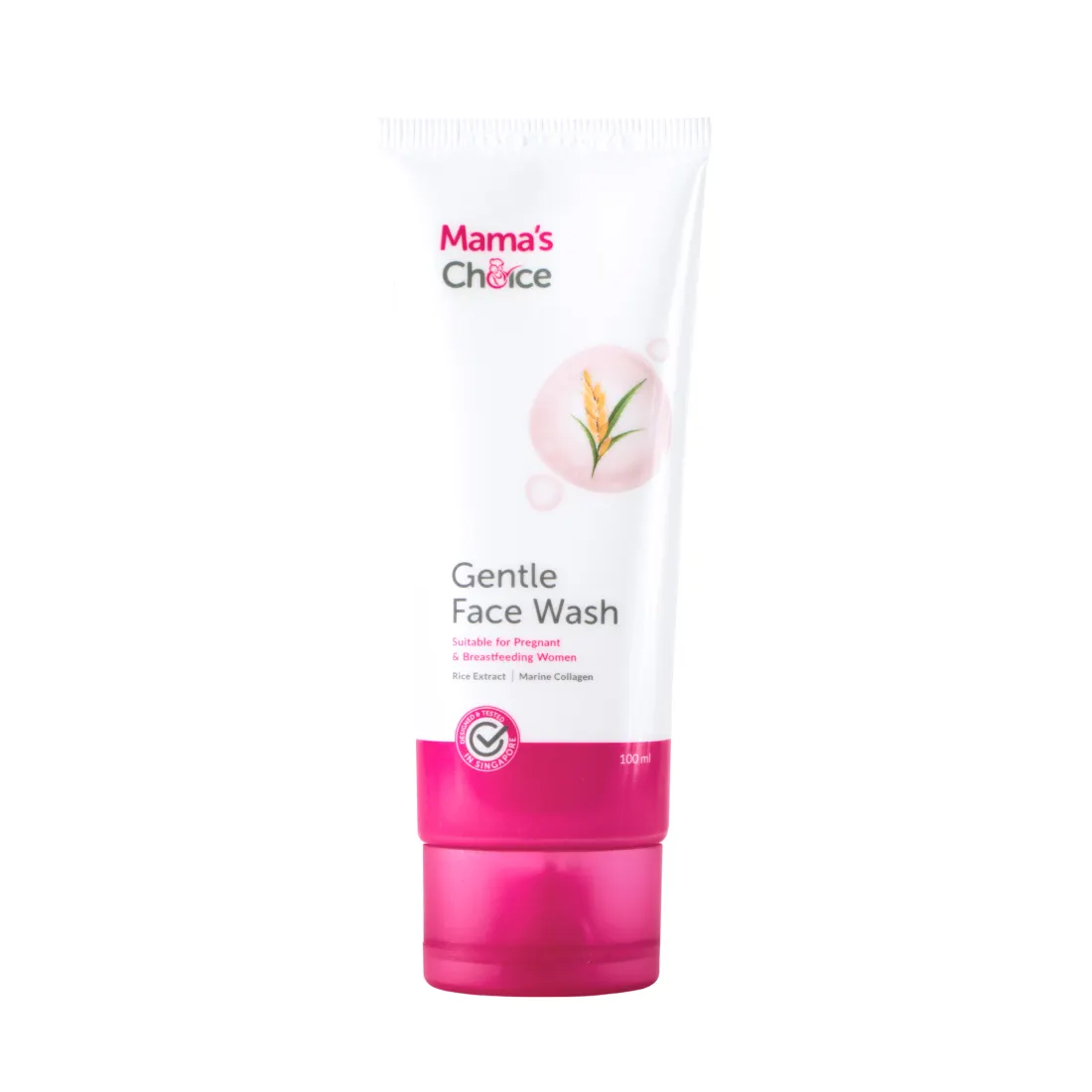
The list worth watching in pregnancy is shorter and more specific: retinoids, high-strength salicylic acid, hydroquinone. Some actives are fine and get worried about anyway, which is the case with niacinamide in pregnancy. HealthHub covers the skin changes pregnancy brings, from pigmentation to dryness to new sensitivity, which is useful background before you overhaul a routine. Cleansers are a different case, since many contain no fatty alcohol at all. Our Gentle Face Wash is one of those: a clear, low-foam gel with glycerin, niacinamide and sodium cocoyl glycinate, a mild cleansing agent made from coconut fatty acids, and it is made without sulfates or added fragrance. Our notes on choosing a face wash for your skin type go through the rest.
Does it clog pores or irritate skin?
Mostly no, on both counts. Fatty alcohols appear in products made for sensitive and eczema-prone skin precisely because they are quiet ingredients.
Reactions do happen. Fatty alcohols turn up occasionally as contact allergens, and the American Academy of Dermatology describes patch testing as the way to find out which ingredient is actually responsible rather than guessing from the label. If a cream stings, look first at the fragrance, the essential oils and the preservative system.
Pore-clogging is harder to pin down. A rich cream can feel too heavy on an oily T-zone in this weather, which is about the formula as a whole rather than one wax in it. Switching to a lighter texture usually fixes it.
Which textures feel tolerable in this climate?
Singapore makes you choose twice a day, and the right answer in the carpark is the wrong one in the office.
Outdoors, the air is warm and already saturated, so skin loses very little water and a heavy cream has nothing to do except sit there and shine. Indoors, air-conditioning runs all day, and cooled air holds much less moisture, which is why faces feel tight by late afternoon in a cold meeting room. Haze season keeps everybody indoors with the windows shut, which pushes the same problem harder.
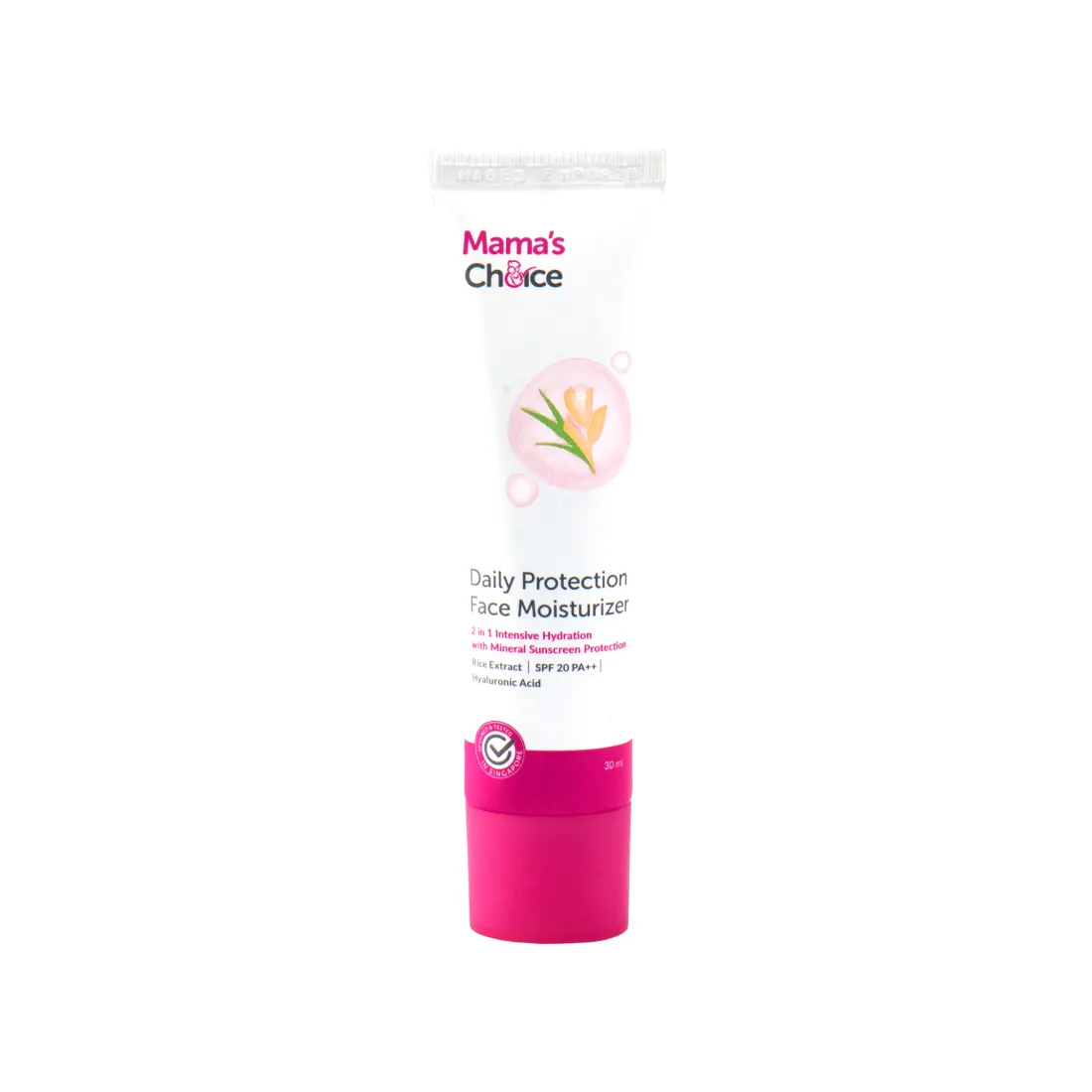
A practical setup here is a light emulsion in the morning and something richer at night. Our Face Moisturizer is a daytime moisturiser that lists cetyl alcohol alongside shea butter and glycerin, so it is a working example of a fatty alcohol doing its job in a cream. For a baby, the same logic applies with thinner textures still, which we cover in choosing a baby moisturiser for Singapore.
How do you check what is actually in a product?
Cosmetics sold in Singapore must be notified to the Health Sciences Authority before they reach a shelf, and the pack must carry a full ingredient list in descending order of weight, with ingredients under 1% allowed in any order. That makes the back of the box more informative than any claim on the front.
Guardian, Watsons and Unity all let you read a box before buying, which online listings often do not. If you shop on Shopee or TikTok Shop, look for a photo of the actual ingredient panel rather than a graphic of selected highlights. Sellers who will not show it are telling you something.
Keep a note on your phone of the products that stung and the ones that sat fine. After a year that list is worth more than any ingredient blacklist circulating in a chat group, because it was written about your skin.
Frequently asked questions
- Is cetyl alcohol the same as the alcohol in hand sanitiser?
- No. Hand sanitiser uses ethanol or isopropyl alcohol, which evaporate and strip oil from the skin surface. Cetyl alcohol is a waxy solid with a sixteen-carbon chain that behaves as an emollient and an emulsifier. They share a chemical family name and almost nothing else that matters on skin.
- Is cetyl alcohol safe to use while pregnant?
- There is nothing about it that pregnancy changes. It stays on the skin surface, works as a softener and thickener, and the ingredients worth avoiding in pregnancy are a different list altogether, retinoids and high-strength salicylic acid among them. Ask your doctor or polyclinic if you are unsure about a specific product.
- Why do some products say alcohol-free when cetyl alcohol is in the list?
- Because the claim refers to the drying short-chain alcohols that shoppers are avoiding, such as denatured alcohol and ethanol. Fatty alcohols do the opposite job. The wording is reasonable, though it is a marketing convention rather than a regulated definition, so the ingredient list is still the thing to read.
- Can cetyl alcohol cause breakouts or irritation?
- For most people it does neither. A small number of people react to fatty alcohols, and that shows up on patch testing rather than by guesswork. If a cream stings or bumps your skin, the fragrance and the preservative are more often behind it than the fatty alcohol holding the formula together.
Sources
- American Academy of Dermatology — Moisturiser ingredients, emollients and humectants
- American Academy of Dermatology — Contact dermatitis and patch testing
- US Food and Drug Administration — Synthetic fatty alcohols permitted in food (21 CFR 172.864)
- Health Sciences Authority — Cosmetic product notification and the ASEAN Cosmetic Directive
- HealthHub (Health Promotion Board) — Skin changes during pregnancy
Share this article
This article is for information only and is not a substitute for diagnosis or medical advice. Please talk to your doctor about your own situation.