What are stretch marks, and can you prevent them?
Stretch marks are scars left when skin stretches fast. What causes striae in pregnancy, how they fade afterwards, and what a cream can and cannot do.
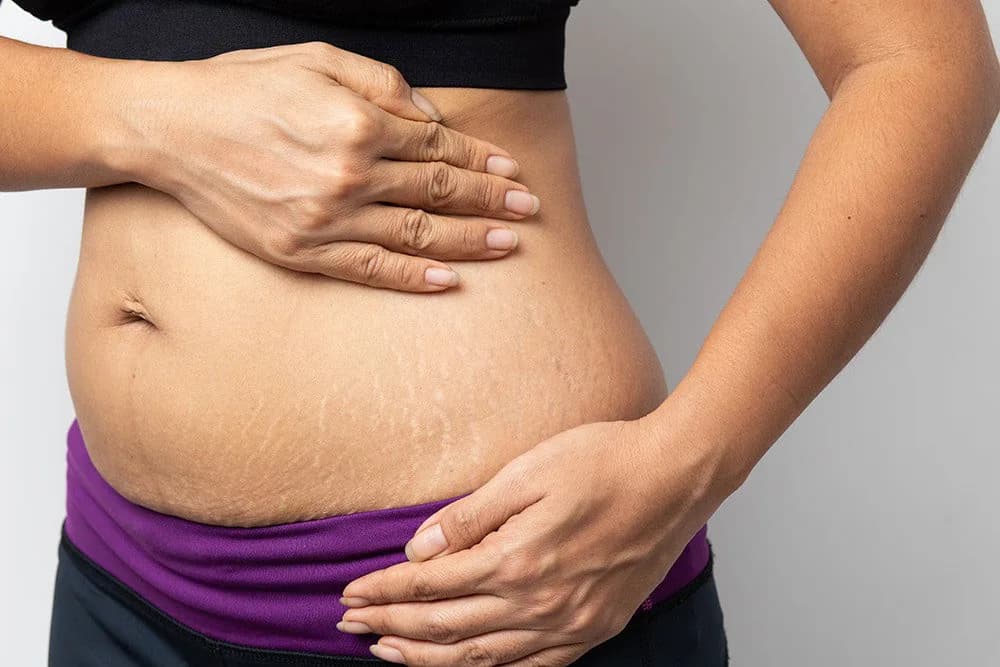
They tend to arrive quietly in the third trimester, low on the belly, and almost never in the place you were diligently rubbing cream into.
Stretch marks are narrow scars that form when skin stretches faster than its collagen and elastin can follow. They are extremely common in pregnancy. Nothing you apply removes them. Most settle into pale, flat lines over the months after delivery, and creams are best thought of as moisturisers for dry, tight-feeling skin.
What causes stretch marks?
Skin can stretch a long way. It cannot stretch quickly.
Striae form in the dermis, the layer underneath the surface you can see, when rapid growth tears the collagen and elastin that hold skin taut. Blood vessels sit below that tear and show through the thinned tissue, which is why a new mark looks pink, red or purple depending on your skin tone. Later the vessels settle, the colour drains out, and the line turns pale and slightly sunken. The American Academy of Dermatology describes that fading as the ordinary course of a stretch mark rather than the result of any treatment.
Pregnancy pushes on the process from two directions at once. The bump grows fast in the last few months, and the hormonal shifts of pregnancy loosen the same connective tissue that would otherwise hold. Adolescent growth spurts, fast weight change and heavy weight training do this to the same layer of skin.
Who is most likely to get them?
Striae gravidarum are common enough that it makes more sense to expect them than to see them as something gone wrong.
The American Academy of Dermatology points to pregnancy, adolescence, rapid weight gain or loss, a family history of stretch marks, long-term use of corticosteroid creams or tablets, and conditions such as Cushing syndrome and Marfan syndrome. Family history is the factor nothing can be done about.
Dry skin does not cause striae. Dryness makes the stretching itch, which is a separate complaint with a much simpler answer. Our guide to itchy skin during pregnancy goes through the rest of it.
Where do they appear, and how long do they last?
The belly, breasts, hips, thighs, bottom and the backs of the upper arms carry most of them. Weightlifters get them across the shoulders and chest instead. The pattern follows wherever the skin was pulled, which is why so many mothers find marks below the navel and nowhere above it.
Timing is slow and reasonably predictable. The NHS says stretch marks usually become less noticeable over time, fading towards a pale or silvery line. The American Academy of Dermatology puts the same thing in a wider window, noting that marks tend to flatten and lose colour over months to years.
Nothing much happens in the first weeks after delivery. That is normal, and it catches a lot of people out.
Can a cream prevent them?
This is where the marketing and the evidence part company.
Cochrane has reviewed the topical preparations used to prevent stretch marks in pregnancy, the oils, butters and branded creams included, and concluded that the evidence is insufficient to say any of them work. The trials were small, they tested different products, and the results did not point the same way.
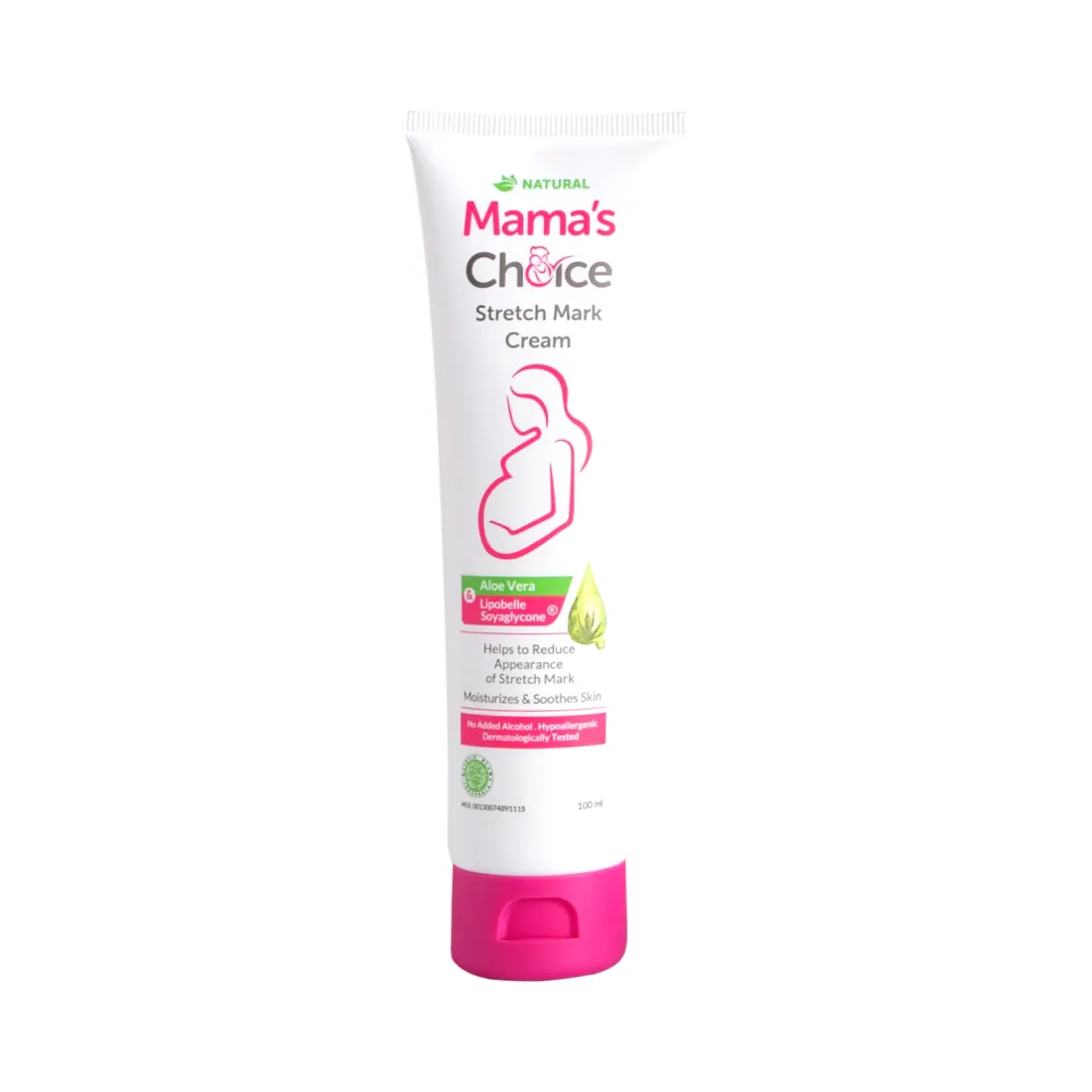
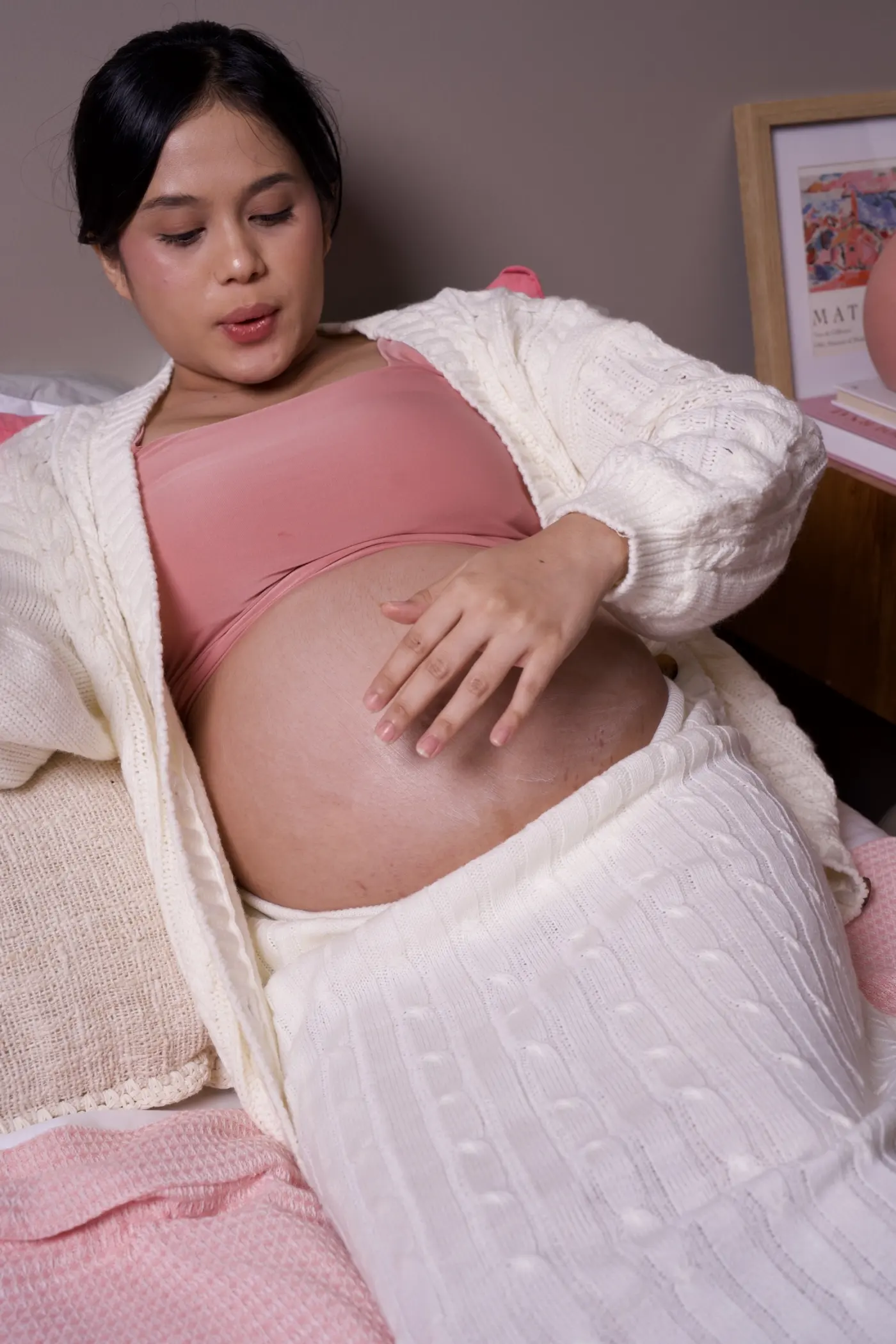
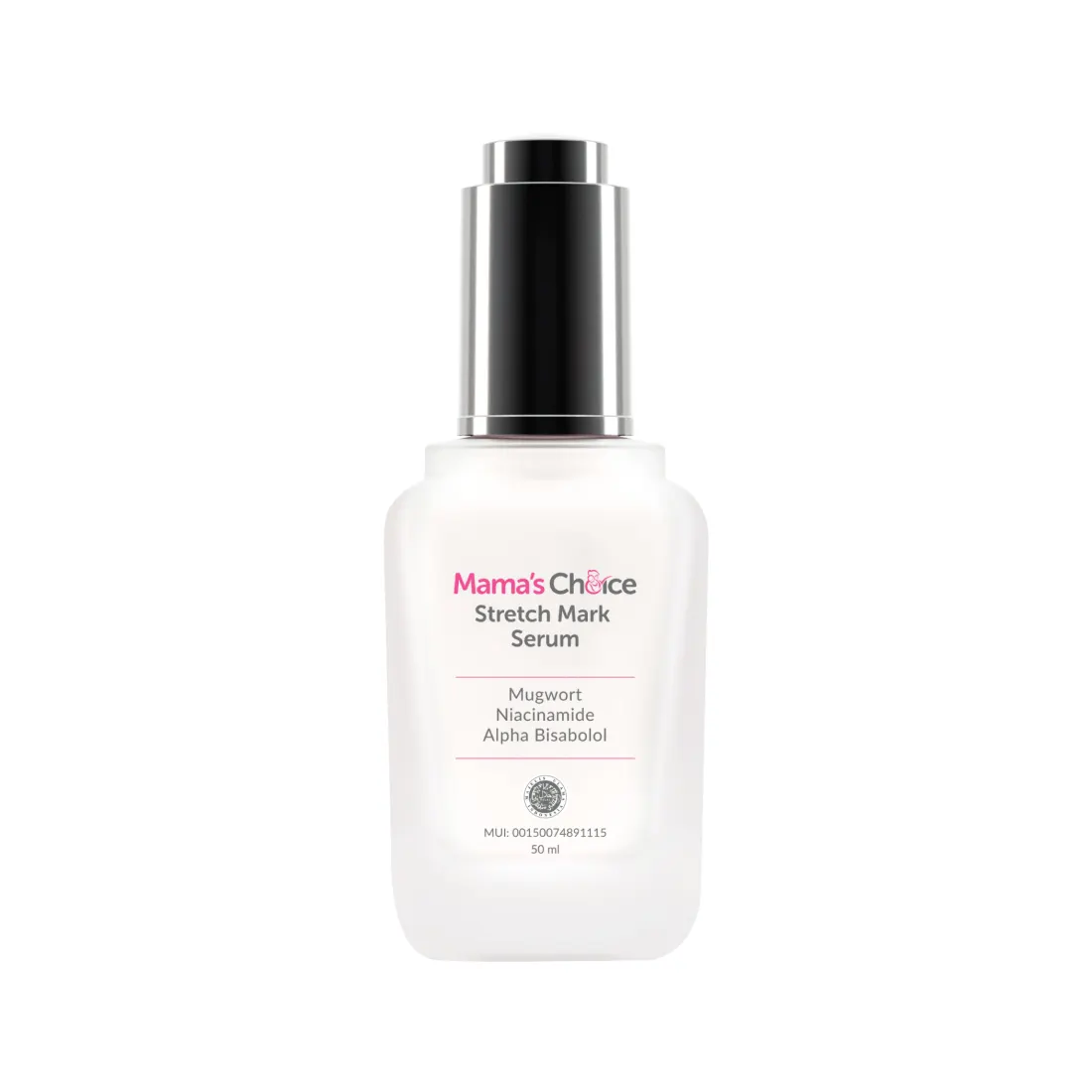
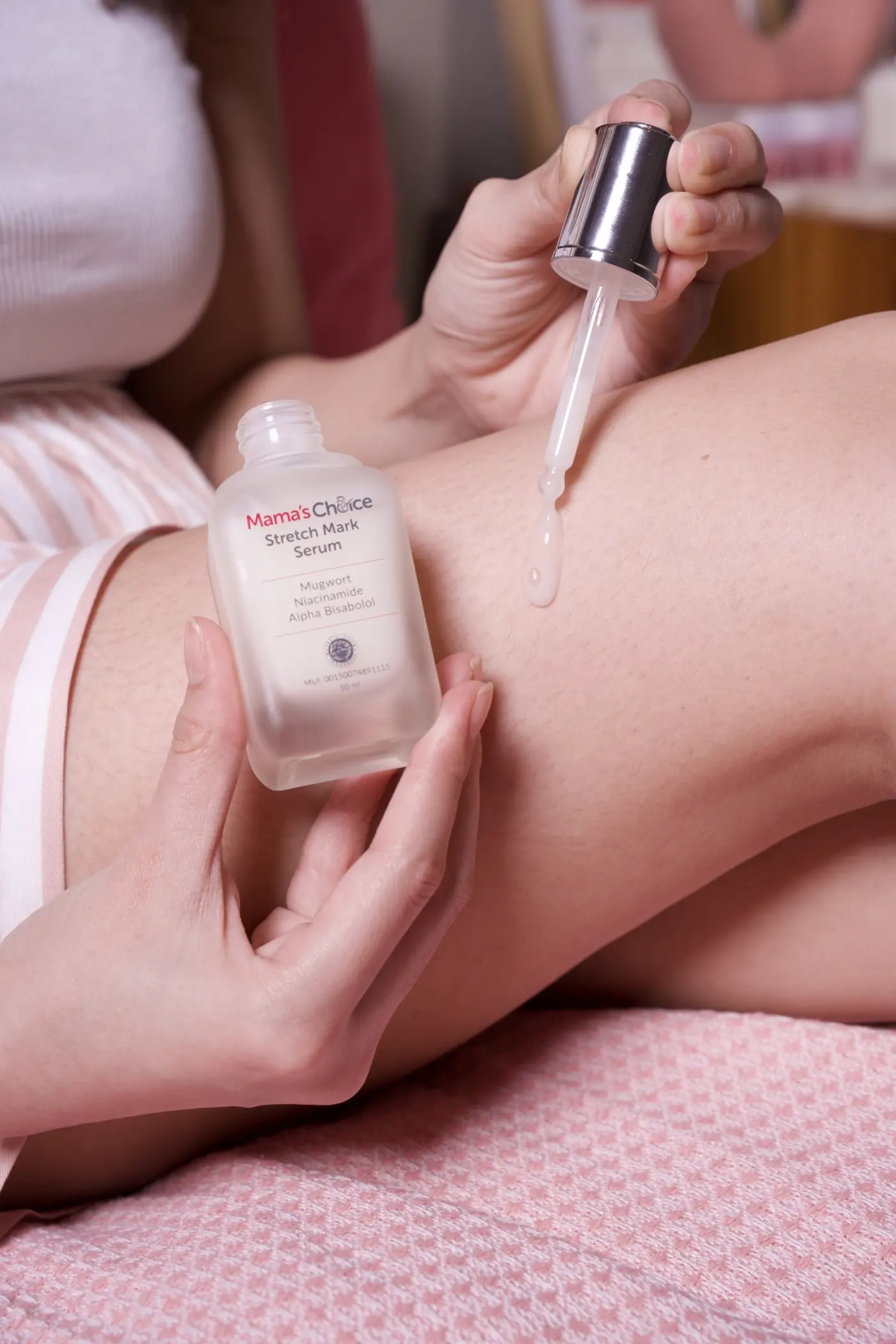
That is an argument for spending less, rather than for doing nothing at all. A rich cream on a tight, dry bump feels good at eleven at night, and the few minutes of massage give some attention to a part of your body that aches. Our Stretch Mark Cream and the lighter Stretch Mark Serum are sold on that footing. They moisturise stretching skin and help it feel soft and supple, and neither formula contains retinoids or parabens. In a 2022 satisfaction survey of 78 mothers, 98% said the cream absorbed easily, which matters on a warm evening. Neither will erase a line that has formed or stop one forming.
If you are comparing tubs on a pharmacy shelf, our notes on choosing a stretch mark product cover what the labels mean, and the shea butter against cocoa butter question comes down to texture more than anything.
What works on marks that have already formed?
The useful options are procedures rather than products. According to the American Academy of Dermatology, fractional laser, microneedling, radiofrequency and chemical peels can make stretch marks less visible, and prescription tretinoin can improve marks while they are still red and new. Improvement is the word used, not removal.
Tretinoin is a retinoid, so it stays off the list while you are pregnant or breastfeeding. That makes it a postpartum conversation at the earliest.
In Singapore these treatments sit with dermatologists and aesthetic clinics, are charged per session, and usually need several sessions before anything shows. A polyclinic will help you with a rash, an infection or a referral. A cosmetic concern is a private cost here, so get the quote for the full course rather than the first visit.
How do you keep a stretching bump comfortable in this climate?
Heat and humidity decide what you can bear to wear on your skin, never mind what the tub promises. A thick butter sits on a damp bump mid-afternoon and transfers onto your top. A lotion or serum sinks in and lets you get dressed.
Air-conditioning does the opposite overnight. Cooled air holds much less moisture, so skin that was sticky at dinner feels tight by morning, and the itch over a stretching belly can feel worse in a cold bedroom than a warm one. Haze season shuts the windows and keeps the aircon running for days at a time, which is often when mothers start asking about the itch.
Guardian, Watsons and Unity stock the mainstream pregnancy ranges, and Unity counters inside FairPrice make it easy to pick one up with the groceries. Shopee and TikTok Shop run cheaper bundles. Buy one tube before you buy three.
Confinement massage is worth having for the aches it can ease. It will not change striae, whatever the package says. For the itch itself, a cool shower and a few simple remedies get many mothers through the night.
When is it worth seeing a doctor?
Stretch marks themselves need no medical attention. A few things around them do.
Severe itching in pregnancy deserves a call rather than a wait. The NHS advises telling your midwife or doctor if itching is intense, particularly on the palms and soles or at night, because intrahepatic cholestasis of pregnancy can present that way and needs monitoring. A crop of new striae outside pregnancy, alongside weight gain and easy bruising, is worth raising too, since the American Academy of Dermatology links that picture to Cushing syndrome. HealthHub has a plain-English rundown of the skin changes that pregnancy normally brings, which helps you sort the boring from the urgent.
Photograph the marks once a month, in the same light, from the same spot. Memory is a poor judge of fading, and half a year of photos on your phone will tell you more about what is happening to your skin than any before-and-after on a product page.
Frequently asked questions
- Are stretch marks permanent?
- The scar tissue stays, though it stops looking like a scar. The American Academy of Dermatology says stretch marks usually fade and flatten over months to years, and the NHS describes them settling into pale, silvery lines. They rarely disappear completely, and a mark you can still find in the mirror is often invisible to everybody else.
- Can a cream stop stretch marks from forming?
- There is no good evidence that it can. Cochrane reviewed the topical preparations used to prevent stretch marks in pregnancy and concluded the evidence was insufficient to recommend any of them. A cream is still useful for dry, tight-feeling skin over the bump, which is a real problem with a simple answer.
- Does confinement massage get rid of stretch marks?
- No. Striae form in the dermis, below the surface, and kneading from the outside does not rebuild torn collagen. A confinement massage can ease a sore back and help you relax, and plenty of mothers find the oil or cream used afterwards leaves the skin more comfortable. Judge it on that.
- When should I see a doctor about itching over my stretch marks?
- Go if the itch is intense, spreads past the marks, affects your palms or soles, or stops you sleeping. The NHS advises telling your doctor or midwife about severe itching in pregnancy, because it can point to a liver problem rather than dry skin. Polyclinics can refer you on to KK Women’s and Children’s Hospital or the National University Hospital.
Sources
- American Academy of Dermatology — Stretch marks: why they appear and how to get rid of them
- NHS — Stretch marks
- Cochrane — Topical preparations for preventing stretch marks in pregnancy
- HealthHub (Health Promotion Board) — Skin changes during pregnancy
- NHS — Itching and intrahepatic cholestasis of pregnancy
Share this article
This article is for information only and is not a substitute for diagnosis or medical advice. Please talk to your doctor about your own situation.