Is Mineral or Chemical Sunscreen Safe in Pregnancy?
Mineral filters are the usual pregnancy choice, and the reasons are narrower than most articles claim. How to pick one and use it in Singapore sun.
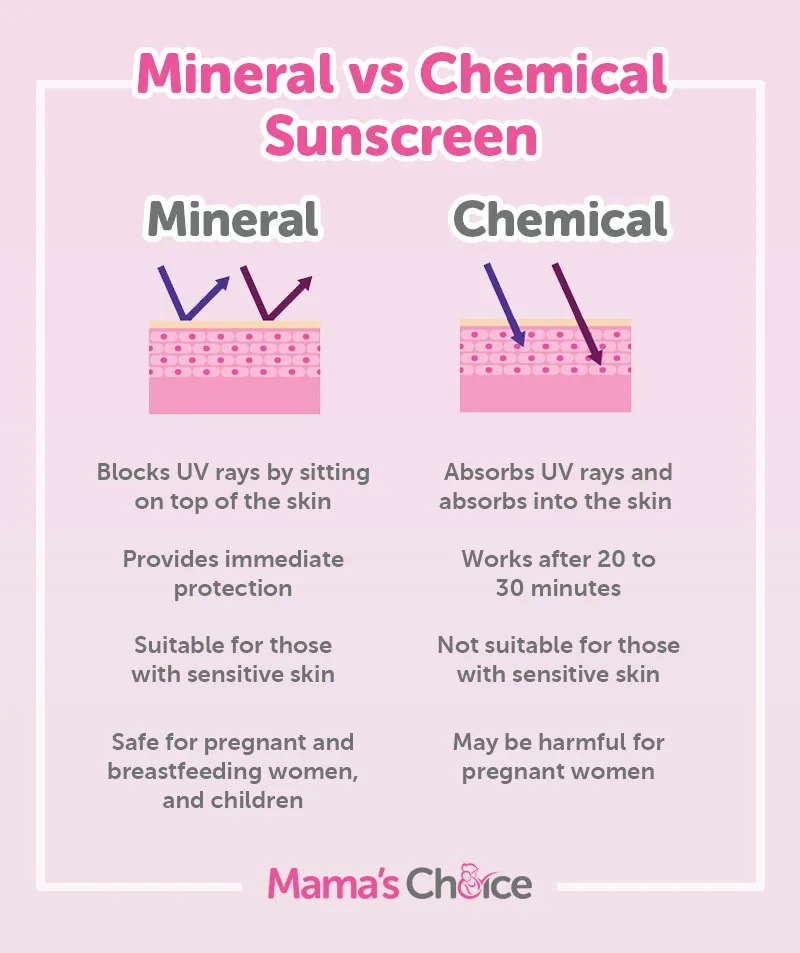
Mineral sunscreens using zinc oxide or titanium dioxide are the usual pregnancy choice, because they sit on the skin instead of being absorbed. Chemical filters have not been shown to be harmful in pregnancy. Broad spectrum, SPF 30 or above, reapplied every two hours outdoors.
The difference between the two kinds
Mineral filters, sometimes called physical sunscreens, use zinc oxide or titanium dioxide. They sit on the surface and scatter or absorb ultraviolet light there. They work the moment you apply them, and they are the filters usually recommended for sensitive skin and for children.
Chemical filters, sometimes called organic filters, include avobenzone, octinoxate, octocrylene and oxybenzone. They absorb ultraviolet energy within the product film. They are lighter on the skin, spread more easily and leave no white cast, which is why most of the shelf is made of them.
Neither type is a gimmick. Both help prevent sunburn when applied properly.
Is chemical sunscreen actually unsafe in pregnancy?
The US Food and Drug Administration has published studies showing that several organic sunscreen filters are absorbed into the bloodstream at measurable levels, and has asked manufacturers for additional safety data. Absorption is not harm, and the agency has been explicit that people should keep using sunscreen while the data question is resolved.
Zinc oxide and titanium dioxide sit in a different regulatory position, having long been treated as acceptable without the same open questions.
So the reasonable position for pregnancy is a preference rather than a prohibition. Mineral filters avoid an unresolved question and are less likely to irritate sensitive skin. A chemical sunscreen you already own is not something to panic about.
What to look for
| Feature | What to choose |
|---|---|
| Filter | Zinc oxide or titanium dioxide, for a mineral option |
| Spectrum | Broad spectrum, which covers UVA as well as UVB |
| SPF | 30 or higher, per the American Academy of Dermatology |
| Water resistance | Yes, which in this climate means sweat resistance |
| Fragrance | None or very little, if your skin reacts readily |
| Texture | Whatever you will actually reapply at lunchtime |
Texture matters most. A perfect sunscreen that feels like paint in 85% humidity stays in the drawer, and the imperfect one you reapply beats it every time.
Our piece on why sunscreen leaves a white cast covers the main complaint about mineral formulas and what to do about it.

Using it properly in Singapore
Sitting almost on the equator changes the arithmetic. Ultraviolet levels stay high throughout the year rather than peaking in a summer, and the sun is close to overhead in the middle of the day. The National Environment Agency publishes Singapore's UV index, which is a more useful guide than how bright it looks outside.
- Apply a generous layer before you leave, not after you are already out
- Reapply every two hours outdoors, and immediately after swimming or heavy sweating
- Take the covered walkway and the sheltered side of the street, since shade outperforms any product
- A wide-brimmed hat does more for your face than an extra reapplication
- Cloud and haze both let ultraviolet through, so an overcast day is not a day off
- Use it indoors near a window if you sit beside one all day, because melasma responds to that too
Sweat is the local problem that temperate guidance ignores. A morning application has often slid off by the time you reach the office, which is why the two-hour rule matters more here than the SPF number.
Melasma, the reason this matters most now
Dark patches across the cheeks, forehead and upper lip are common in pregnancy, and the American Academy of Dermatology attributes them to hormonal change plus ultraviolet exposure.
Only one of those is within reach. Sun protection helps keep melasma from deepening, and it is why dermatologists put it ahead of every brightening ingredient on the market.
Expect to hold ground rather than clear it while you are pregnant. The hormonal driver is still running, and much of the improvement tends to come in the months after delivery. Our article on facial skin problems during pregnancy goes further into the pigment question.
Keeping the routine short
Most pregnant women do not want a six-step routine in this weather, and they do not need one.
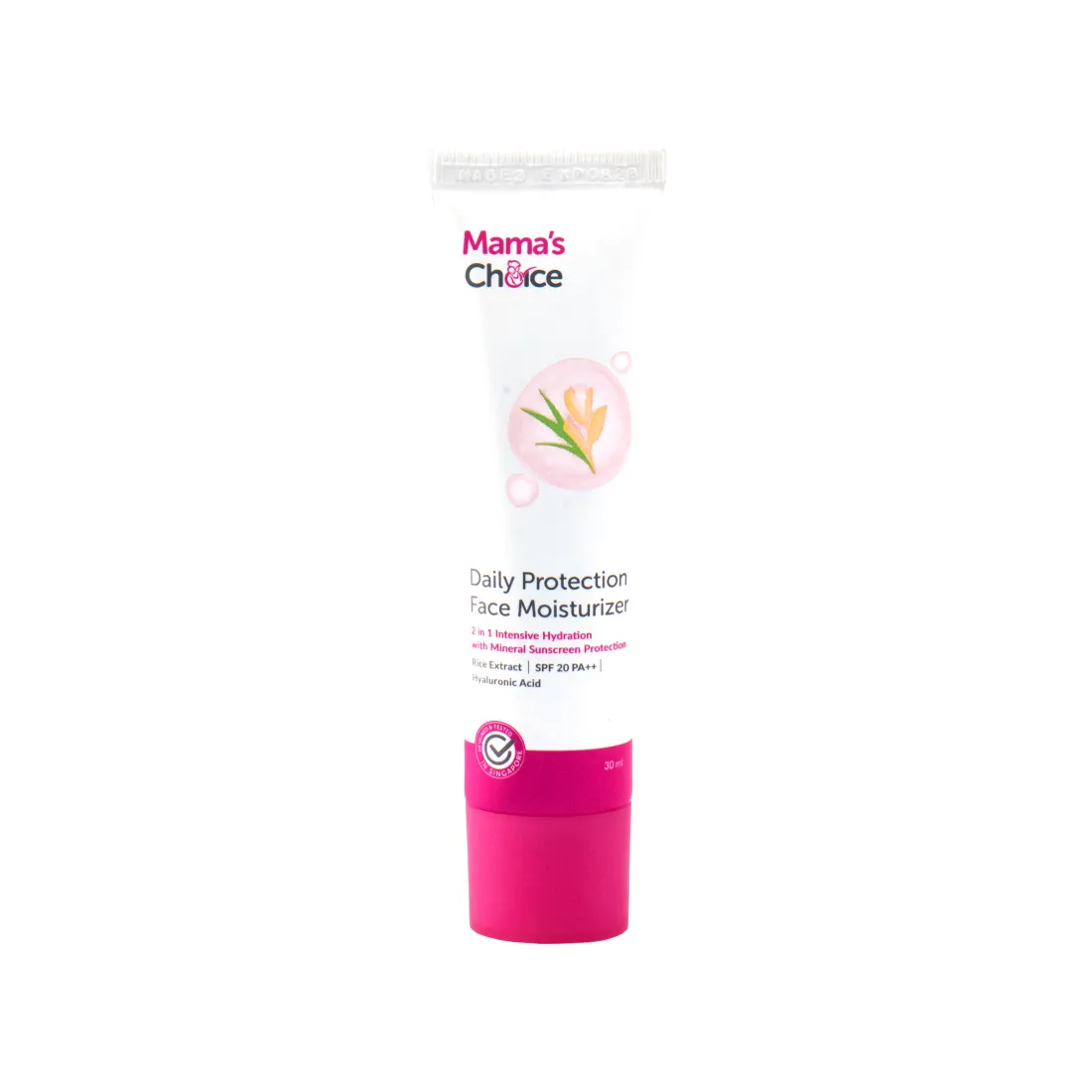
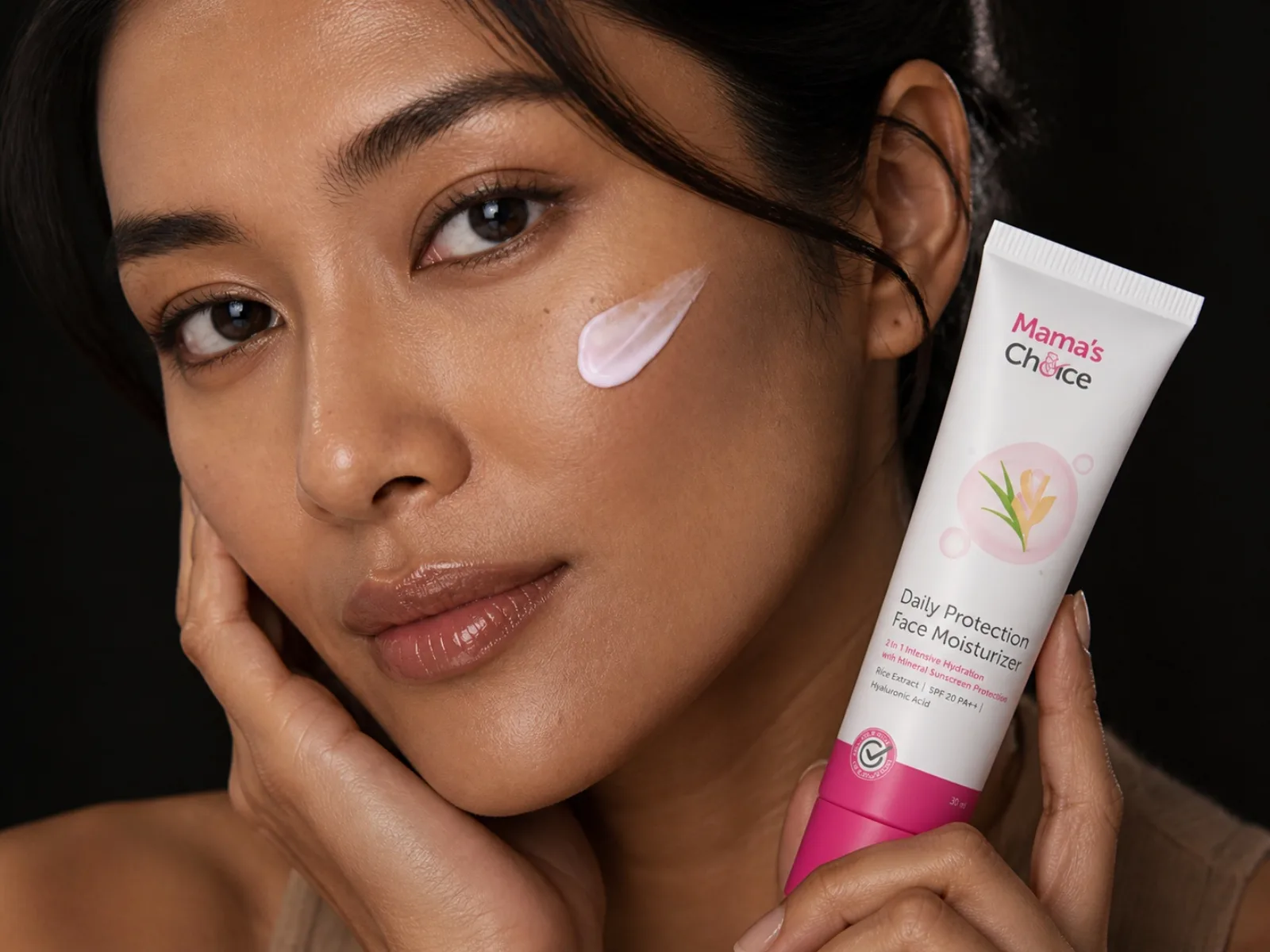
A gentle cleanser, one moisturiser with sun protection, and shade covers it. Mama's Choice Daily Protection Face Moisturizer combines a moisturiser with the mineral filters zinc oxide and titanium dioxide in a single step. That is useful mainly because a step you do not have to remember is a step you do not skip. It is labelled SPF 20 PA++, medium protection, which is below the SPF 30 the American Academy of Dermatology recommends for time outdoors. Use it on days spent mostly indoors, and add a dedicated SPF 30 or higher sunscreen for longer in the sun. It has no added perfume, though orange peel oil gives it a light scent. Do not stay too long in the sun, even while using a sunscreen product.
Pair it with a hat and a covered route and you have done more than most elaborate routines achieve. Our guide to pregnancy beauty habits sets out the rest, and whether niacinamide is safe in pregnancy covers the one active most women want to keep.
Babies and children
Under six months, no sunscreen. The American Academy of Pediatrics advises shade, a hat and light long sleeves instead, and in Singapore that means planning the stroller route rather than relying on a product.
After six months, a mineral sunscreen on the exposed bits, alongside shade and clothing. Our article on baby sunscreen covers how much and how often.
One last practical note. Vitamin D does come from sunlight, but sunscreen on your face is rarely what decides your level. If you are concerned about it, that is a blood test and a conversation at the polyclinic rather than a reason to skip the hat.
Frequently asked questions
- Is chemical sunscreen unsafe during pregnancy?
- No regulator has concluded that. The US Food and Drug Administration has asked manufacturers for more safety data on several organic filters after studies showed they are absorbed into the bloodstream, which is a call for data rather than a finding of harm. Many women switch to mineral filters while that question is open, which is a reasonable precaution rather than a medical requirement.
- What SPF should I use?
- The American Academy of Dermatology recommends a broad-spectrum sunscreen of SPF 30 or higher, water resistant, reapplied every two hours outdoors. In Singapore the reapplication part is the one that gets skipped, and it matters more here than the number on the bottle.
- Which mineral filters should I look for?
- Zinc oxide and titanium dioxide. Both sit on the surface rather than being absorbed, both work immediately on application, and both are the filters generally recommended for sensitive skin and for children.
- Does sunscreen stop melasma?
- It helps limit it. The American Academy of Dermatology attributes melasma to hormonal change plus ultraviolet exposure, and sun protection is the part you can control. Expect to hold ground during pregnancy rather than clear the patches, since the hormonal driver is still running.
- Can I put sunscreen on my baby?
- Not under six months. The American Academy of Pediatrics advises shade, a hat and light clothing for young infants instead. After six months, a mineral sunscreen on exposed skin is appropriate alongside shade.
Sources
- American Academy of Dermatology — sunscreen FAQs and how to select a sunscreen
- US Food and Drug Administration — sunscreen regulation and requests for additional safety data on sunscreen active ingredients
- American Academy of Pediatrics (HealthyChildren) — sun protection for babies and children
- National Environment Agency — Singapore UV index readings
- HealthHub (Ministry of Health Singapore) — skin cancer prevention and sun protection
Share this article
This article is for information only and is not a substitute for diagnosis or medical advice. Please talk to your doctor about your own situation.