Is niacinamide safe for pregnancy?
Niacinamide is one of the few actives dermatologists keep on the list during pregnancy. What it does, what it cannot do, and what to buy in Singapore.
Niacinamide is generally treated as compatible with pregnancy. It is the amide form of vitamin B3, an essential nutrient, and very little of a topical product reaches your bloodstream. No regulator issues pregnancy approvals for cosmetic ingredients, so treat any product claiming one with suspicion.
What niacinamide actually is
Niacinamide, also written as nicotinamide, is a form of vitamin B3. Your body needs it. It turns up in food, in supplements, and in a very large share of the serums and moisturisers on a pharmacy shelf.
In skincare it works on the skin barrier. Studies suggest it supports the production of the lipids that hold water in, which is why it suits dry and reactive skin as well as oily skin.
It is not a protein, and it does not contain keratin. That claim circulates widely and is simply wrong.
So is it safe during pregnancy?
The answer comes in two parts.
Dermatologists keep niacinamide on the list of actives that can usually be continued through pregnancy, because it is a nutrient your body already handles and because absorption through intact skin from a cosmetic is small. The American Academy of Dermatology discusses it for acne and for pigmentation, both of which get worse in pregnancy for plenty of women.
What does not exist is an official pregnancy clearance. Cosmetic ingredients are not assessed and approved for pregnancy by the US Food and Drug Administration or by anyone else, and a brand saying otherwise is overstating its position. In Singapore the Health Sciences Authority operates a notification scheme for cosmetic products and acts against unsafe ones, which governs the product rather than endorsing the ingredient for pregnant users.
If you have a skin condition under treatment, ask your doctor about your specific routine rather than relying on a general article, this one included.
What it does, and what it does not
| Claim | What the evidence supports |
|---|---|
| Strengthens the skin barrier | Reasonable, and the best-supported use |
| Calms redness and inflammation | Reasonable, which is why it appears in rosacea and acne routines |
| Fades dark marks | Modest and slow, over months rather than weeks |
| Regulates oil | Some support, less dramatic than marketing suggests |
| Makes pores smaller | Pores look less obvious when skin is less oily and less inflamed; the opening itself does not shrink |
| Replaces sunscreen | No, and nothing does |
Pigment is where expectations go wrong. Melasma in pregnancy responds to sun avoidance far more than to any cream, and the American Academy of Dermatology is clear that ultraviolet exposure is the driver you can act on.
Where it fits in a Singapore routine
This climate pushes most women towards lighter products. Humidity sits high all year, skin produces more oil, and a heavy cream at midday is unpleasant rather than nourishing.
A workable pregnancy routine here is short. A gentle cleanser in the morning and evening, a light moisturiser, shade and a hat during the day, and one active at most.
Air-conditioning pulls the other way. Eight hours in a cooled office dries the skin out, so the woman who feels greasy outdoors can be flaking by Friday. Niacinamide suits that split, since it works on the barrier rather than by stripping oil.
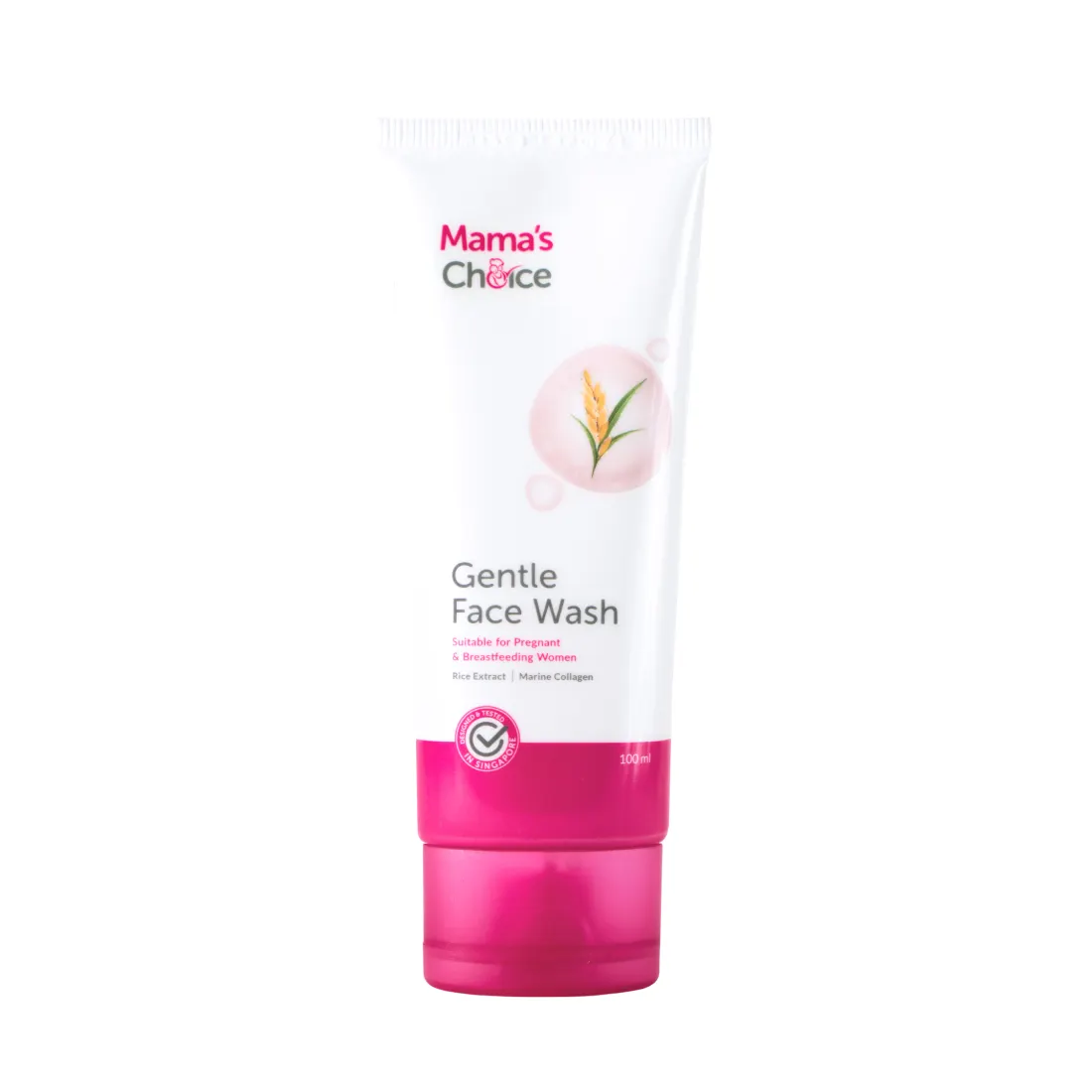
Mama's Choice Gentle Face Wash is a rinse-off gel cleanser that lists niacinamide, glycerin and rice extract, made without sulfates or added fragrance. A cleanser spends less than a minute on your skin, so if niacinamide itself is what you are after, a leave-on product is the place to find it. Our guide to choosing a face wash for your skin type covers how to judge one.
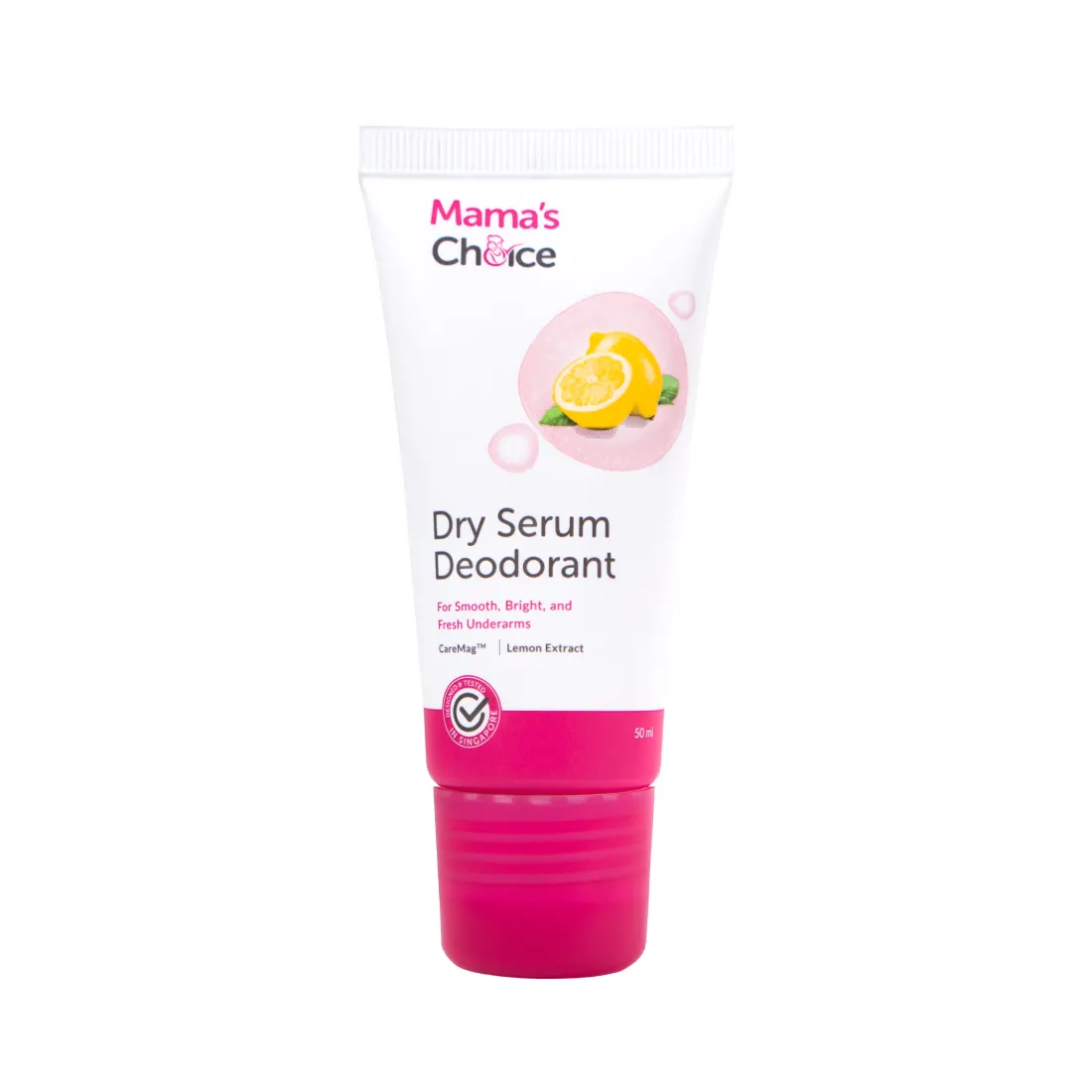
Niacinamide also turns up in underarm products. Mama's Choice Dry Serum Deodorant is a deodorant rather than an antiperspirant: it uses magnesium hydroxide to help control underarm odour, lists niacinamide in the formula, and is made without aluminium salts or alcohol. Choosing aluminium-free is a preference some Mamas have, rather than a medical requirement in pregnancy.
Whitening creams from informal sellers
The Health Sciences Authority publishes alerts on cosmetic products found to contain undeclared ingredients, including mercury in skin-whitening creams sold online and through informal channels. Mercury crosses the placenta.
That makes the sourcing question as important as the ingredient question during pregnancy. Buying from Guardian, Watsons, Unity or an established online storefront is not a formality, and a cream that promises dramatic lightening in a fortnight is the exact category the alerts keep covering.
Check the packaging for a named manufacturer and a full ingredient list. Products with neither are a risk you do not need.
What to leave alone while pregnant
- Retinoids, including tretinoin, adapalene and retinol
- High-strength chemical peels and in-clinic laser work, which can wait
- Hydroquinone, generally avoided in pregnancy because a relatively high proportion is absorbed
- Whitening creams from informal sellers, for the reason above
- Anything that stings, since irritation can deepen pigmentation rather than lift it
Our article on harmful chemicals in pregnancy and breastfeeding goes through the rest, and facial skin problems during pregnancy covers what the hormones are doing to your face in the first place.
One product at a time
Pregnancy skin is less predictable than the skin you had last year. The useful habit is to add one thing, wait a fortnight, and only then add another.
That is slower than anyone wants when their face has changed. It is also the only way to know what caused the reaction, which saves throwing out four products to find the one at fault.
Frequently asked questions
- Is niacinamide safe to use while pregnant?
- It is generally treated as one of the actives that can be continued. Niacinamide is the amide form of vitamin B3, an essential nutrient, and topical absorption from a cream or serum is small. The American Academy of Dermatology discusses it for acne and pigmentation, and it is not among the ingredients withdrawn during pregnancy the way retinoids are.
- Has any regulator approved niacinamide as pregnancy-safe?
- No, and claims that one has are misleading. Cosmetic ingredients are not given pregnancy approvals. In Singapore the Health Sciences Authority runs a notification scheme for cosmetic products and takes action against unsafe ones, which is a different thing from certifying an ingredient for pregnancy.
- What strength should I look for?
- Most of the published studies used 2% to 5%, while many serums now sell at 10% or more. Higher is not necessarily better, and concentrated serums are a common cause of stinging and flushing on skin that is already more reactive than usual during pregnancy.
- Can I use it with vitamin C or an acid?
- Usually yes, though pregnancy skin tolerates less than it used to. Introduce one product at a time and leave a fortnight between additions, so you know which one caused the reaction when there is one.
- Will niacinamide clear melasma?
- It may help a little, slowly, and sun protection does most of the work. The American Academy of Dermatology is clear that melasma deepens with ultraviolet exposure, so a brightening ingredient without daily sun avoidance tends to disappoint.
Sources
- American Academy of Dermatology — acne, rosacea and melasma treatment guidance
- American College of Obstetricians and Gynecologists — skin changes during pregnancy
- US Food and Drug Administration — cosmetics safety information for consumers
- Health Sciences Authority — cosmetic product notification and safety alerts on adulterated cosmetic products
- HealthHub (Ministry of Health Singapore) — skin care
Share this article
This article is for information only and is not a substitute for diagnosis or medical advice. Please talk to your doctor about your own situation.