Why does sunscreen leave a white cast?
The white cast comes from zinc oxide and titanium dioxide. What it does and does not say about protection, and how to apply it in Singapore sun.
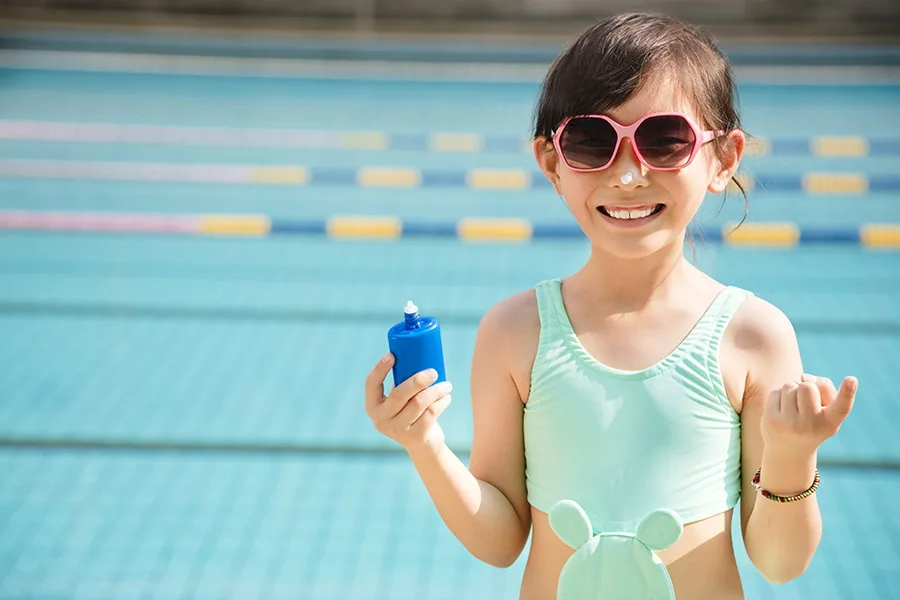
The white cast comes from zinc oxide and titanium dioxide, the mineral filters that stay on the skin's surface. It is cosmetic rather than a sign of strength. Rub it in longer, apply in thin layers, or pick a tinted formula. What protects you is using enough and reapplying it.
Why does sunscreen leave a white cast?
Zinc oxide and titanium dioxide are white pigments. They are the same compounds that make paint and some cosmetics opaque, and they do not become transparent just because they are suspended in a lotion.
Unlike the organic filters used in so-called chemical sunscreens, these two sit on the surface of the skin rather than being absorbed into it. Sitting on the surface is what makes them visible, and it is also why the American Academy of Dermatology often suggests them for sensitive or easily irritated skin.
Particle size decides how obvious the cast is. Larger particles scatter more visible light and look chalkier; micronised and coated formulations look far less white. A tint added to the formula cancels the whiteness optically.

What is the difference between mineral and chemical filters?
| Mineral filters | Organic (chemical) filters | |
|---|---|---|
| Examples | Zinc oxide, titanium dioxide | Avobenzone, octisalate, octocrylene, homosalate |
| Where it sits | On the skin's surface | Absorbed into the upper skin layer |
| White cast | Common, reduced by tint or fine particles | Rare |
| Often suggested for | Sensitive, reactive or very young skin | Everyday wear under makeup |
| Feel in humidity | Thicker, can look chalky with sweat | Lighter, can sting the eyes |
A correction to the version of this article we published in 2023. We wrote that mineral filters work by reflecting UV like a mirror, and that they protect immediately while chemical ones need fifteen minutes. Both statements were too tidy. Mineral filters scatter some UV and absorb a good deal of it, and the FDA's advice to apply sunscreen about fifteen minutes before going outside is given for sunscreens generally. Apply early whichever you use.
We also wrote that experts recommend against oxybenzone. What is accurate is that the FDA has asked for more safety data on several organic filters, including oxybenzone, while the AAD continues to describe approved sunscreens as safe and effective. Those are different statements, and conflating them was unfair to a product category that helps prevent skin cancer.
Does the white cast tell you anything useful?
Only one thing, and it is a small one. A visible film shows you where the product is, which makes it easier to spot the strip along the hairline or the back of the neck you have missed.
Everything else that matters is on the label and in your habits. Broad spectrum, SPF 30 or higher per the AAD, enough product, and reapplication. Studies suggest most people apply half or less of the amount the SPF on the bottle was tested with, which is why real-world protection falls well short of the number.
How do you reduce the white cast?
- Apply in two thin layers rather than one thick one, letting the first settle.
- Keep rubbing. Most casts fade substantially after a minute of working it in.
- Use a tinted formula, which neutralises the whiteness rather than hiding it.
- Look for micronised or coated zinc, which looks less chalky.
- Apply before you dress and before makeup, on dry skin.
- Pick an organic-filter sunscreen for days when appearance matters most, and keep the mineral one for the beach.
What does not work is using less. That trades a cosmetic problem for a protection problem.
How much sun protection does Singapore actually need?
More than most imported advice assumes, and all year.
Sitting almost on the equator, Singapore has high UV every month, peaking in the middle of the day regardless of season. HealthHub's sun protection guidance does not vary by month, because the sun does not. Cloud cover cuts the glare more than it cuts the UV, which is why people here burn on overcast afternoons at East Coast Park.
Then there is sweat. In this humidity, sweat dilutes sunscreen and towels and sleeves wipe it off. The FDA allows a product to claim water resistance for either 40 or 80 minutes and no longer, so two hours is the outer limit outdoors and less if you have been swimming or towelling.
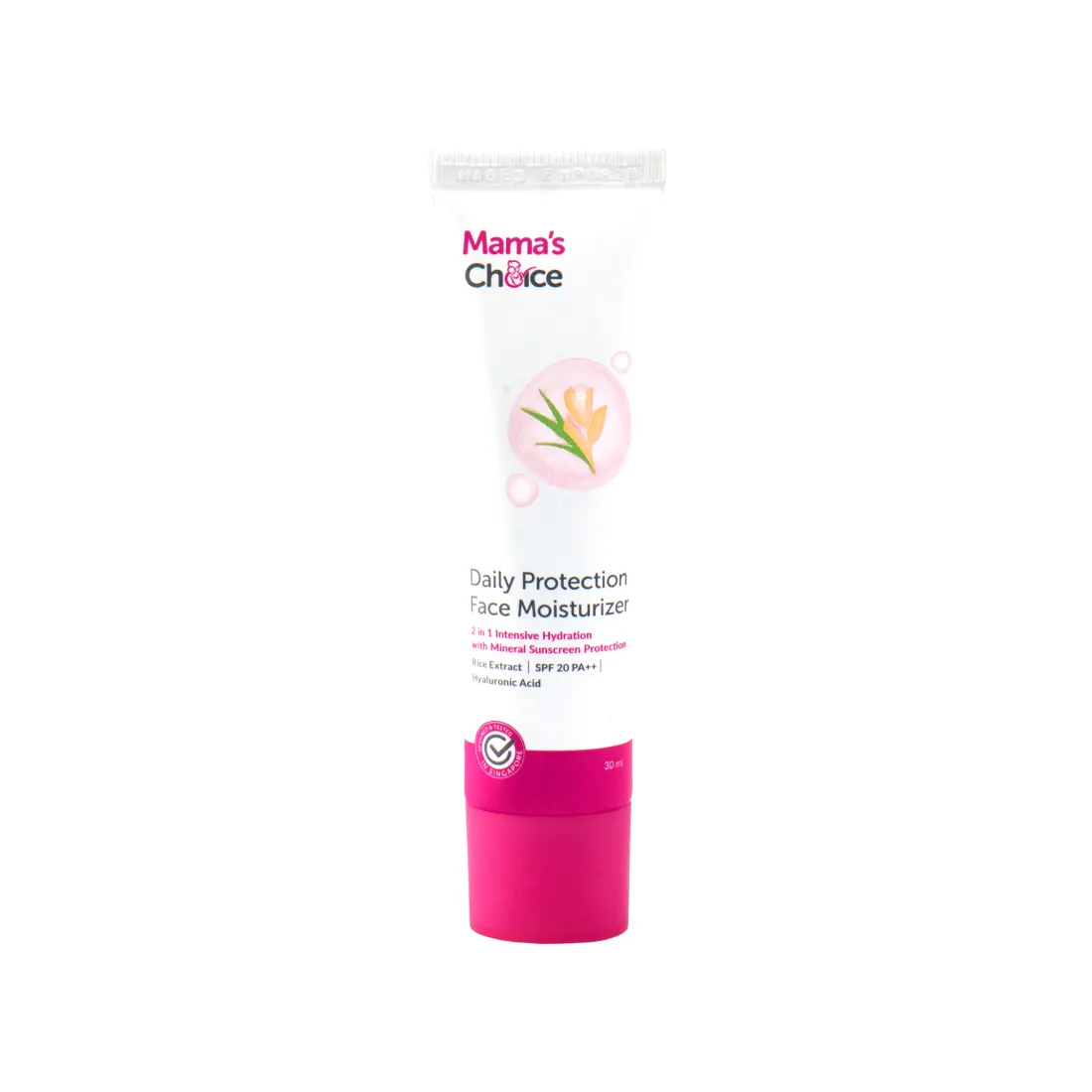
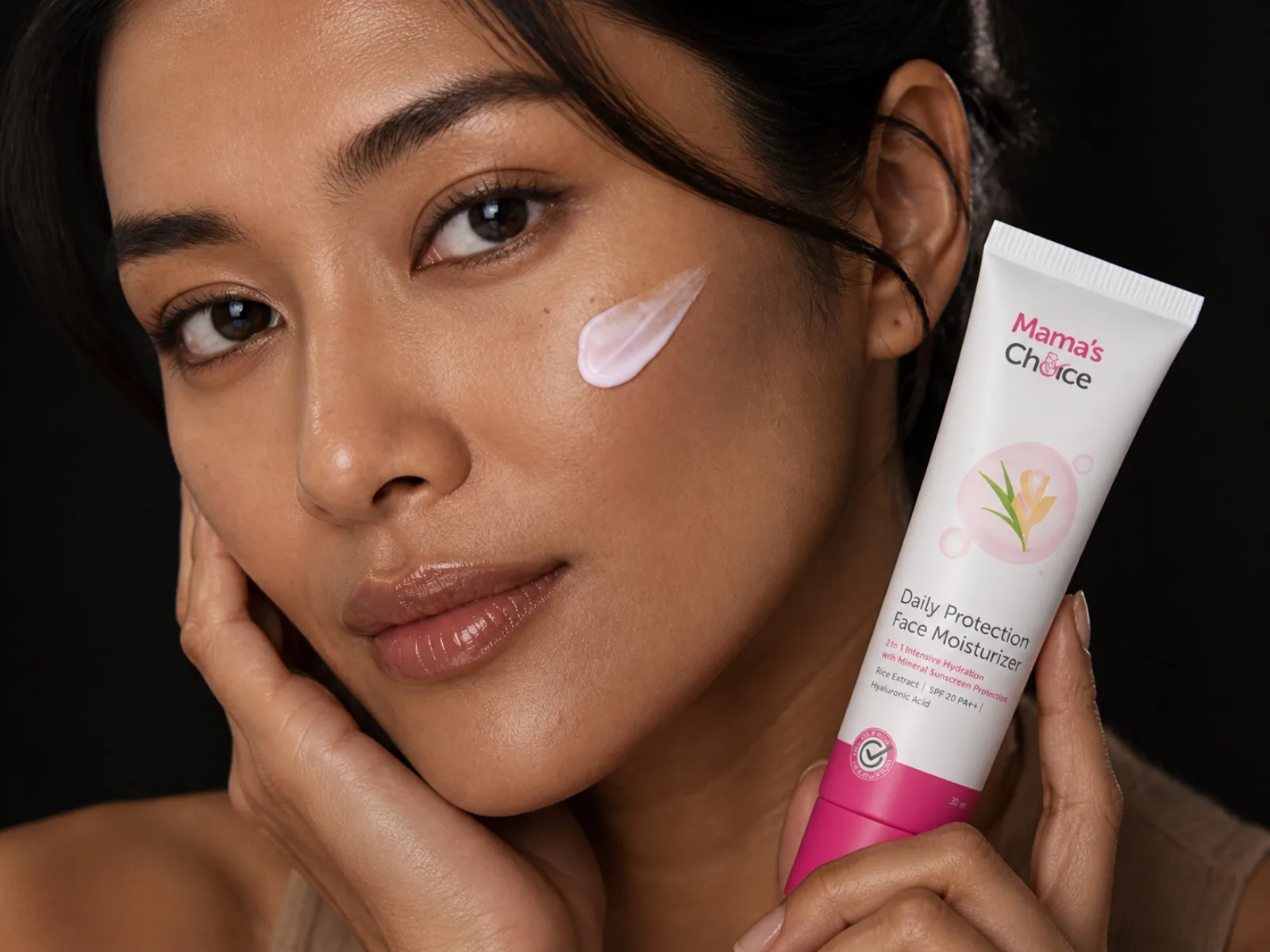
A workable routine here looks like this. Sunscreen as part of getting dressed, a hat and the covered walkway for the walk to the MRT, and reapplication before any outdoor stretch after lunch. For your face on an ordinary weekday, a moisturiser with mineral filters turns two steps into one. Our Daily Protection Face Moisturizer does exactly that, with zinc oxide and titanium dioxide giving SPF 20 PA++ (medium protection) and hyaluronic acid to help skin hold moisture. In a 2022 satisfaction survey of 103 mothers, 95% said their skin felt more moisturised and softer. It suits the office day and the school run; for a long stretch outdoors, add a broad-spectrum SPF 30 or higher, as the AAD recommends, and reapply. Do not stay too long in the sun, even while using a sunscreen product. Our piece on choosing a sunscreen during pregnancy covers the filters to prefer while expecting.
What about babies and children?
Shade and fabric come first. The American Academy of Pediatrics advises keeping babies under 6 months out of direct sunlight and relying on a stroller canopy, a wide hat and light long sleeves, with sunscreen used only on small exposed areas when shade is not available.
From 6 months, use sunscreen generously, and mineral formulations are the usual choice for young skin. Reapply as often as you would on yourself. Our guides to sunscreen for babies and sunburn in babies cover the practical side.
How do you read a sunscreen label here?
Four things to look at.
SPF. Protection against UVB, which causes burning. SPF 30 or above, per the AAD.
Broad spectrum. This is the UVA claim in the FDA's labelling system. UVA drives ageing and pigmentation.
PA rating. A Japanese system for UVA, from PA+ to PA++++, common on the Asian sunscreens widely stocked at Guardian, Watsons and Unity. More plus signs mean more UVA protection.
Water resistance. Either 40 or 80 minutes under FDA rules, and never permanent.
One Singapore-specific check is worth knowing. Cosmetic products sold here, sunscreens included, must be notified to the Health Sciences Authority before sale. Notification is not an approval or a safety check. It does mean a company in Singapore is responsible for the product, which may not be true of one bought from an unverified overseas seller. Our piece on reading an ingredient list covers how to make sense of the rest of the label.
Frequently asked questions
- Does a white cast mean the sunscreen is working better?
- No. The cast is a cosmetic side effect of the pigment in zinc oxide and titanium dioxide, which stay on the skin's surface rather than sinking in. Protection depends on the SPF, on broad-spectrum coverage, and above all on using enough and reapplying it. A clear sunscreen applied properly beats a white one applied thinly.
- Is mineral sunscreen better than chemical sunscreen?
- Both work when used correctly. The American Academy of Dermatology recommends broad-spectrum SPF 30 or higher and often suggests mineral filters for sensitive or reactive skin. Organic filters are easier to wear invisibly. The sunscreen that protects you is the one you will actually put on every morning.
- How do I get rid of the white cast?
- Apply in thin layers and let each one settle, work it in for longer than feels necessary, choose a tinted formula, or look for a micronised zinc formulation. Applying less to avoid the cast is the one approach that does not work, because it cuts the protection with it.
- How often should I reapply in Singapore?
- Every two hours outdoors, and immediately after swimming, towelling or heavy sweating. The FDA regulates water-resistance claims as either 40 or 80 minutes, so even a water-resistant product needs reapplying sooner than most people assume in this humidity.
- Can babies wear sunscreen?
- The American Academy of Pediatrics advises keeping babies under 6 months out of direct sun and using shade and clothing first, with sunscreen on small exposed areas only when shade is unavailable. From 6 months, a mineral sunscreen applied generously is appropriate.
Sources
- American Academy of Dermatology — sunscreen FAQs and how to apply sunscreen
- FDA — Sunscreen: how to read a label, SPF and water resistance claims
- American Academy of Pediatrics, HealthyChildren — sun safety for infants and children
- HealthHub, Health Promotion Board — sun protection and UV in Singapore
- Health Sciences Authority Singapore — cosmetic product notification requirements
Share this article
This article is for information only and is not a substitute for diagnosis or medical advice. Please talk to your doctor about your own situation.