
Baby sunscreen tips for hot and humid Singapore
When babies can wear sunscreen, which filters suit them, how much to use, and why reapplication matters more in Singapore's heat and humidity.
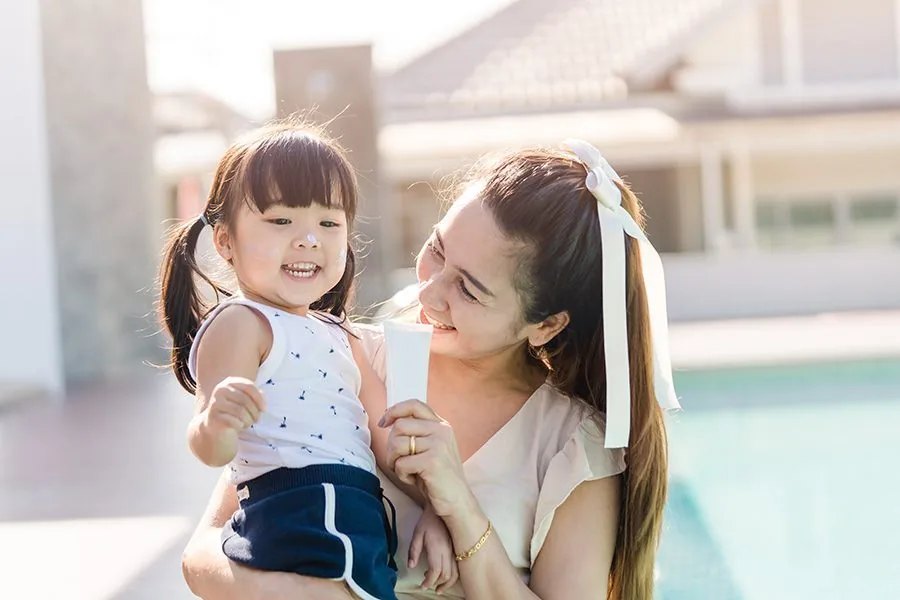
Babies under six months should stay out of direct sun rather than wear sunscreen, using shade, a hat and thin long sleeves instead. From six months, a broad-spectrum SPF 30 or higher on exposed skin, reapplied every two hours and after every soaking, is the standard advice. Singapore's sweat shortens that interval.
Sun protection here is a daily job rather than a holiday one. The equator does not give us an off-season, and the walk from the carpark counts.
Why sunscreen waits until six months
The FDA advises keeping babies under six months out of the sun altogether, pointing out that infant skin is thinner and absorbs more of whatever you put on it, and that a baby has more skin surface relative to body weight than an adult. The American Academy of Pediatrics gives the same age line.
That is a caution about dose rather than a warning that sunscreen is poisonous. The AAP says that if shade and clothing genuinely are not available, a small amount on the face and the backs of the hands is reasonable, and the FDA suggests asking your doctor first.
Under six months, the order runs shade first, then clothing, then timing, then a dab of sunscreen if you are stuck. Over six months, sunscreen joins the list without replacing anything above it.
What to do instead before six months
A stroller canopy, a covered linkway and the shaded half of a playground all do more for a young baby than any bottle. HDB void decks and covered walkways are genuinely useful infrastructure for this, and the sheltered side of a hawker centre works the same way.
Clothing beats lotion on the parts it covers. Thin cotton with long sleeves, or a fabric sold with a UPF rating, stays put while a baby squirms. A wide-brimmed hat shades the ears and the back of the neck in a way a cap never does.
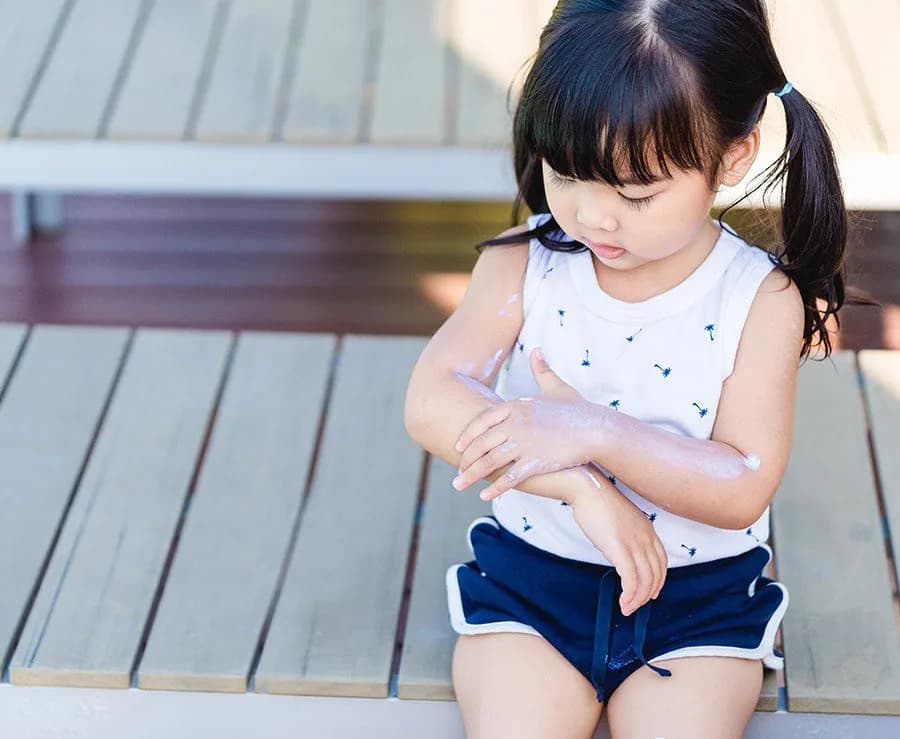
Then there is the clock. The National Environment Agency publishes a UV index through the day, and the high readings sit roughly between 11am and 3pm, year round. Moving a walk to 8.30am changes the exposure more than anything you can buy.
Do not drape a muslin over the stroller hood to make extra shade. It traps heat underneath, and with daytime temperatures around 30 °C and humidity near 80%, a stuffy stroller is its own problem.
Mineral or chemical filters, which suits a baby?
Mineral filters are zinc oxide and titanium dioxide. They sit on the skin surface and scatter or absorb UV there, they work as soon as they are on, and they rarely sting. The AAP suggests them for young children and for sensitive skin.
Chemical filters are absorbed into the upper skin layers and convert UV to heat. They rub in clear and feel lighter, which is why adults prefer them. The FDA has asked manufacturers for more safety data on several of these filters, including oxybenzone, because they are absorbed into the bloodstream at measurable levels. Asking for data is not the same as finding harm, and the FDA still advises using sunscreen.
For a baby or toddler, mineral is the straightforward choice. The trade-off is the white cast, which is why we wrote about why sunscreen leaves a white cast. If you are pregnant and weighing the same question, there is more in our piece on choosing a sunscreen during pregnancy.
How much, and how often in this humidity
Most people use far less than the amount SPF ratings are tested at, so the protection they get is lower than the number on the bottle. Spread it thick enough to see before you rub it in. A visible film that disappears after a few seconds of rubbing is about right.
Cover the places that get missed. Ears, the tops of the feet, the back of the neck, the parting in the hair, and the strip of back that rides out of a T-shirt when a toddler reaches up.
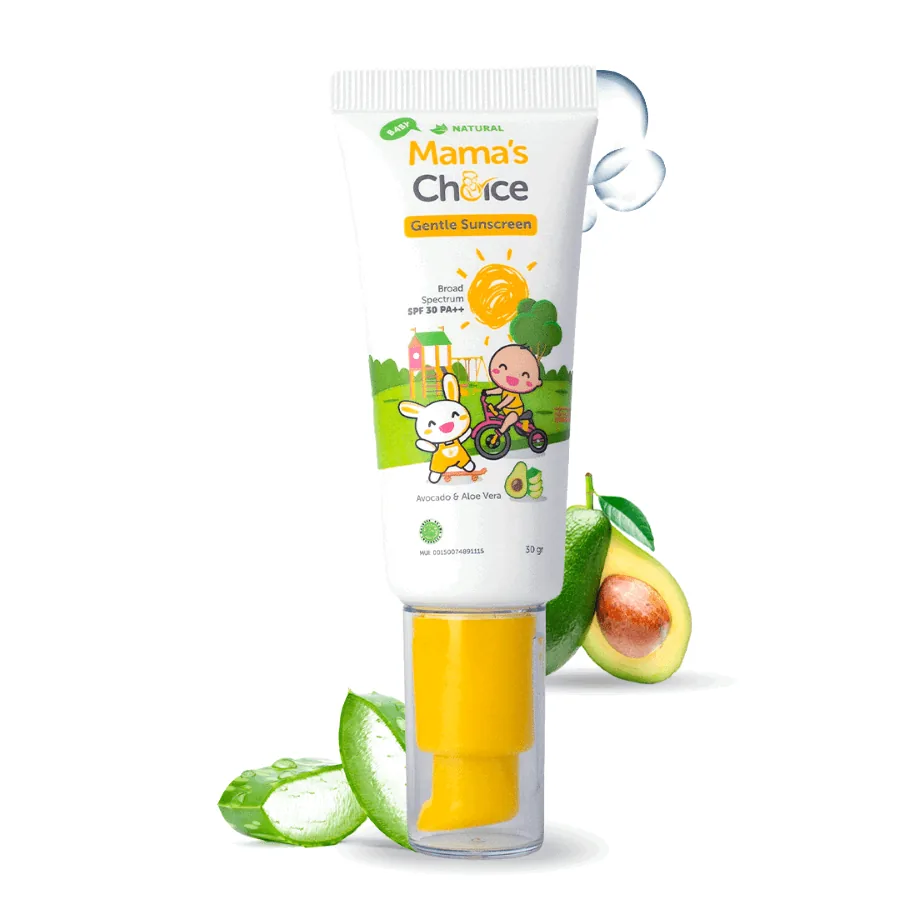
Reapply every two hours, say the NHS and the AAP, and immediately after swimming or towelling off. Singapore adds a third trigger. Sweat lifts sunscreen off skin, and a toddler at a playground at 10am is soaked within twenty minutes, so the two-hour rule is a ceiling rather than a target.
Water-resistant formulas buy time in a pool, and none of them stay on in water indefinitely. The label states how long the resistance was tested for, and the clock restarts every time you dry your child with a towel.
Keeping it away from the eyes
Sunscreen stings eyes, and a stinging toddler will fight the bottle for weeks afterwards. Apply it on your own fingertip rather than straight from the tube, stay a finger's width clear of the lash line, and work outwards from the cheekbones.
If it does get in, wipe with a clean damp cloth and rinse gently with cool water. A sun hat and, for an older child, sunglasses with UV protection take the pressure off the whole area.
Skip aerosol sprays near a baby's face. There is no good way to control where the mist goes or whether it is inhaled, and a stick or a cream is easier to aim.
Reading the label in a Singapore pharmacy
Walk into Guardian, Watsons or Unity and the shelf will be full of SPF 50 and PA++++ claims. Look for broad-spectrum protection, which means UVA as well as UVB, and for SPF 30 or above. The PA rating and the UVA-in-a-circle logo both signal UVA cover.
Regulation works differently here from the United States. The Health Sciences Authority regulates sunscreen as a cosmetic product under the ASEAN Cosmetic Directive, and suppliers notify HSA rather than seek approval. So a Singapore label is a legal declaration by the company, and reading the ingredient list still matters.
Fragrance-free and alcohol-free are worth seeking on a baby product, because both can irritate skin that is already dealing with heat. If sunscreen sits under an occlusive layer on a sweaty back, you can get blocked pores and the prickly heat that follows, which we cover in common baby rashes.
What sunscreen cannot do
It does not license a longer afternoon in the sun. The WHO is direct about this, describing sunscreen as one measure among shade, clothing, hats and timing rather than a substitute for them.
It also does nothing for heat. Singapore's real risk on an open field at midday is overheating and dehydration, and a well-creamed baby is just as vulnerable to those as a bare one.
Nor does it rescue a burn already happening. If your child does get caught, our article on what to do about baby sunburn runs through cooling the skin and the red flags that mean a doctor today, including any sunburn at all in a baby under six months.
Before your next outing, do one thing. Check the NEA UV index for the hour you will be outside, and if it reads high, take the covered route and leave the bottle in the bag for the shaded half of the playground.
Frequently asked questions
- At what age can my baby start wearing sunscreen?
- Six months is the usual line. The American Academy of Pediatrics advises keeping younger babies out of direct sun and using shade and clothing instead, with a small amount of sunscreen on exposed areas such as the face and backs of the hands only when neither is available.
- Is mineral sunscreen better for a baby?
- For young children the AAP suggests looking for zinc oxide or titanium dioxide, which sit on the surface of the skin and are less likely to sting. They leave a visible cast, which is cosmetically annoying and medically irrelevant.
- How often should I reapply in Singapore?
- Every two hours is the general advice from the NHS and the AAP, and sooner after swimming, towelling off or heavy sweating. In practice the sweating is what shortens the interval here, so a mid-morning top-up at the playground is sensible even if nobody got wet.
- Does sunscreen sold in Singapore need approval?
- Sunscreen is regulated here as a cosmetic product by the Health Sciences Authority, under the ASEAN Cosmetic Directive, and suppliers notify HSA before they sell it. There is no pre-market approval step of the kind the US FDA runs for sunscreens.
- What if sunscreen gets in my baby's eye?
- Wipe the area with a clean damp cloth and rinse the eye gently with cool water. Crying helps flush it out, however little it feels like help at the time. If the eye stays red or sore for more than a short while, have it looked at.
Sources
- AAP (HealthyChildren) — Sun Safety and Protection Tips for Babies and Children
- FDA — Should You Put Sunscreen on Infants?
- NHS — Sunscreen and sun safety
- Health Sciences Authority — Regulatory overview of cosmetic products
- National Environment Agency — Ultraviolet Index and Singapore's climate
- WHO — Ultraviolet radiation and health
- HealthHub (Health Promotion Board) — Sun protection and skin care
Share this article
This article is for information only and is not a substitute for diagnosis or medical advice. Please talk to your doctor about your own situation.