Milia on your baby's face
Those white spots on a newborn's nose and cheeks almost always clear on their own. How to tell milia from heat rash and baby acne in this climate.
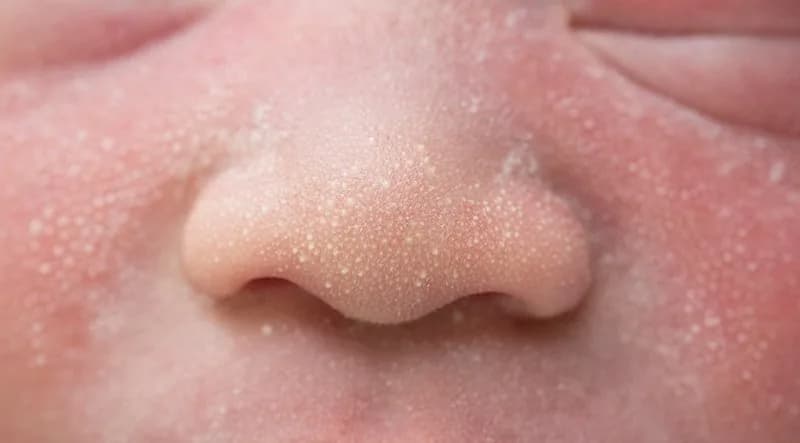
Milia are tiny white cysts of trapped keratin just under the skin, very common on a newborn's nose, cheeks and eyelids. They are harmless and painless, and they clear on their own within weeks. No cream speeds that up, and squeezing makes things worse.
What milia are
Small, firm, pearly white bumps, all about the same size, with no redness around them. They sit most often across the nose and cheeks, sometimes on the chin, forehead and eyelids.
The spots are keratin caught in a developing pore or sweat duct. The American Academy of Dermatology describes them as harmless, and in newborns they belong to the ordinary list of things a new face does in its first month.
They are not an allergy. Nor a sign of anything missing. They are not a reaction to your diet or to your milk, and they are not dirt.
Is it milia, or something else?
Newborn faces produce a surprising number of rashes in the first six weeks, and most parents see several.
| What you see | Likely cause | What to do |
|---|---|---|
| Firm white pinpoint bumps, no redness | Milia | Nothing, they clear in weeks |
| Red bumps and pustules at 2 to 4 weeks | Neonatal acne | Nothing, keep the skin clean and dry |
| Tiny red prickly spots in skin folds and under clothing | Heat rash | Cool the baby down, fewer layers |
| Blotchy red patches with small yellow or white bumps in the middle, in the first days | Erythema toxicum | Nothing, settles within a week or two |
| White spots on the gums or roof of the mouth | Epstein pearls | Nothing, harmless |
| Yellow greasy scale on the scalp and brows | Cradle cap | See our guide below |
Heat rash is the one most often confused with milia in Singapore, and the distinction matters because heat rash has a cause you can fix. Our piece on common baby rashes covers the rest.
What to do about milia
Nothing. That is the whole treatment.
Wash your baby's face with plain lukewarm water once a day, pat it dry with a soft towel rather than rubbing, and leave the spots alone. HealthHub, the Ministry of Health's public portal, takes the same line on newborn skin generally: less is better.
Our guide to bathing a newborn covers the practical part, including how little soap a baby actually needs.
What not to do
- Do not squeeze, pick or try to extract them
- Do not use exfoliating washes, scrubs or anything containing acids
- Do not apply adult skincare, including anything with retinol or fragrance
- Do not apply breast milk, lemon or coconut oil as a remedy, since none of it does anything for keratin under the skin
- Do not use baby sunscreen on a newborn face, which the American Academy of Pediatrics advises against under six months
Secondary milia, the kind that appears after the skin has been damaged, is the reason that list matters. Sunburn, abrasion and reactions to unsuitable creams can all produce milk spots as the skin heals, so aggressive treatment of the original spots can give you more of them.
Washing and moisturising a baby face in this climate
Singapore humidity keeps skin damp rather than dry, so most newborns here need less moisturiser than the aisle suggests. Then air-conditioning reverses it, and a baby sleeping under a cold vent can wake with dry, flaky cheeks.
Judge by the skin in front of you, not by the spots. Dry patches, flaking or rough cheeks earn a thin layer of something plain. Spots alone do not.
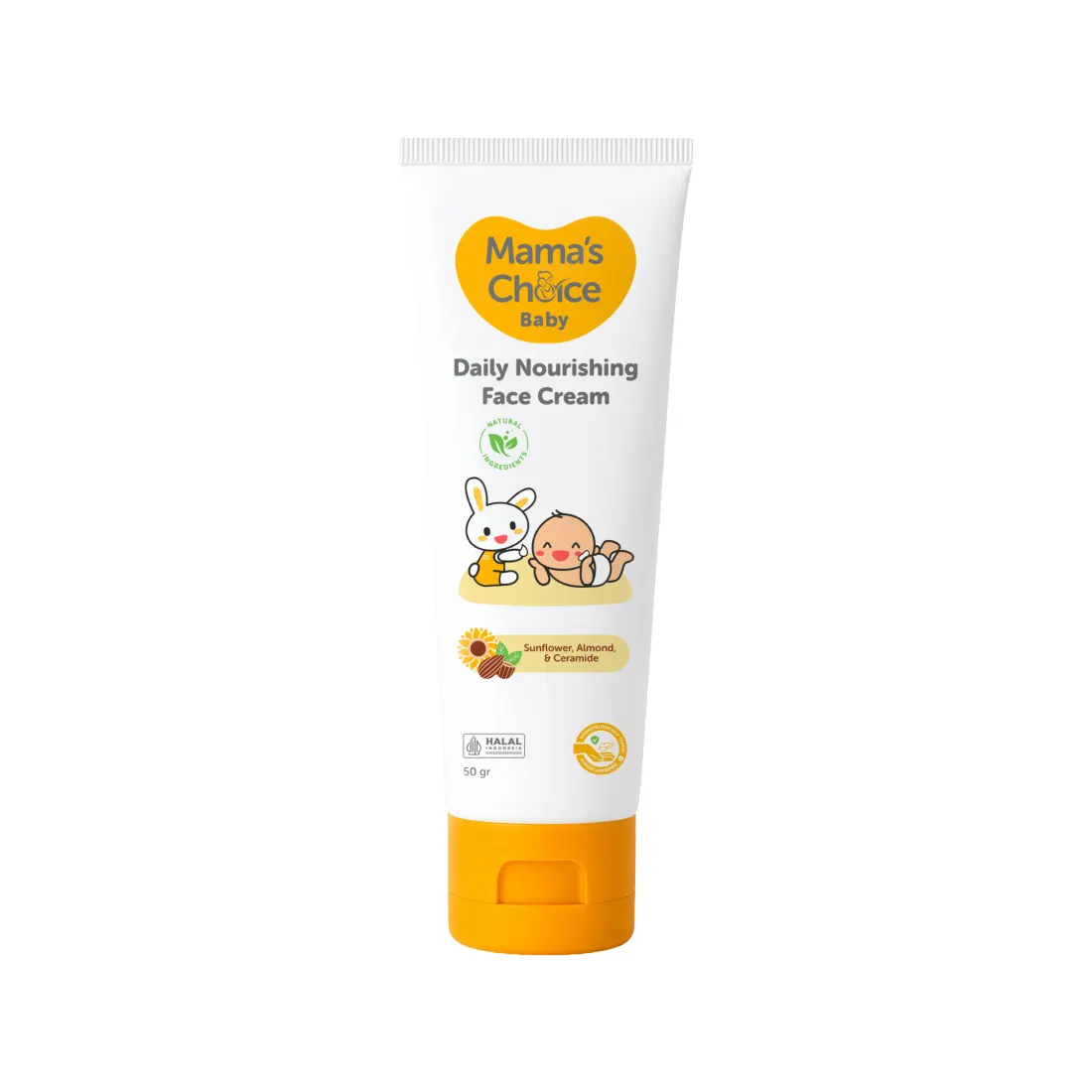
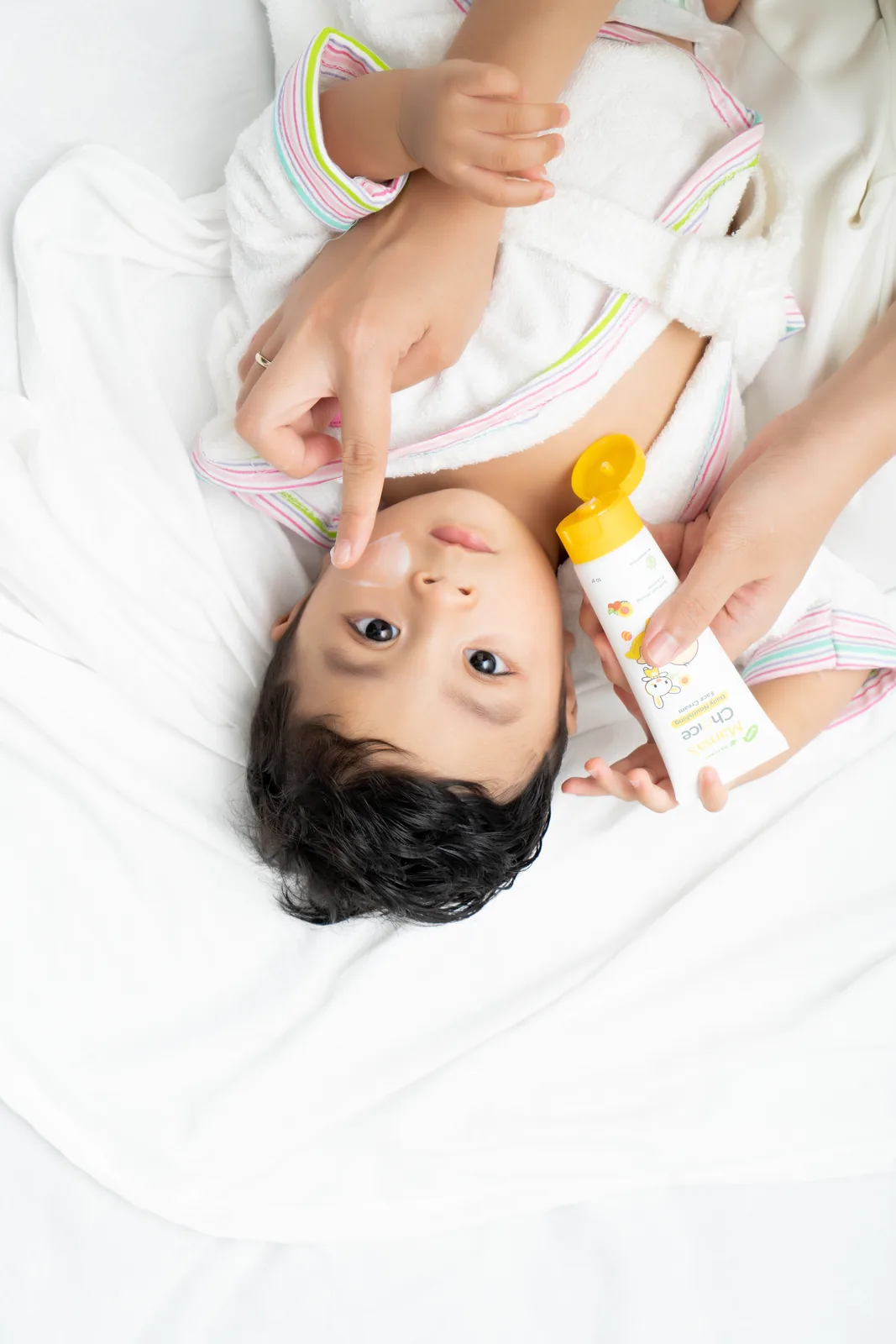
Mama's Choice Baby Daily Nourishing Face Cream is a face moisturiser for babies from birth, with ceramide, sunflower and almond oils and aloe vera, made for dry patches like these. Its label lists sweet almond oil and a light fragrance (aroma), which is worth knowing if your baby reacts easily. It moisturises dry skin and does nothing for milia, and nothing on the shelf clears milk spots faster than time does.
If your baby's skin is peeling in the first fortnight, that is usually normal shedding, and our article on baby skin peeling explains when it is not. For a wider look at moisturisers sold here, see our guide to the best baby moisturiser in Singapore.
Sun, and why it is a bigger deal here
Singapore sits almost on the equator, so ultraviolet levels stay high throughout the year and the sun is close to overhead in the middle of the day. Cloud cover makes less difference than people expect.
The American Academy of Pediatrics advises keeping babies under six months out of direct sunlight and relying on shade, a hat and light long sleeves rather than sunscreen. A stroller canopy, the covered walkway and an indoor route at midday do more than any product.
Our article on baby sunscreen covers what changes once your baby is older.
When to see a doctor
- The spots are still there after several months
- They are spreading, growing, or becoming red and inflamed
- There is pus, crusting, or warmth around them
- Your baby has a fever alongside any rash
- Blisters, or skin that looks peeled or raw
- White patches inside the mouth that do not wipe away, which may be oral thrush
- You are worried, which is reason enough for a five-minute look
Your polyclinic handles the great majority of this, and a paediatric dermatology referral through KK Women's and Children's Hospital exists for the rare case that needs it. Bring a photograph taken in daylight, since newborn rashes have an inconvenient habit of fading in the waiting room.
Frequently asked questions
- What are the white spots on my newborn's face?
- Most often milia, also called milk spots. They are tiny keratin-filled cysts just under the surface of the skin, common on the nose, cheeks, chin and eyelids. The American Academy of Dermatology describes them as harmless, and in newborns they clear without treatment.
- How long do milia last?
- Usually a few weeks, sometimes a couple of months. They need no cream, no cleanser and no intervention. Spots that are still there at several months, or that are spreading and inflamed, are worth showing to a doctor because they may be something else.
- Is it milia or baby acne?
- Milia are firm, pearly white and the same size as each other, with no redness around them. Neonatal acne appears a little later, usually at two to four weeks, as red bumps and pustules on the cheeks and forehead. Both resolve on their own.
- Can I use sunscreen on a newborn to prevent it?
- No. The American Academy of Pediatrics advises keeping babies under six months out of direct sunlight and using shade and clothing rather than sunscreen. In Singapore that matters more than in most places, since the sun is close to overhead all year.
- Should I squeeze them or exfoliate?
- Never. Squeezing a newborn's skin risks infection and scarring, and scrubs and exfoliating washes damage a barrier that is still developing. Milia sit under intact skin and there is nothing to extract.
Sources
- American Academy of Dermatology — milia and newborn skin conditions
- American Academy of Pediatrics (HealthyChildren) — newborn skin care and sun protection for infants
- NHS — milia and common newborn skin conditions
- HealthHub (Ministry of Health Singapore) — caring for your baby's skin and heat rash
- KK Women's and Children's Hospital — paediatric dermatology services
Share this article
This article is for information only and is not a substitute for diagnosis or medical advice. Please talk to your doctor about your own situation.