Baby skin peeling
Why a newborn's skin flakes in the first weeks, how to moisturise it properly in air-conditioning, and the peeling that means something else.
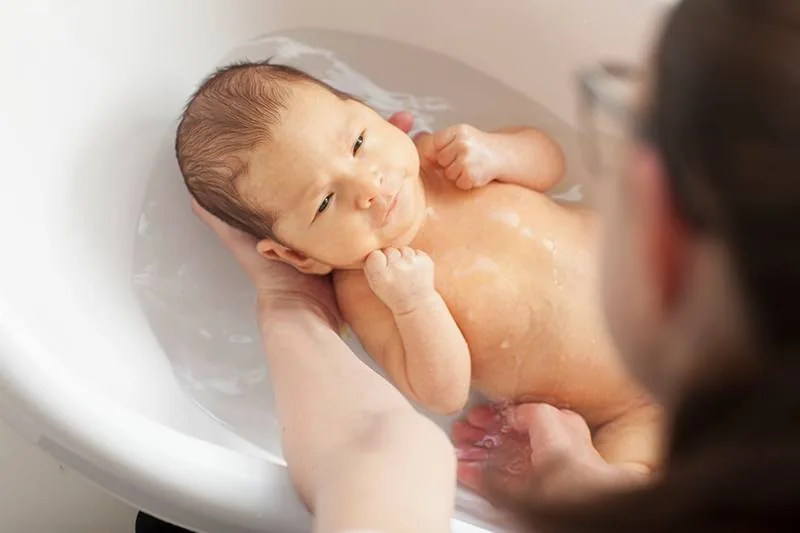
A newborn's skin peels because the outer layer she grew in fluid is shedding in air. It is normal, it usually finishes within the first week or two, and it needs a gentle fragrance-free moisturiser rather than treatment. Flaking that cracks, weeps or spreads is a different matter and worth a clinic visit.
What makes this harder in Singapore is the air-conditioning, which dries a bedroom out far more thoroughly than the weather outside ever would.
Why it happens at all
She arrived coated in vernix, the waxy film that protected her skin while she floated in amniotic fluid. Once that comes away, whether on day one or over the first week, the outermost layer of skin underneath has no reason to stay and sheds.
Babies born a little past their due date tend to peel more, because the vernix had already thinned before birth. Babies born early often peel less. Both are unremarkable.
The flaking usually shows up around the ankles, wrists, hands and feet first, where the skin is thinnest and moves most.
What to do, which is not much
- Keep baths short and warm rather than hot. Five minutes is enough for a newborn, and our full method is in how to bathe a newborn.
- Use plain water, or a mild wash a couple of times a week. Daily soap is a common cause of dry baby skin.
- Pat dry, do not rub. Pay attention to the folds.
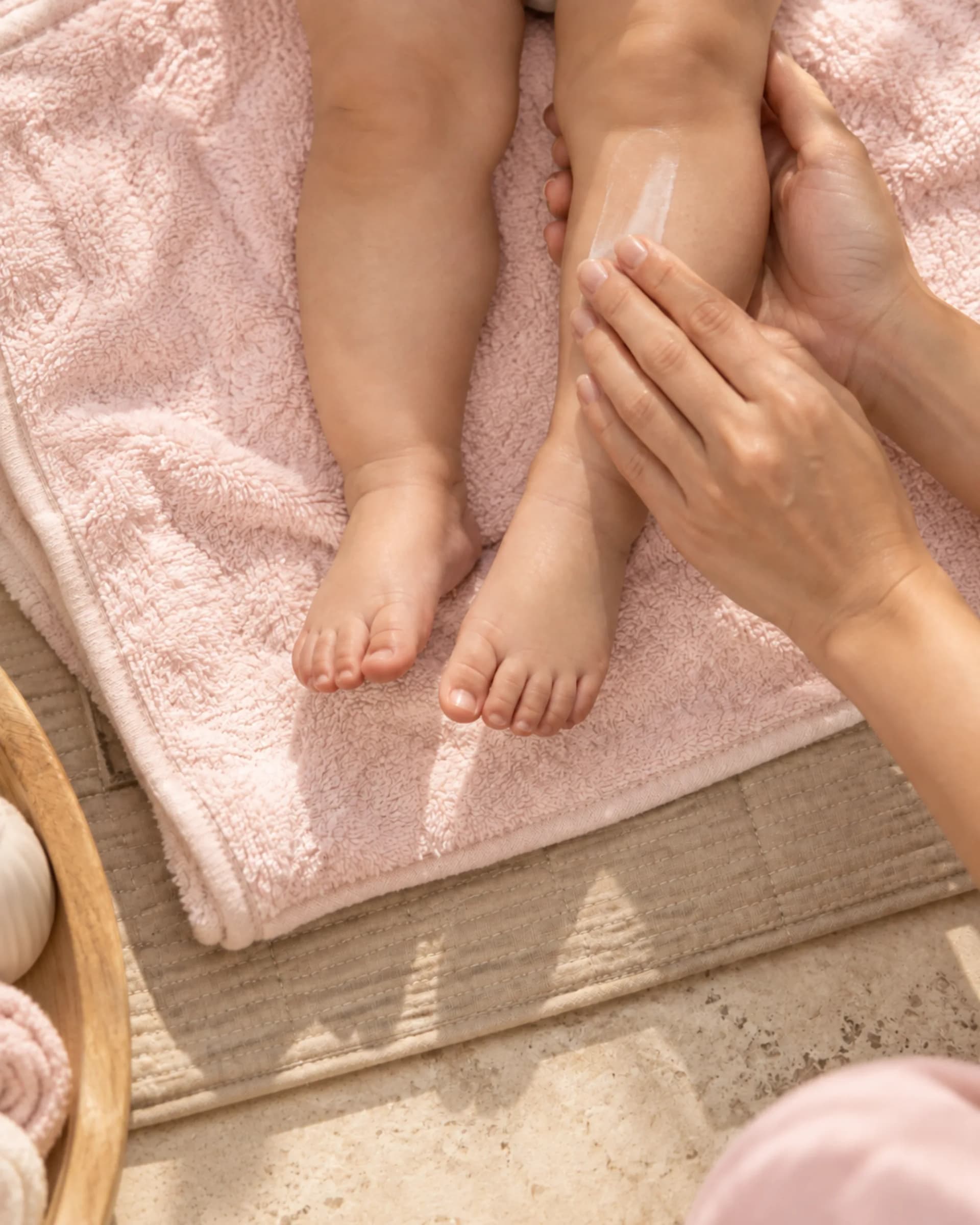
- Moisturise while she is still slightly damp. The AAD puts the window at about three minutes after the bath.
- Leave the flakes alone. They come off in the wash.
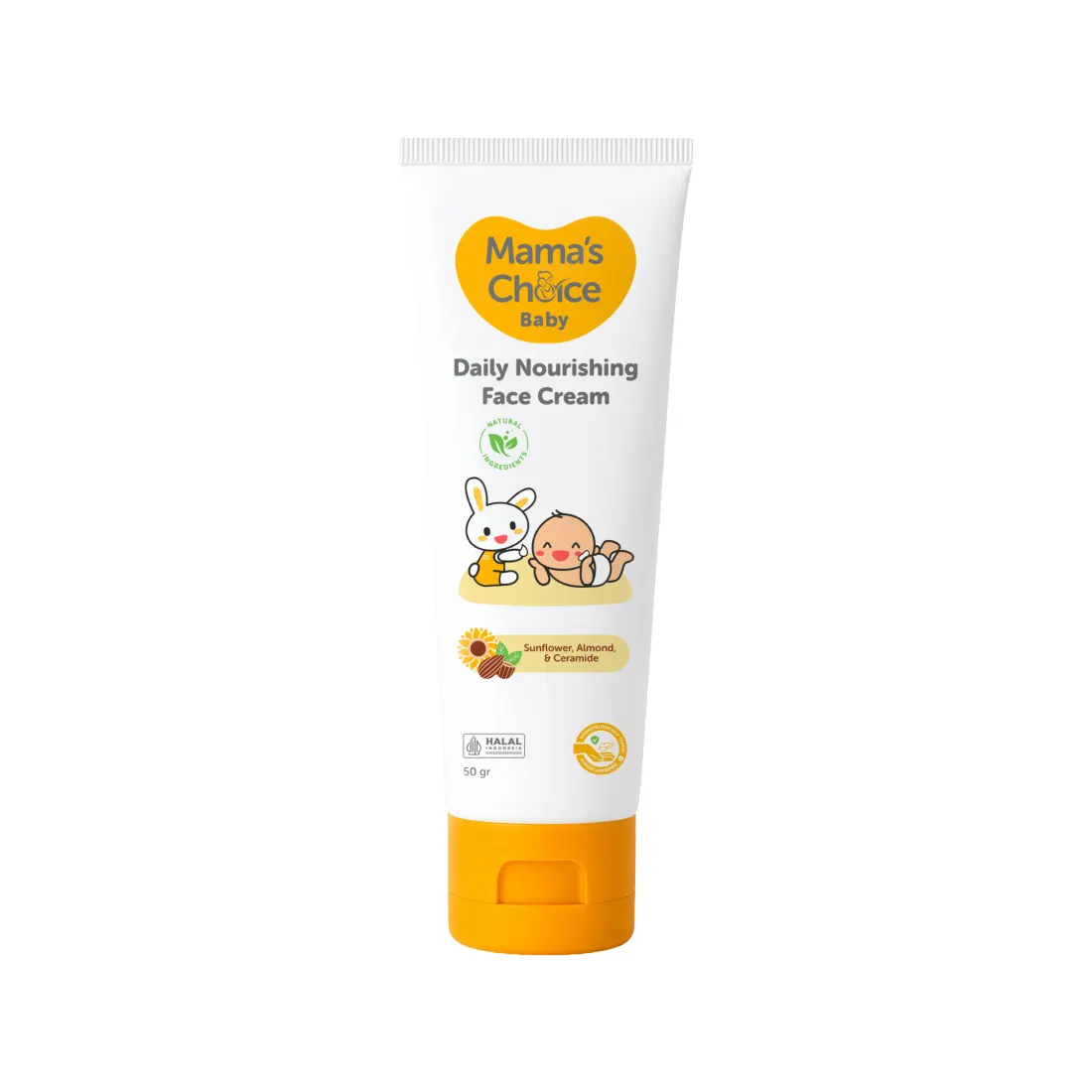
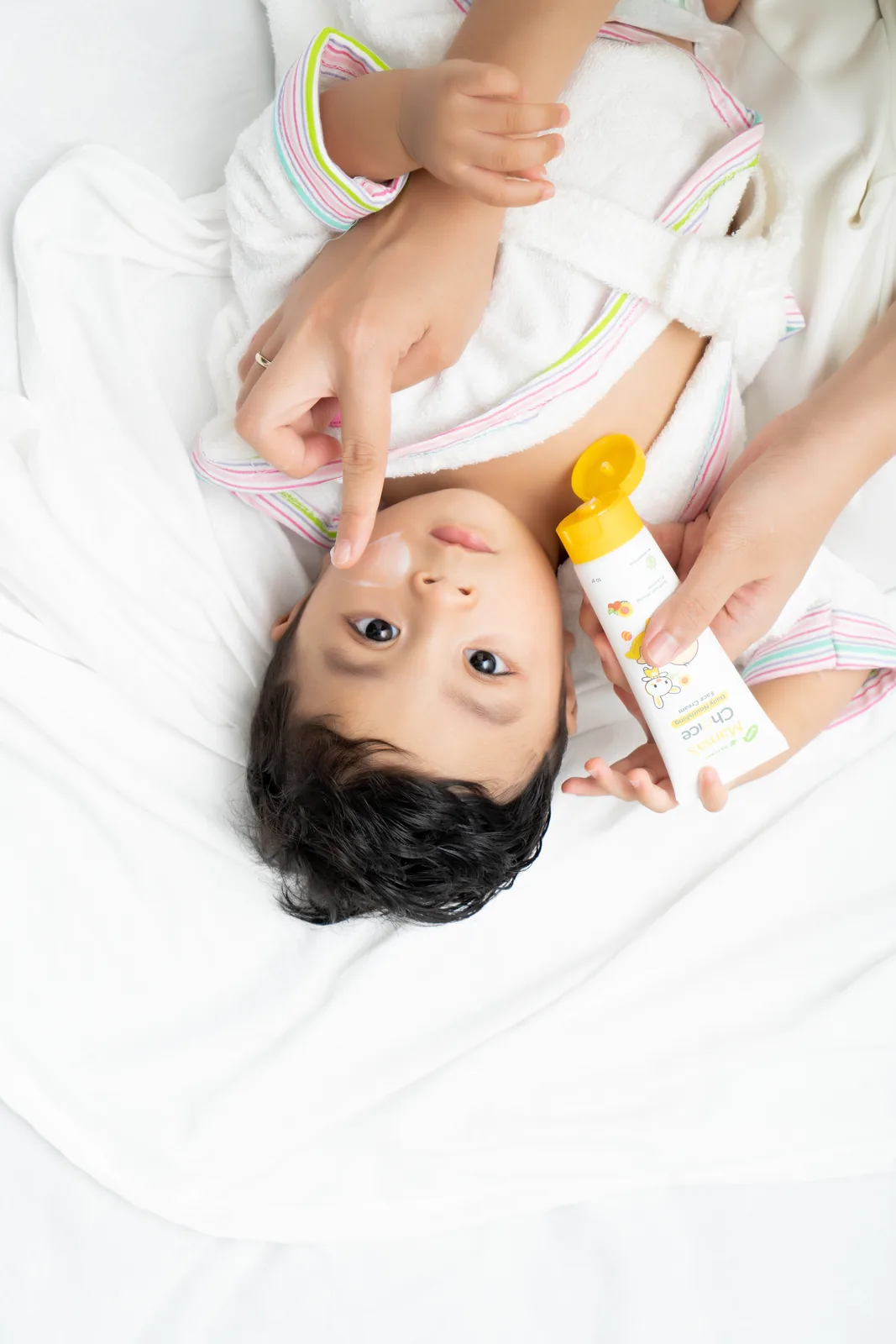
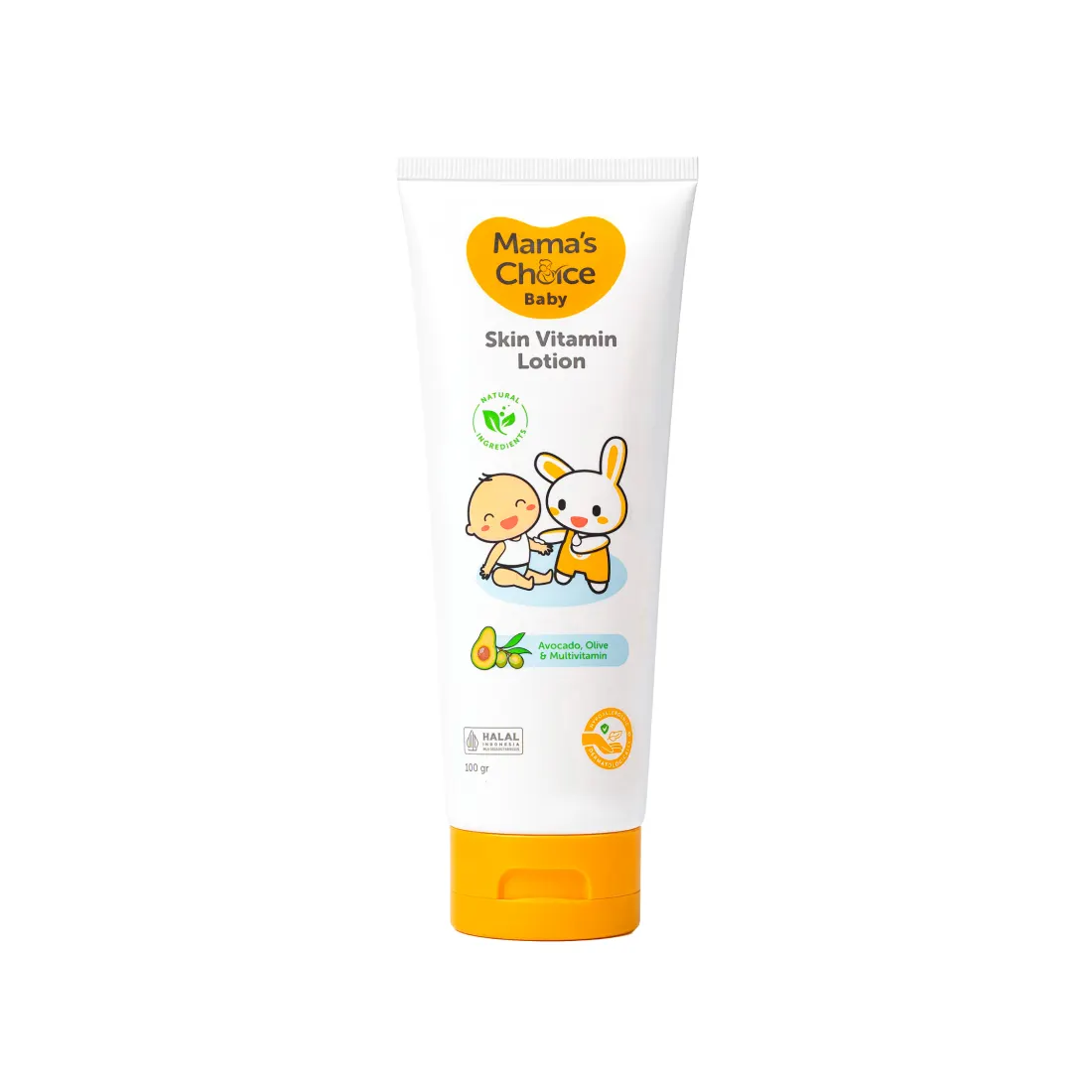
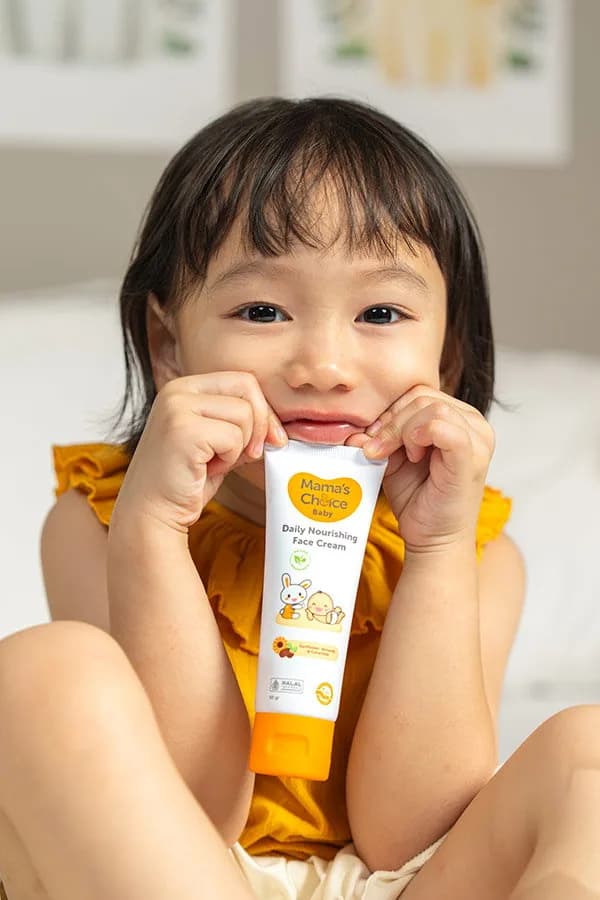
A plain, unscented emollient is what you want, applied twice a day while the peeling lasts. If you would like one of ours, read the label alongside this page. Our Baby Skin Vitamin Lotion is a body moisturiser with shea butter, avocado and olive oils, and it also contains a little sweet orange peel oil. The Baby Daily Nourishing Face Cream is the thicker one for cheeks, which take the brunt of drool and air-conditioning together, with ceramide, sunflower and almond oils and a natural fragrance. If her skin is reacting to everything, start with an unscented pharmacy emollient and ask your doctor.
The air-conditioning problem
An air-conditioner cools by removing moisture. Run one in a closed bedroom for ten hours and the air in that room ends up noticeably drier than the air outside, which is a strange thing to achieve on the equator.
Dry skin on a Singapore baby is therefore often an indoor problem. A few adjustments:
- Set the unit a degree or two warmer than feels ideal for you
- Point the vent away from the cot
- Run a humidifier, or leave a shallow bowl of water in the room
- Moisturise as part of the bedtime routine rather than in the morning
- Dress her in cotton rather than anything synthetic that traps sweat
Condo swimming pools are the other culprit once she is older. Chlorine is drying, so rinse her off properly afterwards and moisturise straight away.
Peeling, or something else
| What you see | What it usually is | What to do |
|---|---|---|
| Fine flakes on ankles, hands, trunk in the first fortnight | Newborn shedding | Moisturise, wait |
| Greasy yellow scales on the scalp or eyebrows | Cradle cap | See cradle cap |
| Rough, red, itchy patches on cheeks, elbows, knees | Eczema | Emollient often, see a doctor if it weeps |
| Tiny white bumps on the nose and cheeks | Milia | Nothing |
| Prickly red spots in the neck and diaper folds | Heat rash | Cool down, dry the folds |
| Peeling palms, soles or shedding nails weeks after a fever | Aftermath of hand, foot and mouth disease | Mention it at the next visit |
That last row catches a lot of Singapore parents by surprise. Hand, foot and mouth disease circulates steadily in our preschools and childcare centres, and skin peeling and nail shedding are a recognised after-effect that can follow weeks after the illness itself has gone. It is harmless. It just looks alarming on a toddler who seemed better a month ago.
If you are not sure which row you are in, common baby rashes has photographs and distinguishing features.
When peeling is eczema starting
Eczema often begins as dryness that will not resolve, then becomes rough, red and itchy. The cheeks and the outer arms are the usual first sites in a baby.
The NHS approach is emollient applied generously and often, plus a short course of a mild steroid cream for flares, prescribed rather than guessed at. A baby who scratches, sleeps badly and has weeping patches needs to be seen rather than managed from a shelf.
KKH runs a paediatric dermatology service, and your polyclinic can refer. In the meantime, keep her nails short, keep the room cooler, and do not let anyone talk you into stopping the moisturiser because it "looks oily".
What to keep off her skin
Coconut oil, olive oil and the various traditional oils all get recommended for newborn flaking, and the evidence behind them is thin. Olive oil in particular may make a barrier worse rather than better, which we cover in olive oil on baby skin.
Also worth skipping: anything scented, anything with essential oils, antibacterial washes, talcum powder, and adult body lotion. Our round-up of baby moisturisers available in Singapore goes through what to look for on a label.
When to get it seen
Book an appointment for cracking deep enough to bleed, patches that weep or crust yellow, peeling that covers large areas of her body, blistering, any fever alongside it, or a baby who seems unwell rather than simply flaky.
Polyclinics see this constantly and will not think you are wasting their time. Bring a photograph taken in daylight, since skin changes look different under a clinic's fluorescent lighting, and note when it started and what you have put on it. That history is usually what tells the doctor more than the examination does.
Frequently asked questions
- Is it normal for a newborn's skin to peel?
- Yes, and it is expected. She spent nine months in fluid under a waxy coating, and the outer layer sheds once she meets air. It usually settles within the first week or two and needs nothing more than a gentle moisturiser.
- Should I peel the loose flakes off?
- No. Pulling at attached skin tears the layer beneath and opens the door to infection, which matters more in a humid climate. Moisturise and let it come away on its own.
- When should I moisturise?
- Straight after a bath, while the skin is still slightly damp. The AAD advises applying moisturiser within about three minutes of patting dry, which traps the water rather than letting the air pull it back out.
- Why does my baby's skin get worse in the bedroom?
- Air-conditioning strips humidity out of the room all night. Setting the unit higher, adding a bowl of water or running a humidifier, and moisturising before bed all help. Dry skin in Singapore is usually an indoor problem rather than an outdoor one.
- My toddler's palms started peeling weeks after a fever. Why?
- Peeling palms, soles and shedding nails some weeks after hand, foot and mouth disease is a recognised and harmless aftermath. It is worth mentioning at the next clinic visit, and it is not a new infection.
Sources
Share this article
This article is for information only and is not a substitute for diagnosis or medical advice. Please talk to your doctor about your own situation.