How to get rid of cradle cap
Cradle cap is harmless and clears on its own. How to loosen the scales safely, what to avoid, and how Singapore's heat and confinement caps make it worse.
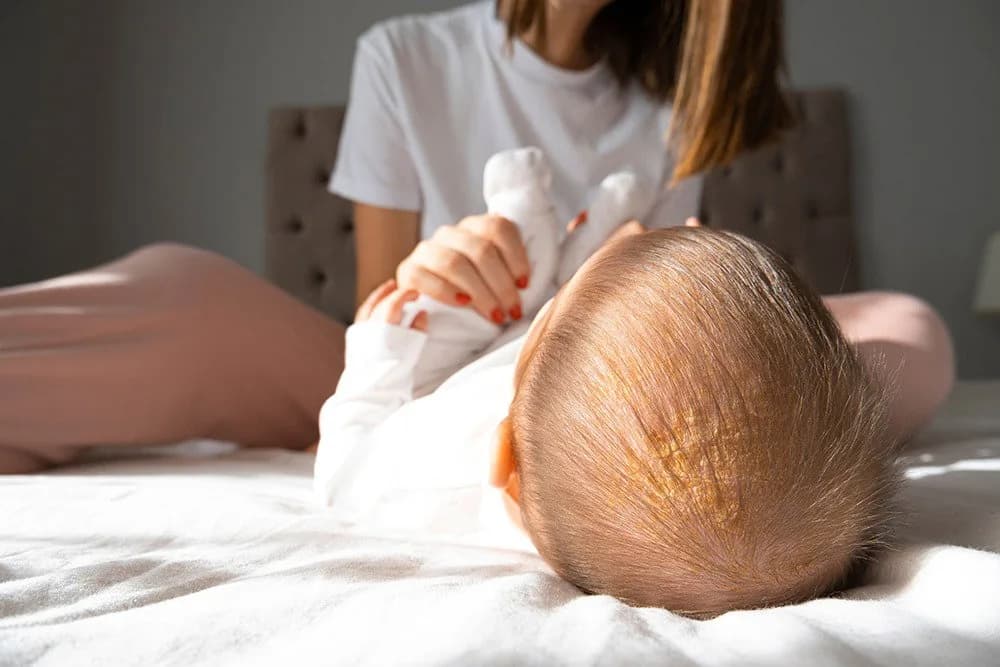
Cradle cap is a harmless build-up of greasy yellow scale on a baby's scalp, and the NHS says it usually clears on its own by 6 to 12 months. Softening it with an emollient or baby oil before a bath and lifting what comes away with a soft brush is the whole of the treatment. Picking at it is the one thing to avoid.
What is cradle cap?
Thick yellowish or white patches, sometimes greasy and sometimes dry and flaky, usually on the crown and sometimes spreading to the eyebrows, behind the ears or into the neck creases.
It is a form of seborrhoeic dermatitis. Oil glands in a newborn's skin are thought to still be running on hormones that crossed from you before birth, and the overproduction traps old skin cells instead of letting them shed. A yeast that lives normally on skin appears to play a part.
What it is not: dirty, contagious, an allergy, a sign you are doing something wrong, or a reason for your baby to be uncomfortable. Babies with cradle cap are usually not bothered by it.
Does it need treating at all?
Strictly, no. The NHS and the American Academy of Pediatrics both describe it as self-limiting and advise simple measures rather than medication.
Most parents treat it anyway, because the crust looks worse than it is and because grandparents ask. Gentle loosening is fine. The reason for doing it carefully is that the skin beneath a scale is thin and already slightly inflamed.
How do you loosen the scales safely?
A sequence that works, repeated every couple of days:
- Massage a little emollient or plain baby oil into the scaly patches and leave it on for 15 minutes or so, or overnight for thick crust
- Bath as usual, so the warm water softens what the oil loosened
- Wash with a mild baby shampoo and rinse thoroughly
- Brush along the scalp with a soft baby brush, in short strokes, in the direction the hair lies
- Lift only what lets go on its own, then stop
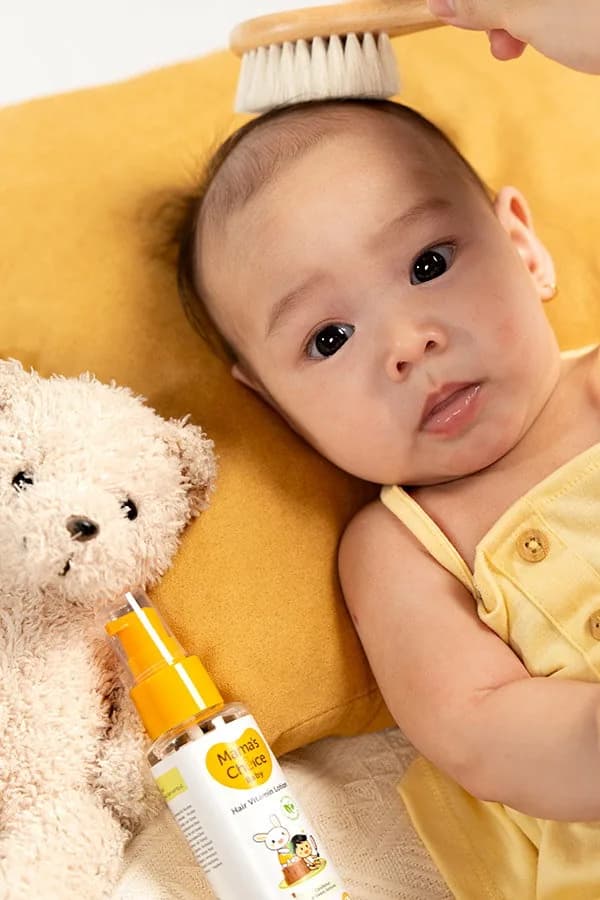
Rinsing is the step that gets rushed. Oil left in the hair collects more scale, so the shampoo has to come out properly before you dry her.
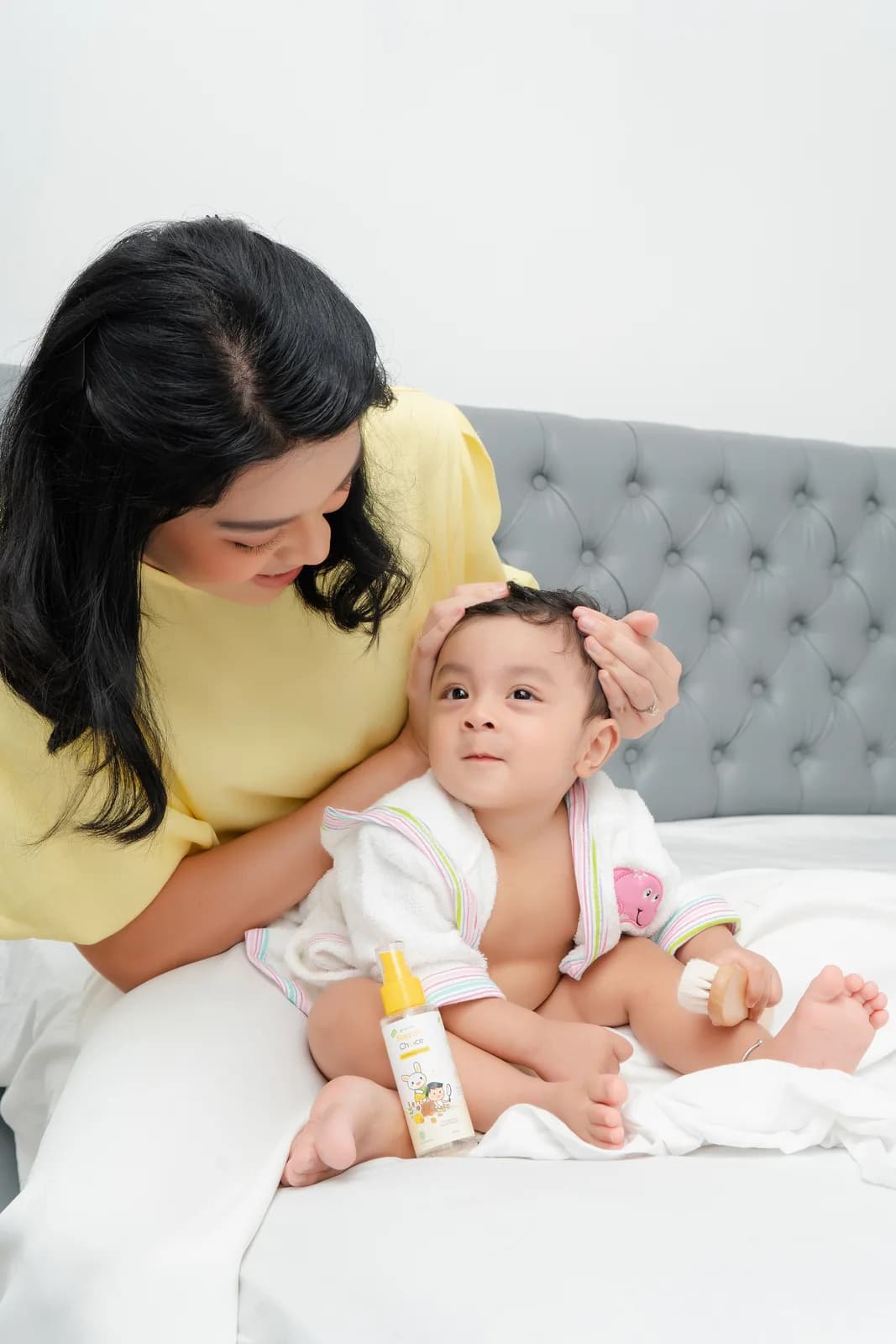
Whatever you use for the first step, the brush and the bath do the actual lifting. For everyday hair care once the scale has gone, Mama's Choice Baby Hair Vitamin Lotion is the leave-in lotion we make, with sweet almond oil, aloe vera and chamomile, to keep a baby's hair soft and easy to comb. It is not a cradle cap treatment, and it contains a light fragrance, so leave it off any skin that is red or broken.
Also read: helping baby hair grow
What should you not do?
- Pick, scrape or comb hard. Broken skin is how a harmless patch becomes an infected one
- Use an adult anti-dandruff shampoo. Too strong for an infant scalp, and near the eyes, unless a doctor suggests a specific one
- Apply a steroid cream you have at home. Not without a doctor saying so
- Leave heavy oil on for days. It builds up rather than clears
- Scrub with a flannel. A soft brush is gentler and more effective
Does Singapore's heat make it worse?
It makes it look worse, certainly. Scalps sweat heavily in this climate, sweat mixes with the sebum that is already excessive, and the crust gets softer, smellier and more obvious by the end of a warm afternoon.
Two local habits add to it. A cotton cap kept on indoors, often part of confinement practice, traps heat against exactly the area that needs to breathe. And a reluctance to wash a newborn's head often, also traditional in some families, leaves scale to accumulate.
Neither needs a confrontation. Caps belong outdoors for sun, not indoors under air-conditioning. Daily hair washing with a mild baby shampoo is fine.
Also read: how to bathe a newborn
Is it cradle cap or eczema?
The distinction matters, because eczema needs active treatment and cradle cap does not.
| Cradle cap | Infant eczema | |
|---|---|---|
| Where | Scalp, eyebrows, behind the ears | Cheeks, then elbow and knee creases |
| Look | Greasy yellow scale on a calm base | Red, dry, sometimes weeping |
| Itch | Rarely | Usually, and the baby scratches |
| Course | Clears within months | Comes and goes over years |
| Needs | Oil, bath, soft brush | Emollients, and often a prescribed cream |
The American Academy of Dermatology's guidance on bathing children with eczema is worth reading if the picture looks more like the right-hand column: short lukewarm baths, a soap substitute, and moisturiser within minutes of patting dry.
When should you see a doctor?
Book a polyclinic or GP appointment if the scalp is bleeding, weeping, crusted with yellow, warm to the touch or has a smell, since those point to infection. Go sooner if your baby has a fever with it.
Also go if the patches spread widely across the face, trunk and diaper area, if she seems genuinely itchy and unsettled, or if careful care has made no difference over several weeks. Your doctor can refer you to the National Skin Centre or to dermatology at KK Women's and Children's Hospital.
An unsettled baby is the signal worth trusting. Cradle cap on its own does not make a baby miserable, so a miserable baby has something else going on.
Frequently asked questions
- Will cradle cap go away on its own?
- Almost always. The NHS describes it as harmless and says it usually clears without treatment, often by 6 to 12 months of age. Nothing you do or fail to do caused it.
- Can I pick the flakes off?
- No. Picking or scraping breaks the skin underneath and opens the door to infection. Loosen the scale with an emollient or baby oil, soften it in the bath, and lift only what comes away by itself with a soft brush.
- Is cradle cap itchy?
- Cradle cap itself does not usually itch. A baby who is scratching, with red weepy patches on cheeks or in elbow and knee creases, is more likely to have eczema, and that is worth a doctor's opinion.
- How often should I wash my baby's hair?
- Daily or near-daily is reasonable in this climate, with a mild baby shampoo. Scalps sweat heavily here, and sweat plus trapped heat under a cap feeds the problem.
- When should I take my baby to a doctor?
- If the scalp is bleeding, weeping, crusted yellow or warm, if it spreads over the face and body, if your baby seems itchy or unsettled, or if it has not improved after several weeks of gentle care.
Sources
Share this article
This article is for information only and is not a substitute for diagnosis or medical advice. Please talk to your doctor about your own situation.