Can you make baby hair grow faster?
Nothing reliably speeds up a baby's hair, and newborn shedding is normal. What genetics, cradle cap and Singapore's humidity really do to a scalp.
Some babies arrive with a full head of hair. Some arrive bald and stay bald through the whole first year, and the photos are just as good.
Nothing has been shown to make a healthy baby's hair grow faster. Follicle count and timing are set by genetics before birth, and the hair a newborn sheds in the first months is a normal cycle rather than a problem. Scalp care, cradle cap treatment and avoiding pulling are the parts you can actually influence.
Can you speed a baby's hair up at all?
Every follicle your baby will ever have was formed before she was born. No cream, oil, food or supplement adds more, and none of them shortens the growth cycle a follicle runs on.
What varies is when those follicles decide to produce visible hair, and that is largely inherited. A cousin with a thick fringe at four months and your own baby still bald at ten months can both be entirely ordinary. Family patterns show up here more than anything you buy.
So the useful question changes. Instead of growing hair faster, you are keeping the scalp healthy enough that the hair arriving is not damaged, scratched off or held back by scale. That part is genuinely within your control.
Why is my newborn losing her hair?
Hair grows in cycles, with a growing phase and a resting phase. In a newborn, a large number of follicles slip into the resting phase at around the same time, which dermatologists call telogen, and the hair they were holding falls out together.
The result looks alarming on a dark pillowcase. It is normal. The American Academy of Pediatrics describes this shedding across the first months of life, often most obvious at the back of the head, and regrowth generally fills in through the first year. The new hair can come in a different colour and texture from the hair she was born with, so a dark-haired newborn turning light brown is nothing to query.
A bald patch at the back has a second cause as well. Babies sleep on their backs, as they should, and the rubbing wears hair away at the point of contact. Tummy time while awake takes the pressure off that spot, which also helps with flat head shape.
Your own hair is probably falling out too. Postpartum shedding runs on the same resting-phase mechanism, a few months behind the birth.
Does shaving a baby's head make hair thicker?
It does not, and this is worth saying clearly because the practice is common in a lot of Singapore families. The American Academy of Dermatology states that cutting or shaving has no effect on growth rate or thickness, since the follicle sits below the skin and never knows the hair was cut.
The myth survives because a shaved hair grows back with a blunt end rather than a tapered one. Blunt ends feel coarser between your fingers and look denser against the scalp. Nothing has changed underneath.
Shaving a newborn head is not dangerous when it is done carefully, and plenty of families do it for cultural or religious reasons. Keep the blade clean, avoid nicking the skin over a soft fontanelle, and do not expect a different head of hair in a month.
How should you wash and dry a baby's scalp?
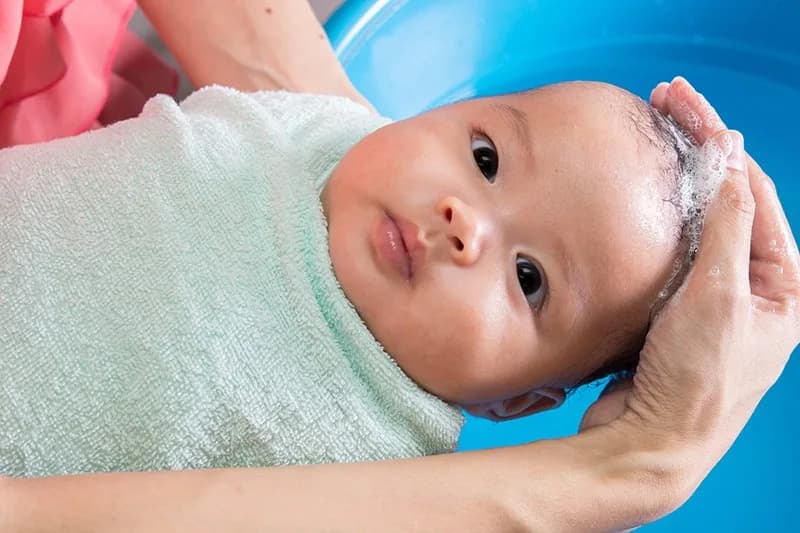
Less often than you would think, and more gently. A newborn needs only a few baths a week, and a plain fragrance-free wash is enough for the scalp.
Singapore changes this a little. Humidity means a sweaty head by mid-afternoon, so daily rinsing in plain water is reasonable here, with a mild cleanser a few times a week rather than every day. Dry the neck folds properly afterwards, because a fold that stays damp gets red and sore. Our guide to bathing a newborn covers the order of things.
Pat the head rather than rubbing it, with the softest towel you own. Comb damp hair with a wide-toothed baby comb, never a fine one, and work from the ends up if there is enough hair to tangle. Stop at the first complaint.
What does cradle cap have to do with hair?
Cradle cap is the greasy yellow scale that appears on a baby's scalp in the first weeks, and the NHS describes it as common, harmless and usually gone within a few months. It is not an infection, and it does not itch most babies.
Thick scale can take a few hairs with it when it lifts, which is why some parents link cradle cap to patchy hair. Picking at it is what actually causes loss. Soften the scale first, comb gently, wash the softened flakes away, then leave the area alone.
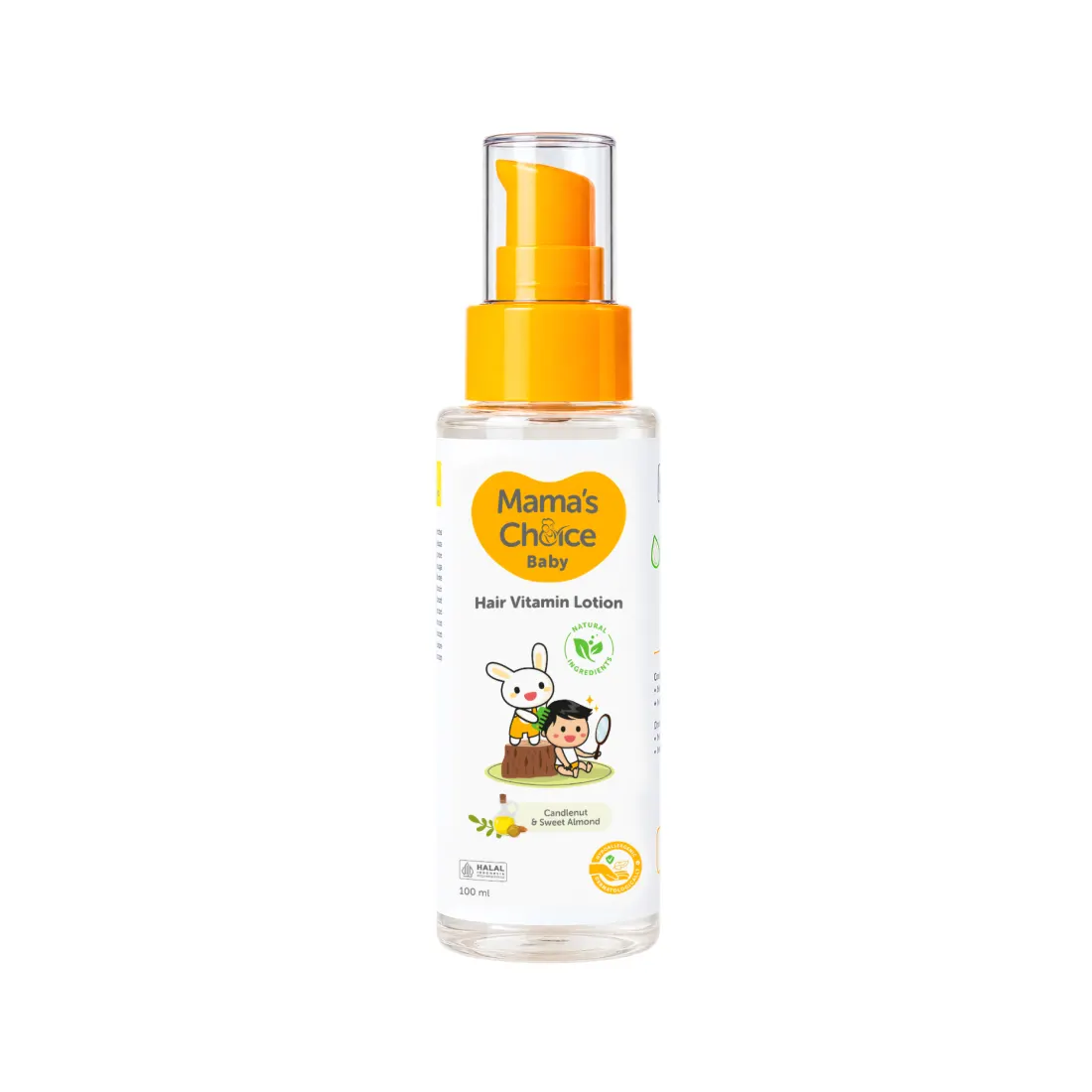
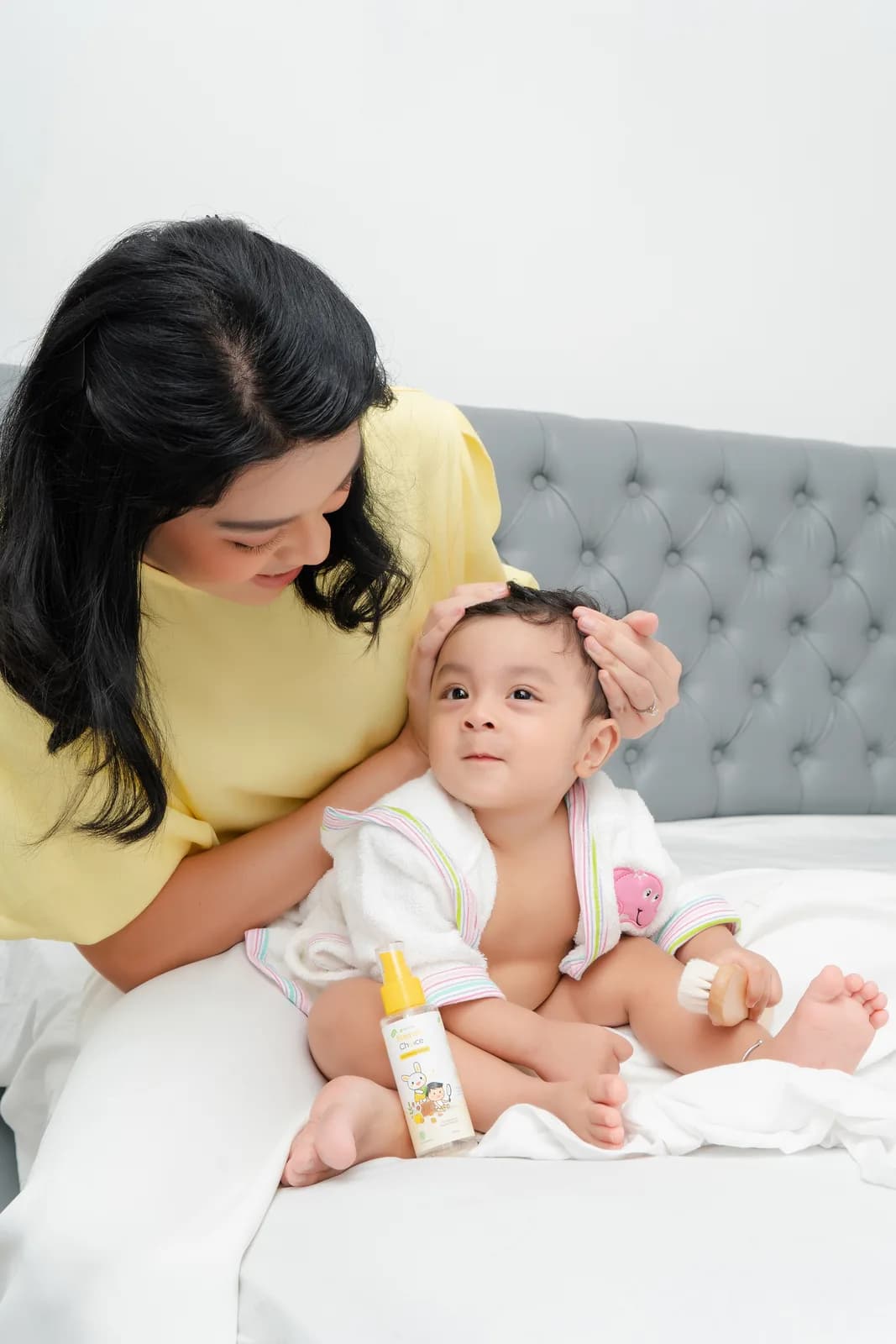
For everyday scalp care, our Baby Hair Vitamin Lotion is a leave-in lotion with aloe vera, chamomile and sweet almond oil that moisturises the scalp and leaves hair soft and easy to comb. It is not a cradle cap treatment, and it will not change your baby's own timetable for hair. It contains a light fragrance, so keep it off skin that is red or broken. Our fuller guide to clearing cradle cap goes through the comb-and-wash routine step by step.
Cradle cap that spreads down the face, weeps, or looks red and angry has stopped being ordinary cradle cap. That one gets seen.
Does Singapore's climate affect a baby's scalp?
More than most parents expect, in both directions. Outside, heat and humidity leave a scalp permanently slightly damp, and blocked sweat glands produce the pinprick heat rash that turns up on the hairline, forehead and the back of the neck. A cotton cap in a stuffy room makes it worse.
Indoors, air-conditioning does the opposite and dries the skin out. A scalp that is flaking in a cold bedroom often responds to a light moisturiser and a slightly shorter bath rather than a new product. Our rundown of which baby rash you are looking at helps separate heat rash from cradle cap from eczema, because they all show up on a scalp and they want different handling.
Keep hats off indoors, keep the fan moving air, and change a damp romper before the nap. Sweat under a headband is a predictable route to an irritated scalp.
Which remedies are worth skipping?
Plenty of the internet's suggestions have no evidence behind them and a few can cause harm.
| Popular remedy | What it actually does |
|---|---|
| Gelatin or egg on the scalp | No evidence for hair growth, and raw egg on a baby's skin is best avoided |
| Hibiscus or yoghurt masks | Messy, unproven, and a sensitising risk on new skin |
| Essential oils | Common cause of contact reactions in infants |
| Vitamin E oil | Moisturises, does nothing measurable for growth |
| Coconut oil | Genuinely useful for softening cradle cap scale, no growth effect |
| Daily vigorous brushing | Pulls out hair that was staying put |
| Hair ties and tight headbands | Traction on the follicle, a known cause of hair loss |
Dietary advice belongs to older babies. Before solids there is nothing to adjust, and after six months a varied diet with iron-rich foods supports growth generally without being a hair treatment. A supplement makes sense only when a doctor has found a deficiency.
When should you see a doctor?
Most baby hair questions need reassurance rather than treatment. A few patterns do need an appointment.
Book one for smooth round bald patches with no scale, for scaly or crusted patches with hairs broken off at the surface, for redness that weeps or crusts yellow, for hair loss that begins after six months instead of settling, or for hair that comes out in handfuls alongside poor weight gain. Scalp ringworm and alopecia areata both have specific treatments, and neither improves with lotion. Polyclinic doctors refer on to paediatric dermatology at KK Women's and Children's Hospital and the National University Hospital.
One practical thing about a bald head: it burns. A scalp with no hair over it has no shade at all, so a wide-brimmed hat and the covered side of the walkway matter far more for your baby than anything you could rub into her scalp, especially between eleven and three.
Frequently asked questions
- Is there anything that genuinely makes a baby's hair grow faster?
- No product, oil or diet has been shown to speed it up in a healthy baby. Hair follicles are all formed before birth and genetics sets the pace from there. What you can do is keep the scalp clean and comfortable, treat cradle cap, and avoid anything that pulls on the hair that is already there.
- Why did my baby lose the thick hair she was born with?
- Newborn hair follicles move into their resting phase at roughly the same time in the first months of life, so the hair she was born with falls out in a batch. Dermatologists call that phase telogen. New hair usually arrives by the first birthday, sometimes a different colour and texture from the first lot.
- Will shaving my baby's head make her hair grow back thicker?
- It will not. The American Academy of Dermatology is clear that cutting or shaving does not change how fast hair grows or how thick it is, since nothing happens to the follicle under the skin. A shaved hair has a blunt tip, which feels coarser to the hand and fools a lot of people.
- Should I put coconut oil on my baby's scalp?
- Coconut oil softens cradle cap scale before you comb it out, and that is a real use. It will not grow hair. Leave it on for a short while, wash it off with a mild baby cleanser, and stop if the skin looks redder afterwards.
- When is a baby's hair loss worth a doctor's appointment?
- Go if you see smooth round bald patches, scaly or crusted patches with broken-off hairs, redness that weeps, or hair loss that starts after six months rather than fading out. Polyclinic doctors refer on to paediatric dermatology at KK Women's and Children's Hospital or the National University Hospital.
Sources
- AAP, HealthyChildren.org — Your newborn's skin and hair, and cradle cap
- American Academy of Dermatology — Hair loss in children, and hair care myths including shaving
- NHS — Cradle cap
- HealthHub (Health Promotion Board) — Baby skin and scalp care
- KK Women's and Children's Hospital — Paediatric dermatology service
Share this article
This article is for information only and is not a substitute for diagnosis or medical advice. Please talk to your doctor about your own situation.