How to properly wash your face during pregnancy
Seven steps for washing pregnant skin without stripping it, what the AAD actually recommends, and how Singapore's heat and aircon change the routine.
Wash twice a day with lukewarm water and a gentle, fragrance-free cleanser, using your hands rather than a cloth, and moisturise while your face is still damp. In Singapore, add a rinse after any sweaty commute. During pregnancy, drop retinoids and high-strength acids and keep the routine short.
Why does face washing change during pregnancy?
The skin on your face behaves differently once you are pregnant. Oil production shifts, so some mothers break out for the first time since their teens while others go suddenly dry. Pigmentation changes too. ACOG lists melasma, the brownish patching across cheeks and forehead, among the ordinary skin changes of pregnancy.
At the same time, half your usual products come off the shelf. ACOG advises against retinoids during pregnancy and suggests checking any prescription treatment with your doctor first.
What survives that cull is the cleansing step. A short, gentle routine done properly will do more for pregnant skin than an elaborate one done with the wrong products. Our piece on facial skin problems in pregnancy covers the changes themselves in more detail.
How to properly wash your face in 7 steps
1. Take your makeup and sunscreen off first
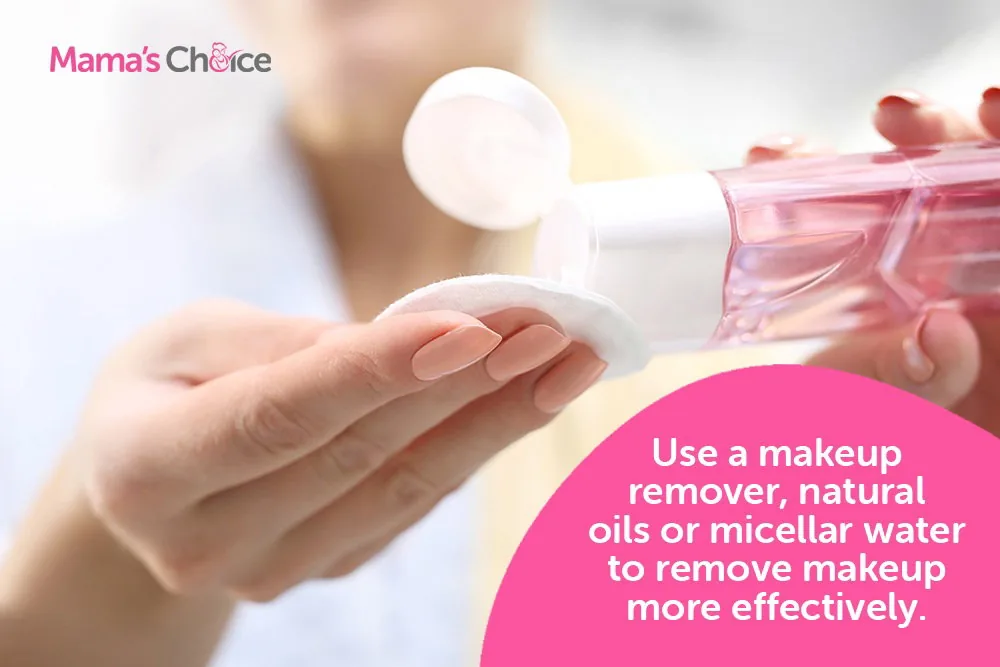
A gentle cleanser struggles to get through a layer of foundation or a mineral sunscreen. Use a dedicated remover, micellar water, or a cleansing oil, then wash. Sunscreen matters particularly here, because the mineral filters many people choose in pregnancy are designed to sit on the surface and stay there.
2. Keep the water lukewarm
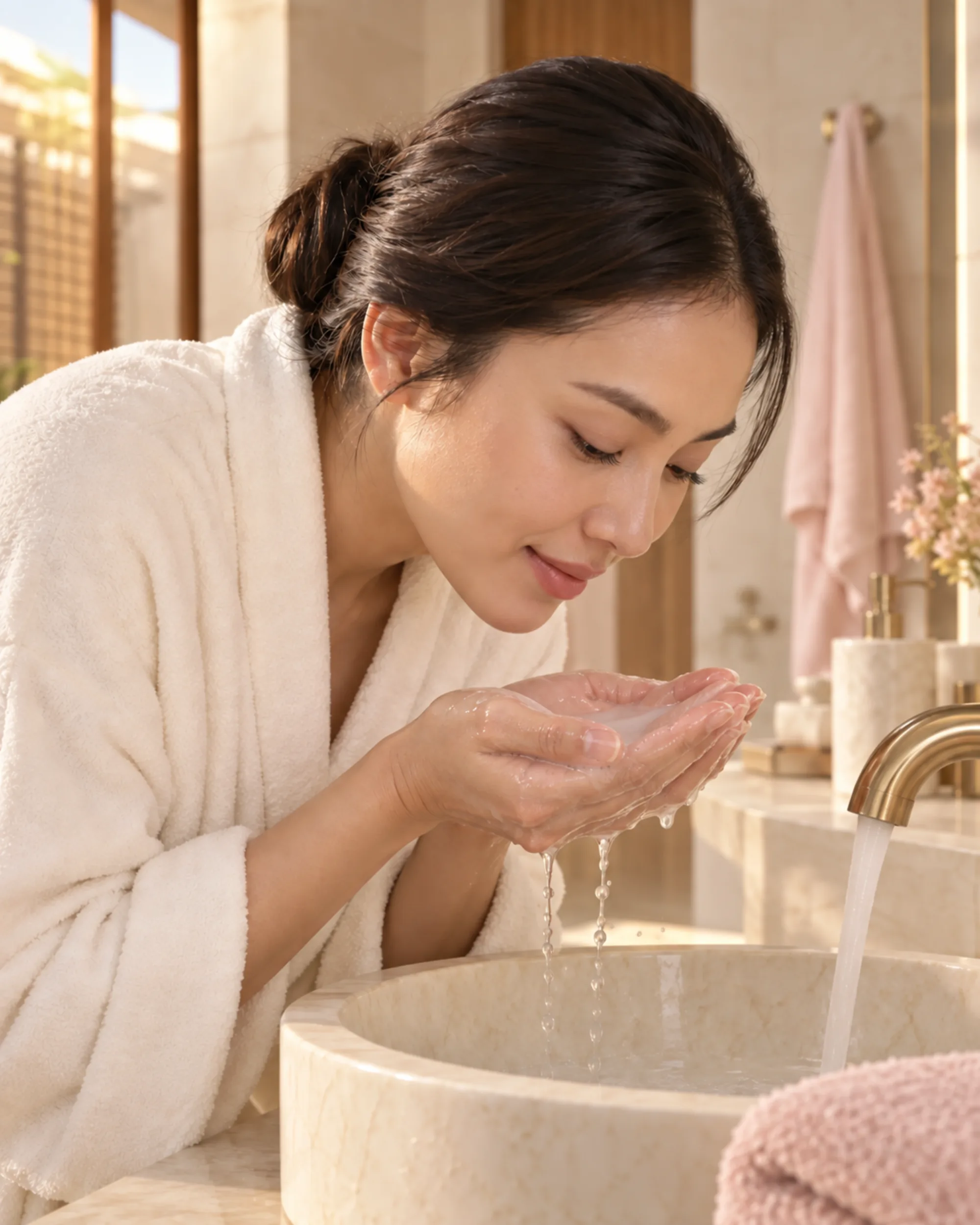
Hot water strips surface oils, and skin that is already drier than usual feels it. Lukewarm is the whole instruction. If your tap runs warm by default in this climate, let it settle first.
3. Use your hands, not a tool
Flannels, loofahs and silicone brushes add friction your face does not need, and they hold bacteria between uses. Fingertips in small circles are enough. Thirty seconds, no scrubbing.
4. Pick a gentle cleanser and read the label
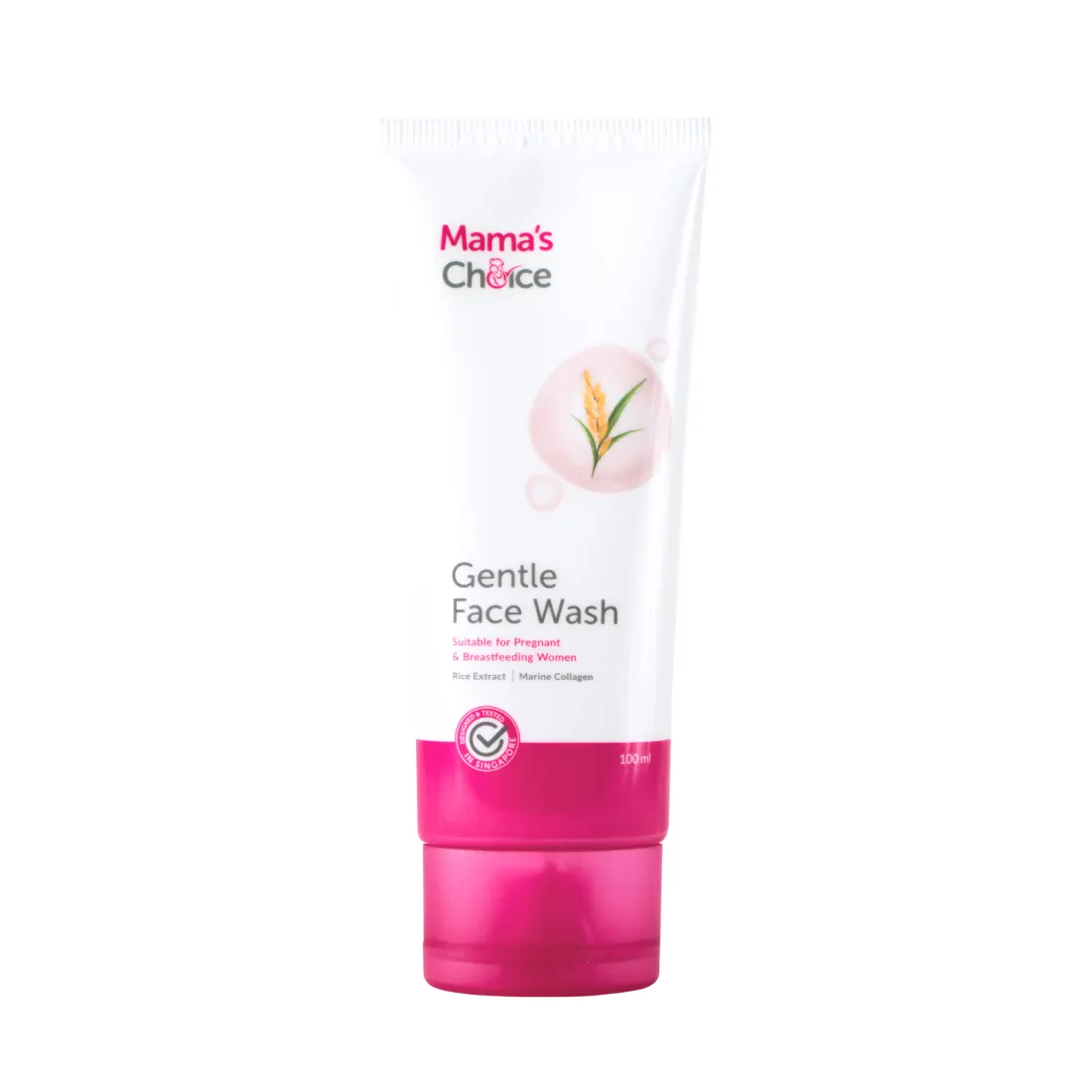
The AAD's advice in Face washing 101 is to choose a gentle, non-abrasive cleanser that does not contain alcohol. That rules out most astringent toners and the stripping foams marketed for oily skin. A low-foam or cream cleanser leaves skin feeling clean without that tight, squeaky finish. The Mama's Choice Gentle Face Wash is a clear, low-foam gel formulated with pregnant and breastfeeding mothers in mind, with rice extract and niacinamide, and it leaves the face feeling soft and moisturised. It is sulfate-free and made without drying alcohol or added fragrance, and in a repeat patch test on 49 adults (SKINPROOF, Jakarta, December 2020) no irritation was recorded. If you are unsure which texture suits you, we have a guide to matching a face wash to your skin type.
5. Rinse until nothing is left
Cleanser residue along the jaw and hairline can contribute to breakouts that get blamed on hormones. Rinse past the point where you think you are done, and check the sides of the nose.
6. Pat dry, gently
A soft towel, pressed rather than dragged. Leave the skin slightly damp.
7. Moisturise within a few minutes
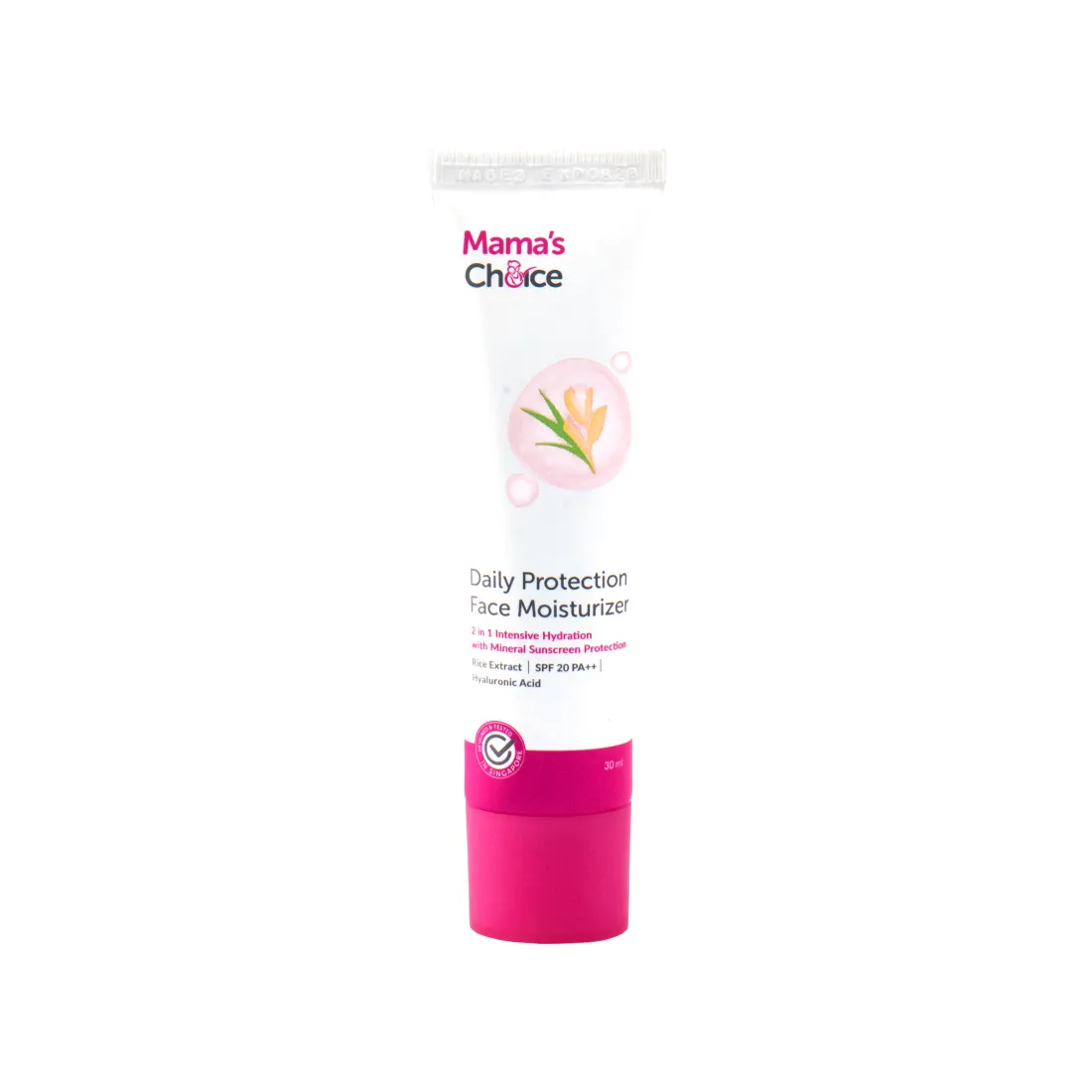
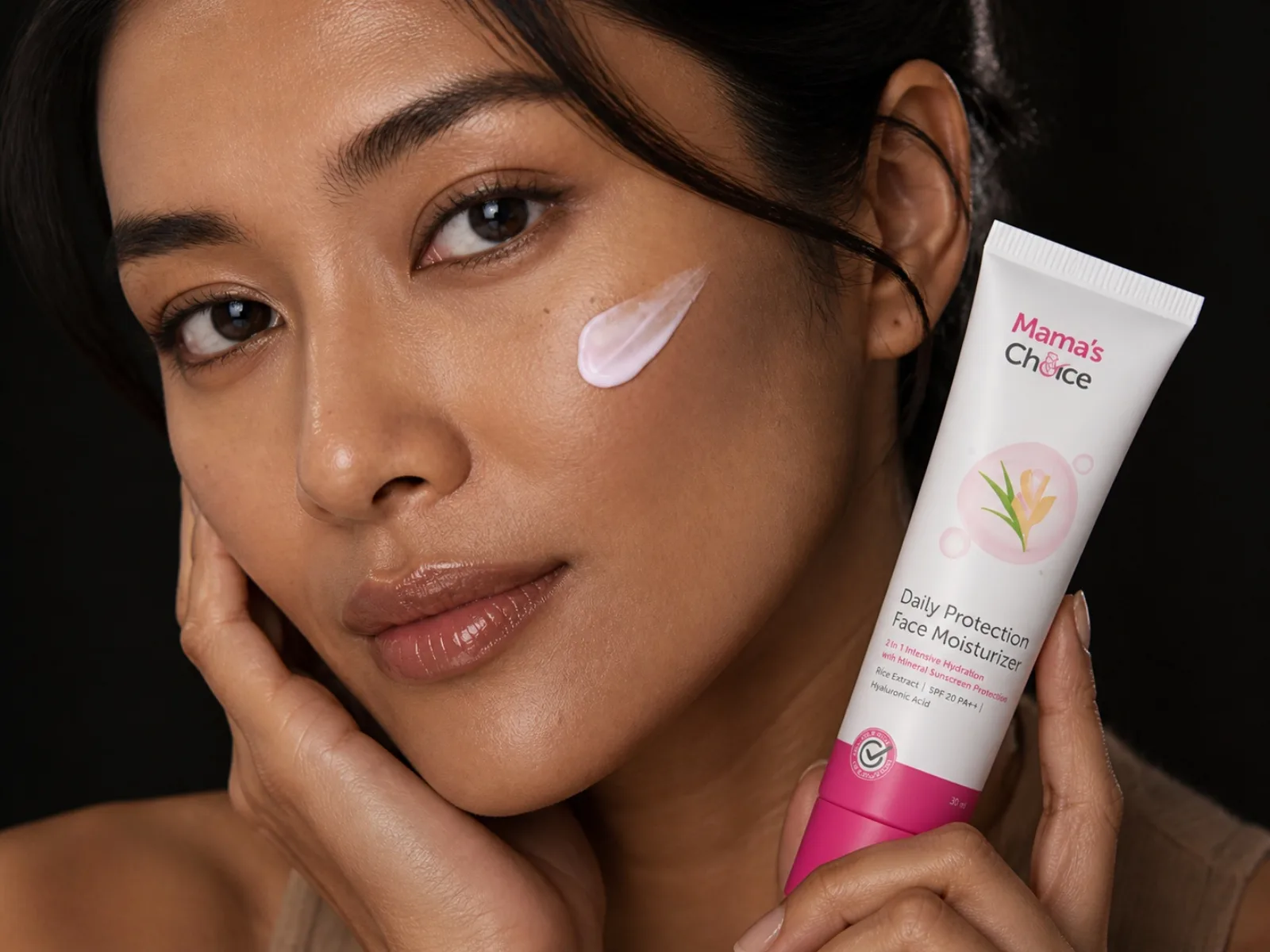
The AAD recommends applying moisturiser while the skin still holds water from washing, which is what seals it in. Waiting ten minutes while you brush your teeth undoes part of the benefit. In the morning, a moisturiser with sun protection saves a step. Our Daily Protection Face Moisturizer does both for the school run and the office: a lightweight cream with shea butter and hyaluronic acid that leaves skin soft and hydrated, and mineral filters (zinc oxide and titanium dioxide) at SPF 20 PA++. For a long day outdoors, the AAD recommends SPF 30 or higher, so layer a dedicated sunscreen on top. Do not stay too long in the sun, even while using a sunscreen product.

Does Singapore's climate change the routine?
It changes the timing more than the products.
You sweat here in a way you would not in a temperate climate, and sweat mixed with sunscreen and the day's dust is worth rinsing off. The AAD already includes "after sweating heavily" in its washing guidance, which in practice means a third rinse on days with an outdoor commute or a hawker centre lunch. Water alone is fine for that one.
Air-conditioning pushes the other way. An office at 22°C dries the skin out all afternoon, so the evening wash should be the gentlest of the day, followed immediately by moisturiser.
Haze season is the third variable. When the PSI rises, the Ministry of Health's advisories name pregnant women among the groups who should limit outdoor exertion, and the fine particulate that settles on skin is a reason to cleanse in the evening rather than skip it.
What about dark patches and the sun?
Singapore sits almost on the equator, so UV is high year round and does not taper off in a cooler season. Melasma that appears in pregnancy darkens with sun exposure, and HealthHub's sun protection guidance is the same for a cloudy day as a bright one.
Daily sun protection is the most useful habit for pregnancy pigmentation. Add a wide-brimmed hat for the school run and the covered walkway for everything else. Our round-up of pregnancy beauty routines has the rest, and niacinamide in pregnancy covers one ingredient that does stay on the shelf.

When should you see a doctor instead?
Acne that is painful, cystic or scarring deserves a medical opinion rather than another cleanser, because the usual prescriptions change during pregnancy. The same goes for a rash that spreads, a patch that itches and weeps, or pigmentation that appears suddenly in one spot.
Start at a polyclinic. They can treat the straightforward cases and refer you to a dermatologist at the National Skin Centre or to the obstetric team at KKH or NUH where the pregnancy itself is the relevant factor.
Bring the actual bottles to the appointment. A doctor can usually tell you quickly whether what you already own is fine to keep using, which usually saves a trip to Guardian or Watsons for replacements you did not need.
Frequently asked questions
- How many times a day should I wash my face?
- The American Academy of Dermatology recommends washing in the morning, again in the evening, and after sweating heavily. In Singapore that last one comes up daily, so a quick rinse after a walk to the MRT counts. Washing more often than that tends to leave skin tight and reactive.
- Which skincare ingredients should I avoid while pregnant?
- ACOG advises against retinoids and oral acne medications during pregnancy and suggests discussing any prescription treatment with your doctor. Strong chemical peels are usually postponed too. A plain cleanser, a moisturiser and sun protection cover almost everything in the meantime.
- Is a foaming cleanser bad for my skin?
- Foam itself is harmless. The problem is the strength of some surfactants used to create it, which strip the natural oils your skin needs. The AAD's guidance is to pick a gentle, non-abrasive cleanser without alcohol, so read the ingredient list rather than judging by lather.
- Should I wash my face more often in Singapore's humidity?
- Wash after sweating rather than on a tighter schedule. Sweat, sunscreen and particulate from a haze day all sit on the skin and are worth removing, but over-washing is the more common mistake here. A rinse with water alone is enough for the extra sessions.
- Does pregnancy really cause dark patches on the face?
- It can. Melasma, sometimes called the mask of pregnancy, shows up as brownish patches on the cheeks, forehead and upper lip, and ACOG lists it among the common skin changes of pregnancy. Daily sun protection helps keep it from deepening under the equatorial sun. If a patch appears suddenly or looks different from the rest, show it to a doctor.
Sources
- American Academy of Dermatology — Face washing 101
- American Academy of Dermatology — dry skin: dermatologists' tips for relieving it
- ACOG — Skin conditions during pregnancy
- HealthHub, Health Promotion Board — skin care and sun protection
- Ministry of Health Singapore — haze health advisory for vulnerable groups
Share this article
This article is for information only and is not a substitute for diagnosis or medical advice. Please talk to your doctor about your own situation.