Baby teeth care from the first tooth onwards
When the first tooth arrives, how to clean gums before it does, when to book the first dental visit, and what dental care costs a child in Singapore.
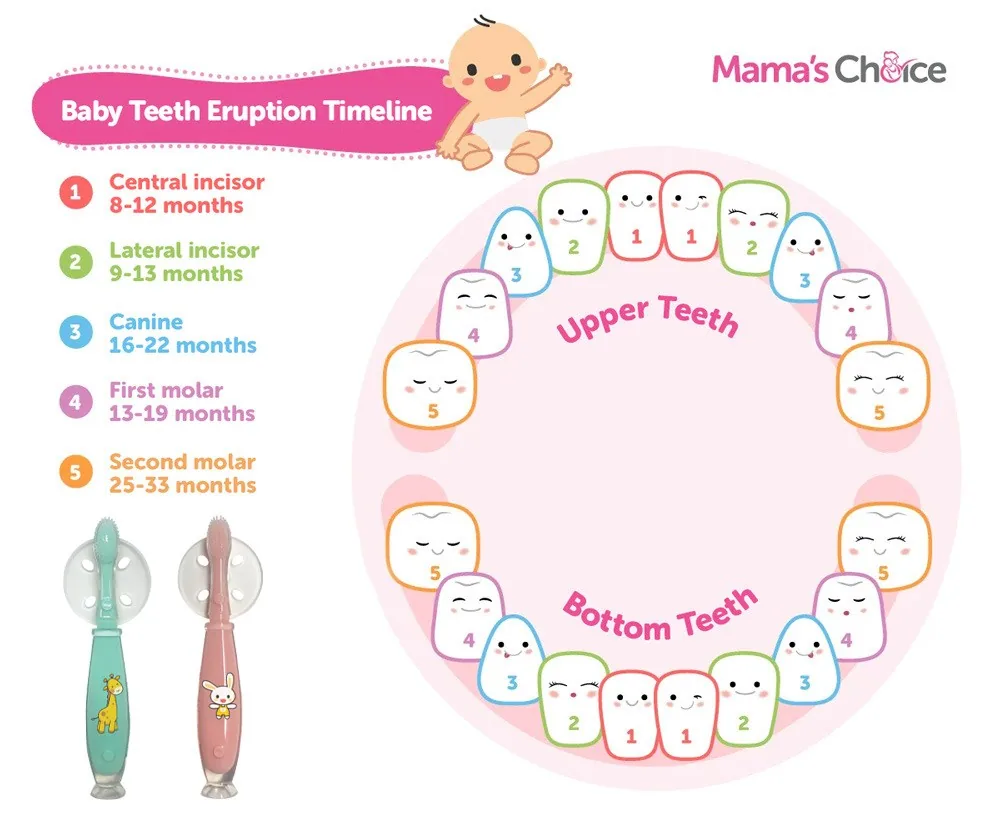
Twenty teeth are already sitting in your baby’s gums at birth, waiting their turn. The care starts before any of them show.
Wipe your baby’s gums twice a day with a clean damp cloth from the first weeks. Brush with a soft small brush as soon as a tooth breaks through, twice a day, using a smear of paste the size of a grain of rice. Book the first dental visit by the first birthday.
When does the first tooth appear?
Around 6 months, give or take a good deal. The American Academy of Pediatrics describes the normal range as wide, with some babies cutting a tooth at 4 months and others arriving at their first birthday with bare gums, and both being fine.
The bottom two front teeth usually come first, then the top two. By about 3 years old a child generally has the full set of 20 primary teeth. Those teeth start loosening at around 6, and the last of them leave in the early teens, so the ones you are brushing now stay in use for years.
A baby born with a tooth already through happens occasionally. Your doctor will check it is not loose enough to be a choking risk, and most of the time nothing needs doing.
Teething itself makes the gums sore and swollen, and a baby who wants to chew on everything is behaving normally. Our guide to when to give a teether to a baby covers what is worth buying and what is not.
How do you clean a mouth with no teeth in it?
With a clean damp cloth over your finger, or a piece of gauze. Wipe along the gum ridges, top and bottom, morning and evening.
This does two useful things. It clears the film of milk that otherwise sits on the gums, and it trains your baby to tolerate a hand in their mouth, which is the part that pays off the week a tooth finally arrives. A baby who has never had their gums touched tends to clamp down hard on the first brush.
Do it on your lap, with the head tilted back against your arm so you can see what you are doing. Bathtime is an easy slot to attach it to.
When should your baby first see a dentist?
By the first birthday, or within six months of the first tooth coming through, whichever happens sooner. That is the American Academy of Pediatrics position, and it may be earlier than you expected.
One barely visible tooth hardly seems to warrant an appointment. The point of the visit is less about the tooth than about the habits: how the feeding is going, whether a bottle is going into the cot, how you are managing the brushing, and what the enamel already looks like. Early decay shows up as a dull white line along the gum margin before it ever becomes a hole.
It also means the chair, the light and the mirror become familiar while nothing hurts. A child whose first dental appointment happens at 4 with toothache learns something different.
How much toothpaste, and which sort?
A smear the size of a grain of rice until 3, then a pea-sized blob from 3 to 6. The NHS and the American Academy of Pediatrics agree on both amounts, and both ask an adult to do or finish the brushing until a child can spit properly.
Brush twice a day. The one before bed matters most, because saliva flow falls overnight and leaves anything on the enamel to sit there.
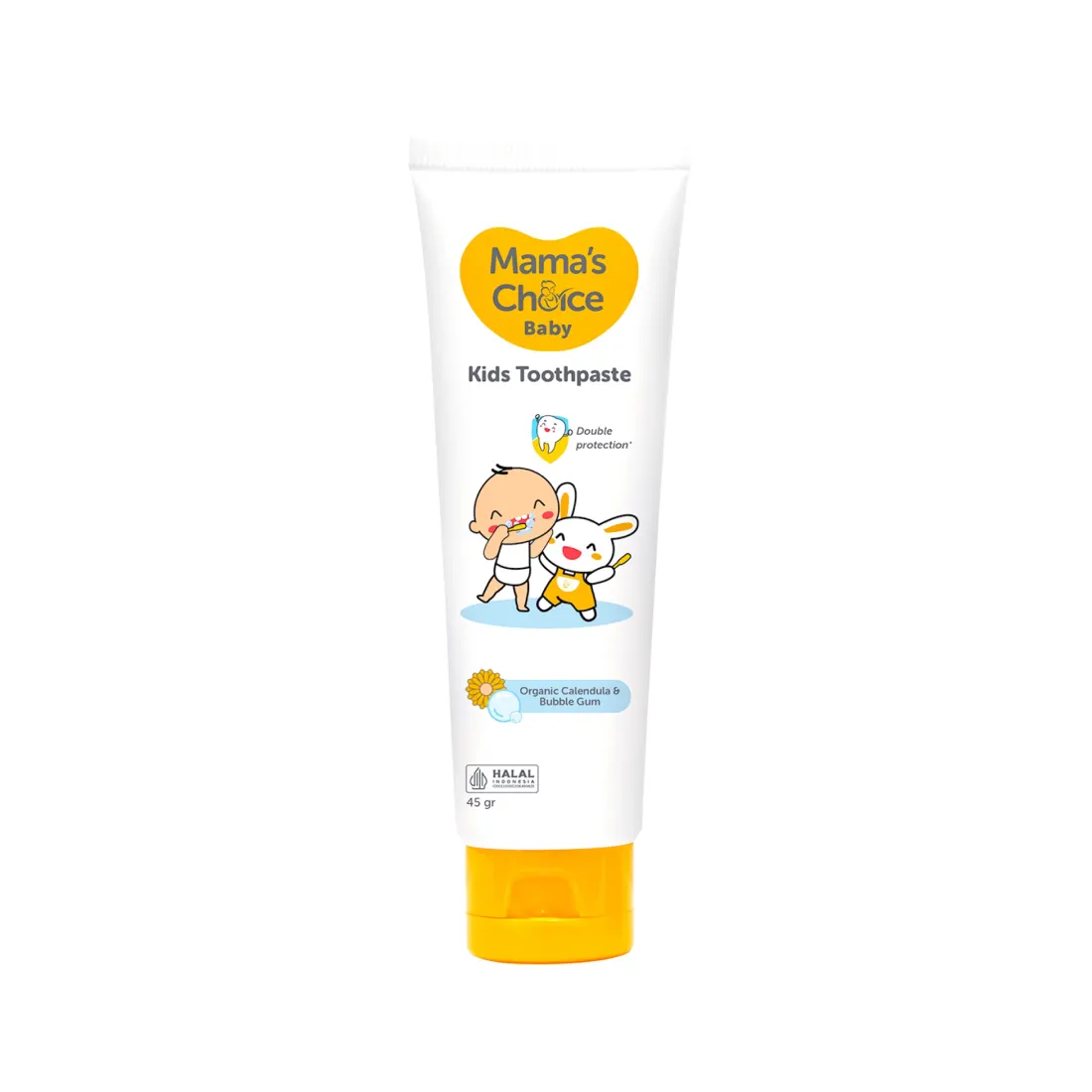
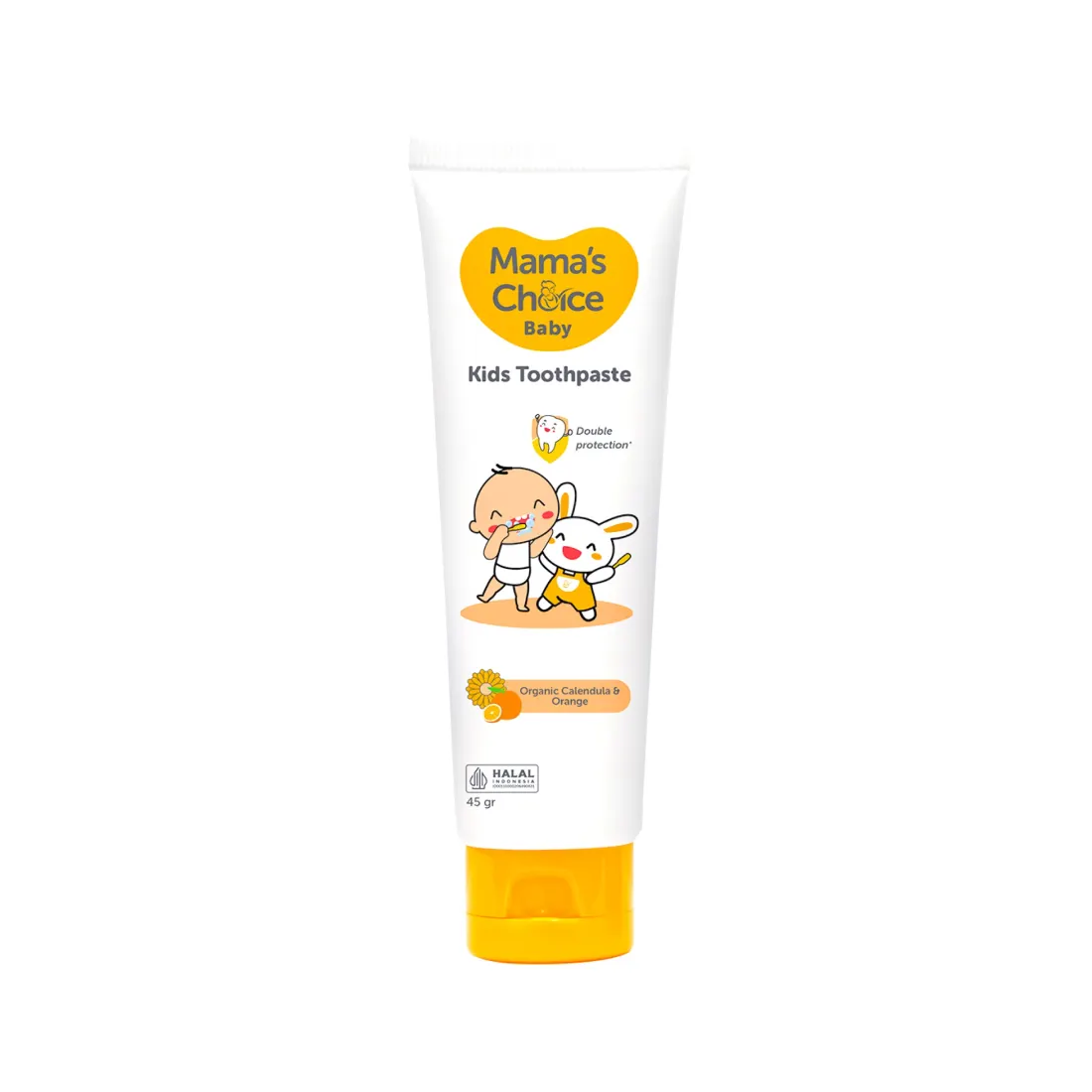
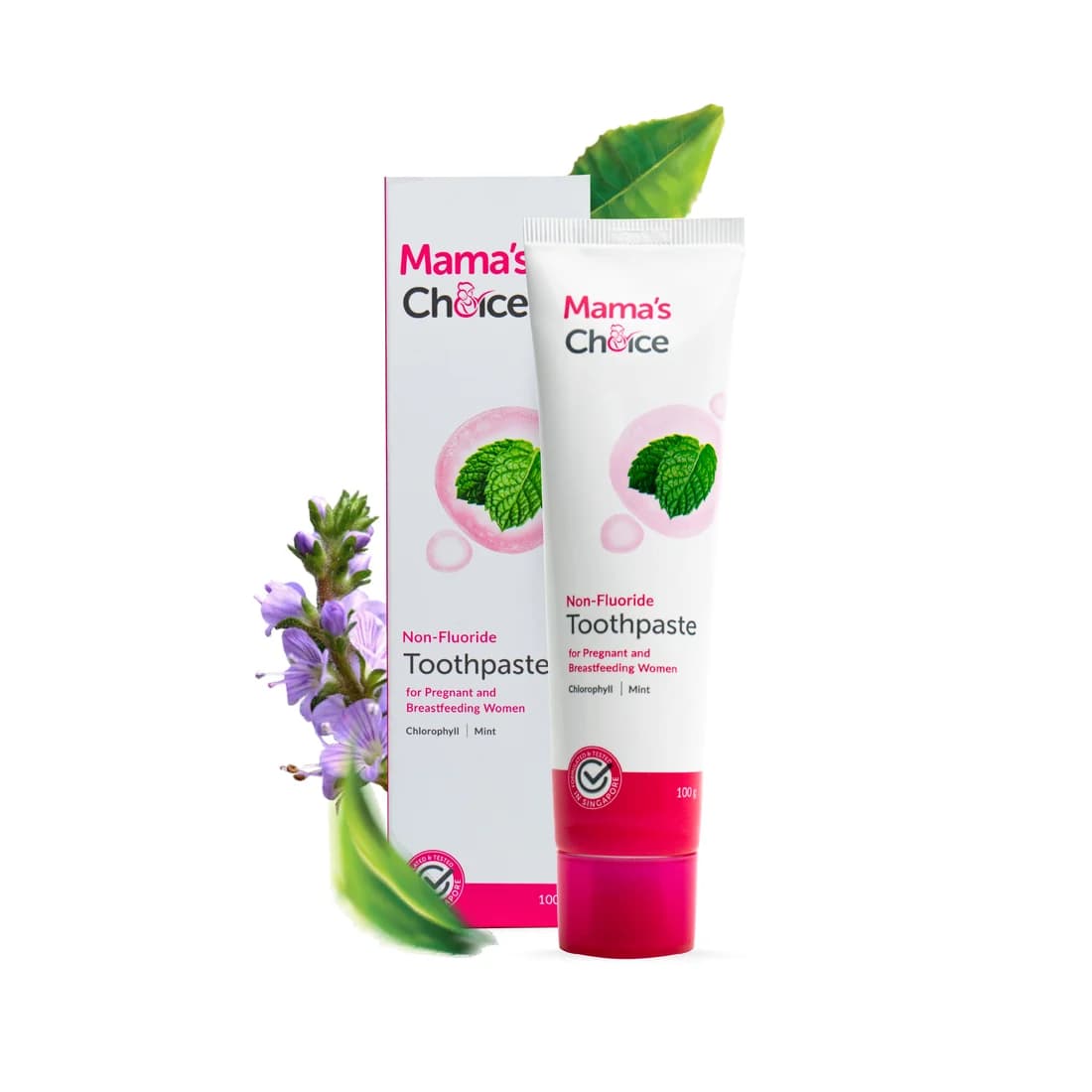
A fluoride paste at those amounts is the standard recommendation, and HealthHub backs it for children here. The amounts are kept small so that a toddler who swallows most of it still gets very little. Some parents prefer a fluoride-free paste until their child can spit; if that is you, choose one made for young children, such as our Baby & Kids Toothpaste. It is fluoride-free, made for children from 6 months, with xylitol and hydroxyapatite, and comes in strawberry, bubble gum and orange, flavours that make the brush easier to sell to a toddler. Regular brushing with it may help fight tooth decay. Our Non-Fluoride Toothpaste is a different product: a mint paste made with pregnant and breastfeeding mothers in mind, meant for adults and children over 5. We have written up the trade-off in is fluoride in toothpaste safe for children, including the situations where a dentist will ask for more fluoride rather than less.
Use a brush with a small head and soft bristles, and replace it when the bristles splay. Chewed brushes stop cleaning.
Why does a bottle in the cot cause decay?
Because milk pools. A sleeping baby stops swallowing, saliva production drops, and whatever is in the bottle settles around the upper front teeth for hours.
The American Academy of Pediatrics calls the result early childhood caries, and it can take out the top incisors before a child turns 2. Juice and sweetened drinks are worse than milk, and formula and breast milk both contain sugars. Water is the only thing safe to sip through the night.
Finish the feed, clean the gums or teeth, then put your baby down. Prolonged daytime grazing on a bottle or a sippy cup does the same damage more slowly, so keep drinks to mealtimes and offer water in between.
What dental care can you get in Singapore?
Polyclinic dental clinics see children at subsidised rates for Singaporeans and permanent residents, and they are the usual first stop for a check-up, a filling or a worry about a knocked tooth. Private paediatric dentists cost considerably more and are often easier to book.
The Health Promotion Board runs the School Dental Service, which screens and treats children through primary and secondary schools, and it also brings dental screening to preschools. That picks up most children from about the age of 7, which leaves the first several years to you.
For children who need treatment beyond routine care, including those with extensive decay or a medical condition that complicates dental work, KK Women’s and Children’s Hospital has a paediatric dentistry department that takes referrals. Your polyclinic dentist or GP can write one. If your child already has a problem, common dental problems in children sets out which ones need a dentist this week.
How do you brush a toddler who refuses?
Position beats persuasion. Sit on the floor with your child’s head in your lap, or stand behind them at the mirror with their head resting back against you, so you can actually see the back molars rather than guessing.
Let them hold a second brush while you work with the first. Count out loud, sing, use the same order every time so the routine becomes predictable. A song that lasts two minutes is more use than a timer nobody looks at.
Expect resistance between about 18 months and 3 years, and expect to hold a wriggling child firmly for 30 seconds twice a day. Holding on kindly and firmly is part of the job. If the gums bleed a little at first, keep going gently, because inflamed gums usually settle within a week or two of regular brushing. Bleeding that carries on past that deserves a look, and swollen gums in kids explains the likelier causes.
Once a month, lift your child’s upper lip and look at the front teeth where they meet the gum. Chalky white bands or brown marks there are the earliest sign of decay, and they are far easier to deal with before the tooth starts to hurt.
Frequently asked questions
- When does a baby get their first tooth?
- Usually around 6 months, though the American Academy of Pediatrics describes a wide normal range from about 4 months to the first birthday. A baby born with a tooth already through is uncommon and rarely a problem. A baby with nothing at 12 months is worth mentioning at the next check-up.
- When should my baby first see a dentist?
- The American Academy of Pediatrics advises a first dental visit by the first birthday, or within six months of the first tooth appearing, whichever comes sooner. The visit is mostly a look, a clean and a conversation about feeding and brushing, so the chair stops being frightening later.
- How do I clean a baby’s mouth before any teeth arrive?
- Wipe the gums with a clean damp cloth or a piece of gauze twice a day, once in the morning and once before bed. It clears milk residue and the bacteria that sit on the gum ridge, and it gets your baby used to someone else putting a finger in their mouth.
- Is it bad to let a baby fall asleep with a bottle?
- Yes. Milk or juice pools around the upper front teeth while your baby sleeps and saliva flow drops, which is how early childhood caries starts. The American Academy of Pediatrics asks parents to finish the feed, then clean the gums or teeth, then put the baby down with nothing in the cot.
- Where can I get affordable dental care for my child in Singapore?
- Polyclinic dental clinics charge subsidised rates for Singaporeans and permanent residents, and the Health Promotion Board’s School Dental Service covers most children once they reach school. KK Women’s and Children’s Hospital runs a paediatric dentistry service for children who need more than routine care, usually by referral.
Sources
- AAP, HealthyChildren.org — Teething, tooth eruption and the first dental visit
- AAP, HealthyChildren.org — Baby bottle tooth decay and early childhood caries
- NHS — Looking after your baby's teeth
- HealthHub (Health Promotion Board) — Caring for your child's teeth
- Health Promotion Board — School Dental Service and preschool dental screening
- KK Women's and Children's Hospital — Department of Paediatric Dentistry
Share this article
This article is for information only and is not a substitute for diagnosis or medical advice. Please talk to your doctor about your own situation.