Common dental problems in children
Cavities, sensitivity, bad breath, bleeding gums and dental fear in children, with the toothpaste amounts the NHS gives and where to get care in Singapore.

Most childhood dental trouble comes down to plaque left on teeth and sugar arriving often. The NHS advises brushing twice a day from the first tooth with a fluoride paste, a smear under 3 and a pea from 3 to 6, spitting rather than rinsing. A first dental visit belongs by the first birthday.
Why do children get cavities so easily?
Enamel on a baby tooth is thinner than on an adult tooth, so decay travels through it faster. The mechanism is the same as in adults: bacteria in plaque feed on sugar and produce acid, and the acid dissolves mineral out of the enamel surface.
What matters most is how often that happens rather than how much sugar arrives at once. The CDC puts frequency at the centre of its children's oral health guidance, and the practical version is local. A packet drink nursed across a whole afternoon, or Milo sipped between meals, keeps the mouth acidic for hours. The same drink finished with a meal is one acid attack rather than many.
A bottle in bed is the version with the worst outcome. Milk pools around the upper front teeth while saliva flow drops during sleep, which is how a toddler ends up with decay on teeth that only came through a year ago.
Signs to look for:
- A white chalky line along the gum edge, which is early demineralisation
- Brown or black spots or pits
- A child who flinches at cold water or refuses to chew on one side
- Pain that wakes her at night
- Swelling of the gum or face, which needs same-day attention
How much toothpaste, and from when?
From the first tooth, says the NHS, twice a day with a fluoride paste.
| Age | Amount | Fluoride |
|---|---|---|
| Under 3 | A smear | At least 1,000 ppm |
| 3 to 6 | A pea | 1,350 to 1,500 ppm |
| 7 and up | A pea, brushing on her own with you checking | 1,350 to 1,500 ppm |
Two details get skipped more than anything else. Spit, do not rinse, because rinsing washes away the fluoride that was about to do the work. And brush last thing at night, since saliva protection falls during sleep.
Brushing a toddler's teeth is a wrestling match in most households. Standing behind her with her head tipped back against you gives better access than facing her. Let her hold a second brush. Counting out loud works better than negotiating.
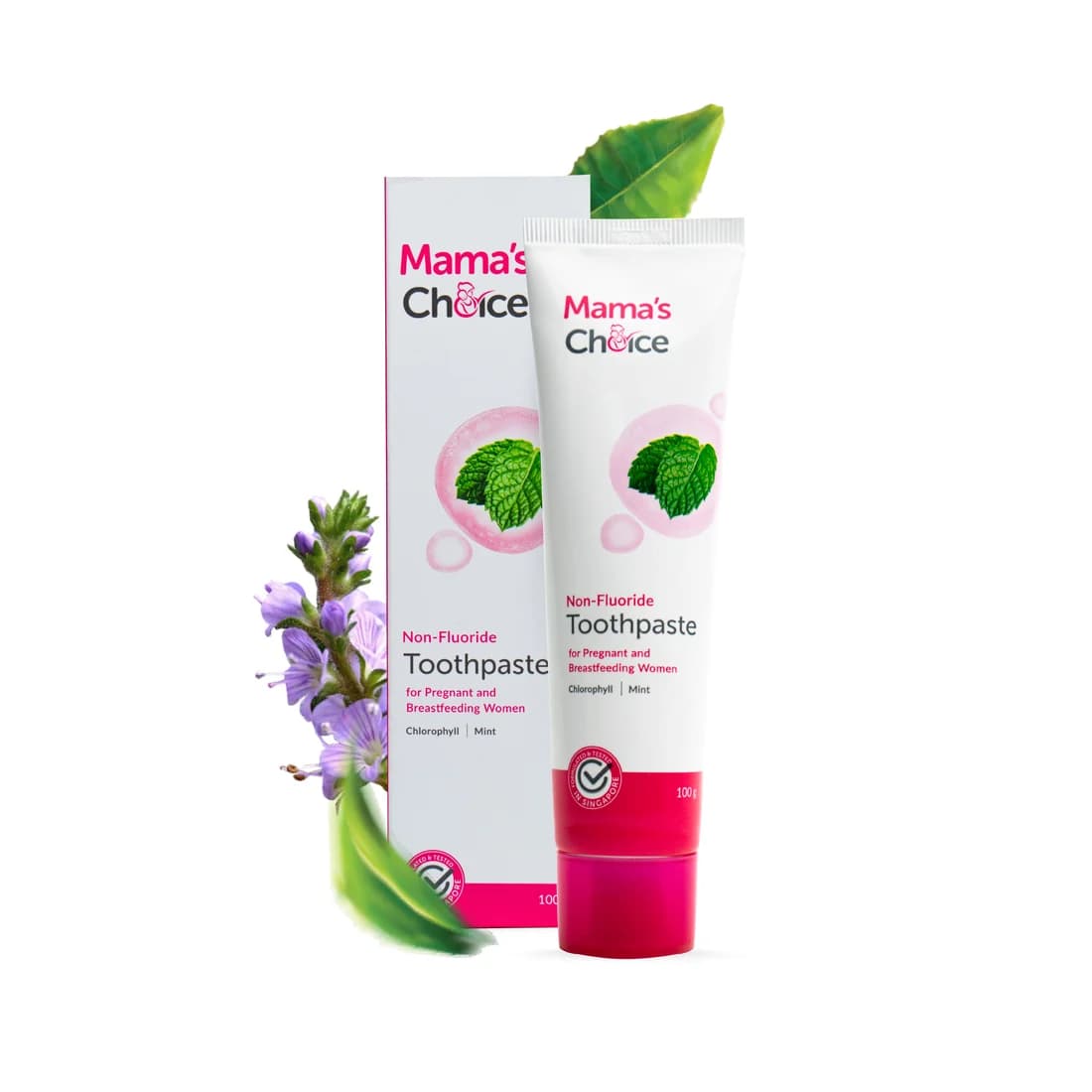
For a child who still swallows everything she is given, the NHS answer is still a smear of fluoride paste, with you doing the brushing and wiping away the excess. Some parents choose a fluoride-free paste at that stage. If you do, regular brushing with it may help fight tooth decay, and once she can spit reliably, fluoride is the better protection. Our Mama's Choice Non-Fluoride Toothpaste is an adult mint toothpaste made with pregnant and breastfeeding mothers in mind, so it belongs on your side of the sink rather than hers. The mint can taste sharp to a child, and for young children we make a separate Baby & Kids Toothpaste with a milder taste.
Also read: caring for baby teeth and gums
Does Singapore's fluoridated water change anything?
It changes the arithmetic rather than the advice. Singapore's public water supply is fluoridated as a public health measure, which the Health Promotion Board has long supported, so children here already get a low background dose from drinking water and from food cooked in it.
The CDC's fluoridation guidance explains why that is additive rather than alternative. Water fluoridation works systemically at low levels across a population. Toothpaste works topically at the tooth surface, which is where decay actually starts, and the two are not substitutes.
What the background dose does mean is that there is no case for fluoride supplements here unless a dentist says otherwise, and no case for a high-fluoride paste for a young child.
Also read: the fluoride question in toothpaste
Sensitivity, bad breath and bleeding gums
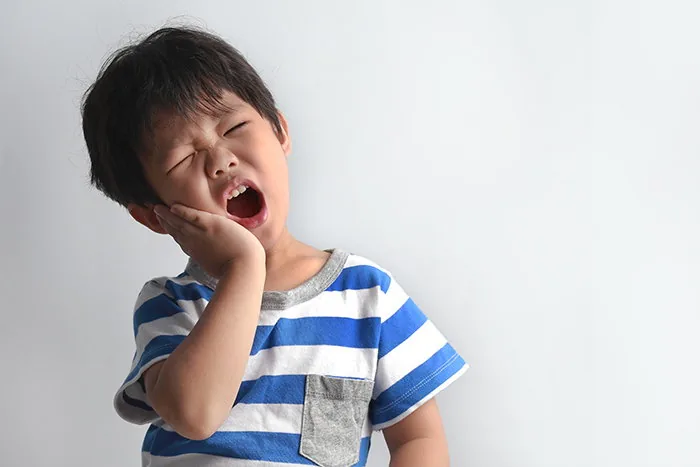
Sensitivity. Usually worn enamel, a cavity, or a cracked tooth. A child who reacts to cold needs to be looked at rather than switched to a sensitivity toothpaste, because the cause determines the fix.
Bad breath. Nearly always bacteria on the tongue and between the teeth, and sometimes a blocked nose that keeps her mouth open all night. Brushing the tongue and flossing where teeth touch deals with most of it. Persistent bad breath with a single blocked nostril can mean something lodged up there.
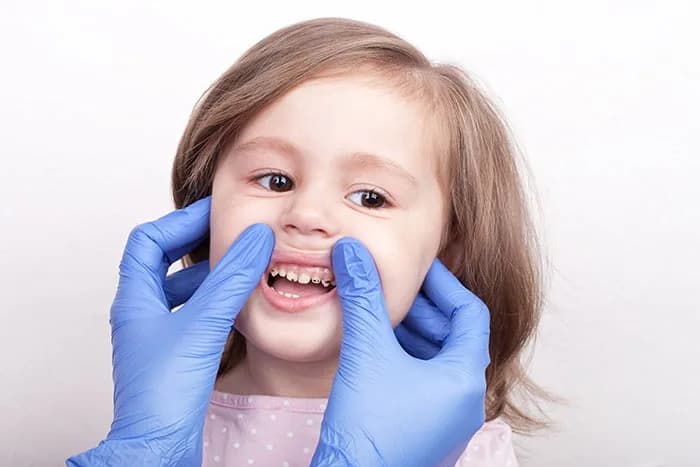
Bleeding gums. Gingivitis happens in children too. Red, puffy gums that bleed when brushed mean plaque is sitting at the gum line, and the answer is more careful brushing there, not less. If it continues for a fortnight of good brushing, see a dentist.
Also read: causes of swollen gums in kids
A tooth knocked out or lost early
A baby tooth knocked out is not replanted. Control the bleeding with gauze and pressure and get her seen the same day to check the socket and the teeth either side.
An adult tooth knocked out is an emergency. Hold it by the crown, not the root, rinse it briefly in milk or saline if it is dirty, and either slot it back into the socket or carry it in milk to a dentist or hospital immediately. Time decides the outcome.
A baby tooth lost early to decay or injury leaves a gap that the neighbouring teeth drift into, which can crowd the adult tooth coming later. A dentist may fit a space maintainer. That is the main reason early loss is treated as a real problem rather than a cosmetic one.
How do you handle a child who is frightened?
Fear usually comes from an emergency first visit when something already hurt. An early, uneventful visit around the first birthday prevents that.
What helps:
- Book a morning slot, before she is tired
- Say what will happen in plain words, without promising there will be no injection
- Avoid the words you would use to reassure yourself, which she hears as warnings
- Let her sit in the chair and hold the mirror first
- Stay where she can see you, and let the dentist do the talking
Paediatric dentists do this for a living and have a toolkit for it. Ask for one if a general dentist visit has already gone badly.
Where do children get dental care in Singapore?
- School Dental Service, run by the Health Promotion Board, which screens and treats school-age children
- Polyclinic dental clinics, for preschool children and for families without a regular dentist
- Private dental clinics, where the Community Health Assist Scheme subsidises treatment for eligible households at participating practices
- Hospital paediatric dentistry, at KK Women's and Children's Hospital and the National Dental Centre, by referral for complex treatment or sedation
Ask about CHAS before you assume private treatment is out of reach. The subsidy applies per procedure at participating clinics, and the Ministry of Health publishes which ones take part.
Frequently asked questions
- When should a child first see a dentist?
- The CDC and the American Academy of Pediatrics both advise a first visit by the first birthday, or when the first tooth appears if that comes sooner. An early visit is mostly about habits and about making the chair familiar.
- How much toothpaste should a toddler use?
- The NHS advises a smear for children under 3, using a paste with at least 1,000 ppm fluoride, and a pea-sized amount from 3 to 6 with 1,350 to 1,500 ppm. Brush twice a day, and spit rather than rinse.
- Why do baby teeth get cavities if they fall out anyway?
- Decay in a baby tooth can reach the nerve, cause real pain and infection, and damage the adult tooth forming underneath. Losing one early also lets the neighbouring teeth drift into the gap.
- Is sugar amount or sugar frequency the bigger problem?
- Frequency. Each sugar exposure starts an acid attack that lasts a while, so a packet drink sipped across an afternoon does more damage than the same drink finished at a meal.
- Is children's dental care subsidised in Singapore?
- The Health Promotion Board runs a School Dental Service for school-age children. Polyclinics have dental clinics, and the Community Health Assist Scheme subsidises dental treatment at participating clinics for eligible households.
Sources
Share this article
This article is for information only and is not a substitute for diagnosis or medical advice. Please talk to your doctor about your own situation.