
Why a child's gums swell and what to do about it
Swollen or bleeding gums in a child usually trace back to plaque, rushed brushing or sweet drinks. What the NHS advises, and where to go in Singapore.
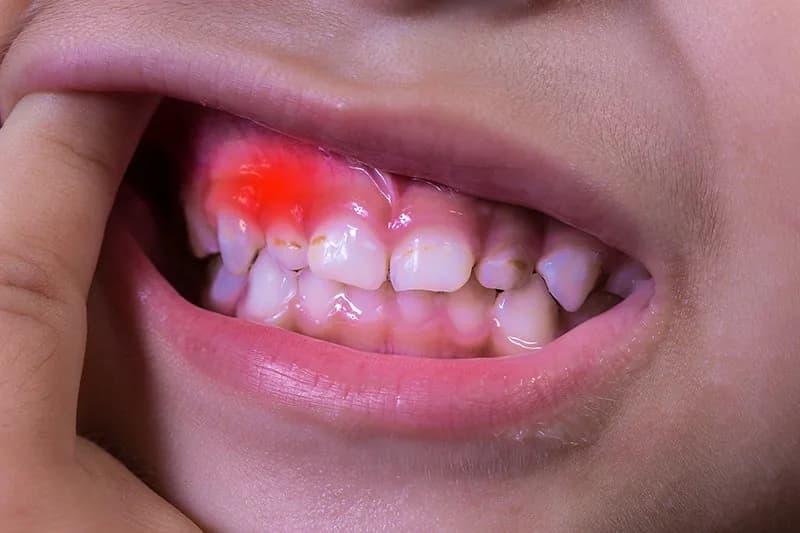
Swollen or bleeding gums in a child are usually gingivitis, the early and reversible stage of gum disease described by the NHS. Plaque left sitting along the gum line is the common cause, helped along by rushed brushing and sweet drinks. Gentle twice-daily brushing settles most cases. Bleeding that lasts beyond a fortnight needs a dentist.
What do swollen gums look like in a child?
Healthy gums are pale pink, firm, and sit snugly around each tooth. Inflamed gums go darker, puffier and softer. They bleed when touched.
Four signs are worth watching for at the bathroom sink.
Blood on the brush. A new brush or a heavy hand will draw a little blood from anyone. If it still shows up when your child brushes softly, the gum itself is inflamed.
Bad breath that brushing does not fix. Plaque bacteria give off sulphur compounds. Morning breath clears after brushing; plaque breath comes back by lunchtime.
A puffy rim along the gum line. Run your eye along where the gum meets the tooth. Swelling there is different from the single tender lump you get over an erupting tooth.
Tenderness that changes how your child eats. Children rarely say their gums hurt. They go quiet about crunchy food instead, or start leaving apple skins and toast crusts on the plate.
What causes swollen gums in kids?
| Cause | What you would notice | What helps |
|---|---|---|
| Plaque along the gum line | Bleeding on brushing, bad breath, puffy gum rim | Gentle brushing twice a day, flossing where teeth touch |
| Brushing too hard, or a stiff brush | Gums sore right after brushing, receding at one spot | A small soft-bristled brush, light pressure, adult supervision |
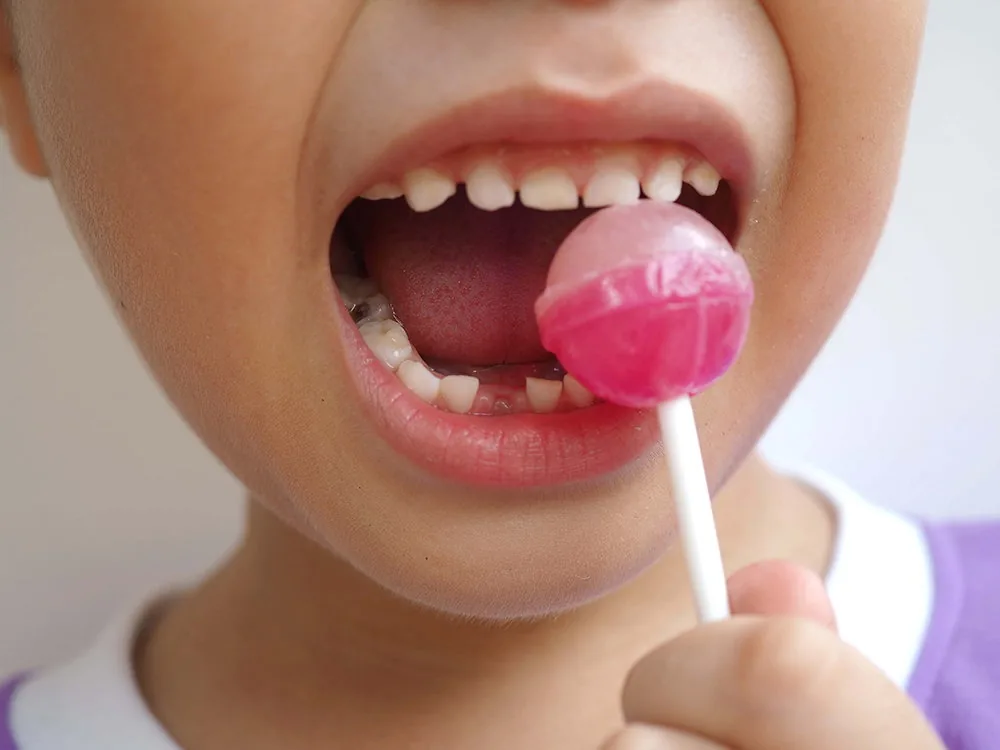
| Frequent sweet drinks and snacks | Plaque rebuilds fast, early cavities alongside the swelling | Fewer sipping occasions, water between meals |
| Teething or a tooth erupting | One red, tender lump over a single tooth | Time, a cold teether, nothing more |
Plaque is the main one
Plaque is a soft film of bacteria that forms on teeth within hours. Where it is left along the gum line, the gum reacts by swelling. Harden it into tartar and a toothbrush can no longer shift it, which is the point at which a dentist has to.
Left alone for long enough, gum inflammation can progress to periodontitis, which damages the tissue and bone holding a tooth in place. That takes years and is uncommon in young children. It is still the reason the NHS sees bleeding gums as something to act on rather than wait out.
The toothbrush can be the problem
A brush with firm bristles, or a child who scrubs sideways with real enthusiasm, grazes the gum margin. The gums bleed, the child decides brushing hurts, and brushing gets skipped. Both halves of that make the swelling worse.
Buy the smallest soft-bristled brush you can find. Guardian, Watsons and Unity all stock children's brushes by age band, and the age on the packet is about head size, which matters more than the character printed on the handle.
Sugary drinks, and how often they are sipped
Plaque bacteria convert sugar to acid. What drives the damage is how many times a day the mouth is exposed, more than the total amount swallowed.
That is where Singapore makes life easier. Since the Ministry of Health introduced Nutri-Grade labelling, pre-packaged and freshly prepared drinks carry a grade from A to D, and the D-graded bubble teas and packet drinks are the ones to make occasional. Water with meals, sweet drinks as a treat, and a brush before bed covers most of it.
Rushed or skipped brushing
Twice a day is the target, with the night-time brush the one that counts most, because saliva flow drops during sleep and leaves plaque undisturbed for eight hours. The morning brush can be quick. The night one should not be.
What helps swollen gums at home?
Gentle, boring consistency is what settles most mild gingivitis.
- Brush twice daily with a soft brush, for two minutes, using small circles rather than long scrubs.
- Keep brushing the bleeding area. Avoiding it leaves the plaque that is causing the bleeding.
- Clean between the back teeth once they touch, with floss or a floss pick.
- Supervise until about age 7 or 8. Younger children do not have the wrist control to brush thoroughly.
- Cut the number of sweet drinks and snack occasions rather than banning them outright.
- If your child is old enough to rinse and spit reliably, a warm salt-water rinse (half a teaspoon of salt in a cup of warm water) can make sore gums feel more comfortable for a few days.
Skip mouthwash for young children unless a dentist has recommended one. Most are not formulated for a child who may swallow them.

What toothpaste should a child use?
The NHS position is straightforward. Children should use fluoride toothpaste, a smear for under-threes and a pea-sized amount from age 3, with an adult watching to make sure it is spat out and not swallowed. Dental fluorosis is associated with swallowing more than the recommended amount repeatedly over years.
Plenty of Singapore parents still prefer a fluoride-free paste for a toddler who swallows everything, and then move to fluoride once spitting is reliable. Either way, the mechanical act of brushing is what removes plaque, and we have written separately about the fluoride debate in toothpaste and how to choose a children's toothpaste if you want the longer version. Talk it through with your dentist rather than with an ingredient list on a shelf.
Where do you get a child's teeth checked in Singapore?
Most families use one of a few routes.
The School Dental Service. The Health Promotion Board provides basic dental care for pupils in government and government-aided schools, so most children are seen without your having to book. If your child has come home with a dental slip, that is the service, and the slip is worth acting on.
Polyclinic dental clinics. For preschoolers and anyone outside the school scheme, polyclinic dental clinics see children at subsidised rates. Appointments are made through HealthHub, which also carries the Health Promotion Board's own oral care guidance for each age.
KKH and the paediatric specialists. KK Women's and Children's Hospital runs a paediatric dental service for referrals, children with medical complications, and problems a general clinic has not resolved.
The American Academy of Pediatrics recommends a first dental visit by the first birthday or within six months of the first tooth appearing. Going early is mostly about the child getting used to the chair, which pays off at every visit afterwards. Our guide to teeth and gum care in infants and toddlers covers the years before school.
When should you stop waiting and see a dentist?
Book an appointment if the bleeding has not improved after two weeks of careful brushing, or if you can see tartar, a yellowish-brown crust at the gum line that no amount of brushing shifts.
Go sooner for any of these: swelling that spreads to the cheek or jaw, fever alongside sore gums, pus, a tooth that has gone loose without being wobbly in the normal way, or pain bad enough to interrupt sleep. Those suggest an abscess or an infection that has moved past the gum, and antibiotics or drainage may be needed.
Our piece on common dental problems in children sets out what a dentist typically does at that first appointment, and when to give a baby a teether covers the eruption lumps that look alarming and are not.
Frequently asked questions
- Is it normal for a child's gums to bleed when brushing?
- A little blood after a rough brush is common and settles once the brushing gets gentler. Blood that keeps appearing even with a soft brush and light pressure points to gum inflammation, which the NHS describes as the early and reversible stage of gum disease. Two weeks of careful brushing is the usual test. If it is still bleeding, book a dentist.
- Where can I get my child's teeth checked in Singapore?
- Children in government and government-aided schools are seen by the Health Promotion Board's School Dental Service, which provides basic dental care in school. Before school age, polyclinic dental clinics take children, and KK Women's and Children's Hospital runs a paediatric dental service for referrals and more complex problems.
- Should my child use fluoride toothpaste?
- The NHS advises fluoride toothpaste for children, with only a smear for under-threes and a pea-sized amount from age 3, and tells parents to supervise brushing so the paste is spat out rather than swallowed. Fluorosis is linked to swallowing too much over years, not to the recommended amount. Ask your dentist what suits your child.
- Can teething cause swollen gums?
- Yes. A tooth pushing through leaves the gum above it red, puffy and tender for a few days, and that settles on its own. Teething swelling sits over one spot. Gum inflammation from plaque runs along the gum line across several teeth and comes with bad breath.
- Does a sugary drink really matter if my child brushes?
- Frequency matters more than quantity. A packet drink sipped slowly through an afternoon keeps the mouth acidic for hours, and plaque bacteria feed on it the whole time. Singapore's Nutri-Grade labels make the sugar content of bottled and freshly prepared drinks easy to compare before you buy.
Sources
- NHS — Gum disease: symptoms, causes and treatment
- NHS — How to keep your teeth clean, including children's toothpaste amounts
- HealthHub, Health Promotion Board — oral health and dental care guidance for children
- Health Promotion Board — School Dental Service
- Ministry of Health Singapore — Nutri-Grade beverage labelling
- KK Women's and Children's Hospital — paediatric dental service
- American Academy of Pediatrics, HealthyChildren — the first dental visit
Share this article
This article is for information only and is not a substitute for diagnosis or medical advice. Please talk to your doctor about your own situation.