
A guide to back pain during pregnancy
What causes pregnancy back pain trimester by trimester, what helps, how Singapore commutes make it worse, and the symptoms that mean see a doctor today.
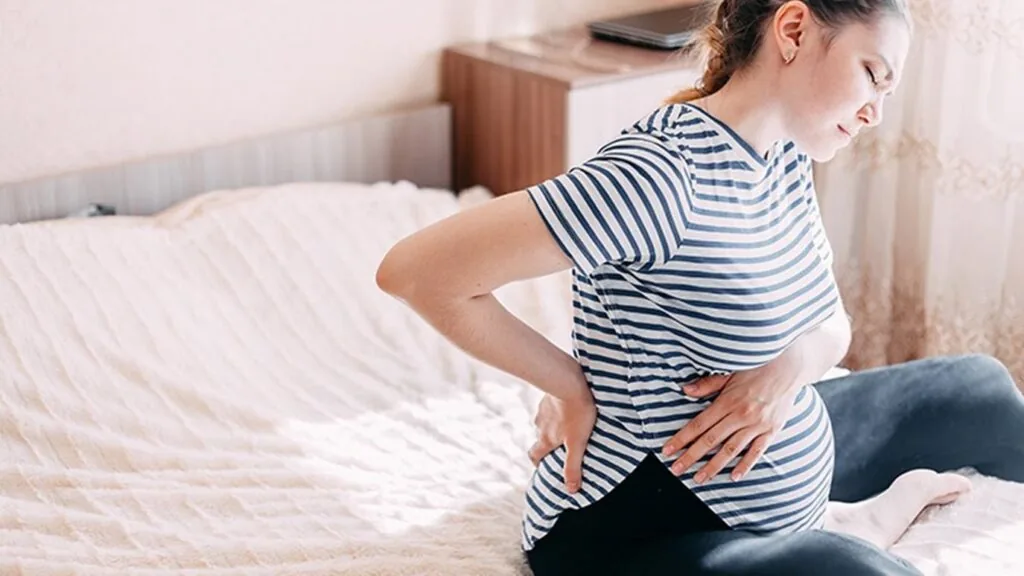
Back pain in pregnancy is common and rarely a sign of anything wrong with the baby. Shifting hormones loosen the pelvic joints, a growing uterus pulls your posture forward, and standing through a long commute finishes the job. Movement, posture and heat help most. Pain with fever or bleeding needs a doctor today.
Why does your back hurt when you are pregnant?
Several mechanisms overlap, and most mothers have some of each.
Hormones soften connective tissue. Progesterone and relaxin are thought to make ligaments more pliable so the pelvis can open for delivery, which also means the joints holding your spine and pelvis together move more than they used to. The NHS points to exactly this softening when it explains antenatal backache.
Weight moves forward. A growing uterus shifts your centre of gravity ahead of your hips, and the muscles along the lower spine work overtime to stop you tipping. They ache the way any overworked muscle aches.
The abdominal wall stops helping. Those muscles normally share the job of holding you upright. Stretched over a bump, they contribute less, and the lower back absorbs the difference.
What changes by trimester
| Trimester | What drives the pain | What tends to help |
|---|---|---|
| First | Hormonal softening of ligaments, often felt as a dull ache low down | Gentle walking, avoiding long stints in one position |
| Second | Sacroiliac joints loosening as the bump grows, pain across the back and hips | Core and pelvic floor work, a backrest at the desk |
| Third | Load and pressure on nerves and vessels around the pelvis | Side sleeping with pillows, heat, shorter standing spells |
Not everyone follows that sequence. Plenty of mothers hurt only in the first trimester, or only in the last few weeks, and a previous back injury changes the pattern entirely.
Is it back pain or pelvic girdle pain?
Worth separating, because the advice diverges.
Lower back pain sits in the lumbar spine, usually one broad band above the waistband, and it worsens after standing or sitting too long. Pelvic girdle pain sits lower, at the front of the pubic bone or across the back of the pelvis, and it spikes when you part your legs: getting out of a car, climbing stairs, rolling over in bed.
Pelvic girdle pain responds to different handling, including keeping the knees together when turning over and avoiding breaststroke in the pool. A women's health physiotherapist can tell the two apart in one appointment, and a Cochrane review of interventions for low-back and pelvic pain in pregnancy treats them as separate problems for that reason.
What prevents pregnancy back pain?
Posture and movement, mostly, and both are dull to read about and effective in practice.
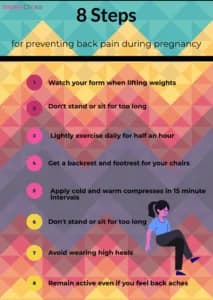
- Squat to lift, bending at the knees and hips with a straight back. Never bend at the waist to pick something up, however light.
- Break up long positions. Half an hour standing or sitting is plenty before you shift.
- Stay active. ACOG supports regular moderate exercise through pregnancy for women without complications, and HealthHub carries the same message.
- Swim. In this climate it is the kindest option going, and the water carries the bump for you. ActiveSG pools charge very little for entry.
- Lose the heels. Flat, supportive shoes with a real sole, not flimsy sandals.
- Set up the desk. A rolled towel in the small of the back and a footrest change the afternoon.
- Sleep on your side with a pillow between the knees, which the NHS advises in later pregnancy.
Our guide to prenatal exercise by trimester has routines, and staying comfortable through pregnancy covers the practical side.
Does commuting in Singapore make it worse?
A standing commute is one of the hardest things you can ask of a pregnant lower back, and most of us do it twice a day.
Thirty minutes braced against the sway of an MRT carriage loads exactly the muscles that are already struggling. The Land Transport Authority's "May I Have A Seat Please" card and lanyard exist for this, and it is worth collecting one rather than waiting to be noticed. Ask at a passenger service centre.
A few other local adjustments help more than they sound like they would. Take the lift rather than the long escalator flights with a heavy bag. Use covered walkways so you are not hurrying through a downpour on wet tiles. And if your workplace has a sick bay with a bed, a ten-minute lie down at lunch beats pushing through to the evening.
What helps once it already hurts?

- Heat first for muscle ache. A warm shower on the lower back, or a warm towel for fifteen minutes.
- Cold for a sharp, inflamed spot, wrapped and never direct on skin, fifteen minutes at a time.
- Keep moving within comfort. Bed rest tends to make musculoskeletal back pain slower to settle.
- Pelvic tilts and bridges, done slowly, a few times a day.
- Side sleeping with knees bent and a pillow between them, plus one under the bump.
- Prenatal massage from someone trained to work with pregnant women, which rules out most walk-in shops. Our guide to prenatal massage covers what to ask before you book.
- Paracetamol, if your doctor agrees it suits you. Ask before taking anti-inflammatories, which are generally avoided in pregnancy.
- A physiotherapy referral if a fortnight of the above has changed nothing.
Does it go away after birth?
Usually, over weeks rather than days. Relaxin levels fall, the load disappears, and the joints firm up again.
Some mothers trade antenatal backache for postpartum backache, which comes from different sources: hours in a hunched feeding position, lifting a baby in and out of a cot, and carrying a car seat on one side. Confinement arrangements can cut both ways. A confinement nanny who takes the night feeds protects your sleep, and the same month spent mostly sitting on a low stool does your back no favours.
Singapore gives 16 weeks of Government-Paid Maternity Leave under the Ministry of Manpower's scheme, which is a genuine opportunity to rebuild rather than only to recover. Start with walking and breathing work, add pelvic floor exercises, and leave heavy lifting until later. Our pieces on postpartum pain and postpartum workouts go through the staging.
When should you see a doctor today?
Some back pain needs same-day assessment rather than a heat pack.
Call your doctor or go to the nearest clinic if your back pain comes with fever, burning or stinging when you pass urine, or blood in the urine. Those point to a urinary tract or kidney infection, which in pregnancy is treated promptly because of the link with preterm birth.
Go urgently for vaginal bleeding, fluid leaking, regular tightening that comes in a rhythm, severe pain that arrives suddenly, numbness or weakness in a leg, or any difficulty controlling your bladder or bowel. Severe pain high up under the ribs late in pregnancy is also a reason to be seen.
Anything milder than that belongs on the list for your next antenatal visit. Write it down with when it started and what makes it worse, because a clear history is what gets you the physiotherapy referral rather than a shrug.
Frequently asked questions
- Is back pain in pregnancy normal?
- It is one of the most common complaints of pregnancy, and the NHS describes backache as expected as the bump grows and the ligaments soften. Being common does not mean you have to put up with it. Posture, movement and heat make a real difference, and a physiotherapist can help when they do not.
- Can back pain harm my baby?
- Ordinary musculoskeletal back pain does not reach the baby. What matters is ruling out the conditions that present as back pain, including urinary tract infection and preterm labour. Back pain with fever, burning on urination, vaginal bleeding or regular tightening needs assessment the same day.
- Which sleeping position helps pregnancy back pain?
- On your side, knees bent, with a pillow between the knees and another supporting the bump. The NHS advises side sleeping in later pregnancy, and the left side is commonly suggested because it keeps pressure off the large vein running up the right of the spine.
- Will the pain go away after delivery?
- For most mothers it eases over the weeks after birth as hormones settle and the load disappears. Some find it replaced by postpartum back pain from feeding postures and lifting a growing baby. Singapore's 16 weeks of Government-Paid Maternity Leave is a useful window for rebuilding core and pelvic floor strength.
- Can I get physiotherapy for pregnancy back pain in Singapore?
- Yes. Ask at your antenatal visit or polyclinic for a referral. KK Women's and Children's Hospital and the National University Hospital both run physiotherapy services that see antenatal and postnatal women, and women's health physiotherapists deal with pelvic girdle pain specifically.
Sources
- NHS — Back pain in pregnancy
- ACOG — Back pain during pregnancy, and exercise during pregnancy
- Cochrane — Interventions for preventing and treating low-back and pelvic pain during pregnancy
- HealthHub, Health Promotion Board — physical activity during pregnancy
- KK Women's and Children's Hospital — antenatal and women's health physiotherapy
- Ministry of Manpower Singapore — Government-Paid Maternity Leave, 16 weeks
Share this article
This article is for information only and is not a substitute for diagnosis or medical advice. Please talk to your doctor about your own situation.