How to stay comfortable during pregnancy in Singapore
Heat, aircon, swollen feet and standing on the MRT. Practical ways to stay comfortable during pregnancy here, and the discomforts that need a doctor.

Comfort in a Singapore pregnancy comes down to managing heat, water and rest. Keep cool and loose, drink more than you think you need, get your feet up at the end of the day, and use the leave you are entitled to. Some discomforts are warnings, so learn which ones.
Why does pregnancy feel so much hotter than before?
Your blood volume rises steeply and your metabolic rate goes up with it, so you simply run warmer than you used to. The thermostat at home has not changed. You have.
Outside, the National Environment Agency's climate records put most days around 30 °C with high humidity all year. Damp air stops sweat evaporating properly, which is how your body is supposed to cool itself, and NEA now issues a heat stress advisory when conditions get worse. Pregnant women feel that before anyone else in the house does.
Plan around it rather than through it. Run errands before 10am or after 6pm, take the sheltered link ways instead of the open pavement, and treat an air-conditioned mall as a legitimate rest stop halfway through a walk.
How much water do you actually need?
More than you are drinking. There is no single correct figure, so judge it by urine colour: pale straw is right, dark yellow means catch up.
Carry a bottle and refill it. Headache, dizziness, a dry mouth and Braxton Hicks tightenings that come more often can all be signs of being short of fluid in this climate. HealthHub makes the same point in its pregnancy guidance, and it is the cheapest intervention in this entire article.
Kopi and teh count towards your intake, though less usefully than water. Coconut water and barley are easier on a queasy stomach. If nausea is still the bigger problem, our guide to pregnancy nausea remedies covers that side of it.
What helps swollen feet and ankles?
Heat, standing and gravity, mostly. Retail, teaching, nursing and F&B shifts are brutal on pregnant legs, and so is the stretch of MRT between home and the office when you cannot get a seat.
Use the reserved seats and ask if nobody offers. Many commuters give one up straight away once they notice.
The rest is unglamorous and works:
- Get your feet above hip height for twenty minutes in the evening, against the wall or on the arm of the sofa.
- Circle your ankles every hour if you sit all day, and shift your weight if you stand all day.
- Go half a size up in footwear for the last months and give up on anything with a strap that cuts in.
- Finish your shower with cool water on your legs.
- Avoid standing still in a queue in the sun, which is the worst combination of the lot.
Swelling that builds through the day and eases overnight is ordinary. Sudden puffiness in the face or hands, or swelling alongside a headache, blurred vision or pain under the right ribs, is the pre-eclampsia pattern the NHS says to get checked the same day. Call your polyclinic or your obstetrician, not your mother-in-law. Our guide to postpartum swelling covers what happens to all this after delivery.
How do you sleep with the aircon on?
Badly, at first. The compromise many Mamas reach is a warmer setting with a fan moving the air, rather than a cold room and a blanket you fight with all night.
Cooled air is dry air, and it is a common reason pregnant skin here gets tight and flaky in a country this humid. Moisturise within a few minutes of stepping out of the shower, while your skin still holds water. A saline spray helps the blocked nose that pregnancy and aircon produce between them.
From 28 weeks, the NHS advises going to sleep on your side rather than your back, including for naps. A folded bath towel wedged behind your back stops you rolling over, and another between your knees takes the pull off your hips. If your back is the thing keeping you awake, we have a longer piece on back pain during pregnancy.
What can you do about heat rash under your bump?
Prickly heat turns up where skin folds trap sweat: under the bump, under the breasts, in the groin and at the back of the neck. In the third trimester that list only gets longer.
Keep those areas dry and uncovered where you can. Cotton rather than synthetics, loose rather than fitted, a change of clothes after the commute, and a proper dry with a towel after every shower including the folds you cannot see. A cool shower in the middle of the afternoon is not indulgent.
Thick, occlusive creams make folds worse by sealing moisture in. Leave them for elsewhere. See a doctor if the rash weeps, spreads, smells, or comes with a fever, because that may be an infection rather than heat rash.
Why is the skin over your bump so itchy?
Because it is stretching faster than it would like. The American Academy of Dermatology describes stretch marks as the visible result of that stretching, strongly influenced by genetics, and is clear that no cream reliably prevents them.
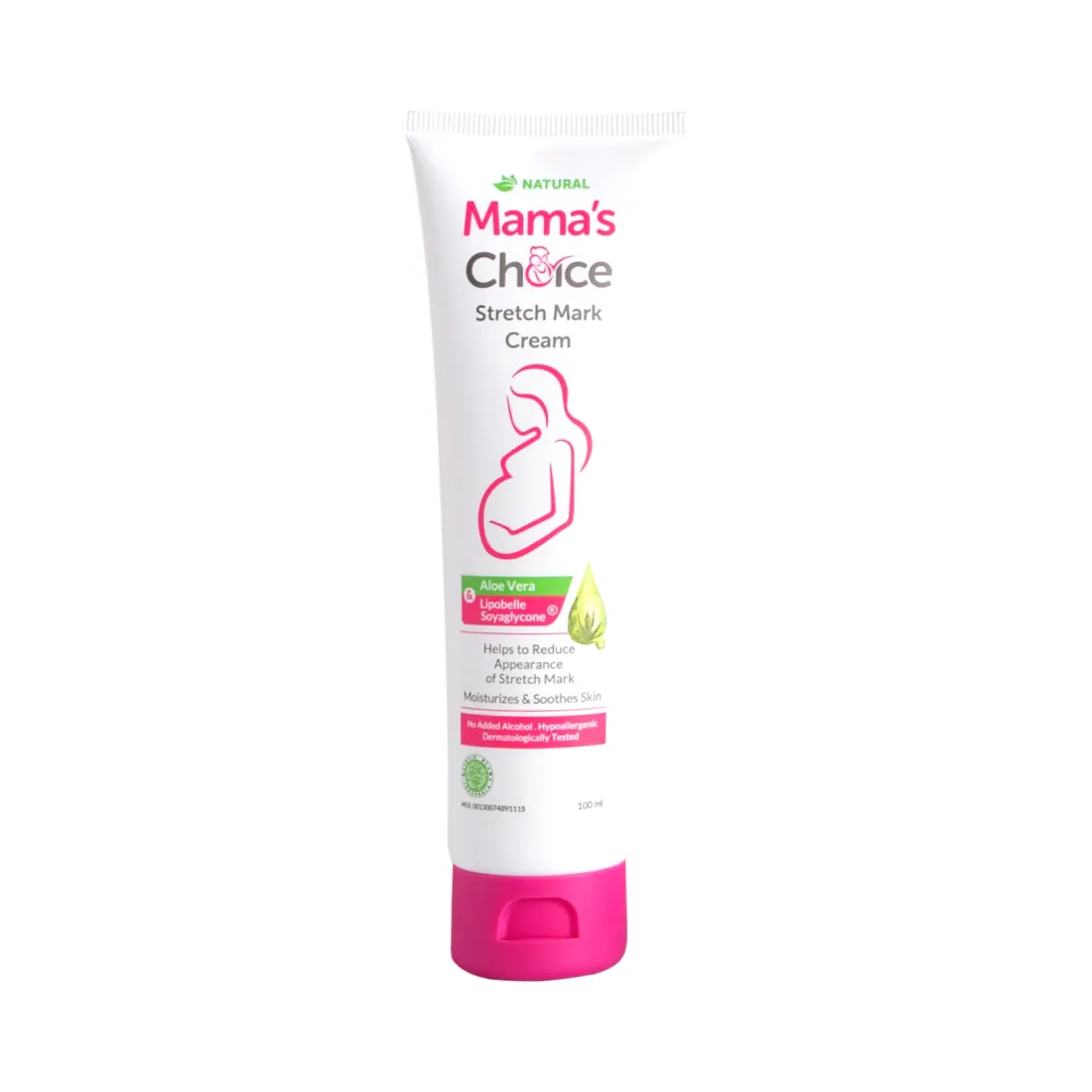
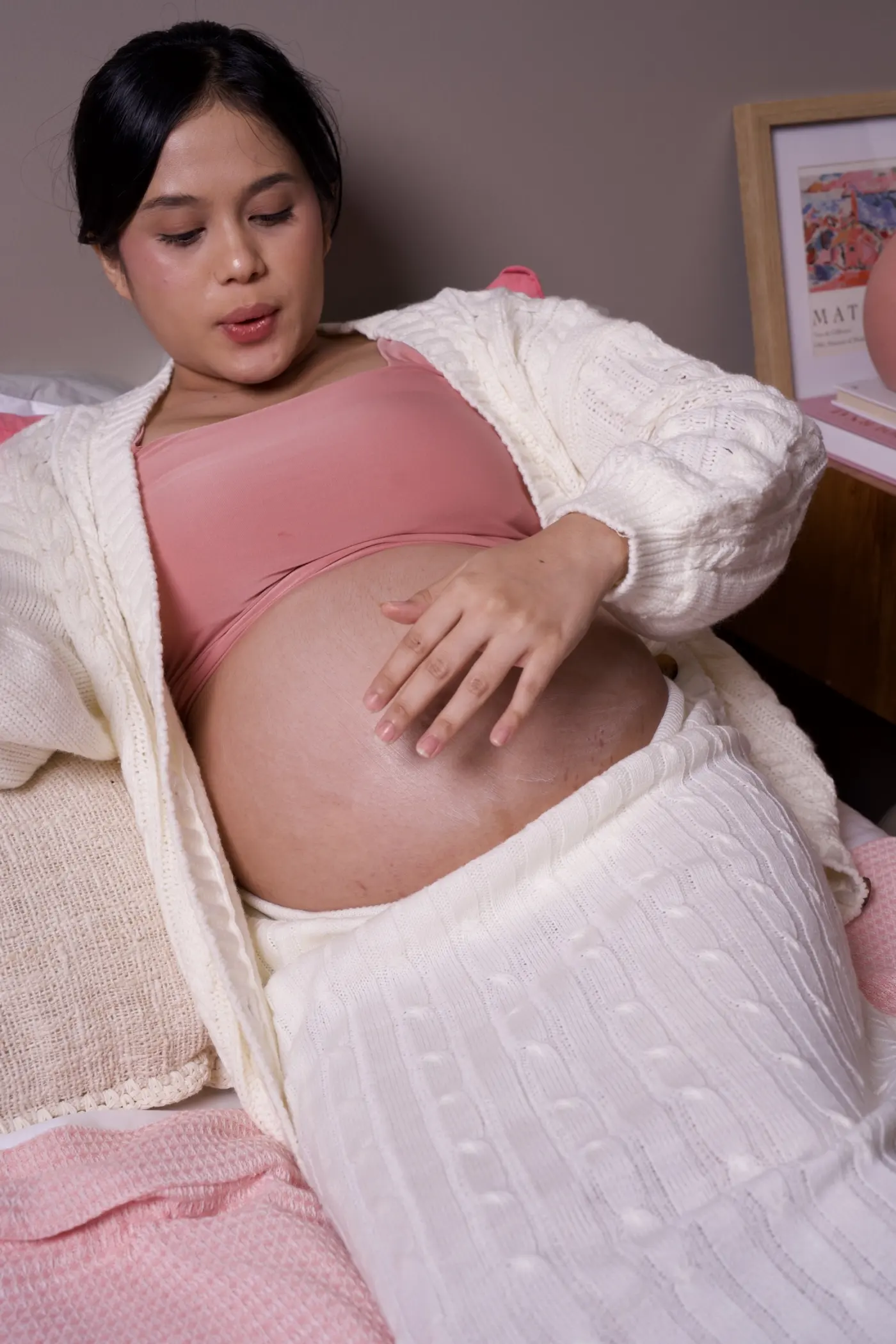
What a moisturiser can do is ease the dry, tight feeling of skin that is stretching, which is worth plenty at 34 weeks. Our Stretch Mark Cream is a moisturiser formulated with pregnancy in mind, with shea butter, olive and jojoba oils and aloe vera. Smooth it over the bump, hips and thighs morning and night to keep the skin moisturised and supple. It contains fragrance, so try it on a small patch first if your skin has become sensitive. More on the biology of it in what stretch marks actually are, and more ideas in our guide to itchy skin during pregnancy.
One kind of itching is not a skin problem at all. Intense itching without a rash, worst on the palms and soles and worse at night, can signal obstetric cholestasis (also called intrahepatic cholestasis of pregnancy), a liver condition that the NHS says needs a blood test promptly. Do not wait a week to mention it.
How much rest can you take from work?
The Ministry of Manpower provides 16 weeks of Government-Paid Maternity Leave for eligible working mothers of Singapore citizen children. Conditions apply to how long you have been with your employer and to how the leave may be split, so read MOM's own rules rather than relying on what a colleague remembers.
Tell your employer earlier than feels comfortable. Antenatal appointments are easier to schedule when they are expected, and a standing job is easier to adjust in month five than in month eight. Ask for a stool, a later start, or a day working from home in the final weeks.
Keep a note of the days you feel worst and what you were doing when it hit. Bring it to your next antenatal visit. A pattern your doctor can see tends to get treated, while a vague complaint of being tired usually does not.
Frequently asked questions
- Is it normal for my feet to swell this much in Singapore?
- Gradual swelling of the feet and ankles that is worse by evening and better by morning is ordinary in pregnancy, and the heat here makes it more pronounced. Sudden swelling of the face or hands, or swelling with a headache or vision changes, is different. The NHS treats that combination as a reason to be seen the same day.
- What temperature should the aircon be at night?
- Comfortable rather than cold. Many Mamas settle somewhere around 24 to 25 °C with a fan rather than 18 °C with a blanket, which dries skin, nose and eyes far less. Moisturising after your shower, while your skin is still damp, helps with the dryness.
- How many weeks of maternity leave do I get?
- The Ministry of Manpower provides 16 weeks of Government-Paid Maternity Leave for eligible working mothers of Singapore citizen children, with conditions on employment length and how the leave may be split. Check the eligibility rules on MOM's site and talk to your employer early, since some of the leave can be taken flexibly.
- Can anything stop stretch marks forming?
- No product reliably prevents them. The American Academy of Dermatology describes stretch marks as a normal result of skin stretching, influenced strongly by genetics, and says creams may improve their appearance rather than erase them. Moisturising is still worth doing, because it eases the dry, tight feeling of stretching skin.
Sources
- NHS — Common health problems in pregnancy
- HealthHub (Health Promotion Board) — Staying well during pregnancy
- National Environment Agency — Singapore climate records and heat stress advisory
- American Academy of Dermatology — Stretch marks, why they appear and how to treat them
- ACOG — Skin conditions during pregnancy
- Ministry of Manpower — Government-Paid Maternity Leave
Share this article
This article is for information only and is not a substitute for diagnosis or medical advice. Please talk to your doctor about your own situation.