Which deodorant works best in pregnancy?
Deodorant or antiperspirant, what aluminium salts do, why crystal sticks are not aluminium-free, and how to stay dry in Singapore humidity.
A deodorant handles odour and an antiperspirant reduces sweat, which the FDA regulates as a cosmetic and a drug respectively. For a Singapore pregnancy you usually want both effects in something mild enough for skin that has turned reactive. Aluminium salts are the only over-the-counter ingredient shown to cut sweating, and the crystal sticks sold as aluminium-free contain aluminium.
Sweating increases in pregnancy anyway. Here it increases from a starting point of 30 °C and high humidity, which makes this a more pressing question than it would be anywhere temperate.
Why you are sweating more
Pregnancy raises your resting metabolic rate and your blood volume, and your body sheds that extra heat by sweating. ACOG lists increased perspiration among the normal changes, alongside the hot flushes that catch many women by surprise.
Hormonal shifts can also change your sense of smell and the composition of sweat itself, so your usual product can stop seeming to work when nothing about it has changed.
Postnatally it swings the other way for a few weeks, with night sweats as your body clears the extra fluid. Confinement, with its long sleeves and its aversion to fans, lands squarely in the middle of that.
Deodorant, antiperspirant, or both
| Deodorant | Antiperspirant | |
|---|---|---|
| What it does | Reduces odour | Reduces sweat |
| How | Antibacterials, fragrance, absorbents | Aluminium salts block ducts temporarily |
| Regulated as | Cosmetic | Over-the-counter drug in the US |
| Helps with wet patches | No | Yes |
| Helps with smell | Yes | Partly, by drying |
| Typical irritation | Fragrance, baking soda | Aluminium salts on shaved skin |
Odour comes from skin bacteria breaking down sweat rather than from sweat itself, which is why an antiperspirant reduces smell indirectly. Most products on a Guardian or Watsons shelf combine both functions, and the pack will say.
The aluminium question, answered straight
Aluminium salts, usually aluminium chlorohydrate or aluminium zirconium compounds, form a temporary plug in the sweat duct. Nothing else available over the counter does this.
The concern that circulates links them to breast cancer and to Alzheimer's disease. Aluminium compounds remain permitted in cosmetics under the ASEAN Cosmetic Directive that HSA enforces, and the evidence health authorities have reviewed does not support a causal link to either disease.
One real caution does exist, and it is on the label rather than in a forum. The FDA requires antiperspirants sold as over-the-counter drugs to advise asking a doctor before use if you have kidney disease, because impaired kidneys clear aluminium less well. Pregnancy does not change that, and kidney disease is the group it applies to.
So for most people the decision is about preference and skin tolerance, which is a more useful frame than a safety debate that has not moved in years.
How natural deodorants compare
Crystal and alum sticks. Potassium alum and ammonium alum are aluminium compounds. A stick marketed as aluminium-free while being made of alum is mislabelled, whatever its other merits.
Baking soda formulas. Effective against odour and a common cause of the red, itchy underarm rash that sends many people back to their old product. Sodium bicarbonate raises skin pH, and pregnancy skin reacts more readily.
Magnesium hydroxide. Gentler than baking soda and reasonably effective on odour.
Arrowroot and starch powders. Absorb moisture. They do not reduce sweating, and they mark dark clothing.
Essential oil blends. Pleasant, and a common source of contact allergy. Tea tree in particular sensitises some people.
Zinc compounds. Reduce odour-causing bacteria without blocking ducts.
A natural deodorant is a legitimate choice. What it will not do is keep a shirt dry on the walk from the MRT station, and pretending otherwise is how people end up disappointed twice over.
What we would use here
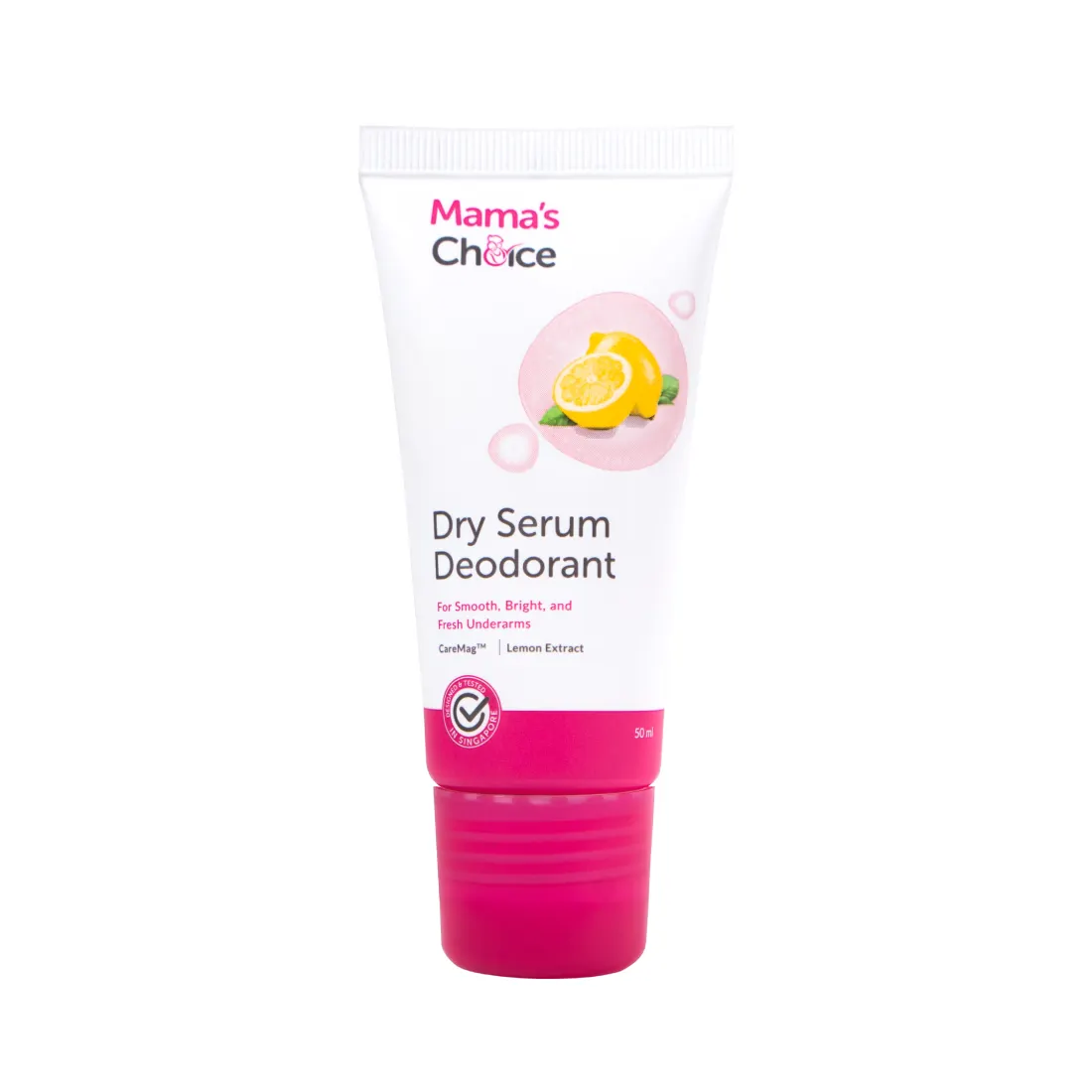
Our Dry Serum Deodorant is a roll-on serum, lighter than a stick, which matters when you are applying to skin that is already warm and slightly damp. It is made without aluminium, alcohol or baking soda, and its magnesium hydroxide base helps control underarm odour, with niacinamide in the formula too. In a 2023 home use test with 30 mothers, 97% said underarm odour was reduced while using it. It is a deodorant rather than an antiperspirant, so it keeps you fresh rather than dry.
For the ingredients worth avoiding in everything else you put on, our page on harmful chemicals in pregnancy and breastfeeding sets out the short list.
Getting more out of whatever you use
Technique matters more than brand, and most of us apply these the quick way rather than the effective one.
- Apply at night, to clean dry skin. Aluminium salts need hours without sweating to form their plug, which is why a morning application in this climate underperforms. Night application then survives the next day's shower.
- Do not apply straight after shaving. Wait a day, or shave at night and apply the following evening.
- Dry the skin completely first. A damp underarm dilutes the product.
- Less than you think. A thin layer works; a thick one transfers to clothing.
- Reapply in the evening if you are going out after work, rather than layering more in the morning.
- Wear cotton or linen. Synthetic office blouses trap sweat and hold odour through a wash.
Irritation, darkening and the rest
Underarm skin in pregnancy gets more reactive and often darker. Pigmentation increases under hormonal influence, and friction, shaving and heat all deepen it. HealthHub's material on pregnancy skin changes covers the same pattern across the neck, face and abdomen.
It fades after the birth, over months rather than weeks. In the meantime, reduce friction, switch to trimming rather than shaving if the skin is sore, and avoid unregistered skin-lightening creams, a product type HSA has repeatedly warned about because some contain mercury or steroids. They have no place in a pregnancy.
For a rash that has already started, stop the product, use a plain moisturiser for a few days, and see a doctor if it weeps or spreads. Our page on common underarm problems covers the rest, including ingrown hairs and the lumps that are usually blocked glands.
Sweating that is not normal
Most pregnancy sweating is ordinary. A few things are worth raising with your obstetrician or your polyclinic.
Drenching night sweats with fever, weight loss or a racing heart. Sweating heavy enough to stop you working or holding a pen, which the AAD classes as hyperhidrosis and manages with prescription-strength aluminium chloride and other options. Sudden heavy sweating with chest pain or breathlessness, which needs attention immediately rather than an appointment.
Everything else is your body cooling a pregnancy in the tropics, which it is doing competently. Our notes on staying comfortable through a Singapore pregnancy and on pregnancy skin generally cover the parts a deodorant cannot reach.
Frequently asked questions
- What is the difference between deodorant and antiperspirant?
- A deodorant tackles odour, by reducing the bacteria that cause it or by masking it. An antiperspirant reduces sweat itself, using aluminium salts that temporarily block the ducts. The FDA regulates antiperspirants as over-the-counter drugs and deodorants as cosmetics, which is how different the two actually are.
- Are aluminium salts safe in pregnancy?
- Aluminium compounds remain permitted in cosmetics under the rules HSA enforces. The claim that they cause breast cancer is not supported by the evidence health authorities have reviewed. If you are unsure, ask your doctor or pharmacist.
- Is a crystal deodorant aluminium-free?
- No. Crystal and alum sticks are potassium alum or ammonium alum, both of which are aluminium compounds. Marketing them as aluminium-free is inaccurate, whatever else they do well.
- Why do my armpits itch since I switched to a natural deodorant?
- Usually the baking soda. Sodium bicarbonate raises the skin's pH and commonly causes a red, itchy reaction, and pregnancy skin is more reactive than usual. Switch to a formula without it rather than persisting.
- Why have my underarms gone darker?
- Pregnancy hormones increase pigmentation, and friction, shaving and heat make it worse. It fades over months after the birth. Reducing friction helps more than any skin-lightening product, and many of those are best avoided while pregnant anyway.
Sources
- FDA — Antiperspirants regulated as over-the-counter drug products, including the kidney disease warning
- AAD — Hyperhidrosis, excessive sweating, diagnosis and treatment
- HSA — Cosmetic product regulation and the ASEAN Cosmetic Directive annexes
- ACOG — Changes to your body during pregnancy
- HealthHub (Health Promotion Board) — Skin changes during pregnancy
Share this article
This article is for information only and is not a substitute for diagnosis or medical advice. Please talk to your doctor about your own situation.