Common underarm problems in pregnancy and after
Bumps, lumps, darkening, odour and sweat all change in pregnancy. What causes each, what helps, and what the Singapore humidity adds to it.
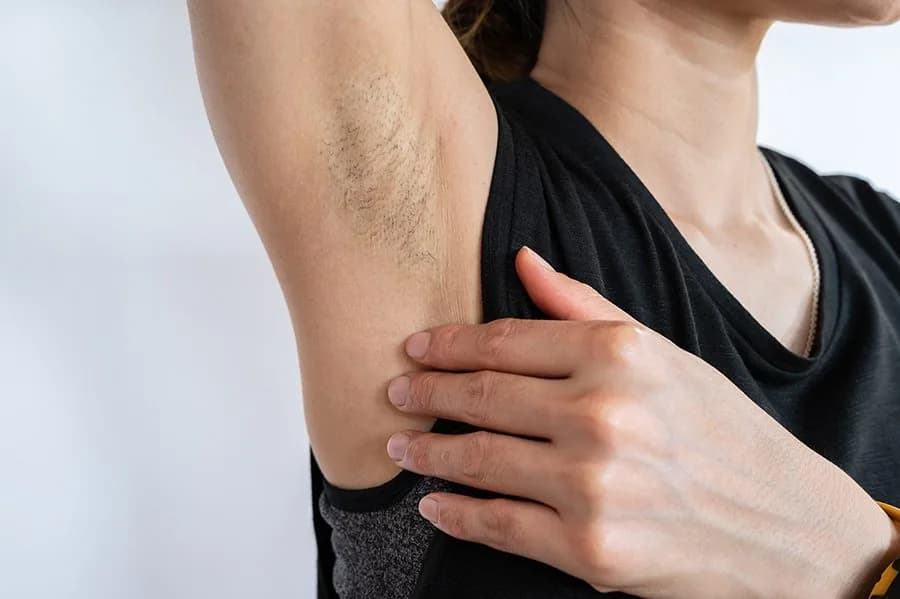
Underarm skin changes in pregnancy because hormones raise pigment production, blood flow and sweating at the same time. Add a damp fold in a humid climate and you get darkening, bumps, odour and the occasional tender lump. Most of it is harmless, and most of it is manageable.
Why underarms change at all
Several systems shift at once. Pigment cells become more active, your metabolic rate rises, and your blood volume increases, so you run warmer and sweat more.
The American Academy of Dermatology lists darkening in skin folds among the ordinary skin changes of pregnancy, together with the line down the abdomen and melasma on the face. None of that means anything has gone wrong.
Then there is the fold itself. Skin against skin, warm and damp, is where friction and irritation live.
Bumpy skin after shaving
Small rough bumps have two usual causes.
The first is hair removal. Shaving against the grain, plucking and waxing all traumatise the follicle, and underarm skin forgives less than leg skin does.
The second is keratosis pilaris, a build-up of keratin around the follicle that the American Academy of Dermatology describes as common and harmless. Hormonal change can make it more noticeable.
What helps: shave with the grain on damp skin with a sharp blade, moisturise afterwards, and leave the area alone for a few days when it is angry. Gentle exfoliation once or twice a week is plenty. If it itches badly, a doctor can prescribe something rather than you working through the pharmacy shelf.
A lump in the armpit while breastfeeding
Breast tissue reaches into the armpit, which is why engorgement in the first weeks can show up there as a tender swelling. It usually softens with frequent feeding and a cool compress between feeds. Skip deep massage, which can make the swelling worse.
Our guide to clearing a clogged milk duct covers the technique.
Get it looked at if the lump is hard, fixed in place, growing, painless but persistent, or still there after two weeks. Your polyclinic can refer you to the breast service at KK Women's and Children's Hospital. Checking is cheap and reassurance is worth having.
Itchy rash in the fold
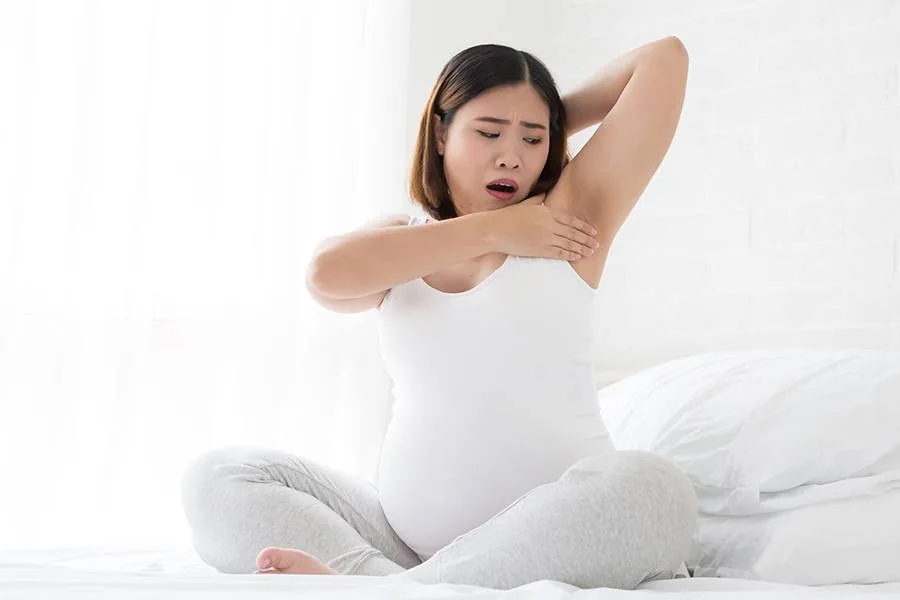
Heat and damp do most of this. A red, sore, sometimes smelly rash in the crease, worse by the end of the day, is usually irritation from skin rubbing on wet skin, and it is one of the most common skin complaints in this climate. HealthHub, the Ministry of Health's public portal, covers the same pattern as heat rash.
Keep the area dry and cool. Loose cotton rather than synthetic sleeves, a cool shower when you get home, and a towel patted properly into the fold.
Pregnancy also brings its own itchy rashes, some of which need a diagnosis rather than a cream. Our piece on itchy skin during pregnancy sets out which ones matter.
Do not scratch. A cold compress does more than fingernails, and broken skin in a damp fold invites infection.
Darkening
Hormones drive the pigment, and friction keeps it going. Tight sleeves, daily shaving and vigorous scrubbing all irritate, and irritated skin in someone prone to pigmentation darkens further.
Most pregnancy darkening fades over the months after delivery. Sun exposure slows that down, and the underarm is less exposed than the face, which works in your favour.
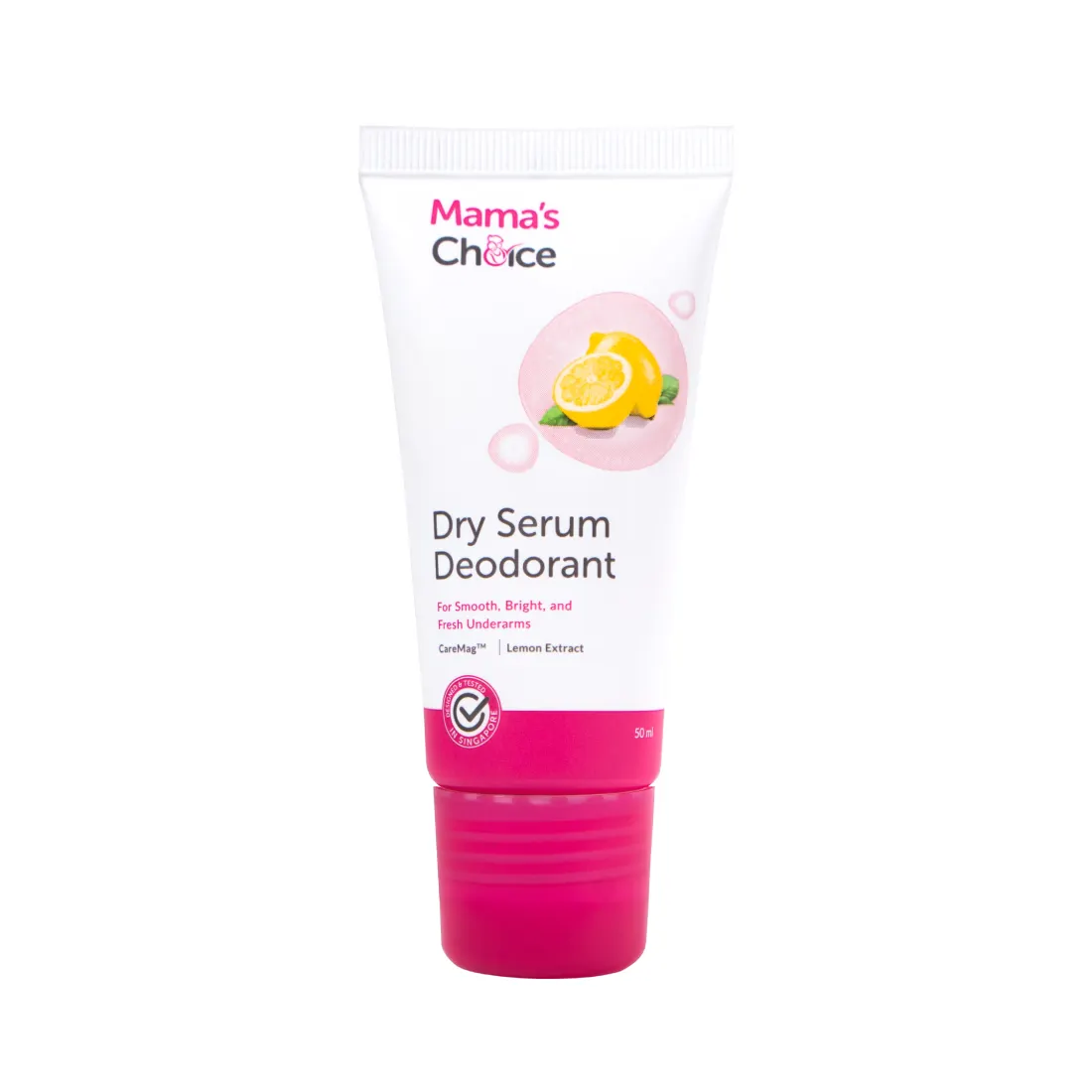
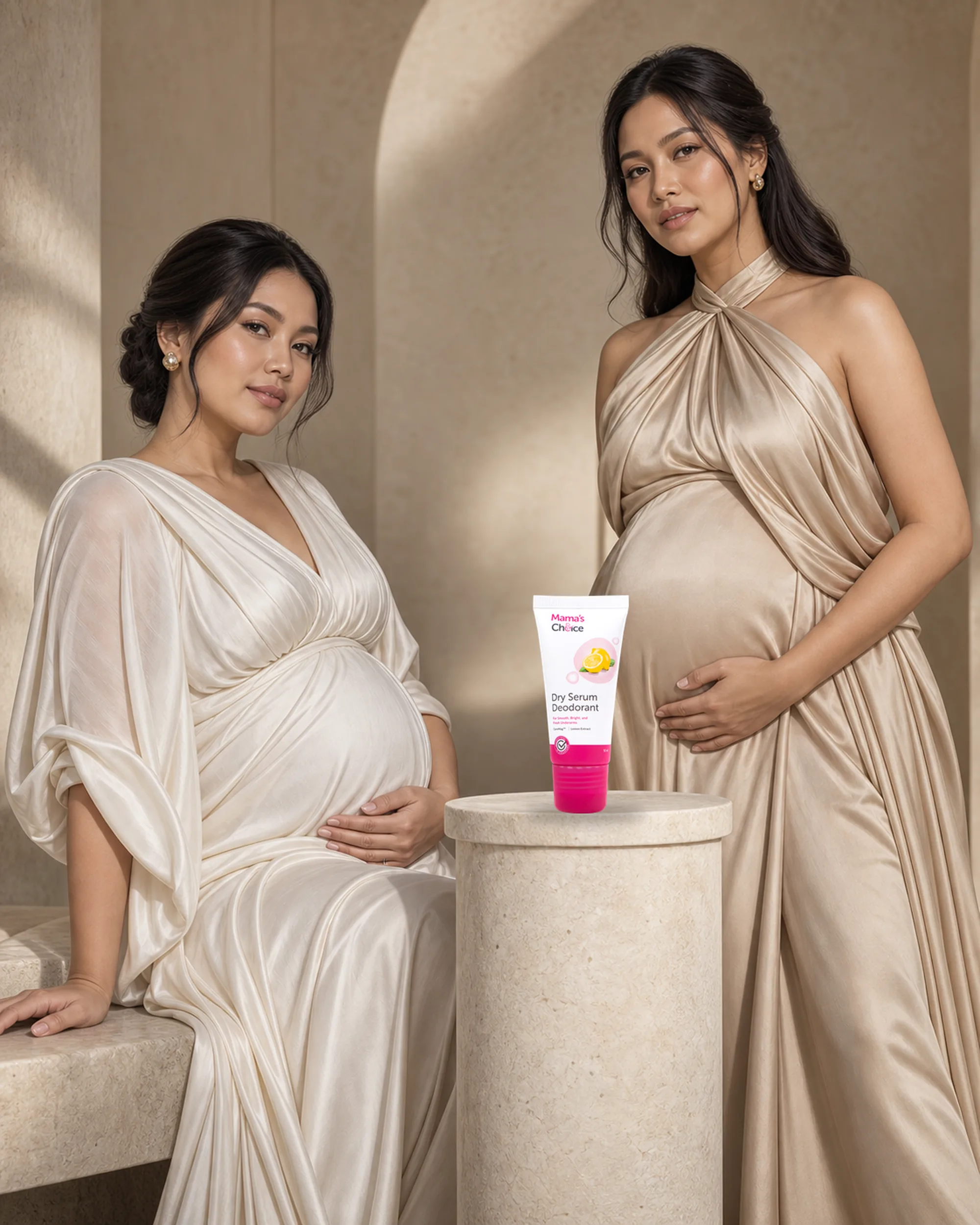
Niacinamide has reasonable evidence for uneven-looking skin tone and is generally regarded as fine to use in pregnancy. Mama's Choice Dry Serum Deodorant puts it in your daily routine: a roll-on with niacinamide and Dead Sea magnesium minerals, made without aluminium, alcohol or parabens, that dries in a minute or two and leaves no yellow marks on clothes. It is a deodorant rather than an antiperspirant, so it works on odour, not sweat. In a 2023 home use test with 30 mothers, 97% felt underarm odour was reduced and 80% felt fresh through the day.
For the face, our article on facial skin problems in pregnancy covers the same pigment question.
Odour and sweating
Sweat itself has almost no smell. Bacteria on the skin break it down, and that is what you notice at the end of the day.
In a climate where you are damp from the walk to the MRT, that process has all day to work. Shower when you get home rather than only in the morning, dry the fold properly, and change out of a damp top instead of letting it dry on you.
Antibacterial soap helps some people. Diet matters less than the internet suggests, though a heavily garlicky or very spicy meal can come through for a day.
What deodorant actually does
The two words get used interchangeably and do different jobs. Deodorant tackles the bacteria and the smell. Antiperspirant reduces the sweat itself, and the US Food and Drug Administration regulates those products as over-the-counter drugs rather than cosmetics.
| What you want | What to look for | Where to buy it here |
|---|---|---|
| Less smell | Deodorant, antibacterial wash | Guardian, Watsons, Unity |
| Less wetness | Antiperspirant, applied to dry skin at night | Guardian, Watsons, Unity |
| Less irritation | Fragrance-light, alcohol-free formulas | Pharmacy shelf, or ask the pharmacist |
| Less darkening | Niacinamide, and fewer shaves per week | Pharmacy or online |
Apply antiperspirant to dry skin before bed rather than after a morning shower. It needs time on dry skin to work, and in this humidity a morning application is diluted before you reach the bus stop.
Sweating that soaks through clothing regardless of what you use, or that wakes you at night, is worth raising at an antenatal visit. The American Academy of Dermatology recognises hyperhidrosis as a treatable condition, and there are prescription options after delivery.
What to skip
- Baking soda, lemon and apple cider vinegar on freshly shaved skin
- Scrubbing hard, which deepens pigmentation rather than lifting it
- Hair removal creams during pregnancy, unless you have used that brand before without reaction
- Strong fragrance in the fold, which is a common source of contact irritation
- Stacking several new products at once, so you cannot tell which one caused the rash
Our comparison of deodorant types for pregnancy goes through the formulations in more detail.
When to see a doctor
- A lump that is hard, fixed or growing, or any lump lasting more than two weeks
- Redness spreading out from the fold, with warmth or fever
- A rash that weeps, crusts or breaks down the skin
- Sudden darkening with other changes, such as thickened velvety skin on the neck, which has its own causes worth checking
- Sweating heavy enough to interfere with work or sleep
- Any underarm change that frightens you, since a five-minute look at the polyclinic settles it
Most of this list turns out to be friction, heat and hormones. The reason to check anyway is that nobody can tell the difference by feel, including the person it is attached to.
Frequently asked questions
- Why do my underarms get darker during pregnancy?
- Pregnancy hormones increase pigment production, and the American Academy of Dermatology describes darkening in skin folds as one of the common pregnancy skin changes, alongside the linea nigra and melasma. Friction and shaving irritation deepen it. Most of it fades over the months after delivery.
- I have a lump in my armpit while breastfeeding. Is that normal?
- Breast tissue extends into the armpit, so engorgement can produce a tender swelling there in the early weeks. It often settles with frequent feeding and a cool compress between feeds. A lump that is hard, fixed, growing, or still present after a fortnight needs a doctor, and your polyclinic can refer you to KK Women's and Children's Hospital.
- Is aluminium in antiperspirant safe in pregnancy?
- Antiperspirants are regulated as over-the-counter drugs by the US Food and Drug Administration, and no regulator has established a link between aluminium salts in antiperspirant and cancer. Plenty of mothers still prefer to avoid them, which is a preference rather than a medical instruction.
- Does baking soda or apple cider vinegar lighten underarms?
- No, and both commonly irritate. Underarm skin is thin, often freshly shaved, and sits in a fold that stays damp in this climate. Irritation is one of the things that darkens the area further, so these remedies tend to work against the result you want.
- Why do I sweat so much more now?
- Blood volume, metabolic rate and core temperature all rise during pregnancy, so you shed more heat through sweat. In Singapore that compounds with year-round humidity, where sweat evaporates poorly, and the damp fold is what causes the rash and the smell.
Sources
- American Academy of Dermatology — skin conditions during pregnancy
- American Academy of Dermatology — keratosis pilaris and hyperhidrosis
- US Food and Drug Administration — antiperspirant drug products for over-the-counter human use
- HealthHub (Ministry of Health Singapore) — skin care and heat rash
- KK Women's and Children's Hospital — breast conditions and lactation services
Share this article
This article is for information only and is not a substitute for diagnosis or medical advice. Please talk to your doctor about your own situation.