
What Are the Real Benefits of a Sheet Mask?
Sheet masks hydrate well and treat very little. What they actually do for pregnancy skin, what to check on the label, and how to use one in this climate.
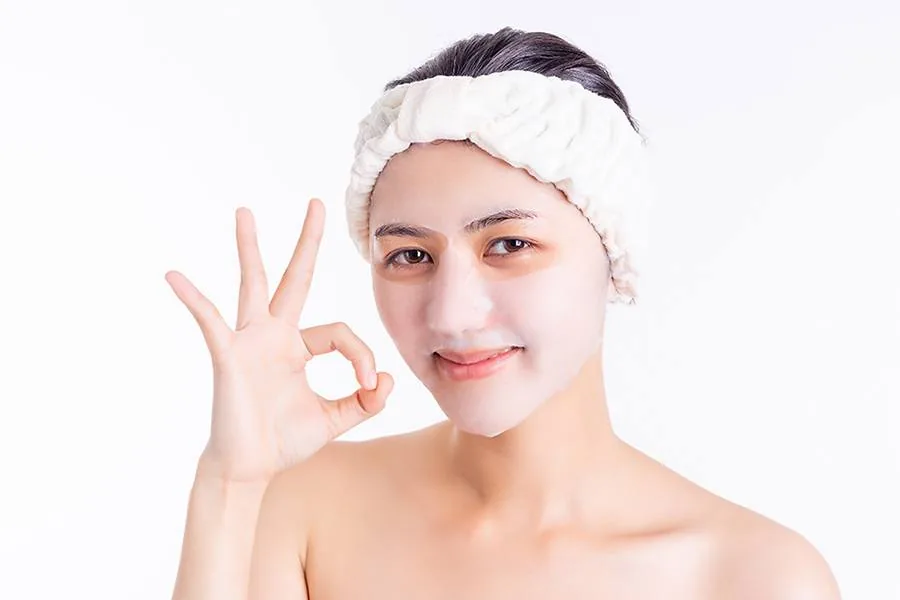
A sheet mask is a soaked cloth that holds watery essence against your face for fifteen minutes. It hydrates well, feels pleasant, and leaves skin looking smoother for about a day. It does not treat pigmentation, acne or wrinkles, whatever the packet says.
What a sheet mask does
Occlusion, mostly. A wet sheet sitting on the skin stops water evaporating, so the surface layer takes up moisture and swells slightly. Fine lines look softer, the skin looks plumper, and makeup goes on better.
The American Academy of Dermatology describes this as the ordinary mechanism of moisturising: humectants draw water in, occlusives hold it there. A sheet mask is an efficient way of applying both at once.
The effect lasts a day or so. That is worth knowing before a wedding and not worth building a routine around.
What it will not do
The claims on the pouch run well ahead of the evidence.
- Lift pigmentation. Melasma responds to sun avoidance over months, not to a sheet over fifteen minutes
- Clear acne. A treatment needs to be on the skin consistently; a weekly mask is not
- Shrink pores. Pores look smaller when skin is less oily and less inflamed, and the opening does not change
- Deliver actives deeper. Intact skin is a barrier, and a damp cloth does not change that in any meaningful way
- Replace a moisturiser or sun protection. Neither job is covered
None of that makes masks useless. It makes them a nice fifteen minutes with a hydration bonus, which is a fair thing to buy.
Reading the label when you are pregnant
Pregnancy skin is more reactive, and a few ingredients come off the list entirely.
| Ingredient | In pregnancy |
|---|---|
| Glycerin, hyaluronic acid, panthenol | Fine, and these are the ones doing the work |
| Niacinamide | Generally considered compatible, and useful for dullness |
| Centella asiatica, aloe, oat | Fine, and soothing on irritated skin |
| Salicylic acid | Low concentrations in a wash-off product are usually acceptable; avoid strong leave-on versions |
| Retinol and other retinoids | Avoid |
| Hydroquinone | Avoid |
| Heavy fragrance and essential oils | Common cause of irritation; skip when your skin is already reacting |
Our article on whether niacinamide is safe in pregnancy covers the one active most women want to keep, and harmful chemicals in pregnancy goes through the wider list.
Using one without irritating your skin
- Cleanse with something mild, then leave the skin slightly damp
- Apply the mask smoothed flat, and set a timer
- Take it off at fifteen to twenty minutes, while the sheet is still wet
- Pat the remaining essence in rather than rinsing it off
- Follow with your usual moisturiser, since the mask is not one
- Stop immediately if anything stings
Letting a mask dry out on your face works against you, because a drying sheet can pull moisture back out of the skin. It is an easy mistake to make.
Skip the exfoliation beforehand. Our guide to washing your face properly covers what a cleanse should and should not involve.
Humidity, air-conditioning and haze
Singapore skin lives in two climates a day, and that changes what a mask is for.
Outdoors you are damp, oily and shiny by mid-morning, so a rich mask feels like too much. Indoors you spend eight hours in dry, cooled air, which is where the dehydration actually happens. A mask after work makes more sense here than a mask before going out.
Haze season tightens and irritates skin for a lot of people. A plain hydrating mask with no fragrance is a reasonable response, and an actives-heavy one is not.
One practical note on storage. A fridge is kinder to masks than a bathroom shelf in this climate, and a chilled mask feels considerably better on a flushed face.
Where to buy, and what to leave alone
Guardian, Watsons, Unity and the established online storefronts are the straightforward options, with full ingredient lists and a named manufacturer on the pack.
The category worth avoiding is unbranded whitening masks bought through informal channels. The Health Sciences Authority publishes alerts on cosmetic products found to contain undeclared ingredients, including mercury in skin-lightening products, and mercury crosses the placenta. A mask promising dramatic whitening in a week belongs in that category.
Check for a legible ingredient list and a manufacturer's name. Products with neither are not a bargain.
Cheaper things that do the same job
A plain moisturiser applied to damp skin after a shower achieves most of what a hydrating mask achieves, for a fraction of the cost per use.
A clean flannel soaked in cool water and laid over the face for ten minutes does the resting part, which for many women is the actual appeal. Our guide to pregnancy beauty habits sets out the short routine that does the heavy lifting, and facial skin problems during pregnancy covers what to do when your face changes more than a mask can address.
Frequently asked questions
- What does a sheet mask actually do?
- It holds a layer of watery essence against your skin for fifteen minutes, which slows water loss and leaves the surface plumper and smoother. The American Academy of Dermatology describes that occlusive effect as how moisturisers work generally. The result is real and short-lived, usually a day or so.
- Are sheet masks safe during pregnancy?
- Most are, and the ingredient list is what matters rather than the format. Avoid retinol and retinoids, strong salicylic acid and hydroquinone. Fragrance-light, alcohol-free masks aimed at sensitive skin are the sensible pick, since pregnancy skin reacts more readily than it used to.
- How often can I use one?
- Once or twice a week is plenty for most skin. Daily masking can cause irritation, particularly on pregnancy skin, and irritated skin looks duller rather than brighter.
- Should I exfoliate before masking?
- No. That advice circulates widely and it is how people end up with a stinging face. Cleanse, pat the skin so it is still slightly damp, then apply. Save any exfoliation for a different day, if at all.
- Are expensive masks better?
- Rarely. The useful ingredients in a hydrating mask are humectants such as glycerin and hyaluronic acid, which are inexpensive. What you are often paying for is packaging and a brand name.
Sources
- American Academy of Dermatology — moisturiser ingredients and how to care for dry skin
- American Academy of Dermatology — skin care and skin conditions during pregnancy
- Health Sciences Authority — cosmetic product notification and safety alerts on adulterated cosmetic products
- HealthHub (Ministry of Health Singapore) — skin care
Share this article
This article is for information only and is not a substitute for diagnosis or medical advice. Please talk to your doctor about your own situation.