Pregnancy Nausea Remedies Worth Trying
Practical relief for morning sickness, the local smells and heat that make it worse, how to protect your teeth after vomiting, and when it needs treatment.

Eat small and often, keep fluids going, and avoid the smells that set you off. Ginger, vitamin B6 and rest all help some women. Nausea that stops you keeping liquid down is a different problem and needs a doctor, because dehydration comes fast in this climate.
Why does pregnancy nausea happen?
Rising hCG is the main suspect, alongside oestrogen and a slower-emptying stomach. Low blood sugar makes it worse, which is why it tends to be at its worst first thing and after a long gap without food.
ACOG and the NHS both describe nausea and vomiting as among the most common complaints of early pregnancy, usually starting before week 9 and, for most women, easing by around week 16 to 20. The name is misleading; it arrives at any hour.
Our separate piece on what triggers pregnancy nausea goes through the mechanisms, and early pregnancy signs covers what else turns up at the same time.
Seven remedies worth trying
1. Eat before you feel hungry
An empty stomach is the most reliable trigger. Small portions every two hours beat a sit-down meal. Keep crackers by the bed and eat a few before you sit up.
2. Ginger
A slice in hot water, ginger tea, or a ginger sweet. ACOG lists it among the non-drug options, and it is cheap and easy to try. Available at every wet market and supermarket here.
3. Something sour or cold
Sour plum, a sliced lemon to sniff, frozen grapes, ice chips. A cold drink often stays down when a warm one will not.
4. Vitamin B6
ACOG describes pyridoxine, with or without doxylamine, as the first medical step. Ask your doctor about the dose rather than buying a high-strength supplement yourself.
5. Rest, properly
Lie down when it is bad. Avoid lying flat straight after eating, which makes reflux and nausea worse. Keep the room cool.
6. Loose clothing
Anything tight across the abdomen adds to the queasiness. Elastic waists and loose cotton, which suits the weather anyway.
7. Gentle movement
A short walk in the evening when the heat drops, or a prenatal yoga session. Our trimester exercise guide has the detail.

What to eat and drink in this heat
Dehydration and nausea feed each other, and Singapore's humidity speeds up the first one.
| Usually tolerated | Usually a trigger |
|---|---|
| Plain rice, congee, plain bread, crackers | Fried hawker food, deep-fried snacks |
| Barley water, coconut water, cold plain water | Strong coffee, sweet milk tea |
| Steamed fish, chicken soup, tofu | Sambal, heavy curries, chilli |
| Bananas, apples, cold fruit | Durian and other strong-smelling fruit |
| Ice chips, frozen fruit cubes | Large volumes of liquid at once |
Sip rather than gulp, and aim for frequent small amounts through the day. If one glass is too much, ice chips count. Watch your urine colour; dark yellow means you are behind.
HealthHub's pregnancy nutrition guidance applies once the nausea settles. For these weeks, food that stays down is the standard.
Which triggers are harder to avoid here?
A few are specific to daily life in Singapore.
Hawker centre air. The mix of fried oil, sambal and durian at close range is a reliable trigger. Sit at the edge, upwind of the stalls, or get food to go.
The morning MRT. A packed carriage with no airflow, standing up, after no breakfast. Leaving fifteen minutes earlier for a less crowded train helps more than it sounds like it should.
Heat and no breeze. Nausea worsens when you overheat. Carry a fan, stay in the shade and use the underground links.
Strong-smelling traditional tonics. Herbal preparations offered during pregnancy are worth checking with a doctor first. The Health Sciences Authority has repeatedly warned about unregistered health products containing undeclared ingredients, and pregnancy is the wrong time to take a chance.
Protecting your teeth after vomiting
Stomach acid softens tooth enamel, and acid reaching your mouth several times a day adds up over a trimester.
Rinse with plain water straight after being sick. The NHS advice on teeth in pregnancy is to avoid brushing immediately, because the enamel is temporarily softened and brushing can wear it away. Wait a while, then brush.
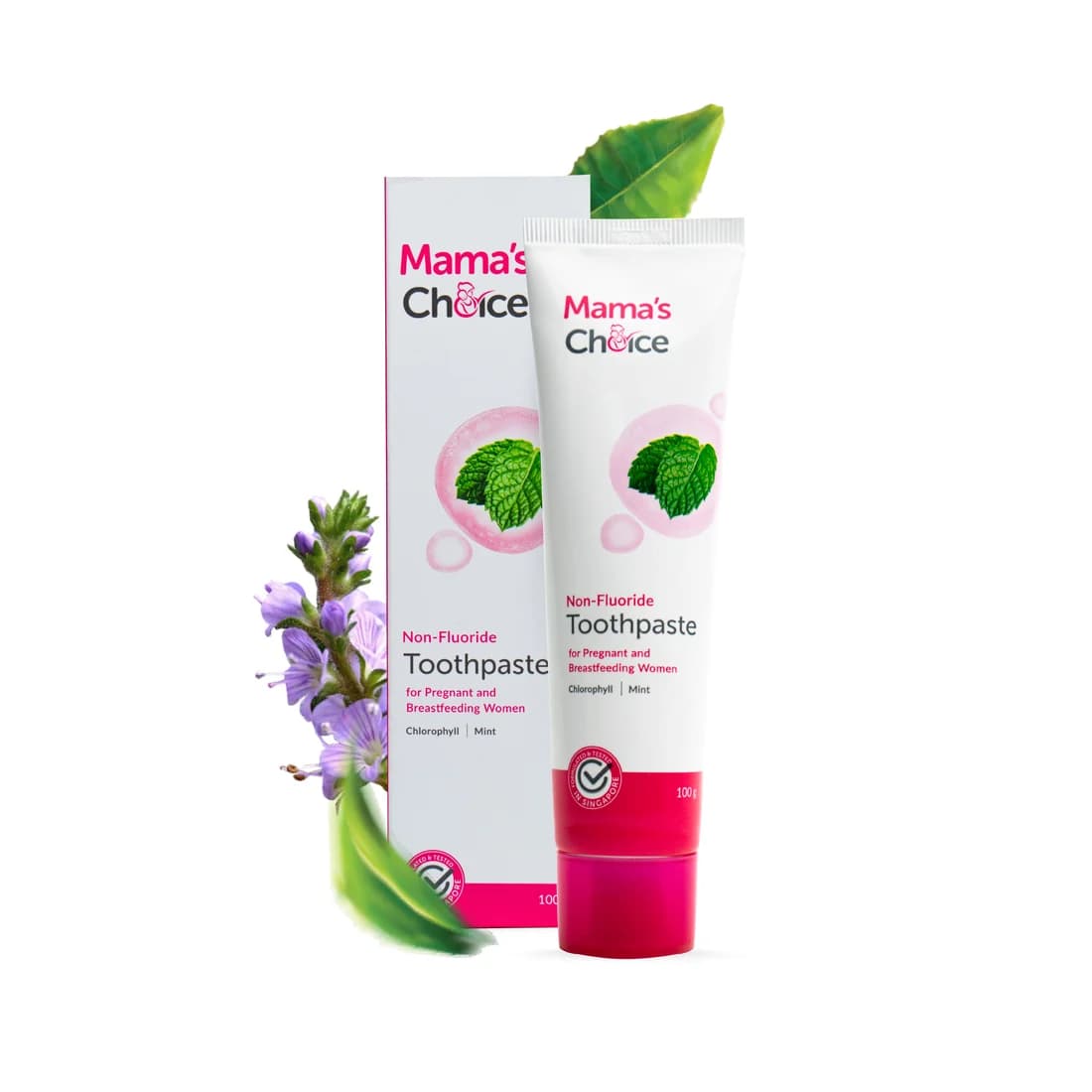
Brushing can set off the gagging by itself. The NHS suggests a small-headed brush, taking it slowly, and a toothpaste with a milder taste if a strong one makes you heave. Keep to a fluoride toothpaste if you can, since enamel softened by acid is exactly what fluoride helps protect. Our Non-Fluoride Toothpaste is a mint paste made without fluoride or SLS, for women who prefer a fluoride-free paste; if that is you, ask your dentist how else to protect your enamel through the sick weeks. Our pieces on fluoride in toothpaste and toothache during pregnancy cover the dental side.
Polyclinic dental clinics see pregnant patients, and gum inflammation is common in pregnancy, so a check-up during the second trimester is time well spent.
When does nausea need treatment?
Go and be seen if you cannot keep fluids down for a day, if you are losing weight, or if you feel dizzy and your urine has gone dark. The NHS calls the severe form hyperemesis gravidarum, and it is treated with anti-sickness medication and sometimes intravenous fluids.
Other reasons to get checked promptly: vomiting that starts for the first time after week 9, abdominal pain, fever, a headache with visual changes, or vomiting blood.
Polyclinics can assess and refer, and both KKH and NUH take obstetric admissions. Pre-delivery consultations and tests can be paid from MediSave under the Ministry of Health's maternity package, so the cost of going early is lower than you might assume.
Frequently asked questions
- Does ginger really help morning sickness?
- ACOG includes ginger among the non-drug options worth trying for nausea and vomiting in pregnancy, and many women find it takes the edge off. It will not touch severe vomiting. Ginger tea, a slice in hot water, or a ginger sweet are all reasonable; there is no need for a concentrated supplement.
- What can I take for nausea while pregnant?
- ACOG describes vitamin B6, also called pyridoxine, with or without doxylamine, as the first-line medical treatment for nausea and vomiting in pregnancy. That is a conversation with your doctor rather than a pharmacy purchase. Prescription anti-sickness medicines exist for cases that do not respond.
- Should I brush my teeth right after vomiting?
- Rinse with plain water first and wait a while before brushing. Stomach acid softens enamel temporarily, and brushing immediately can wear it away. Rinsing dilutes the acid, and the toothbrush can wait.
- When does morning sickness stop?
- Many women feel better towards the end of the first trimester, and the NHS says that for most it improves or stops by around week 16 to 20. A minority have it for longer, occasionally the whole pregnancy. Sickness that starts after week 9 or comes with other symptoms is worth mentioning to your doctor.
- How do I know if it is hyperemesis gravidarum?
- The markers the NHS describes are vomiting so persistent that you cannot keep food or fluid down, weight loss, and signs of dehydration such as dark urine and dizziness. It needs medical treatment and sometimes a drip. Go to a polyclinic or straight to KKH or NUH rather than waiting it out.
Sources
- ACOG — Morning sickness: nausea and vomiting of pregnancy
- NHS — Vomiting and morning sickness in pregnancy
- NHS — Severe vomiting in pregnancy, hyperemesis gravidarum
- NHS — Teeth and gums during pregnancy
- HealthHub, Health Promotion Board — eating well in pregnancy
- Health Sciences Authority Singapore — risks of unregistered health products and traditional remedies
Share this article
This article is for information only and is not a substitute for diagnosis or medical advice. Please talk to your doctor about your own situation.