
Is Pregnancy Hair Loss Normal?
Shedding during pregnancy usually points to iron, thyroid or stress rather than to pregnancy itself. What the AAD says, and which blood tests to ask for.
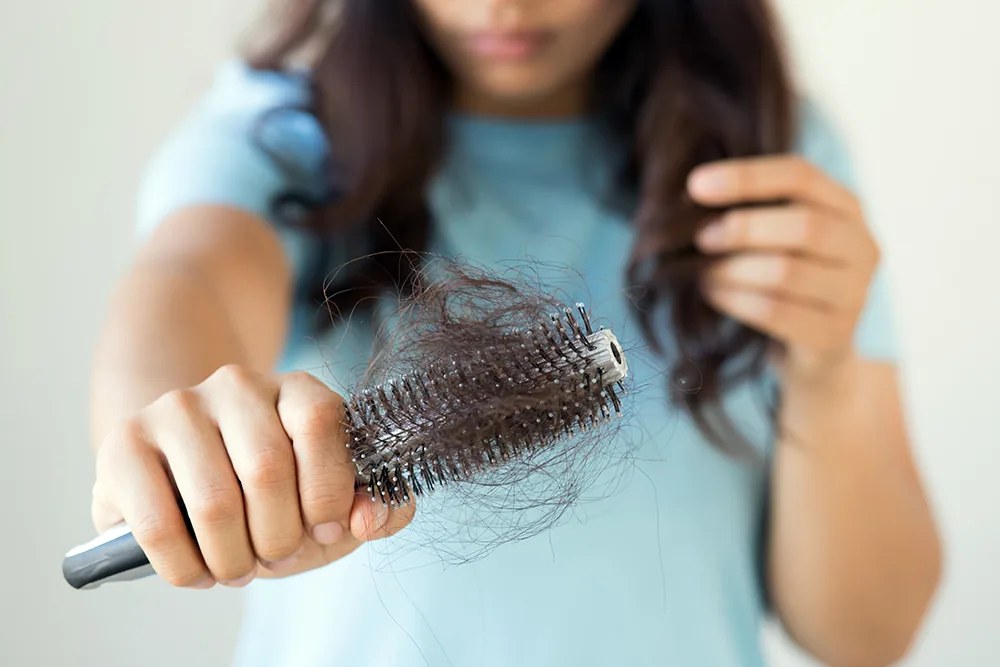
Many women shed less hair while pregnant, not more. Noticeable loss during pregnancy usually points to low iron, a thyroid problem or a recent shock to the system rather than to pregnancy itself. Ask for a blood test. The heavy shedding many Mamas notice comes a few months after delivery.
Is hair loss normal during pregnancy?
It happens, and it is worth looking into rather than waiting out.
Hair grows in cycles. At any time most of your hairs are in the growing phase and a minority are resting, after which they fall. Pregnancy hormones tend to hold more hairs in the growing phase, which is why some women find their hair thicker and glossier for a few months.
So shedding that gets worse while you are pregnant is a signal. The American Academy of Dermatology describes this kind of diffuse loss as telogen effluvium, where a shock pushes a large batch of hairs into the resting phase at once. The trigger might be an illness, surgery, severe nausea and weight loss, a bereavement, or a nutritional deficiency.
The condition is temporary. Finding the trigger is what shortens it.
What causes shedding while you are pregnant?
Iron deficiency. A common finding, and a very treatable one. Blood volume rises sharply in pregnancy and iron requirements rise with it, so anaemia is common; the WHO and ACOG both treat it as a routine thing to screen for. Alongside thinning hair you may notice fatigue, breathlessness on the stairs, palpitations and headaches.
Thyroid disease. Both an overactive and an underactive thyroid can cause hair loss, and both are easy to overlook in pregnancy because tiredness, weight change and temperature sensitivity all sound like pregnancy. A blood test settles it.
Severe nausea and vomiting. Hyperemesis gravidarum causes weight loss and nutritional shortfall, and hair loss can follow a few months later. Our guide to pregnancy nausea covers the manageable end of that.
Stress and illness. Telogen effluvium typically shows up two to three months after the trigger, which is why the cause often feels unrelated by the time the hair starts coming out.
Traction. Tight ponytails, buns and braids worn daily pull hair from the follicle. This one causes thinning at the hairline and temples specifically, and it is largely preventable.

How much shedding is too much?
| Sign | What it suggests |
|---|---|
| 50 to 100 hairs a day | Normal, per the AAD |
| Handfuls in the shower, widening parting | Telogen effluvium, worth testing |
| Thinning at the temples and hairline | Traction from tight styles |
| Round smooth bald patches | Alopecia areata, see a doctor |
| Scaly, itchy or sore scalp | A scalp condition rather than shedding |
| Shedding plus fatigue and breathlessness | Possible anaemia, get bloods done |
Keep what falls out for two or three days in an envelope. It sounds odd and it turns "my hair is falling out" into something a doctor can assess.
What actually helps?
Nothing on the shelf fixes a deficiency, so the useful list is short.
- Get tested. Full blood count, ferritin, thyroid function. If iron is low, correcting it removes the trigger, and the AAD notes that hair usually recovers once the cause is dealt with.
- Eat iron with vitamin C. Lean red meat, dhal, tofu, kailan, spinach, fortified cereal, with an orange or a squeeze of lime at the same meal to help absorption. Skip liver, which is high in vitamin A and on the avoid list in pregnancy.
- Take supplements on your doctor's recommendation rather than by guesswork, since too much iron causes its own problems.
- Loosen your hair. Clips instead of elastics, and nothing tight overnight.
- Use a wide-toothed comb on wet hair, working up from the ends.
- Skip heat and chemical processing for now. Straighteners, perms and bleach weaken hair that is already shedding.
- Consider a shorter cut. It does not change how much you lose and it makes the loss less visible, which matters more than people admit.
Our pieces on calcium and other pregnancy deficiencies and foods to avoid cover the nutrition side in more detail.
Does washing your hair matter?
The old version of this article told you to wash no more than a few times a week. We have removed that, because it is wrong and it is particularly wrong here.
Hairs that come out in the shower had already detached from the follicle. Washing reveals shedding; it does not cause it. In Singapore's heat and humidity, scalps sweat, and a sweaty scalp left unwashed gets itchy and flaky rather than stronger. Wash as often as your scalp needs, which for many people here is daily.
What is worth checking is the product. Our guide to ingredients worth avoiding in pregnancy sets out the reasoning and the evidence behind each claim, which is more useful than a blanket rule about frequency.
What about confinement and the months after?
Two separate things get tangled here.
Traditional confinement practice in Singapore often discourages washing your hair for the first month, on the grounds that cold water and wind enter the body. That belief is not the reason for postpartum shedding, and not washing will not prevent it. If you observe confinement, warm water and prompt drying is a reasonable compromise.
The shedding itself arrives on its own schedule. Oestrogen falls sharply after delivery, a large batch of hairs enters the resting phase together, and around two to four months postpartum it comes out in handfuls. The AAD describes this as temporary, usually resolving within a year. Our guide to postpartum hair loss covers that phase specifically.
When should you ask for more than a blood test?
Book a doctor's appointment if shedding is still heavy twelve months after delivery, or at any point if you see smooth round bald patches, a receding hairline, scalp pain, or scaling and crusting.
Polyclinics can run the bloods and treat anaemia and thyroid problems. For anything that looks like a scalp disease or patchy rather than diffuse loss, ask for a dermatology referral; the National Skin Centre takes them. Bring the envelope.
Frequently asked questions
- Is hair loss normal during pregnancy?
- Less common than people assume. Many women shed less than usual while pregnant because more hairs stay in the growing phase. Noticeable loss during pregnancy is worth investigating, since low iron, thyroid disease and a recent illness or shock are all causes that can be tested for and treated.
- How much hair loss is normal?
- The American Academy of Dermatology puts normal daily shedding at 50 to 100 hairs. More than that, or visible thinning at the parting and temples, counts as excessive. Collecting what comes out over a few days gives you something concrete to show a doctor instead of an impression.
- Which blood tests should I ask for?
- A full blood count and ferritin for iron stores, and thyroid function. Iron deficiency anaemia is common in pregnancy and is a recognised cause of shedding. Thyroid disease in pregnancy is easy to miss because its symptoms overlap with normal pregnancy. Both tests are available at a polyclinic.
- Does washing your hair cause hair loss?
- No. The hairs that come out in the shower were already detached and would have come out anyway. There is no evidence that washing frequency causes shedding, which also means the confinement advice to avoid washing your hair has no bearing on how much you lose.
- When will postpartum shedding stop?
- The heavy shedding many Mamas notice after birth starts a couple of months after delivery and usually settles within a year, which the AAD describes as temporary. If it is still heavy at 12 months, or there are bald patches rather than general thinning, ask for a dermatology referral.
Sources
- American Academy of Dermatology — hair loss: causes, and shedding after pregnancy
- ACOG — Anaemia in pregnancy, and thyroid disease in pregnancy
- NHS — Iron deficiency anaemia
- World Health Organization — anaemia in pregnant women
- HealthHub, Health Promotion Board — nutrition during pregnancy and iron-rich foods
Share this article
This article is for information only and is not a substitute for diagnosis or medical advice. Please talk to your doctor about your own situation.