
Foods to avoid during pregnancy in Singapore
Sashimi, yusheng, see hum, half-boiled eggs and kopi. Which local foods carry a real risk in pregnancy, which are fine, and what the guidance actually says.
Most of what you eat is fine. The short list of things that are genuinely risky in pregnancy happens to include several dishes a Singaporean eats without thinking.
Leave raw fish, barely cooked cockles, runny yolks, unpasteurised and mould-ripened cheeses, cold deli meats, liver, high-mercury fish and all alcohol. Keep caffeine under the 200 mg a day the NHS advises. Treat anything that has been sitting out in the heat with suspicion.
Which raw and half-cooked local dishes are the problem?
Raw fish is the main one. Sashimi, raw salmon, raw tuna and the salmon in yusheng can all carry listeria, salmonella and parasites, and no amount of soy sauce, wasabi or lime does anything about it.
Blood cockles are the local trap most people miss. See hum in char kway teow or laksa is usually tipped in at the last moment and stays barely warmed through, which is the whole point of it texturally and the whole problem nutritionally. Order it without.
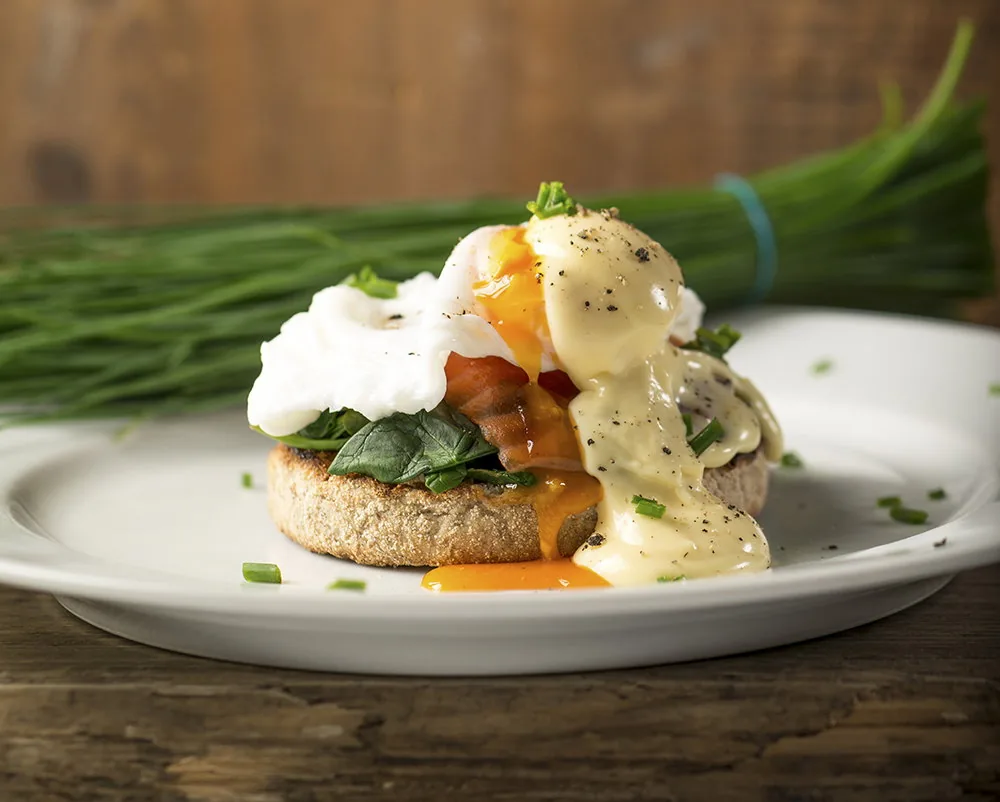
A half-boiled egg with a soft yolk, the kind that comes with the kaya toast set, is raw enough to carry salmonella. The same applies to the lightly cooked egg stirred into nasi lemak sambal, the raw egg sometimes cracked over chwee kueh chilli or bibimbap, and homemade mayonnaise, aioli, tiramisu and hollandaise. Raw oysters are out. Medium-rare steak, pink lamb and raw beef in a Thai salad carry toxoplasma, which the CDC notes can damage a baby’s sight and hearing even when the mother never feels unwell.
Raw sprouts belong on this list too. The FDA advises pregnant women against them, because the warm damp conditions sprouts need are also what bacteria need, and rinsing does not fix it.
Why is listeria the one to take seriously?
Because it behaves differently from ordinary food poisoning. Listeria grows at fridge temperatures, it can give the mother nothing worse than a mild flu, and it crosses the placenta. The US Centers for Disease Control and Prevention puts pregnant women at far higher risk of listeriosis than other healthy adults, and the consequences include miscarriage, stillbirth and infection in a newborn.
| Leave it | Why | What to have instead |
|---|---|---|
| Soft mould-ripened cheese, brie, camembert, chevre | Listeria survives in the soft rind | Hard cheese, cheddar, parmesan, processed slices |
| Soft blue cheese, gorgonzola, roquefort | Same reason | Cream cheese, cottage cheese, ricotta, paneer |
| Unpasteurised milk and raw-milk cheese | No heat step to kill bacteria | Pasteurised milk, UHT milk |
| Cold deli meats, ham, salami, pâté | Contaminated during slicing or storage | The same meat heated until steaming |
| Pre-cut fruit left standing at a stall | Hours at 31°C outdoors | Whole fruit you cut at home |
Cooked versions of most of these are fine. Baked brie straight from the oven, a ham sandwich toasted until the filling steams, a laksa boiled hard before the cockles go in. Heat is the whole answer.
Singapore’s climate shortens every safety margin in that table. Food that would sit happily on a British kitchen counter for an afternoon is in trouble within a couple of hours here, and a styrofoam box of mixed rice carried home on a bus is warm all the way.
Which fish carry too much mercury?
The large, long-lived predators. The US Food and Drug Administration lists shark, swordfish, king mackerel, marlin, bigeye tuna, orange roughy and tilefish from the Gulf of Mexico among the fish to avoid in pregnancy, because mercury accumulates up the food chain and crosses to the baby.
That still leaves plenty. The FDA’s best choices include salmon, sardine, anchovy, tilapia, cod, haddock, squid, prawn and crab, and most of those are easy to find at any wet market or supermarket here. Fish is worth eating while pregnant, so the point of the list above is substitution instead of avoidance.
Sliced fish soup, fishball noodles and steamed fish are all cooked through and all low-mercury. Canned tuna is a moderate choice to eat in moderation rather than daily.
How much kopi is too much?
The NHS puts the ceiling at 200 mg of caffeine a day during pregnancy, and gives a mug of instant coffee as roughly half of that. Filter coffee and strong brewed coffee count for more.
Nobody labels the caffeine in a kopi, and local coffee is brewed hard through a sock, so a cup at a hawker centre is not a weak drink. Count cups. One or two a day sits inside most people’s allowance, and tea, green tea, cola, chocolate and some soft drinks all add to the same total.
Then there is the sugar. A kopi or teh made the usual way carries a thick layer of condensed milk, and ordering it kosong, siew dai or with evaporated milk cuts that down without touching the caffeine. Gestational diabetes is usually screened for between 24 and 28 weeks, and the sweetened drinks are a simpler thing to change than the rice.
What about alcohol and liver?
Alcohol has no safe amount and no safe trimester, which is the position the CDC states plainly. That covers wine, beer, spirits, the rice wine in Chinese cooking and the brandy in a confinement tonic. Dishes simmered for a long time lose most of the alcohol, though a chicken braised in half a bottle of Shaoxing is worth skipping.
Liver is the surprise entry. The NHS advises against liver and liver products in pregnancy, including pâté and liver sausage, because they hold very high levels of vitamin A in the retinol form, which can harm a developing baby. Pig liver in kway chap or pig organ soup falls under the same advice. Check your supplements too, since a multivitamin containing retinol should be swapped for a prenatal one.
Are herbal and cooling preparations safe?
Harder to answer than any of the above, because the contents are frequently unlisted. Cooling teas, liang teh blends, ginseng, dang gui and the various bottled tonics sold for pregnancy or confinement are not held to the standards that apply to medicines, and a few contain ingredients that stimulate the uterus.
Bring the box or packet to your next appointment and ask. HealthHub advises discussing supplements and traditional remedies with a doctor rather than assuming a plant is harmless, and your obstetrician will tell you which of them are genuinely for afterwards. Many confinement preparations are intended for the postnatal month and not for now.
Ginger is the exception worth knowing, and it is widely used for nausea. Pregnancy nausea remedies covers what else helps, and things to avoid during pregnancy goes beyond food to the rest of the list.
What can you still eat at a hawker centre?
Most of it. Chicken rice is poached and usually cooked through even though it arrives cool, so just leave any meat that is still pink at the bone. Fishball noodle soup and sliced fish soup are boiled, ban mian with a properly cooked egg is fine, and so are thosai, roti prata, popiah and any of the stir-fried dishes that leave the wok steaming.
The things to adjust are small. Ask for no see hum, no raw egg and no century egg in porridge. Skip the chilled desserts that have been sitting in a display case, and the cut fruit on a tray in the open air. Choose a stall with a queue, because turnover means fresher food.
Watch your calcium and iron while you are striking things off, since cutting dairy for fear of listeria is how a lot of mothers end up short. Calcium deficiency in pregnancy sets out the signs, and the same questions come up again later in what food to avoid while breastfeeding.
Takeaway deserves one rule of its own. Eat it within two hours of buying it, or get it into the fridge, and reheat leftovers until they steam right through rather than just until they are warm. A cheap cooler bag for the weekly marketing run earns its keep in this climate.
Frequently asked questions
- Can I eat sushi in Singapore while pregnant?
- Cooked sushi is fine. Raw fish is the part to leave, because sashimi, raw salmon and raw tuna can carry listeria and parasites, and the US Centers for Disease Control and Prevention puts pregnant women at much higher risk from listeriosis than other healthy adults. Unagi, ebi, tamago and cooked maki rolls are all safe.
- What about yusheng at Chinese New Year?
- The raw salmon in yusheng is the only problem, so ask for your portion without it or toss the dish and eat around the fish. Everything else in the plate is shredded vegetables, crackers and sauce. Keep the dish out of the heat if it has been sitting on a table for a long while.
- How much coffee can I drink while pregnant?
- The NHS sets the limit at 200 mg of caffeine a day, with a mug of instant coffee counting as roughly half of that. Nobody prints the caffeine in a kopi and local coffee is brewed strong, so count cups rather than milligrams and keep it to a couple at most.
- Is see hum in char kway teow safe?
- Blood cockles are usually barely cooked, which is exactly the problem, so order it without see hum. The same goes for the cockles that come in laksa. Fully cooked shellfish such as prawns and squid are fine.
- Should I take confinement tonics or cooling teas while pregnant?
- Check with your doctor first. Herbal preparations are not regulated the way medicines are, the ingredients are often not listed, and some traditional tonics are meant for after the birth rather than during pregnancy. Bring the packet to your appointment and ask.
Sources
- NHS — Foods to avoid in pregnancy
- US Centers for Disease Control and Prevention — Listeria and pregnancy
- US Centers for Disease Control and Prevention — Alcohol use during pregnancy
- US Food and Drug Administration — Advice about eating fish
- HealthHub (Health Promotion Board) — Eating well during pregnancy
Share this article
This article is for information only and is not a substitute for diagnosis or medical advice. Please talk to your doctor about your own situation.