How to prevent breast milk from leaking
Why breasts leak, what stops a let-down in the middle of a meeting, and how to stay dry through a Singapore afternoon without wrecking your skin.
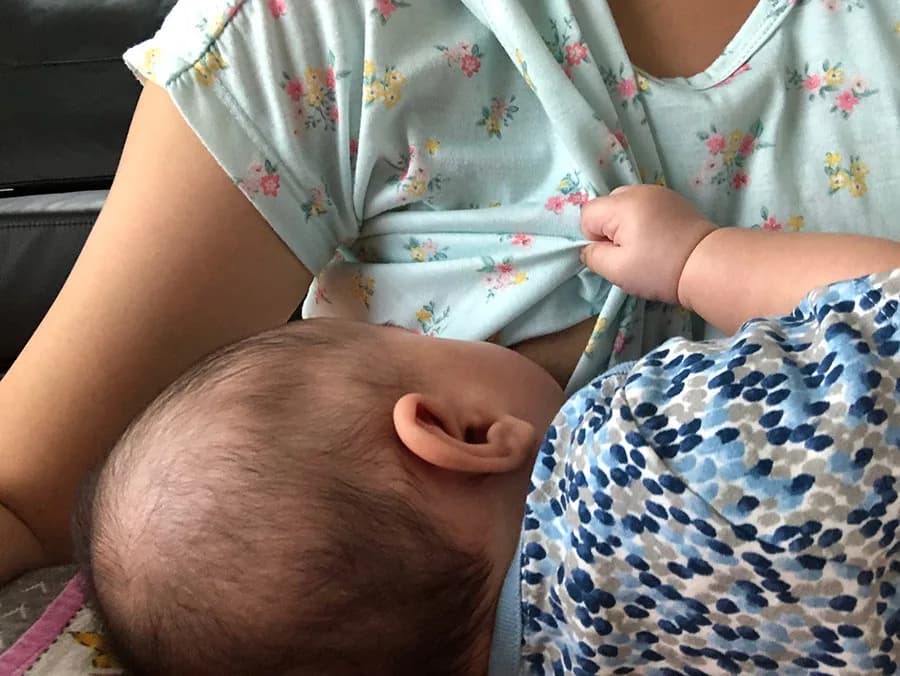
A let-down does not check the room first. It fires when your baby cries, when another baby cries, and occasionally when a lift door opens.
Leaking happens because oxytocin triggers a let-down whether or not your baby is attached, and a full breast leaks more readily than a soft one. Feed or express on your usual pattern, press the heel of your hand over the nipple when a let-down starts in public, and keep a dry nursing pad against the skin.
Why does breast milk leak?
Two things are going on at once. Your breast is storing more milk than it has learned to hold, and the reflex that releases it is still indiscriminate.
Oxytocin drives the let-down, and it responds to a cry, a thought, a warm shower and the sight of your baby's cot. The NHS describes leaking between feeds as common in the early weeks for exactly this reason. One breast often drips while the baby works on the other, which is normal plumbing rather than waste.
Fullness is the other half. A breast that has gone four hours without being emptied is under pressure, and pressure finds the nearest exit.
When does leaking settle down?
Usually within the first couple of months, as supply calibrates to what your baby actually takes. The reflex gets more selective at the same time, so it stops firing at other people's babies.
Some mothers never leak. Some leak for as long as they feed, and a few only ever leak on one side. None of that predicts how feeding will go.
What stops a let-down mid-meeting?
Pressure, applied straight away. Cross your arms firmly across your chest, or press the heel of a hand over each nipple through your top, and hold for a slow count. The reflex passes.
This is a stopgap, so feed or express soon afterwards. Milk sitting in a full breast is what sets up a blocked duct, and our guide to clearing a clogged milk duct is the thing you want to avoid needing. If you feed out of the house, breastfeeding in public has the practical cover.
How do you keep clothes dry in this heat?
Nursing pads do most of the work, and the climate changes how you use them. Disposable and washable pads are both easy to find at Guardian, Watsons and Unity, and the washable cotton or bamboo ones are kinder in humidity because they breathe.
Change them as soon as they feel damp. A pad that would last all morning in a cool country lasts a couple of hours here once you have walked to the MRT, and the damp is sweat as much as milk. Carry spares in a small zip bag. Keep a dark or patterned top in your work drawer, since prints hide a stain that a plain pale blouse broadcasts.
| What to wear | Why it works here |
|---|---|
| Washable cotton or bamboo pads | Breathable, cheap over a year, no plastic backing to trap sweat |
| Disposable pads with a waterproof layer | Best for long days out, worst for sore skin if left damp |
| Patterned or darker tops | Disguises a leak until you can change |
| A spare top in the office drawer | Saves the walk home after a soaked meeting |
Avoid anything tight over the breast. Pressure from a seam or an underwire sitting in one spot can block a duct, which turns a laundry problem into a painful one.
Can damp pads hurt your skin?
Yes, and this is the part many mothers learn the hard way. Warm damp fabric against a cracked nipple is ideal ground for thrush, and it keeps damaged skin permanently soft and fragile.
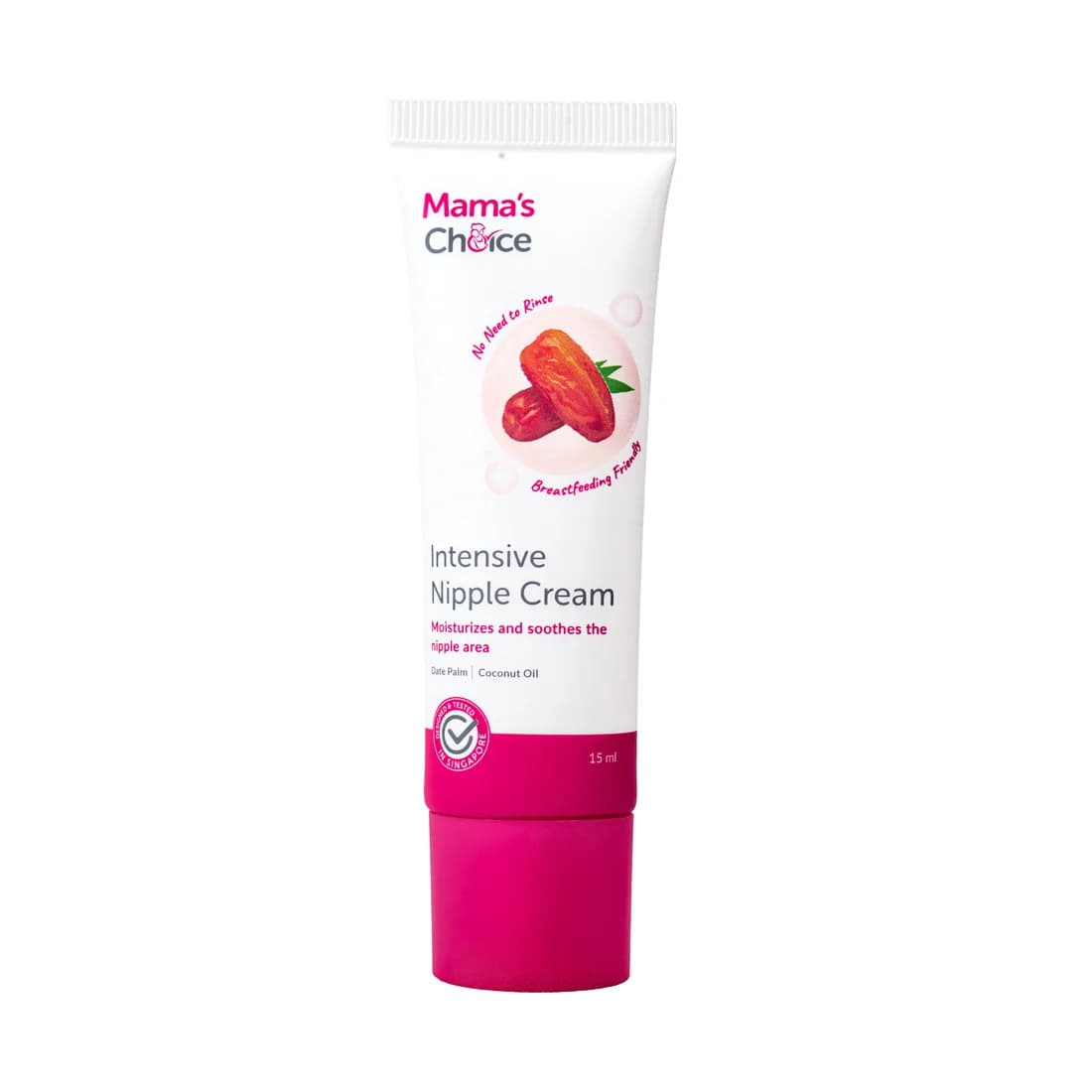
Let the skin air for a few minutes when you are home. A split nipple that has not started to settle within a few days is worth showing to your doctor or a lactation consultant, because the latch is usually behind it. For everyday dryness, a plain balm between feeds stops the skin drying out. Our Intensive Nipple Cream is a lanolin-based cream with shea butter and coconut oil that moisturises and protects nipple and areola skin.
Pain that burns after feeds, shiny or flaky skin, or a baby with white patches in the mouth points to thrush, which needs treatment for both of you from a polyclinic or your doctor.
Does leaking say anything about your supply?
Very little. Mothers with plenty of milk often stay bone dry, and mothers who leak through two pads can still be worried about volume.
Judge supply by your baby. Heavy wet diapers, steady weight gain in the health booklet, and a baby who comes off the breast satisfied are the signals HealthHub points mothers towards. Leaks are weather, not climate.
What about leaking once you are back at work?
Government-Paid Maternity Leave runs to 16 weeks for eligible mothers under the scheme the Ministry of Manpower administers, so many mothers return while they are still feeding. Leaks follow the gaps in your day.
Keep your expressing times roughly even, because a skipped session on a long morning shows up on your shirt by lunch. Store milk by the HealthHub guidance and keep a cooler bag at your desk. Our guide to pumping at work covers the scheduling, the fridge etiquette and what to say to a manager who has never thought about any of it.
When should you see a doctor about leaking?
A red, hot wedge on the breast with fever and aches suggests mastitis, and the NHS advice is to get seen quickly rather than waiting a day to see if it settles. Polyclinics manage it, and so will your obstetrician.
Blood from one nipple only, or milk that keeps coming months after you have stopped feeding, is worth a doctor's look rather than a wait. Both are usually explainable. Neither is something to self-diagnose from a forum.
Wash reusable pads with your baby's clothes in unscented detergent, then dry them properly in the sun or on high heat. Pads that go back in the drawer slightly damp are the ones that start the skin trouble, and in this climate they almost never dry on a bathroom rail.
Frequently asked questions
- Does leaking mean I have too much milk?
- Not on its own. Leaking reflects how readily your let-down fires and how full the breast is, and plenty of mothers with ample supply never leak at all. La Leche League and the NHS both treat it as a normal early feature rather than a measure of volume.
- Is it safe to press on my nipple to stop a let-down?
- For a minute or so in public, yes. Press the heel of your hand firmly over the nipple through your clothes, or fold your arms across your chest. Then feed or express as soon as you reasonably can, because milk left sitting in a full breast is what leads to blocked ducts.
- How often should I change nursing pads in Singapore’s humidity?
- As soon as a pad feels damp, which outdoors here can be every couple of hours. Warm wet fabric against broken skin invites thrush and makes sore nipples worse, so carry more pads than you think you need and let the skin air for a few minutes at home.
- Will leaking stop if I feed less often?
- It will do the opposite. Longer gaps leave the breast fuller, which makes leaks heavier and raises the risk of engorgement and mastitis. Feeding or expressing on your usual pattern is what keeps both the leaking and the lumps down.
Sources
- NHS — Breastfeeding: the let-down reflex and leaking breasts
- NHS — Mastitis: symptoms and when to get help
- NHS — Breast symptoms and nipple discharge: when to see a GP
- La Leche League International — Let-down and leaking
- HealthHub (Health Promotion Board) — Breastfeeding and expressing milk
- Ministry of Manpower — Government-Paid Maternity Leave scheme
Share this article
This article is for information only and is not a substitute for diagnosis or medical advice. Please talk to your doctor about your own situation.