How to protect your baby from mosquito bites in Singapore
A baby lotion moisturises skin and does not repel mosquitoes. What prevents bites at each age, how to calm the itch, and when a fever needs a doctor.

A moisturising lotion keeps skin soft. It cannot stop a bite, and no product sold as skin care should suggest it can. Preventing bites in a baby comes down to clothing, netting and an age-appropriate repellent. Soothing comes afterwards, with cold water, clean skin and whatever stops the scratching.
Why a lotion cannot keep mosquitoes away
A repellent works by interfering with how a mosquito finds you, masking the carbon dioxide and skin compounds it homes in on. A moisturiser works by holding water in the top layer of skin. Those are unrelated jobs.
Plenty of baby lotions carry citronella or another plant oil on the front of the pack with an implied promise behind it. Read that promise carefully. Insect repellents sold here are regulated by the National Environment Agency, which registers household vector control products, and a product that has been through that process says so on the label. A skin-care lotion has not.
Dengue reaches a child only through a bite, so the bites you prevent are what count. That is why this article keeps the two jobs apart.
What actually prevents bites, by age
| Age | What to use |
|---|---|
| Under 2 months | No repellent on the skin. Mosquito netting over the cot and the stroller, and clothing that covers arms and legs |
| From 2 months | DEET at 10% to 30%, or picaridin, applied once a day by an adult |
| Under 3 years | No oil of lemon eucalyptus or PMD, which the CDC excludes at this age |
| Every age | Light long sleeves and long trousers, netting outdoors, screens and aircon indoors |
The CDC is unambiguous about the youngest babies. Nothing goes on the skin of a baby under two months old. Net the stroller instead, and dress the baby in light clothing that covers the arms and legs.
From two months, the AAP considers DEET suitable for children at concentrations between 10% and 30%, with picaridin as an alternative. A higher concentration lasts longer rather than repelling harder, so choose the number by how long you will be outside. Once a day is enough.
Put it on yourself rather than handing the bottle over. Spray your own hands first and wipe it onto a face, keeping clear of eyes and mouth. Skip the hands entirely, since those end up in the mouth within minutes. Avoid broken or irritated skin, and wash everything off with soap and water once you are home. Our older article on whether DEET repellents are safe for kids goes deeper into the ingredient itself.
Clothing does more than most parents expect. Light, loose, long-sleeved cotton is bearable in this heat and leaves far less skin exposed than a singlet does. Mosquitoes bite through tight fabric.
Dengue and why Aedes bites in daylight
The mosquito that carries dengue here is Aedes, and it keeps different hours from the ones people assume. The National Environment Agency describes Aedes as a daytime biter, most active in the early morning and the late afternoon. A net over the cot at night covers the hours when Aedes is least active, so daytime naps and outings need the same care.
Protection has to follow the real exposures. The late-afternoon hour at the playground, the morning walk to infant care, an evening sitting at the void deck while somebody buys dinner. Indoors with the windows shut and the aircon running, the risk falls a long way.
NEA publishes dengue clusters on its website and in the myENV app, and the red and yellow cluster banners you walk past are the same information in physical form. Check whether your block is in one. It changes how carefully you dress a baby for a walk downstairs. Our article on dengue symptoms and prevention covers the illness itself in detail.
The standing water on your own balcony
NEA's Mozzie Wipeout is a short domestic routine aimed at breeding sites inside your flat rather than the drains outside it. Aedes breeds in clean, still water. It needs very little of it, and a week is long enough.
- Turn the pail over when you are done with it.
- Change the water in vases and plant pot plates at least twice a week, or tip them out altogether.
- Loosen hardened soil in potted plants so water drains instead of pooling on top.
- Clear the roof gutter if you have one, and add larvicide.
- Cover the bamboo pole holders.
On a balcony here the repeat offenders are the saucer under the plants, the bucket with the mop standing in it, the drip tray under the aircon condenser, and the corner of the service yard where the floor stays wet. A condo's landscaping and drains belong to the management. The pot you repotted last month belongs to you.
Outside your flat, report what you cannot fix. Choked drains and stagnant water in common areas go to NEA or the town council, and the dengue officers who knock on doors during a cluster are checking exactly these spots.
How to soothe a bite that is already there
Wash the bite with soap and water. Hold something cold against it, a cloth wrung out in cold water or an ice pack wrapped in a towel, which the NHS recommends for the swelling and the itch. Keep fingernails short and filed. Most of the damage comes from scratching rather than from the bite itself.
Long sleeves or mittens at night buy you a few hours. With an older baby, distraction beats instruction every time.
A pharmacist at Guardian, Watsons or Unity can suggest an antihistamine or a mild hydrocortisone cream appropriate to your child's age, both of which the NHS lists among the options for an itchy bite. Ask rather than guess, because the age limits differ between products.
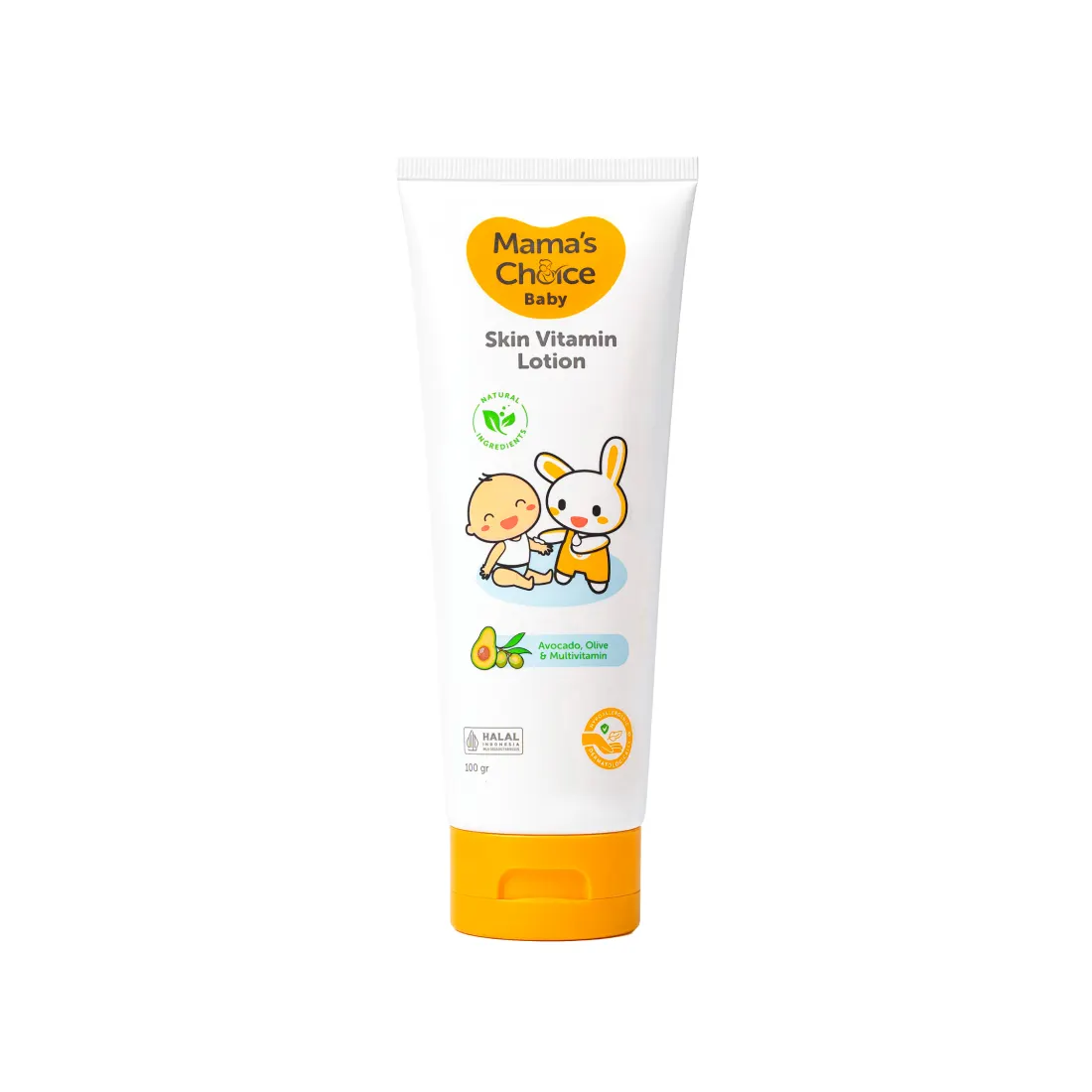
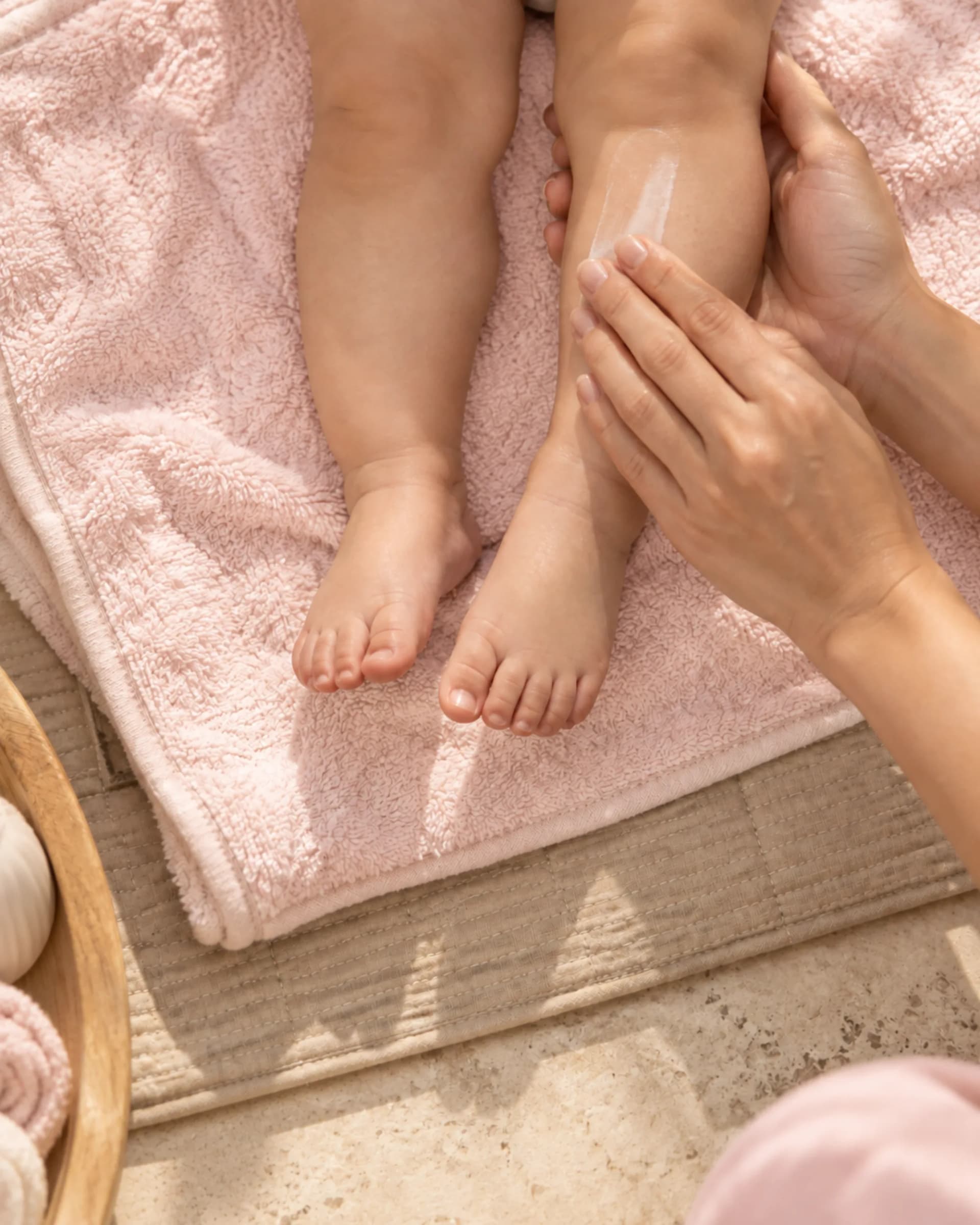
Skin in decent condition itches less and breaks less easily, which is where a moisturiser genuinely helps. A moisturiser after the evening bath does most of the work, and that is the step our Baby Skin Vitamin Lotion was made for. It is a light lotion with avocado and olive oils that sinks in easily and leaves skin soft, and it can be used from birth. In a 2022 consumer use test with 29 mothers, 28 said it helped their baby's skin feel softer. It is a moisturiser rather than a repellent, so keep the netting and the long sleeves too, and our round-up of baby moisturisers in Singapore compares what else is on the shelf.
When a bite has turned into an infection
An ordinary bite is red, raised, itchy and smaller every day. A scratched one in this climate can turn into a skin infection, and the signs are worth memorising.
- Redness spreading outwards over a day instead of shrinking
- Pain, warmth or swelling that increases after the second day
- Pus, a yellow crust, or weeping
- A red streak running away from the bite
- Swollen glands in the neck, armpit or groin
- Fever alongside any of the above
The NHS lists pus, spreading redness and swollen glands among the reasons to get medical advice about a bite. For a baby, go the same day to the polyclinic or your GP. Impetigo moves quickly through a childcare centre, and our guide to common baby rashes helps with telling one thing from another.
When a fever after bites means a polyclinic visit
Fever is the part to take seriously, because dengue begins as an ordinary fever. HealthHub describes the usual picture as a sudden fever lasting several days, with headache, pain behind the eyes, aching joints and muscles, nausea and a rash. In a small child you often get the fever and the misery without any of the description.
Go the same day if your baby is under three months old with a temperature of 38 °C or above, which the NHS regards as a reason for prompt advice at that age. Go the same day for any fever lasting more than a day or two at any age, and go sooner while your block sits inside a dengue cluster.
Go straight to A&E for a feverish child who vomits repeatedly, complains of severe tummy pain, bleeds from the nose or gums, becomes very drowsy or floppy, or whose skin turns cold and clammy. HealthHub lists those as dengue warning signs. They are the ones that change the plan.
Tell the doctor when the fever started, to the day. Dengue testing depends on which day of illness your child is on, so that date is more useful to them than any description of the bites.
Frequently asked questions
- Can I put mosquito repellent on my newborn?
- No. The CDC advises against insect repellent on a baby under two months old. Cover the cot and the stroller with mosquito netting instead, and dress your baby in light clothing that covers the arms and legs.
- Is DEET safe for my toddler?
- The AAP considers DEET suitable for children from two months at concentrations between 10% and 30%. A higher percentage lasts longer rather than working harder. Apply it yourself, keep it off hands and faces, and wash it off when you get home.
- Does baby lotion keep mosquitoes away?
- A moisturising lotion soothes skin and holds water in it. Repelling insects is a separate job that needs a registered repellent, and the National Environment Agency is the body that registers those in Singapore. Be wary of any skin-care product that implies otherwise.
- When does a mosquito bite need a doctor?
- When the redness spreads over a day rather than shrinking, when there is pus, a yellow crust or a red streak running away from the bite, or when your child has swollen glands or a fever. The NHS lists those as reasons to seek medical advice. Go the same day for a baby.
- My baby has a fever after mosquito bites. What now?
- See a doctor the same day, especially if your block is in a dengue cluster. HealthHub describes dengue as a sudden fever with headache, pain behind the eyes and body aches. Go straight to A&E for repeated vomiting, severe tummy pain, bleeding gums, drowsiness or cold clammy skin.
Sources
- CDC — Preventing mosquito bites
- AAP (HealthyChildren) — Choosing an insect repellent for your child
- NHS — Insect bites and stings
- NHS — Fever in children
- National Environment Agency — Dengue and the Mozzie Wipeout
- National Environment Agency — Registration of household vector control products
- HealthHub (Health Promotion Board) — Dengue
Share this article
This article is for information only and is not a substitute for diagnosis or medical advice. Please talk to your doctor about your own situation.