
Non-alcohol hand sanitiser for babies in Singapore
Whether alcohol-free sanitiser is really gentler, what the CDC and WHO recommend instead, and why hand-foot-mouth disease changes the answer here.
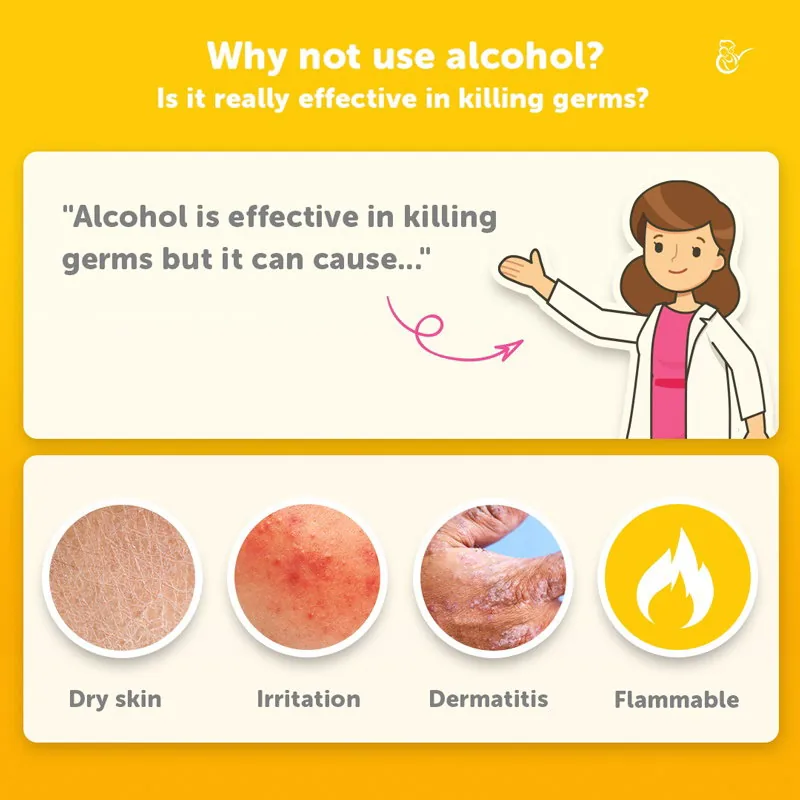
Alcohol-free sanitiser is kinder to skin and avoids the risk of alcohol poisoning if a toddler licks her hands, and the CDC notes it may not work equally well against every class of germ. For a baby, the recommended answer from both the CDC and the WHO is not a sanitiser at all. It is soap and water.
Is an alcohol-free sanitiser better for a baby?
It solves two real problems. Alcohol stings broken skin and dries it out, and a baby who puts her fist in her mouth a second later swallows whatever was on it.
Alcohol-free formulas usually rely on benzalkonium chloride instead. The CDC's guidance is careful about this: non-alcohol based hand sanitisers may not work equally well for all classes of germs, and some may only reduce germ growth rather than kill them.
So the trade is real and it goes both ways. Gentler on skin, weaker on microbes.
What do the authorities actually recommend?
Soap and water first, every time it is available.
The CDC puts handwashing ahead of sanitiser because it removes dirt, grease and chemicals as well as germs, and because sanitiser works poorly on visibly dirty hands. The WHO's hand hygiene guidance says the same thing in a clinical setting.
Where an alcohol-based sanitiser is used, the CDC's threshold is at least 60 per cent alcohol. Below that figure it may not reliably do the job.
For babies, there is a further point that gets lost. Hands go into mouths constantly at that age, which is normal development rather than a hygiene failure. Anything left on the skin gets eaten.
Also read: why babies put everything in their mouths
Why hand-foot-mouth disease changes the answer here
Hand-foot-mouth disease circulates year round in Singapore and runs through childcare centres and playgroups regularly. The Health Promotion Board's guidance on it leads with handwashing, and there is a reason it does not lead with sanitiser.
The viruses responsible belong to a group that alcohol does not reliably kill. Soap and water work by lifting them off the skin and rinsing them down the drain, which is mechanical rather than chemical, and it works regardless of how resistant the virus is.
The same logic applies to the stomach bugs that go round preschools. If your child has been somewhere with other children, the tap beats the bottle.
Also read: how to protect your baby from germs
How do you wash a baby's hands?
| Age | What works |
|---|---|
| Newborn | A clean damp flannel over the palms and between the fingers |
| Sitting up | Your lap at the basin, a drop of mild soap, warm water |
| Standing | A step stool, her own towel, 20 seconds of counting |
| Toddler | Doing it herself with you checking the thumbs and nails |
The missed spots are always the same: thumbs, nail beds, between the fingers and the back of the hand. Rinse fully, because soap residue on skin that is then licked is its own small problem.
Dry properly as well. In humid weather, hands that stay damp chap at the knuckles.
When is a sanitiser the right tool?
When there is no tap. That is the whole of the case, and it comes up often enough with a stroller.
- At a hawker centre table before you unwrap something
- On the MRT, on your own hands before you pick her up
- Between a lift button and a bottle
- At a clinic, where the dispenser is there for a reason
Note which hands those are. Yours. Sanitising your own hands protects your baby without putting anything on hers.
A damp flannel in a zip bag, or a packet of plain water wipes, covers her hands for the same situations. Guardian, Watsons, Unity and the supermarkets all carry fragrance-free versions.
How to use one safely around a child
The FDA's warnings about hand sanitiser are mostly about children.
- Keep it out of reach, including the handbag it lives in
- Supervise every use, and dispense it yourself
- A pea-sized amount, rubbed until completely dry
- Never near the eyes or an open cut
- It is flammable, so keep it away from a stove or a candle
- Do not use the scented novelty bottles that look like snacks
Buy from a pharmacy or supermarket rather than an unknown online seller. The FDA has documented sanitisers contaminated with methanol, which is toxic absorbed through skin as well as swallowed, and a counterfeit label is not detectable by eye.
If your child swallows some
Do not try to make her vomit. Wipe out her mouth, take the bottle with you, and go to a hospital accident and emergency department.
A small child can develop alcohol poisoning from a surprisingly small amount, because of her body weight. Drowsiness, unsteadiness, vomiting or confusion after a lick of sanitiser is an emergency rather than something to monitor at home.
Keep the bottles with the cleaning products, high up and latched, and tell whoever else looks after her where they are.
Frequently asked questions
- Is alcohol-free sanitiser better for babies?
- It is gentler on skin and carries no risk of alcohol poisoning if swallowed, though it is not harmless to swallow either, and the CDC notes that non-alcohol sanitisers may not work equally well against all classes of germ. Gentler is not the same as more effective.
- What is the best way to clean a baby's hands?
- Soap and water, which the CDC and WHO both put ahead of any sanitiser. It removes dirt as well as germs, and it works against the viruses that alcohol handles poorly.
- How much alcohol does a sanitiser need to work?
- At least 60 per cent, according to the CDC. Below that the product is not doing the job people assume it is doing, whatever the label says.
- Why is hand washing stressed so much for hand-foot-mouth disease?
- The viruses that cause it are a type alcohol-based sanitisers do not reliably kill. Washing with soap and water physically removes them, which is why childcare centres here insist on it.
- What if my child swallows hand sanitiser?
- Alcohol-based sanitiser can cause alcohol poisoning in a small child, and the FDA warns about ingestion specifically. Take the bottle with you and go to a hospital accident and emergency department rather than waiting.
Sources
Share this article
This article is for information only and is not a substitute for diagnosis or medical advice. Please talk to your doctor about your own situation.