
Why do babies put everything in their mouths?
Mouthing is how babies learn, and it peaks between four and twelve months. What is normal, what is dangerous, and what matters in a Singapore home.
Mouthing is how a baby examines the world before the hands are good enough to do it. The mouth is more sensitive and better controlled early on, and mouthing also soothes. It peaks between six and twelve months, and your job is to make the things within reach safe rather than to stop the behaviour.
Why they do it
Investigation. A young baby's hands are clumsy and the mouth is precise. Putting an object in there tells them about texture, temperature, edges and weight, all at once.
Soothing. Hands to the mouth is one of the earliest ways babies settle themselves, and the Centers for Disease Control and Prevention includes it among the milestones around two months.
Hunger, in the early weeks. A newborn sucking on fists, turning the head and getting fussy is often asking for a feed. Later on, hand-to-mouth loses that meaning.
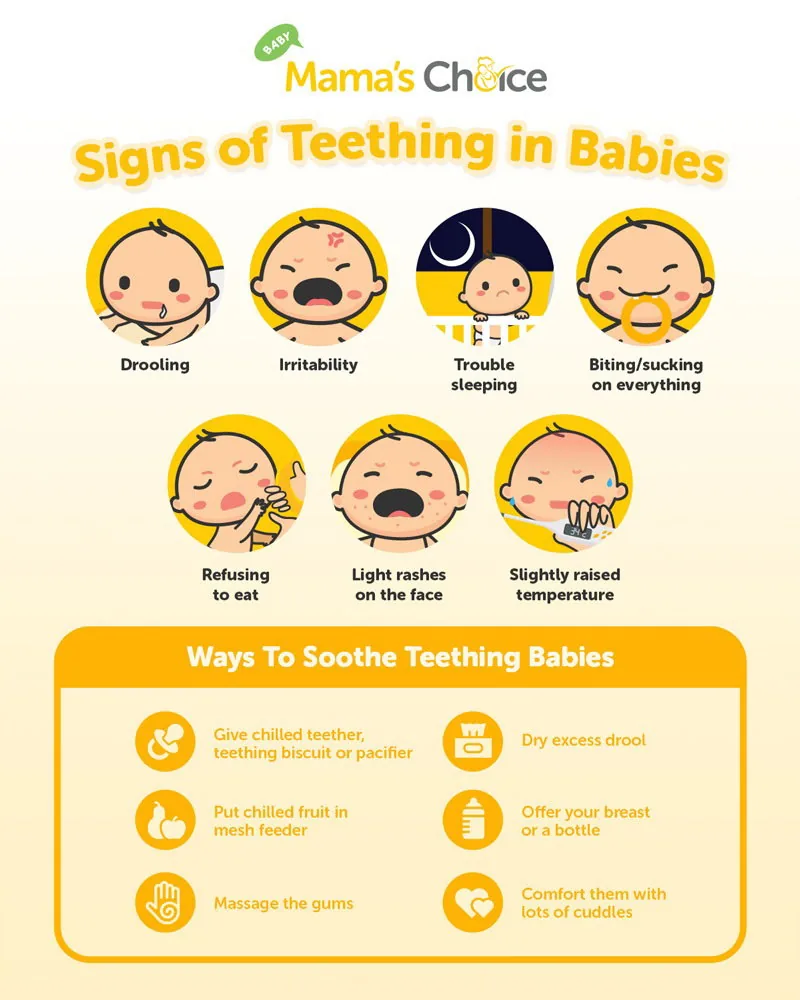
Teething. From around four to seven months, pressure on the gums feels good, and hard objects get preferred over soft ones.
Practising. Mouthing is part of how feeding skills develop. Exploring textures with the mouth may help babies get ready for solids.
When it starts and when it stops
It builds from about four months, peaks between six and twelve as reaching and grasping get reliable, and fades through the second year.
That timeline matters for safety, because the peak of mouthing arrives at exactly the point your baby starts rolling, crawling and pulling to stand. Reach expands faster than judgement does.
A toddler who still mouths occasionally is unremarkable. One who is mouthing constantly at two and a half, or who is not using hands and eyes to examine things, is worth mentioning at a developmental check.
Is it safe?
Normal, yes. Safe, only as safe as what is within reach.
The actual risks are a short list, and none of them involve the general germiness of a remote control.
- Choking. Small toys, detached parts, coins, bottle caps, and foods including whole grapes, nuts, popcorn, hard sweets, chunks of cheese and raw carrot
- Suffocation. Plastic bags, cling film, balloons, soft bedding
- Button batteries. Remote controls, bathroom scales, musical cards, LED tea lights
- Magnets. Two or more swallowed magnets can pinch the bowel between them
- Household chemicals. Detergent capsules, bleach, dishwasher tablets, cleaning spray, essential oils
- Medicines and supplements. Iron tablets are a particular hazard
The American Academy of Pediatrics advises cutting food small, sitting babies upright to eat, and keeping anything smaller than a toilet roll tube out of reach. A toilet roll tube is a genuinely useful test.
Button batteries, and why they are different
Worth separating out. A swallowed button battery lodged in the throat or oesophagus can cause serious internal burns within a couple of hours, and the early signs look like a cold or a feeding refusal.
So check the devices in your home. Battery compartments on remotes, scales, thermometers, light-up shoes, musical greeting cards and LED candles should need a screwdriver to open. Tape over any that do not.
If you think your baby has swallowed one, go directly to the Children's Emergency at KK Women's and Children's Hospital or the nearest emergency department. Do not wait to see whether anything happens, and do not try to make your baby sick.
Germs, hand washing and the local one to know about
Mouthing does expose babies to infection, and in Singapore one illness deserves specific mention.
The Ministry of Health publishes weekly surveillance on hand, foot and mouth disease, which circulates steadily here and spreads through preschools and infant care centres. It passes on hands, toys and surfaces, which is precisely the route mouthing creates. Blisters on the hands and feet, ulcers in the mouth, fever and feeding refusal are the pattern.
Hand washing with soap and water is the thing that works. For a baby who puts hands in the mouth, that beats sanitiser, which is designed to stay on skin rather than be swallowed. Tap water here is potable, so the sink is always a reasonable option.
Wash your own hands as often as your baby's, since adults do most of the carrying between households. Our guide to protecting your baby from germs covers the rest.
A fair amount of ordinary household exposure is not worth fighting. A baby who licks the sofa is fine.
Keeping toys and floors sensible in this climate
Humidity changes the cleaning problem. Fabric toys stay damp, teethers left in a bag go mouldy, and bath toys with a hole in the bottom grow things inside them within weeks.
- Rinse and dry teethers properly rather than wiping them
- Squeeze out and air-dry bath toys, or buy ones without holes
- Wash fabric toys and let them dry fully in the sun or on a hot cycle
- Mop hard floors with plain detergent, which is enough for everyday cleaning
- Keep shoes at the door, since the floor is where your baby spends the day
- Wipe surfaces more often in haze season, when dust settles indoors
Our piece on disinfecting baby toys covers the method by toy type.
On teethers, cold is one of the simplest things that helps. A clean damp flannel chilled in the fridge, or a solid teether cooled the same way, and never frozen solid. Our guide to when to give a teether covers the timing, and caring for baby teeth and gums covers what comes next.
When to call a doctor
- You think something has been swallowed, especially a battery, magnet or coin
- Coughing, gagging, drooling or refusing to swallow after an episode of choking
- Any exposure to a household chemical or medicine
- Fever with mouth ulcers, or blisters on the hands and feet
- White patches inside the mouth that do not wipe away
- Your baby seems to be in pain when feeding
- Mouthing that continues heavily past the second birthday alongside other developmental concerns
Keep a photograph of anything you suspect your baby got hold of, including the packaging. The first question in the emergency department will be what it was, and answering it quickly changes what happens next.
Most of this phase passes without incident, and babies who are allowed to explore with their mouths are doing something developmentally useful. The work is in the room rather than in the baby, and an hour spent crawling around your own floor at their eye level finds more hazards than any checklist.
Frequently asked questions
- Why do babies put everything in their mouths?
- Mouthing is how a young baby examines an object, because the mouth and lips are more sensitive and better controlled than the hands in the first year. It also soothes, and the Centers for Disease Control and Prevention lists bringing hands to the mouth among the ways babies begin calming themselves at around two months.
- At what age does mouthing stop?
- It usually builds from around four months, peaks between six and twelve months as reaching and grasping improve, and tails off through the second year as hands and vision take over the job. Occasional mouthing in a toddler is still normal.
- Does mouthing mean my baby is teething?
- Sometimes. Teething tends to bring drooling, gum rubbing, a preference for hard objects and some irritability. It does not cause a high fever, diarrhoea or a rash over the body, and the American Academy of Pediatrics is clear that those symptoms need another explanation. A drool rash on the chin is common, though.
- Should I use hand sanitiser on my baby's hands?
- Soap and water is better for a baby who puts hands in the mouth, since sanitiser is meant to be left on the skin rather than swallowed. Tap water is potable in Singapore, so a quick wash at the sink is the simplest answer in most situations.
- What is the most dangerous thing my baby could swallow?
- A button battery. Lodged in the throat or oesophagus it can cause serious internal burns within a couple of hours, so it is an emergency rather than a wait-and-see. Go straight to the Children's Emergency at KK Women's and Children's Hospital or the nearest emergency department.
Sources
- Centers for Disease Control and Prevention — developmental milestones, Learn the Signs Act Early
- American Academy of Pediatrics (HealthyChildren) — teething, choking prevention and childproofing
- Ministry of Health Singapore — weekly infectious diseases bulletin, hand, foot and mouth disease surveillance
- HealthHub (Ministry of Health Singapore) — child development and childhood illness
- KK Women's and Children's Hospital — Children's Emergency
Share this article
This article is for information only and is not a substitute for diagnosis or medical advice. Please talk to your doctor about your own situation.