
How to choose a breast pump
Manual, electric or wearable, why flange size matters more than suction, how to keep parts clean in Singapore's humidity, and what a pump cannot fix.
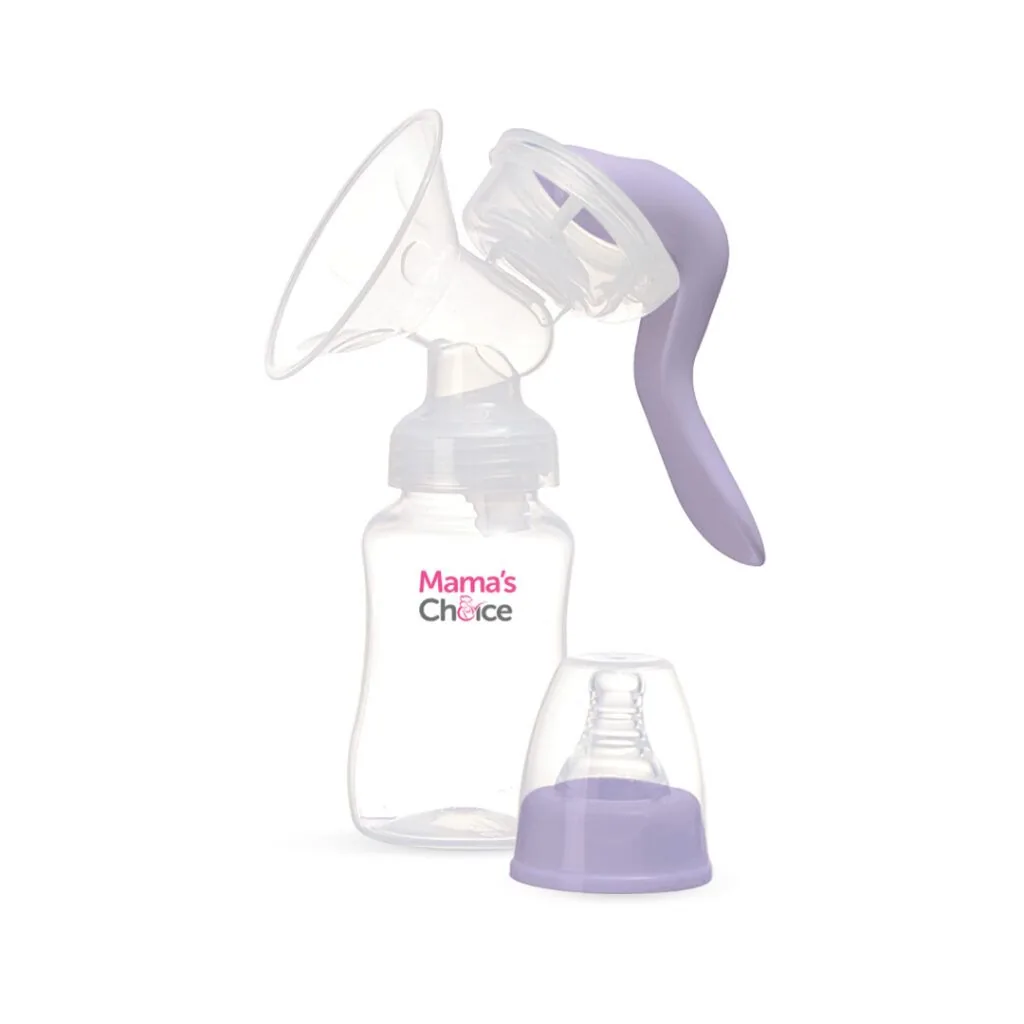
Match the pump to how often you will use it. Daily expressing at work wants a double electric; occasional expressing is fine with a manual. Fit matters more than suction strength, a second-hand single-user pump is unsafe according to the FDA, and parts need to dry fully in this climate.
Do you need a pump at all?
A pump solves one problem: milk has to come out when your baby is not there to take it.
The usual reasons in Singapore are going back to work at the end of maternity leave, a baby in neonatal care who cannot yet feed directly, rebuilding supply after a gap, and wanting somebody else to give a feed. If none of those apply, a pump can sit in a cupboard for a year.
If your baby is in neonatal care, ask the hospital first. A hospital-grade pump is usually available to rent or borrow while you are establishing supply, and it does a job a consumer pump is not built for.
Manual, electric or wearable?
| Best for | Trade-off | |
|---|---|---|
| Manual | Occasional use, travel, a backup in the bag | One side at a time, and your hand gets tired |
| Single electric | Regular use on one side, relieving fullness | Slower than a double over a working day |
| Double electric | Daily expressing at work, building a store | Mains power or charging, more parts to wash |
| Wearable | Expressing while hands are busy | Usually less yield per session, harder to see what you are collecting |
Most mothers end up with two. A double electric for the working day and a manual that lives in the bag for the session you did not plan for.
Noise is worth thinking about in advance. Open-plan offices and shared nursing rooms are the reality for most people here, and a quiet pump gets used more often than a powerful one you feel self-conscious about.
Also read: the full guide to pumping breast milk
Why does flange size matter more than suction?
The flange is the funnel that sits against your breast. Fit decides nearly everything about how a pump performs.
Your nipple should move freely down the tunnel without rubbing the sides, and the areola should not be pulled in with it. A flange that is too small pinches and hurts. One that is too large drags surrounding tissue in and empties the breast poorly.
Many kits ship in one middle size, and plenty of people need a different one. Pain or a thin yield is a fit problem far more often than it is a motor problem.
Suction, meanwhile, is a comfort setting rather than a performance setting. The highest level that does not hurt is correct, and going above it can reduce output because the tissue clamps.
How do you keep the parts clean in this climate?
The CDC publishes the sequence, and the last step is the one Singapore makes difficult.
- Wash your hands before handling parts
- Take the kit apart fully after every session
- Rinse, then wash in hot soapy water in a basin used only for feeding items, not in the sink
- Air-dry completely on a clean towel, never with a dish cloth
- Sanitise daily for babies under three months, premature babies and babies with weakened immunity
Humid air means parts stay damp for hours, and damp silicone grows biofilm. Dry them under a fan or in a steriliser with a drying cycle, and look inside the tubing before you reassemble. Any cloudiness or spotting inside tubing means the tubing is finished, since it cannot be cleaned.
Valves and membranes wear out quietly. A pump that has slowly stopped working is usually a pump with a stretched membrane, and they are a cheap replacement at Guardian, Watsons, Unity or the baby stores.
Also read: using breast milk storage bags properly
Should you buy a used pump?
The FDA advises against using a pump that was not designed and labelled as a multi-user device. Milk and moisture can get into the motor housing of a single-user pump, and no amount of replacing the external parts reaches that.
Hospital-grade rental pumps are the exception, because they are built as multi-user devices with a closed system and are serviced between users.
Marketplace listings are the other thing worth being careful about. The Health Sciences Authority advises buying health products from reputable local sources rather than unverified overseas sellers, partly because a counterfeit motor or charger is not inspectable from a photograph.
Paying for it in Singapore
MediSave does not cover a breast pump. The maternity package covers delivery and pre-delivery expenses, and equipment like this sits outside it.
Child Development Account savings under the Baby Bonus Scheme, which the Ministry of Social and Family Development runs, can be spent at Baby Bonus Approved Institutions. Several pharmacy chains and baby retailers are on that list, so a pump bought there can come out of CDA money rather than your own. Check the current list before you commit, since it changes.
Borrowing is common, and it only works with a pump built for more than one user. If a friend offers hers, check whether the manufacturer labels that model as multi-user. For a single-user pump, your own new shields, valves, membranes and tubing do not solve the problem, because milk can already have reached the motor.
What a pump cannot fix
A pump moves milk. It does not create demand that is not there, and it does not fix a latch.
If your baby is feeding poorly, gaining slowly or hurting you, expressing on top of that is a workaround rather than a solution. Book a lactation appointment through your polyclinic, or at KK Women's and Children's Hospital or National University Hospital, and have somebody watch a feed.
Output at the pump is also a bad measure of supply. Babies are more efficient than machines, and a low yield in a stressful office corner says nothing about what your baby gets at home.
Frequently asked questions
- Do I need a breast pump?
- Only if you need milk to leave your body when your baby is not there. Going back to work, a baby in neonatal care, rebuilding supply or wanting someone else to do a feed are the usual reasons. Many mothers who feed directly never buy one.
- Is an electric pump better than a manual one?
- Electric pumps are faster and better suited to daily use at work. Manual pumps are quieter, cheaper and need no socket, which makes them useful as a backup or for occasional expressing. The better pump is the one matched to how often you will use it.
- How do I know my flange size is right?
- Your nipple should move freely in the tunnel without the areola being pulled in, and the fit should not hurt. A wrong size is the most common reason a pump yields little or causes pain, and many kits come in one size only.
- Can I buy a second-hand breast pump?
- The FDA advises against using a pump that was not designed and labelled for more than one user, because milk can get into internal parts that cannot be cleaned. A new set of shields and tubing does not make a single-user pump safe to share.
- Can I pay for a pump with Baby Bonus or MediSave?
- MediSave does not cover one. Child Development Account savings under the Baby Bonus Scheme can be spent at Baby Bonus Approved Institutions, and many pharmacies and baby retailers are on that list, so check before you pay.
Sources
Share this article
This article is for information only and is not a substitute for diagnosis or medical advice. Please talk to your doctor about your own situation.