
Do you need a machine to make homemade baby food?
When Singapore babies can start solids, what a baby food maker really saves you, safe storage in a humid kitchen, and textures by age.
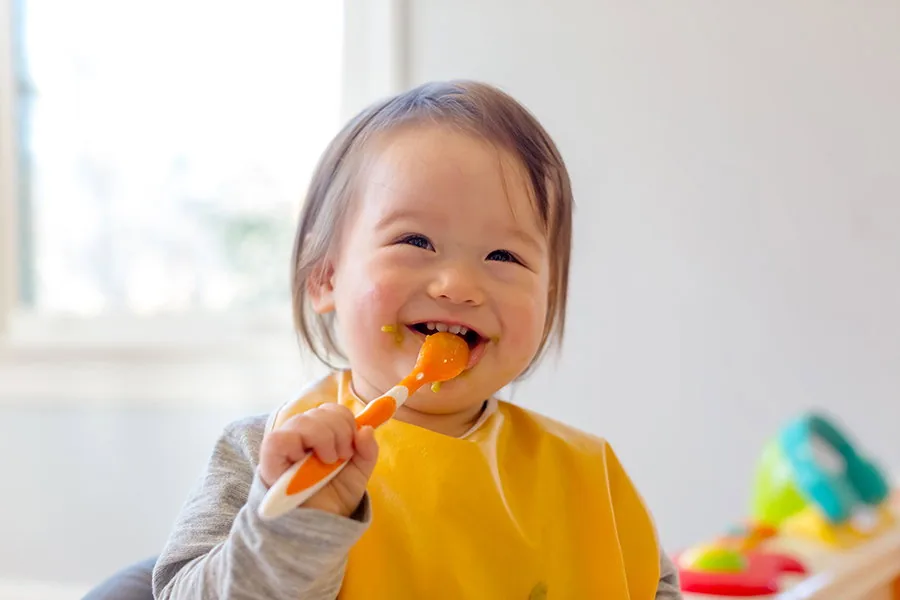
Most babies are ready for solid food at around six months, and the World Health Organization sets that point as the end of exclusive breastfeeding. A steamer and a blender will get you through weaning perfectly well. An all-in-one baby food maker buys you less washing up, which is a convenience rather than a necessity.
The more useful question is how to cook for a baby in a kitchen where food spoils fast and the fridge is already full.
When can a Singapore baby start solids?
The WHO recommends exclusive breastfeeding for the first six months, then complementary foods alongside continued breastfeeding. HealthHub gives Singapore parents the same timing, and your polyclinic will raise it at the six-month developmental check.
Age is only half of it. The AAP asks you to look for the signs as well. Your baby can hold her head steady, sits upright with support, opens her mouth when food comes near, and can move food to the back of her mouth instead of pushing it straight out.
A baby who still shoves everything forward with her tongue is telling you to wait a fortnight. That is not a setback.
What a baby food maker actually replaces
These appliances steam and blend in one jug, and some warm bottles or sterilise utensils too. What they save is real but narrow.
| What it does | What you already own that does it |
|---|---|
| Steams fruit and vegetables | A steamer basket over any pot |
| Blends to a chosen texture | A handheld blender, or a fork |
| Warms milk | A bowl of warm water |
| Sterilises small items | A pot of boiling water |
The genuine gain is fewer items to wash and one jug to watch rather than a hob plus a blender jar. In a small HDB kitchen, counter space is itself a cost, so weigh the footprint against how often you will cook in batches.
If you are leaning towards finger foods from the outset rather than purees, the appliance question mostly disappears. Our guide to baby-led weaning covers that route.
Textures by age
| Age | Texture | Examples |
|---|---|---|
| 6 months | Smooth, thin puree | Pumpkin, sweet potato, papaya, iron-fortified cereal |
| 7 to 8 months | Thicker puree, soft lumps | Mashed dhal, minced chicken, soft tofu |
| 9 to 11 months | Minced and chopped, soft finger foods | Steamed carrot sticks, flaked fish, well-cooked rice |
| 12 months | Family food, cut small | Porridge, soft noodles, egg, most of what you eat |
Local ingredients make this easy. Pumpkin, sweet potato, chye sim, papaya and banana all cook down smoothly and cost very little at the wet market. Our list of best fruits for babies from six months goes further into which ones suit a first spoonful.
Storing baby food in a hot, humid kitchen
This is where Singapore changes the advice, and weaning guides written for cooler countries do not always allow for it.
The CDC advises discarding cooked food left at room temperature for more than two hours, and cutting that to one hour once the surrounding temperature goes above 32°C. Our afternoons pass 32°C regularly, and a kitchen with the windows open and a wok recently used runs hotter still.
What that means in practice:
- Cool a fresh batch quickly, then refrigerate or freeze it. Do not let it sit while you feed.
- Portion before freezing, so you thaw one cube rather than a whole tub.
- Feed from a separate bowl, never the storage container, because saliva in the jar shortens its life.
- Throw away what the baby did not finish. Reheating a half-eaten bowl is a false economy.
- Label every container with the date. A month into weaning you will not remember.
Bottles and utensils need the same discipline. Our piece on disinfecting baby items covers the methods that work on each material.
What to keep out of the bowl
The NHS sets the limit for babies under one year at less than 1g of salt a day, because immature kidneys cannot cope with more. That rules out stock cubes, most sauces, and a spoonful from the family's soup.
Honey waits until after the first birthday, because of the risk of infant botulism. Cow's milk as a drink waits too, though it can be used in cooking. Whole nuts and whole grapes are choking hazards, so grind or quarter them.
Sugar has no place in a first year either. A baby who has never tasted it does not miss it, and the local habit of sweetening porridge is worth skipping while you still can.
Introducing allergens without dread
The old advice to delay peanut, egg and shellfish has been reversed. AAP guidance now gives no reason to hold allergenic foods back once solids have begun, and delaying may raise rather than lower risk.
Offer one new food at a time, in the morning rather than at bedtime, so you have the whole day to watch for a reaction. A small amount is enough to count as an introduction.
If your baby has moderate or severe eczema, or an existing food allergy, speak to your paediatrician before you start. KKH runs a paediatric allergy service and sees these referrals routinely.
Where to get help when feeding goes badly
Weaning throws up a lot of unglamorous problems. Constipation when fruit is low and rice is high. Wind and discomfort after a new food, which our guide to baby gas deals with. Flat refusal for a week at a time.
Polyclinic nurses handle these questions daily and will weigh your baby at the same visit, which answers the only question that really matters. A baby gaining steadily along her growth curve is eating enough, whatever the mess on the floor suggests. Bring the growth chart from your health booklet and ask them to plot it with you.
Frequently asked questions
- When can my baby start solid food?
- Around six months. The WHO recommends exclusive breastfeeding for the first six months, with complementary foods added after that while breastfeeding continues. HealthHub gives the same timing for babies in Singapore.
- Do I need a baby food maker?
- No. A steamer basket and any blender do the same work. An all-in-one appliance saves washing up and a little time, which is worth something if you are cooking in batches on a Sunday, and nothing at all if you are not.
- How long can I leave a puree out on the counter?
- The CDC advises throwing out cooked food left at room temperature for more than two hours, and after one hour once the temperature passes 32°C. Singapore afternoons cross that line often, so refrigerate sooner rather than later.
- Can I add salt or sugar to my baby's food?
- Keep both out. The NHS puts the limit for babies under one year at less than 1g of salt a day, which their kidneys cannot yet handle, and honey should wait until after the first birthday because of the botulism risk.
- Should I delay peanut, egg and other allergens?
- Current AAP guidance gives no reason to hold allergenic foods back beyond the start of solids. Introducing them one at a time, early in the day, lets you watch for a reaction. Ask your paediatrician first if your baby has severe eczema.
Sources
- WHO — Infant and young child feeding
- HealthHub (Health Promotion Board) — Starting your baby on solid food
- AAP HealthyChildren — Starting Solid Foods
- CDC — Food Safety and the 2-hour rule for leftovers
- NHS — What to feed young children, including salt and honey limits
- KK Women's and Children's Hospital — Allergy service and food allergy guidance
Share this article
This article is for information only and is not a substitute for diagnosis or medical advice. Please talk to your doctor about your own situation.