
8 best fruits for babies from 6 months
Papaya, banana, mango and five more first fruits from any wet market or FairPrice, with safe shapes, sour-fruit cautions and what to leave out.
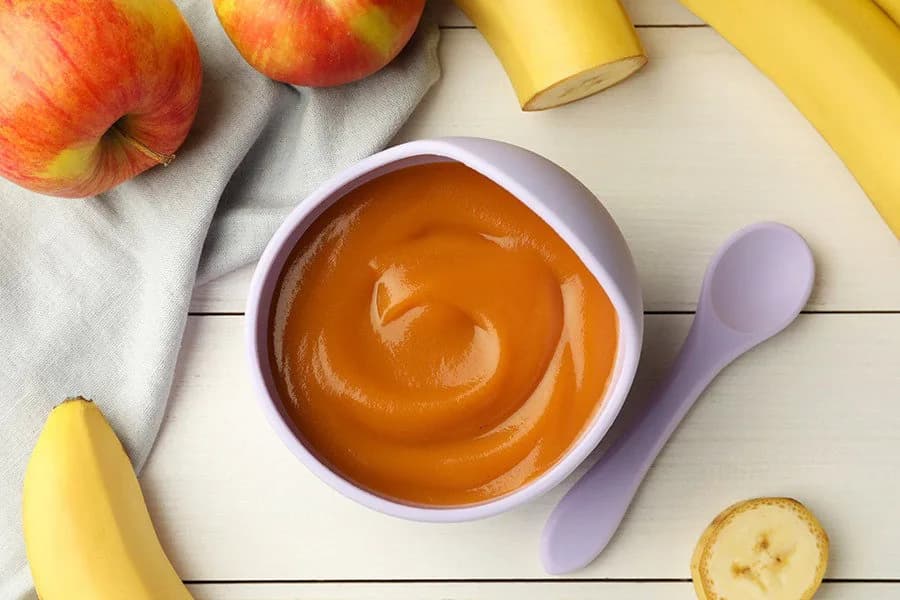
Papaya from the wet market, a banana off the kitchen counter, half an avocado. First tastes in Singapore can be very cheap.
Fruit makes a good first food from around six months, once your baby can sit steadily and hold her head up. Soft ripe papaya, banana, avocado, mango, dragon fruit and watermelon need only mashing. Pear and apple want steaming first. Milk still does the heavy lifting for nutrition all year.
When is a baby ready for fruit?
The World Health Organization puts the start of complementary feeding at around six months, with breastfeeding carrying on alongside it well into the second year. HealthHub says the same for Singapore families. Most babies are not ready before then, and starting earlier has no clear benefit.
Age is the rough guide. Readiness is the real one. The NHS lists the signs to look for: your baby can stay sitting and hold her head steady, she can coordinate eyes, hands and mouth well enough to look at food and get it in, and she can swallow rather than push everything back out with her tongue.
Dribbling, waking at night and chewing fists are not readiness signs, whatever your relatives say. Those happen at four months too. If your baby was premature, ask at the polyclinic which age to count from.
Which eight fruits make the best first tastes?
All eight are on the shelves at NTUC FairPrice and piled up at any wet market, and none of them needs a recipe.
1. Papaya
Ripe papaya is one of the most forgiving first fruits sold here. The flesh mashes to a smooth purée with a fork, it is naturally sweet without being sharp, and it carries fibre, folate and vitamins A and C. Pick one that gives slightly under your thumb. Scoop the seeds out, cut a chunk away from the skin, and mash.
2. Banana
Nothing to cook, nothing to wait for. Mash a ripe banana with a fork and loosen it with a little breast milk or formula if it feels too stiff. Bananas firm up some babies' stools, which is handy after a loose patch and less handy during a constipated one.
3. Avocado
Half an avocado gives your baby unsaturated fat and vitamin E in a texture she can manage from the first week of solids. Mash it plain. Fat matters more in infancy than most adults expect, so do not reach for a low-fat version of anything at this age.
4. Mango
Local and imported mangoes both work once they are properly ripe, which you can tell by smell at the stem end. Peel, cut the flesh off the stone and mash. Unripe mango is sour and fibrous, and it is the version most likely to come back out again.
5. Dragon fruit
The white-fleshed kind is mild and the red-fleshed kind is sweeter. Both mash easily and both are cheap through the local season. One warning worth having: red dragon fruit can turn urine and stools alarmingly pink or red for a day or so, and that is harmless. If you are not sure whether you are looking at dragon fruit or blood, call your doctor.
6. Watermelon
Mostly water, pleasant on a hot afternoon, and useful when your baby is refusing everything else in the heat. Take the seeds out and mash the flesh, or hand over a thick wedge with the rind left on as a handle for an older baby. Serve it fresh rather than from a cut tray that has been sitting out.
7. Steamed pear
Pear is gentle on the stomach and often helps when stools are hard. Peel, core, cut into chunks and steam for eight to ten minutes until a fork goes through without resistance, then mash or blend. The steaming water can thin the purée down.
8. Steamed apple
Raw apple is hard enough to be a genuine choking risk, so apple comes to a baby cooked. Peel, core, steam until soft and mash. A small pinch of cinnamon is fine from six months, and no sugar is needed at any point.
Why go easy on the sour fruits?
Kiwi, pineapple, calamansi and the citrus family are acidic. That acid stings a mouth with a bit of broken skin on it, and it can irritate the skin around the diaper area on the way out, which is a fast route to diaper rash.
None of this makes them dangerous. They simply land better a few months in, once your baby has met a dozen gentler foods. Hold off on the sour end of the fruit bowl at the start.
Allergy is a separate question from sourness. The American Academy of Pediatrics advises introducing the common allergenic foods early rather than late, including egg, peanut, dairy, wheat, soy, fish and shellfish, and doing it one food at a time with a few days in between so you can tell what caused what. Hives, swelling, vomiting or wheeze means stop and call a doctor, and trouble breathing or swelling of the lips, tongue or face means call 995.
Which fruit shapes are a choking risk?
Size and firmness cause choking, far more than the fruit itself.
| Avoid | Why | Serve instead |
|---|---|---|
| Whole or halved grapes | Round, firm, blocks the airway | Quartered lengthways, skin off |
| Raw apple chunks | Too hard to break down | Steamed until soft, or grated |
| Whole cherry tomatoes | Round and slippery | Quartered |
| Longan, lychee, rambutan | Stone plus slippery flesh | Stone removed, flesh quartered |
| Nuts and seeds, including peanuts | Hard and the wrong size | Smooth nut butter thinned with water |
| Dried fruit such as raisins or dates | Sticky and firm, sticks to the palate | Cooked and mashed into porridge |
Gagging and choking look nothing alike once you have seen both. A gagging baby is loud, flushed and furious, and the gag is doing its job by moving food forward. A choking baby is quiet, because no air is moving. Learn infant back blows and chest thrusts before you need them, and keep 995 in your head.
What has no place in the bowl before 12 months?
Honey comes first. Both the NHS and the American Academy of Pediatrics advise against honey of any kind before a baby's first birthday because of the risk of infant botulism, and that includes honey already baked into something.
Salt is next. A baby's kidneys cannot cope with much of it, and the NHS advises keeping salty foods away for the whole first year. This is where Singapore food gets complicated, because the flavour in most of what we eat comes from salt, stock or sauce. Chicken rice is cooked in stock. Porridge from the coffee shop has been seasoned. Sambal, kicap and oyster sauce are all salt.
First tastes of hawker food are still possible. Take plain rice or plain porridge, add steamed fish or a mashed vegetable from your own plate before any sauce goes on, and skip the soup. Added sugar has no reason to appear either, which includes the sweetened condensed milk in a kopi and the syrup in a packet drink.
Does fruit cover a baby's iron needs?
It does not, and this is the gap that catches families out. Iron stores laid down before birth start running low at around six months, which is part of why solids begin then at all. Fruit contains very little iron.
Iron comes from puréed meat and liver, fish, mashed egg, dhal and lentils, tofu, dark leafy greens and iron-fortified infant cereal. Serving a fruit alongside one of those helps, since vitamin C improves how much iron the body takes up from plant sources. Aim for an iron-rich food at least once a day.
Milk stays central through all of it. Breastfeeding on top of solid food is what the World Health Organization recommends up to two years and beyond, and a baby who is suddenly drinking less while eating more may need the balance looked at. Wind and a gassy tummy are common in these weeks, and most of it settles as her gut adjusts.
How do you move on from purée?
Thin purée is a starting texture rather than a destination. Thicken it over a few weeks, then mash with lumps, then soft finger-sized pieces she can hold herself. Babies who stay on smooth purée for many months may find lumpier textures harder to accept later.
Many families run both approaches at once, offering a loaded spoon at one meal and a strip of steamed pear at the next. That is a sensible way to do it. If you want the self-feeding side in full, our guide to starting baby-led weaning covers safe shapes and seating.
Leave juice out of the first year altogether. The American Academy of Pediatrics recommends no fruit juice at all before 12 months, since it delivers sugar and acid without the fibre of the fruit it came from and gets between teeth that are only just arriving. Water in an open cup from around six months does the job instead.
Frequently asked questions
- Can I give my six-month-old fruit straight from the wet market without cooking it?
- Soft ripe fruit such as papaya, banana, avocado, mango and dragon fruit needs no cooking. Wash the skin under running water before you cut, because the knife carries whatever was on the outside through to the flesh. Firm pear and apple are the ones to steam.
- Why is honey banned before 12 months?
- Honey can carry spores of Clostridium botulinum, which an infant gut cannot handle, and the NHS and the American Academy of Pediatrics both advise against any honey before a baby's first birthday. That includes honey stirred into porridge and honey baked into bread or biscuits.
- Is it true that sour fruits cause allergies?
- No. Kiwi, pineapple and citrus are acidic rather than especially allergenic, and the sting of acid on the lips or around the diaper area is what parents usually notice. Allergy to any food can show up as hives, swelling, vomiting or wheeze, so introduce new foods one at a time and watch. Trouble breathing or a swollen face is an emergency: call 995.
- My baby gags on fruit at every meal. Should I stop?
- Gagging is noisy, red-faced and protective, and it pushes food back to the front of the mouth. Choking is quiet. If your baby is coughing, spluttering and making sound, let her work it out. Silence, blue lips or no air means act at once and call 995.
- Where can I get feeding help in Singapore?
- Start with your polyclinic, where the six-month visit already covers feeding and growth. Doctors there refer on to the dietitians, allergy clinics and feeding teams at KK Women's and Children's Hospital and the National University Hospital when a baby needs more than general advice.
Sources
- WHO — Infant and young child feeding: complementary feeding from 6 months
- HealthHub (Health Promotion Board) — Starting your baby on solid food
- NHS — Your baby's first solid foods
- AAP, HealthyChildren.org — Starting solid foods and introducing allergenic foods
- AAP — Fruit juice in infants, children and adolescents, policy statement
- KK Women's and Children's Hospital — Allergy service and paediatric dietetics
Share this article
This article is for information only and is not a substitute for diagnosis or medical advice. Please talk to your doctor about your own situation.