
How to store breast milk when travelling
CDC storage times, why Singapore heat shortens them, getting a cooler bag through Changi, and how to keep pumping on a short regional trip.
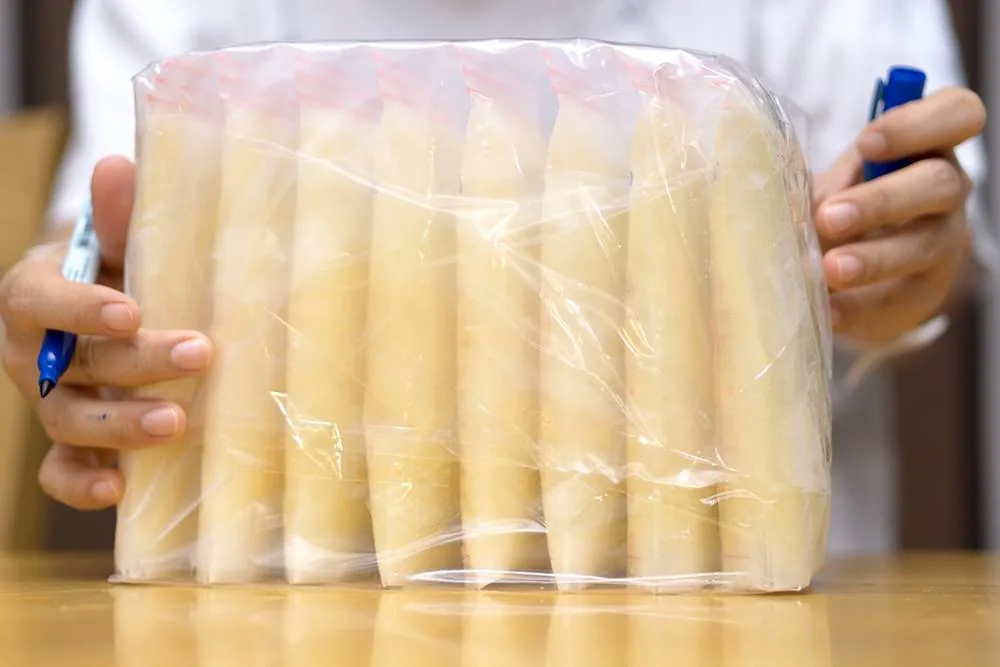
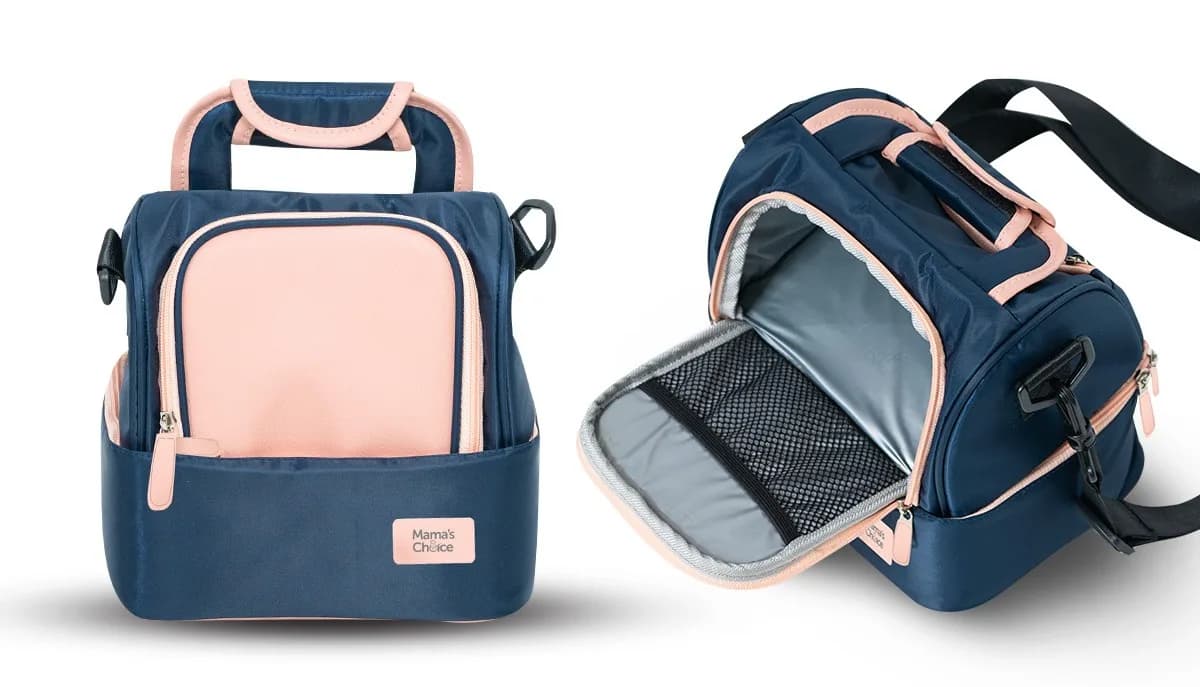
Pack a hard-sided cooler bag, frozen ice packs and dated storage bags, and keep the milk cold rather than cool. The CDC allows 4 hours at a room temperature of 25 °C or cooler, 24 hours in a cooler with ice packs, and 4 days in a fridge. In this heat, assume the shorter end.
How long does breast milk keep?
| Where | Freshly expressed | Note |
|---|---|---|
| Room temperature | Up to 4 hours | CDC defines this as 25 °C or cooler |
| Insulated cooler with frozen ice packs | Up to 24 hours | Keep the bag shut |
| Refrigerator | Up to 4 days | Back of a shelf, not the door |
| Freezer | Best within 6 months, acceptable to 12 | Lay flat, label with the date |
| Thawed in the fridge | Within 24 hours | Never refreeze |
| Left in a bottle the baby drank from | Within 2 hours | Discard the rest |
Those are the CDC's figures, and the NHS gives broadly the same. Every line assumes clean hands, clean equipment and a sealed container. Our guide to using storage bags properly covers the mechanics.
Does Singapore's heat change the rules?
The room-temperature line is the one to distrust. Badly.
The CDC's 4 hours is specified at 77 °F, which is 25 °C. A Singapore living room without air-conditioning runs around 30 °C through the afternoon and a car parked in the open goes far higher. Milk left on a table in those conditions is on a much shorter clock than the chart suggests.
So the working rule here is simpler. Milk goes from the pump into a cooler or a fridge, with as little time in between as you can manage. The 4-hour allowance becomes an emergency margin rather than a plan.
Heat also matters for the ice packs. A thin gel pack that would last a temperate afternoon will be soft within two hours here. Use the thickest packs you can fit, freeze them for a full day, and pack them above and below the bottles rather than just underneath.
What to pack
- A cooler bag with real insulation, ideally one that holds its shape rather than a soft lunch bag.
- At least two ice packs, frozen solid, plus a spare in the hotel freezer.
- More storage bags than you expect to need. They weigh nothing.
- A marker pen for dating every bag.
- Pump, spare parts, spare valves and membranes, plus the charger and a power bank.
- A manual pump as backup. Power sockets fail and batteries die.
- Bottle brush, a small bottle of dish soap, and a basin bag or a wash bag.
- Muslins, which double as a cover, a wipe and a drying mat.
Milk storage bags beat bottles for travel. Every time. They lie flat, take up a fraction of the space, and freeze faster.
Getting through the airport
Allow extra time. Keep everything reachable.
Baby milk is normally allowed as an exception to the usual limits on liquids in cabin baggage, and you will usually be asked to present it separately at screening. The exact handling varies between airports and airlines, so check your airline's page before you leave rather than arguing at the lane.
Changi has baby care rooms in every terminal, with changing tables, a sink and somewhere to sit, which makes a pumping stop before a flight manageable. Ice packs are generally accepted when frozen solid; partially melted ones can be questioned. Ask the staff at your hotel or lounge to refreeze them if there is a long layover.
On the aircraft, keep the cooler under the seat in front rather than in the overhead bin, so you can check it. Cabin crew will often supply ice on request, which is not a substitute for a frozen pack but helps for an hour.
Storing milk in a hotel
Call ahead and ask two specific questions: does the room have a freezer compartment, and will the kitchen store milk for you.
Minibar fridges are the trap. Many are cooling units that may not get down to the 4 °C a fridge should hold, which is fine for a drink and not fine for four days of milk. Put a cheap fridge thermometer in your bag if you are going to rely on one.
If there is no usable freezer, most hotels will keep a labelled bag in the kitchen freezer. Write your name, room number and the date on everything. For a regional trip of a few days, keeping milk fresh and using it as you go is simpler than freezing and transporting it home.
Pumping on the road
Keep the schedule rather than the exact times. Supply responds to how often milk is removed, so a missed session matters more than one shifted by an hour.
Express before you leave the house, again at the airport, and then at your usual intervals. Engorgement on a flight is miserable and raises the risk of a blocked duct, so pump even if you cannot keep the output. Our guides to pumping technique and maintaining supply cover what to do if yields drop while you are away.
Travelling without the baby makes let-down harder. A photo, a recording of them crying, and a warm flannel on the breast all help. Mothers heading back to work after Singapore's 16 weeks of maternity leave face the same problem, and our piece on pumping at work applies equally on a business trip.
When should you throw milk away?
Tip it out if it has been above fridge temperature longer than the table allows, if the ice packs melted and you do not know when, or if a bag has leaked.
Milk that smells sour or soapy is a judgement call. Thawed milk can smell soapy from lipase activity and still be safe, while sour milk is not. If you are unsure, remember that the cost of a discarded bag is lower than the cost of an upset newborn stomach on holiday.
Label everything, use the oldest first, and keep a note on your phone of what went into the freezer and when. It sounds fussy on day one and saves you guessing on day four.
Frequently asked questions
- How long does breast milk keep in a cooler bag?
- Up to 24 hours with frozen ice packs, according to the CDC, after which it goes into a fridge or a freezer. The ice packs have to be frozen solid at the start and the bag kept closed. Opening it every hour to check is what ruins the cold chain.
- Can I take breast milk through airport security?
- Baby milk is normally allowed as an exception to the usual limit on liquids in cabin baggage. Rules differ by airport and airline, so declare it at the screening point, keep it accessible rather than buried, and check your airline's page before you fly rather than at the gate.
- Does Singapore's heat change the storage times?
- It changes how you should read them. The CDC's 4 hours at room temperature is defined as 25 °C or cooler. An unair-conditioned room here sits closer to 30 °C, so do not rely on that figure. Keep milk in a cooler or a fridge instead.
- Should I bring frozen milk or fresh?
- Fresh if the trip is short and the milk will be used within four days. Frozen if it needs to last, since frozen milk also acts as its own ice pack in transit. Thawed milk must be used within 24 hours and never refrozen.
- What containers should I use?
- Food-grade breast milk storage bags or BPA-free bottles. The CDC advises avoiding plastic containers marked with recycle symbol number 7, which may contain BPA. Lay bags flat to freeze, leave a little headspace for expansion, and label every one with the date it was expressed.
Sources
Share this article
This article is for information only and is not a substitute for diagnosis or medical advice. Please talk to your doctor about your own situation.