
Nursing Bra Singapore: How To Buy One That Fits
When to buy, how to measure yourself, which features matter in Singapore's humidity, and the fit problems that lead to blocked ducts and mastitis.
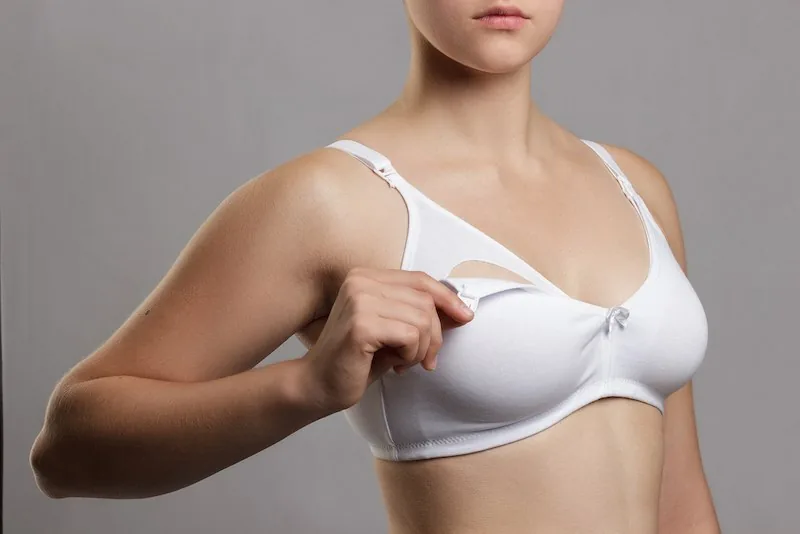
Buy a nursing bra when your current one leaves marks or feels tight, usually in the second trimester and again after your milk comes in. Look for no wires, wide straps, at least four hook positions, breathable fabric for this climate, and a clip you can open one-handed in the dark.
Why does a nursing bra matter?
Your ribcage expands during pregnancy and your breasts grow, and both happen unevenly. The NHS describes breast enlargement and tenderness as among the earliest changes of pregnancy, often before anything else is visible.
Then milk arrives. In the first week after birth the breasts can go from full to engorged to soft again within hours of a feed, and a bra sized for the pregnant version of you will not cope.
A nursing bra does what a regular one cannot, in several ways:
- Opens at the cup, with a clip or a pull-aside panel, so you can feed without undressing.
- Stretches and adjusts across a wide range, because your size now changes daily.
- Avoids concentrated pressure on breast tissue, which is where blocked ducts start.
When should you buy one?
Twice, realistically, and a third time if you are still feeding at six months.
Second trimester. A maternity bra for pregnancy, when your usual band digs in or the cups overflow. Signs worth acting on: indentations in the skin after you take it off, the band riding up, or tissue spilling at the underarm.
Week one or two after birth. This is the nursing size. Buying it before delivery is guesswork, because engorgement shifts the measurement more than nine months of pregnancy did. Take two inexpensive stretchy bras into the hospital bag and buy properly afterwards.
Around 3 to 6 months. Supply regulates, engorgement settles, and many Mamas find they drop a cup size. The bra that fitted in week two will be loose.
How do you measure yourself?
| Step | How | Note |
|---|---|---|
| Band | Snug under the bust, tape level all the way round | This is the number that holds the weight |
| Bust | Loosely around the fullest point | Stand upright, no squashing |
| Cup | Difference between the two | One inch per cup size, roughly |
| Recheck | After milk comes in, and again at 3 months | Sizes here are usually UK or EU |
Measure in the evening rather than first thing. Do it again after a feed, because the difference between a full and a drained breast can be a whole cup.
Department stores along Orchard Road and the maternity shops in the larger malls will fit you in person, which is worth the trip for your first one. After that you know your number and can buy anywhere.

What should you look for in this climate?
Singapore's humidity changes the shopping list more than the design does.
- Breathable fabric. Cotton-rich knits or moisture-wicking blends. Thick foam cups hold sweat against the skin and lead to chafing under the band and sometimes a fungal rash in the fold.
- Wide straps and a wide band. They spread the load and leave fewer marks when you are carrying more weight than you are used to.
- Four or more hook positions. Your ribcage is not finished changing.
- A one-handed clip. Test it in the shop with one hand while holding something in the other. At 3am with a crying baby, that is the whole product.
- Removable or sewn-in pads you can live with. Sewn-in stays put; removable dries faster, which matters here.
- No wire, or a wire that lies flat. Wires are not inherently harmful, and the ones that curve up into breast tissue cause the trouble.
Own at least three. One on, one in the wash, one dry, because in this humidity nothing dries overnight on a bathroom rail.
Which mistakes cost the most?
Buying a regular bra in a bigger size. The band will be too loose to support anything and there is no feeding opening, so you end up pulling the whole cup down and squashing tissue against the underwire.
Buying the nursing size while pregnant. Covered above, and it is the most common one.
Sleeping in something tight. A soft sleep bra or nothing at all is better than a day bra left on overnight, particularly in the engorgement week.
Keeping a bra that leaves red marks. A mark that is still visible after an hour means the bra is pressing hard enough to matter. Our guide to clearing a blocked duct explains what happens when that pressure sits over one area for days.
When is the bra causing a problem?
A few signs point back to fit rather than to feeding.
A tender lump in one spot that appears in the same place repeatedly, often where a wire or a seam sits. The NHS lists a tight bra among the contributors to blocked ducts, which can progress to mastitis with fever and a red wedge on the breast.
A rash or raw skin along the band line or in the crease underneath, which in this humidity is usually friction plus trapped sweat rather than an allergy.
And a drop in what you express on one side only, which occasionally traces back to a bra compressing that breast through the working day.
Change the bra first, then see someone if it continues. A fever, chills or a hot, red, painful area on the breast is different: that can be mastitis, and it needs a GP or polyclinic the same day rather than a new bra. Lactation consultants at KKH and NUH see fit-related problems regularly, and polyclinics can refer you. Our guides to feeding out of the house, what to pack for delivery and general breastfeeding tips cover the rest of the kit.
Frequently asked questions
- When should I buy a nursing bra?
- Around the second trimester for a maternity bra, when your usual one starts leaving marks, and again a week or two after your milk comes in. Buying the nursing size before the birth is guesswork, because engorgement in the first week changes the measurement more than the whole pregnancy did.
- How do I measure myself for a nursing bra?
- Measure the band snugly under the bust with the tape level, then measure loosely around the fullest part. The difference gives you the cup. Do it in the evening rather than first thing, measure again after your milk comes in, and sit down between the two measurements so the tape is not fighting you.
- Can a tight bra cause blocked ducts or mastitis?
- Sustained pressure on one part of the breast can obstruct drainage, and the NHS lists a tight bra among the things that contribute to blocked ducts and mastitis. The fix is a bra that does not dig in anywhere, not a looser band that gives you no support at all.
- Is an underwire bra safe while breastfeeding?
- The wire itself is not the problem; pressure is. A wire that sits flat against the ribcage and nowhere near breast tissue is fine for some women, and most find a wire-free bra easier because breast size changes through the day. Check for red marks after an hour, which is the test that matters.
- What fabric works best in Singapore's climate?
- Something that moves moisture rather than holding it. Cotton-rich knits and moisture-wicking blends both work; thick padded cups and non-breathable synthetics trap sweat against skin and lead to chafing and fungal rashes under the band. Air the bra out between wears and wash it often.
Sources
- NHS — Breastfeeding: blocked ducts and mastitis
- NHS — Your body changes during pregnancy, including breast changes
- La Leche League International — bras, breast support and engorgement
- HealthHub, Health Promotion Board — breastfeeding and breast care
- KK Women's and Children's Hospital — lactation service
Share this article
This article is for information only and is not a substitute for diagnosis or medical advice. Please talk to your doctor about your own situation.