How to relactate after stopping breastfeeding
Relactation works through frequent milk removal and skin-to-skin time. What to expect week by week, and where to get lactation help in Singapore.

Relactation means bringing your milk back after a gap, and it runs on frequent milk removal plus a lot of skin-to-skin time. Eight to twelve stimulation sessions a day, one of them overnight, is the usual target. Progress is measured in weeks, and partial supply counts.
What relactation involves
Your breasts make milk in response to milk leaving them. That mechanism does not switch off permanently when feeding stops, which is why supply can be rebuilt after days, weeks or sometimes months.
The World Health Organization published a review of relactation experience and practice recommendations, and La Leche League International sets out the same approach. Both describe stimulation and contact as the engine, and both say plainly that results vary.
Mamas who stopped recently tend to have an easier time. So do those whose babies are still young enough to latch readily.
How long does it take?
Nobody can give you a date, and the confident numbers on the internet come from sources that do not support them. What the guidance does say is that the gap since you stopped, your baby's age and how often you can stimulate all shift the timeline.
A reasonable way to think about it: drops within the first week or two, a noticeable increase over the following month or so, and a plateau somewhere after that which may or may not be a full supply.
Keep a simple log. Sessions, minutes, and what you collected. On the days it feels hopeless, the log is the clearest evidence you have.
Stimulation is the whole game
Eight to twelve sessions in twenty-four hours, including at least one between midnight and five in the morning, because prolactin runs highest then.
Each session lasts fifteen to twenty minutes on a pump, or as long as your baby is actively feeding. Frequency matters more than duration, so six short sessions beat two long ones.
Hand expression after pumping is worth learning. It can help empty the breast more fully than a pump alone, and it costs nothing. Our guide to pumping breast milk covers technique and timing.
Warmth and massage before a session help. A warm shower, a few minutes of gentle compression, and a photograph or a smell of your baby if you are pumping away from them.
Getting your baby back to the breast
Skin to skin, as much of the day as you can manage. Your baby against your bare chest with nothing in between, no pressure to feed, no timer.
- Offer the breast when your baby is sleepy and calm rather than hungry and cross
- Put the pacifier away, so the comfort sucking happens at the breast instead
- Try feeding in the bath, or lying down in a dark room
- Use a nursing supplementer at the breast if one has been set up for you, so sucking at the breast is rewarded with milk
- Let your baby finish at the breast after a bottle, rather than always starting there
Older babies who have been bottle-fed for weeks often need several days of this before they latch properly. Never push the head on. Our piece on ending a nursing strike applies here too, since refusal looks much the same.
Keeping your baby fed while supply builds
This part is not negotiable. Your baby's weight gain and diaper count come first, and formula or expressed milk continues until your own supply can carry the load.
Reduce top-ups slowly and only on evidence. Weight checks at the polyclinic, wet diapers, and a baby who seems satisfied. Dropping top-ups too fast can leave a baby underfed, and that is the outcome to avoid.
Paced bottle feeding keeps the bottle from being dramatically easier than the breast. Bottle held horizontally, slow-flow teat, pauses.
Food, herbs and what the evidence shows
Eat properly and drink to thirst, because you are about to spend several weeks tired. Beyond that, the picture is thinner than the shelves suggest.
A Cochrane review of oral galactagogues in mothers of healthy term babies looked at the herbal and food products sold for supply and found small, inconsistent trials with no clear conclusion. Our article on boosting supply naturally goes through what was actually measured.
Prescription options exist and are sometimes used here. That is a conversation with a doctor, and the Health Sciences Authority regulates what may be sold for this purpose in Singapore, so anything bought informally is worth refusing.
Looking after your nipples
Twelve stimulation sessions a day is a lot of friction on skin that has been out of practice. Cracks, blisters and soreness are common in the first fortnight, and they can make it very hard to keep going.
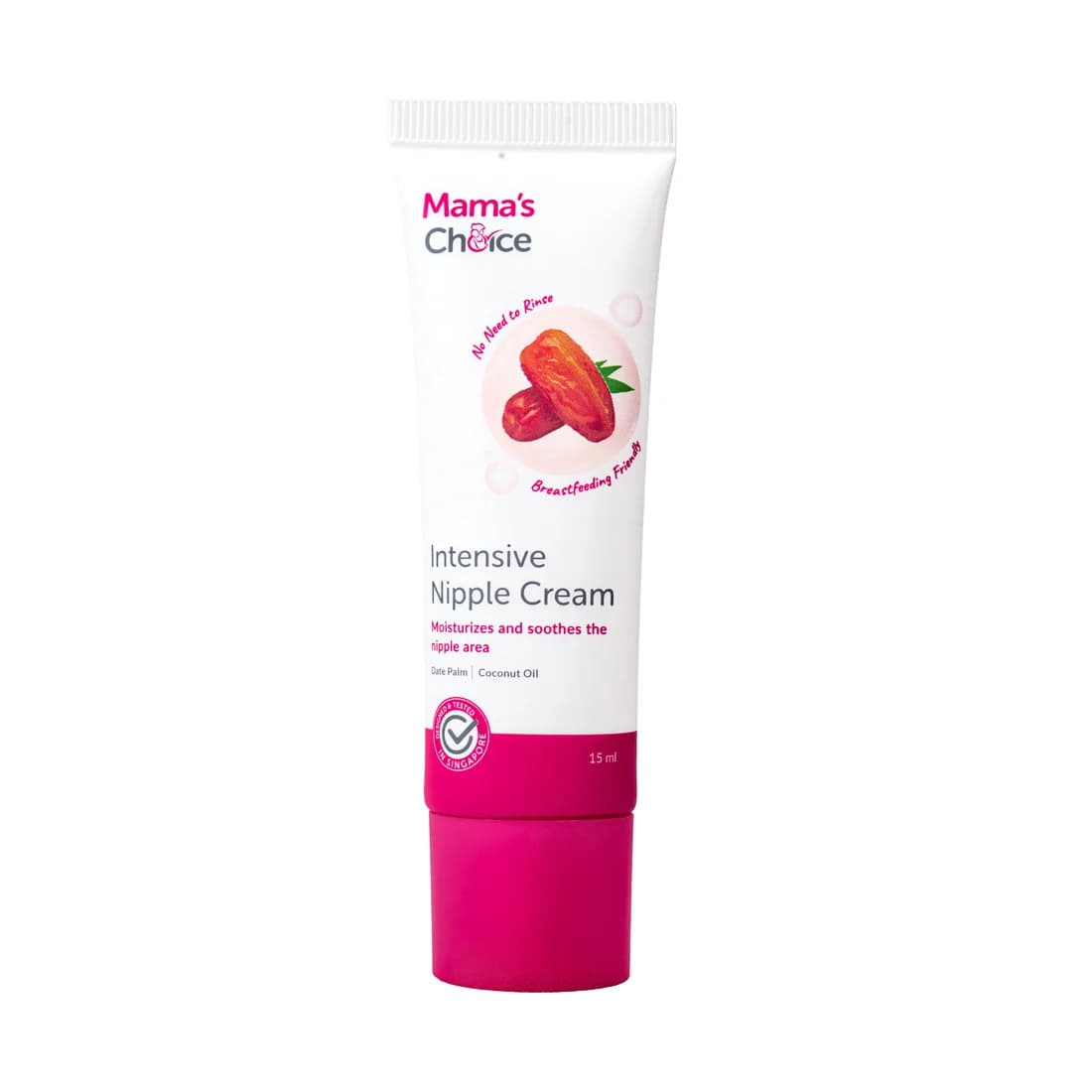
Check the pump flange size, since a poor fit is a common cause of pumping pain. Use a lower vacuum than you think you need. Between sessions, a nipple balm keeps the skin from drying out. Mama's Choice Intensive Nipple Cream is one, a lanolin-based cream with shea butter and coconut oil that moisturises and protects the skin of the nipple and areola. Lanolin comes from sheep's wool, so skip it if you know wool products irritate your skin. Our guide to breastfeeding pain covers the rest.
If a nipple is bleeding or a breast develops a hot, red, painful area, stop guessing and see a doctor.
Getting help in Singapore
Relactation goes far better with someone watching the latch. KK Women's and Children's Hospital and the National University Hospital both run lactation services that see mothers well after discharge, and your polyclinic can make the referral.
Timing is worth thinking about. Government-Paid Maternity Leave runs to sixteen weeks under the scheme administered by the Ministry of Manpower, and a relactation attempt is far easier inside that window than after you are back at a desk. If you are already back, read our piece on pumping at work before you set the schedule.
Confinement nannies and relatives will have opinions, some of them useful. On supply specifically, take the question to a lactation consultant rather than settling it over dinner.
A last practical point. Decide in advance what a good outcome looks like for you, whether that is a full supply, a few feeds a day, or simply the closeness of feeding at all. Setting that line early makes it easier to be kind to yourself when you reach it.
Frequently asked questions
- Is relactation actually possible?
- Yes, and it is well described. The World Health Organization published a review of relactation experience and practice recommendations, and La Leche League International gives the same account: frequent stimulation of the breast, plenty of skin-to-skin contact and patience bring supply back for many mothers, though rarely all at once.
- How long does relactation take?
- There is no reliable rule, and the figures circulating online are not from good sources. What the published guidance does say is that mothers who stopped recently, and whose babies are young, tend to see milk sooner. Expect to measure progress over weeks rather than days.
- How often do I need to pump or feed?
- Aim for eight to twelve stimulation sessions in twenty-four hours, including at least one overnight, since the hormone that drives supply is highest then. Frequency does more than duration, so six short sessions beat two long ones.
- Do herbs and lactation drinks help?
- A Cochrane review of oral galactagogues in mothers of healthy term babies found the trials small and inconsistent, with no clear conclusion. Anything stronger is a prescription decision, and the Health Sciences Authority regulates what can be sold for this purpose in Singapore.
- Will I be able to stop formula completely?
- Some mothers do, many reach a partial supply, and partial is a real result rather than a failure. Any amount of your milk still counts, and a plan that keeps your baby properly fed while supply builds is the safe way to attempt it.
Sources
- World Health Organization — relactation, a review of experience and recommendations for practice
- La Leche League International — relactation and building a milk supply
- Cochrane Library — oral galactagogues for increasing breast milk production in mothers of non-hospitalised term infants
- Health Sciences Authority — regulation of medicines and health products in Singapore
- KK Women's and Children's Hospital — lactation services
- Ministry of Manpower — Government-Paid Maternity Leave
- HealthHub (Ministry of Health Singapore) — breastfeeding support
Share this article
This article is for information only and is not a substitute for diagnosis or medical advice. Please talk to your doctor about your own situation.