Sagging breasts after pregnancy
Why breasts change after pregnancy, why breastfeeding is not the cause, what support and exercise can and cannot do, and when to get screened in Singapore.
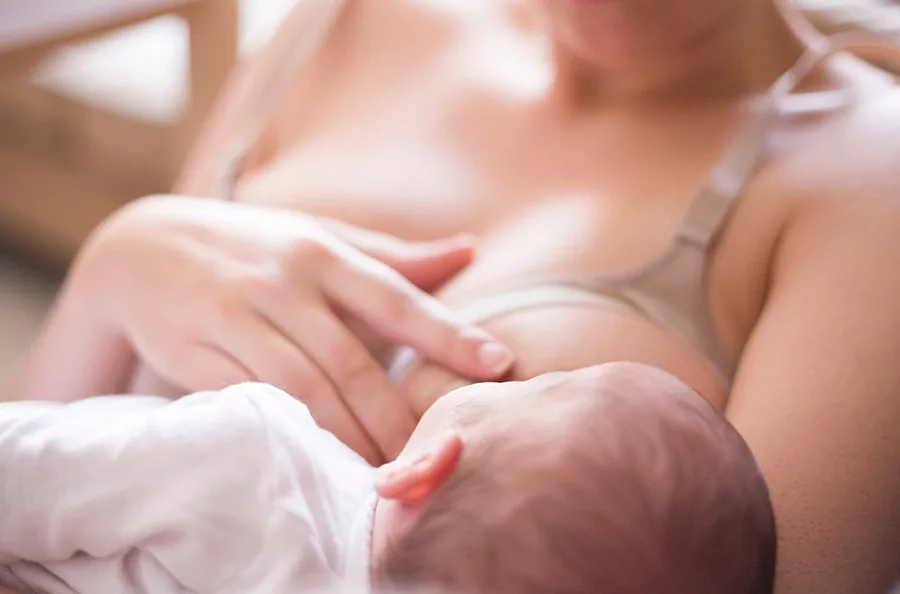
Breasts change shape because pregnancy enlarges them and stretches the skin and ligaments that hold them, and the stretching does not fully reverse. Breastfeeding is not the cause. Good support, chest and back strength, steady rather than crash weight loss, and not smoking are what genuinely help.
Why do breasts change after pregnancy?
A breast is fat, glandular tissue and skin, held in place by connective bands called Cooper's ligaments. There is no muscle inside it.
In pregnancy the gland grows, often by several cup sizes, and the skin and those ligaments stretch to accommodate it. The NHS describes this enlargement as one of the earliest signs of pregnancy. Afterwards the gland shrinks back and the envelope around it does not shrink by the same amount.
Other factors stack on top:
- Each additional pregnancy
- Age, and the natural loss of skin elasticity
- Large swings in body weight, up or down
- Smoking, which damages collagen and elastin
- Genetics, which sets how elastic your skin was to begin with
Nothing on that list is a failure of care. Most of it is not under your control at all.
Is breastfeeding to blame?
No, and the belief is worth putting down because it makes women stop feeding for the wrong reason.
The change is driven by the pregnancy that preceded the feeding. Women who deliver and never breastfeed get the same remodelling. What breastfeeding does is make the breast fuller for a while and then emptier when you wean, which can make the change feel sudden even though it was already underway.
Also read: breastfeeding benefits for you and your baby
What actually helps?
Wear support that fits. Breast tissue has no internal scaffold, so an unsupportive bra lets the weight hang from skin. Get measured after your milk supply settles, since the size you wore in pregnancy is unlikely to be right afterwards.
Support harder when you exercise. More movement means more repeated stretch. A firm sports bra matters more at this stage than it did before.
Strengthen the chest, back and shoulders. Push-ups, rows, band pull-aparts. None of it lifts the breast itself, and all of it improves the posture and the chest wall the breast sits on, which is most of what people see.
Lose weight slowly if you want to lose it. ACOG's postpartum activity guidance supports returning to exercise gradually, and large, fast swings in weight are one of the factors linked to sagging.
Stop smoking. Collagen damage from smoking is one of the few mechanisms here that is fully in your hands.
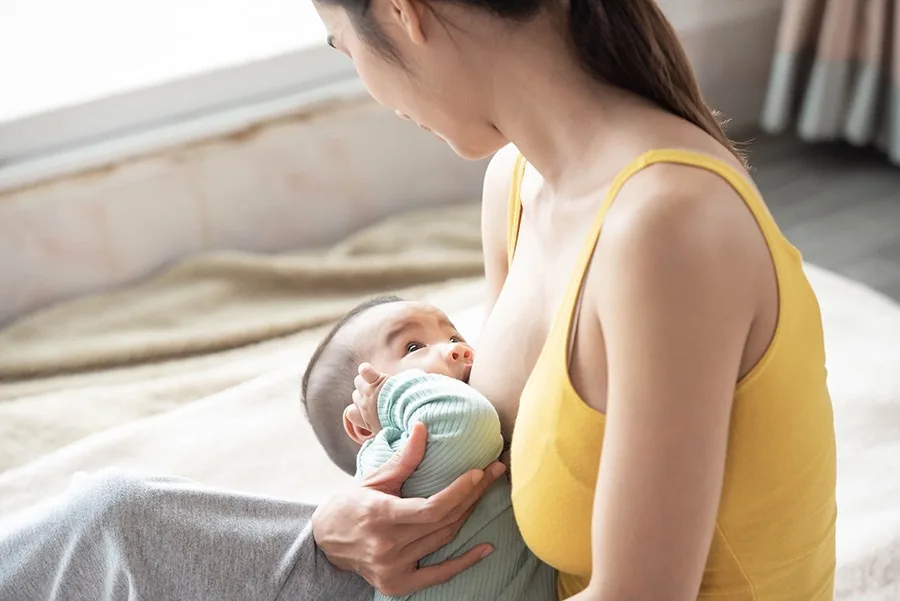
Mind your feeding posture. Hunching over a baby for 40 minutes, eight times a day, builds a rounded upper back that makes everything look lower. Bring the baby up to you with a cushion rather than bending down to her.
Exercising here needs planning around the weather. Early mornings, a pool, or an air-conditioned gym. The Health Promotion Board's physical activity guidance puts the weekly target in minutes rather than in intensity, which is achievable in a climate like this if you break it up.
Also read: postpartum exercise that works
What cannot be fixed without surgery
Several common promises do not hold up.
| Claim | Reality |
|---|---|
| Firming creams lift breasts | No. Cochrane found weak evidence even for creams preventing stretch marks |
| Chest exercises restore shape | They improve the platform, not the breast |
| Massage tightens ligaments | Stretched ligaments do not re-tighten |
| Cold showers firm tissue | A temporary skin effect, nothing more |
| Posture changes everything | It changes appearance, which is worth having |
A breast lift is the only intervention that repositions the tissue, and it is surgery with recovery, cost and scars. Plenty of women decide against it, and plenty decide for it. Either way it helps to know which category each promise belongs in.
Skin care on the chest
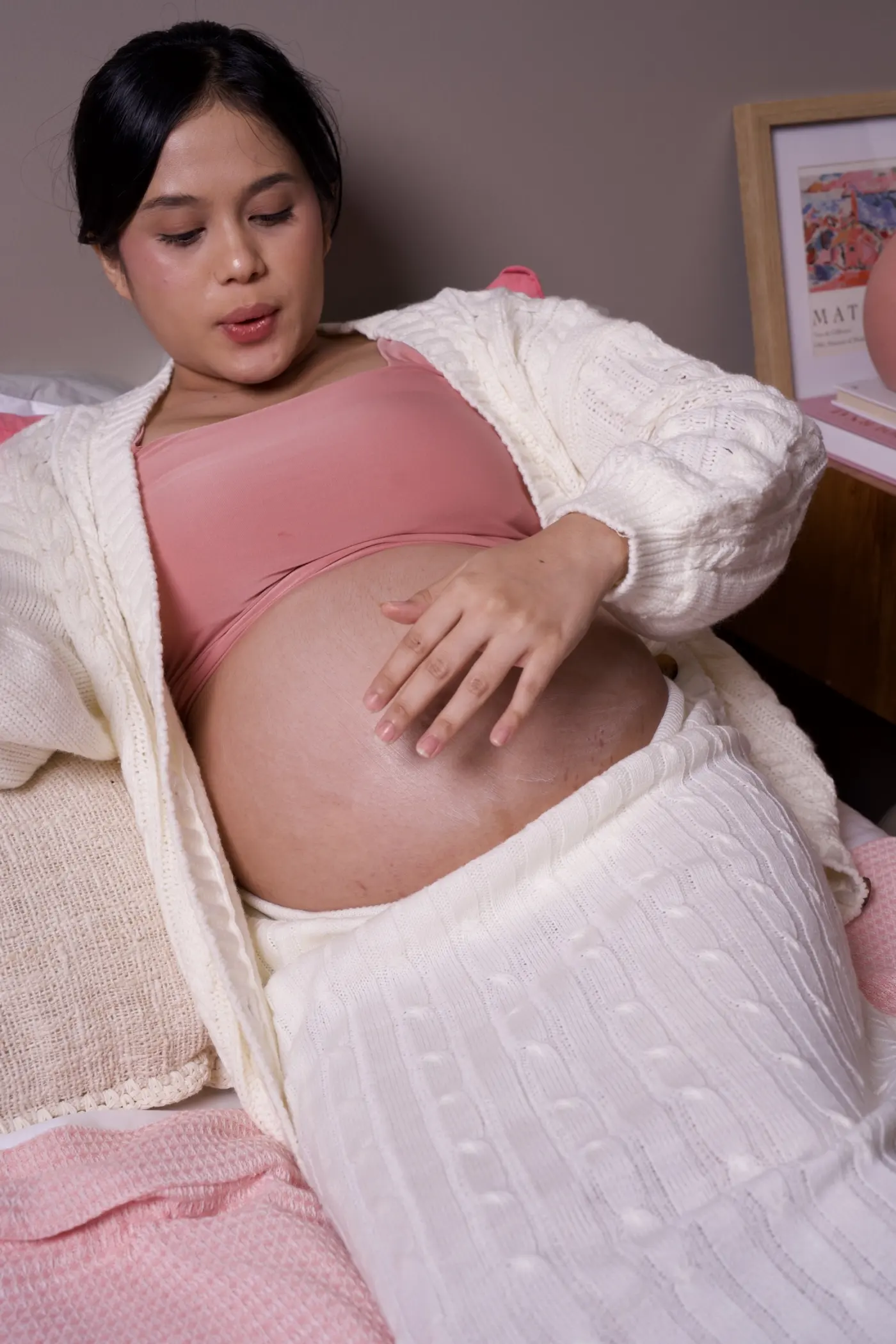
Stretch marks across the upper breast are common and follow the same mechanism the American Academy of Dermatology describes elsewhere on the body: skin stretched faster than it can adapt, with the dermis tearing beneath an intact surface.
They fade from red to pale over months to years, and they do not disappear. Cochrane's review of creams for preventing them in pregnancy found no convincing evidence that any topical product works, which is worth knowing before you spend on one.
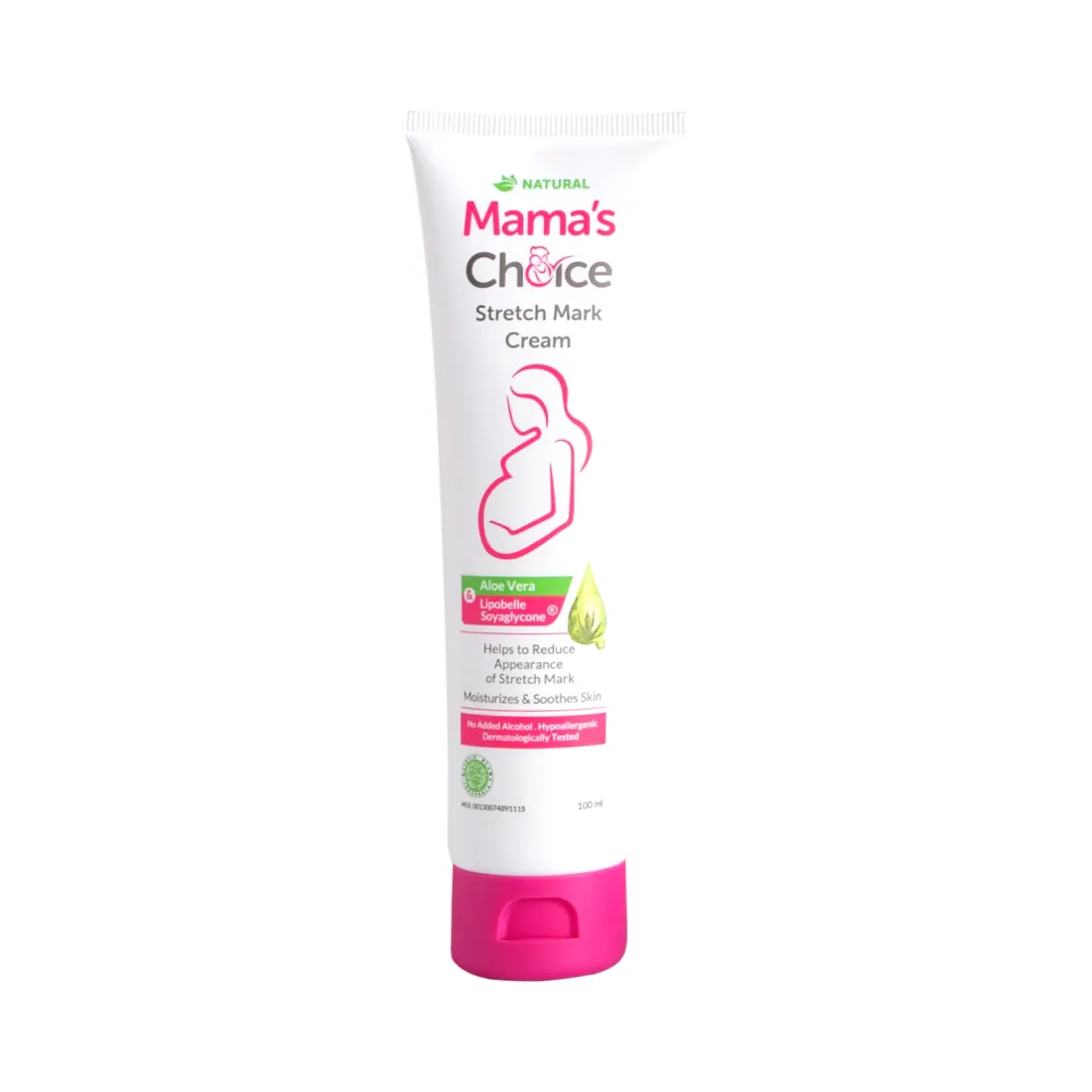
What a moisturiser does do is keep stretched skin moisturised and comfortable, and air-conditioning makes that more relevant here than you might expect. Mama's Choice Stretch Mark Cream is ours, a moisturising cream with shea butter, olive and jojoba oils, formulated for use during pregnancy and breastfeeding. It contains a light fragrance, so keep it off the nipple and areola if you are breastfeeding. We would rather you bought it to keep your skin moisturised than for a promise the evidence does not support.
Also read: what stretch marks are
Rashes in the fold underneath
This is the Singapore-specific complaint that nobody warns you about. A warm, damp crease under a heavy breast, in a climate like this, is where intertrigo starts.
- Dry the fold properly after showering, including with a cool hairdryer setting
- Change out of a sweaty bra rather than letting it dry on you
- Choose cotton-lined cups over synthetic ones for daytime
- Skip talc, which clumps when damp
- Rinse bras of detergent residue thoroughly
A red patch with a defined edge, satellite spots or real itching usually means yeast, and an antifungal cream from a pharmacist or a polyclinic doctor clears it. Treating it as a hygiene failure and scrubbing harder makes it worse.
Checking your breasts, and when to be screened
Everything above is cosmetic. This part is not.
Get to know how your breasts normally feel, which is harder while they are changing, and see a doctor promptly about a new lump, a nipple that has turned inward, puckered or dimpled skin, blood-stained discharge, or a patch of redness and pain that does not settle with the usual mastitis measures.
BreastScreen Singapore, run by the Health Promotion Board, invites women for a mammogram every two years from age 50. Women in their forties can discuss annual screening with their doctor. Screening is subsidised at polyclinics and participating clinics, and the Health Promotion Board publishes the current fees and eligibility.
Frequently asked questions
- Does breastfeeding make breasts sag?
- The change comes from pregnancy itself, which enlarges the breast and stretches the skin and supporting ligaments whether or not you go on to breastfeed. Age, the number of pregnancies, large swings in weight and smoking all contribute as well.
- Can exercise lift my breasts?
- Not directly, because there is no muscle inside a breast. Strengthening the chest, back and shoulders improves posture and the platform the breast sits on, which changes how it looks without changing the tissue.
- Does any cream firm breast tissue?
- No. Cochrane's review of creams for preventing stretch marks in pregnancy found the evidence weak even for that narrower claim. A moisturiser keeps skin moisturised and comfortable, and that is as far as it goes.
- Why do I get a rash under my breasts in Singapore?
- Heat, sweat and skin folds make a warm damp crease, which yeast and bacteria like. Keep the area dry, change out of a damp bra, and see a doctor if it is itchy, red-edged or spreading, since it may need an antifungal cream.
- When should I start breast screening?
- BreastScreen Singapore, run by the Health Promotion Board, invites women to mammogram screening every two years from age 50, and women in their forties can discuss yearly screening with a doctor. Subsidies apply at polyclinics and participating clinics.
Sources
- NHS — Breast changes in pregnancy
- Cochrane — Creams for preventing stretch marks in pregnancy
- ACOG — Physical activity and exercise during pregnancy and the postpartum period
- American Academy of Dermatology — Why stretch marks appear
- Health Promotion Board — BreastScreen Singapore and physical activity guidelines
Share this article
This article is for information only and is not a substitute for diagnosis or medical advice. Please talk to your doctor about your own situation.