
How to choose a pumping bra in Singapore
What a hands-free pumping bra does, how it should fit as your body changes, and which fabrics survive a humid commute and an air-conditioned office.
A pumping session is twenty minutes you cannot get back. A bra that holds the flanges for you decides whether those minutes are spent sitting still or getting something done.
A hands-free pumping bra holds the pump flanges against your breasts so your hands stay free. Choose a soft wide band with several rows of hooks, a stretchy opening that fits the shields you already own, and a breathable fabric that dries fast. Fit matters more than brand, and nothing should pinch.
What does a pumping bra actually do?
It holds the hardware. The flanges press against the breast and the tubing runs to the pump, and a bra with reinforced openings keeps them in place while you lean forward or stand up.
That is the whole mechanism. Everything else, the look, the colour, the marketing about recovery and support, sits on top of that one function. A bra that holds the shields at a slightly wrong angle will break the seal, which means less milk and a wet lap.
Do you need one at all?
Plenty of mothers never buy one. If you express once a day at home, holding the shields is fine, and a rolled towel under your forearms does half the job.
The case changes when expressing becomes routine. Back at work, two or four sessions a day at twenty minutes each adds up to real time, and being able to type, eat or talk through them is the difference between a sustainable routine and a resented one. Our guide to pumping breast milk covers how often most mothers end up expressing.
| Option | Works well when | Catch |
|---|---|---|
| Dedicated hands-free pumping bra | You express several times a day | One more thing to change into and wash |
| Combined nursing and pumping bra | You alternate feeding and expressing | Compromises a little on both |
| A band worn over your usual bra | Your bra already fits and you want flexibility | Can ride up as you move |
| Holding the flanges by hand | Occasional expressing at home | Twenty minutes with both hands busy |
How should a pumping bra fit?
Snug around the ribs, loose over the breast. The band carries the weight, so it wants to be wide and firm without digging in, and your breast tissue wants room to change size through the day.
Measure under your bust with a tape rather than guessing from the size you wore last year. Your ribcage itself widens during pregnancy and does not always go back. Try the band on the loosest hook, so there is somewhere to go as things settle over the following months.
Volume is the part that moves. A breast is fuller before a feed than after one, and often fullest first thing in the morning, which is why a rigid cup that fits beautifully at noon hurts by bedtime. Stretch fabric and a forgiving opening handle that far better than a structured cup.
Which fabrics hold up in this climate?
Anything that traps sweat will make you miserable by the second week. You are moving between a 32°C bus stop and a cold office several times a day, and the bra is under a work blouse for most of it.
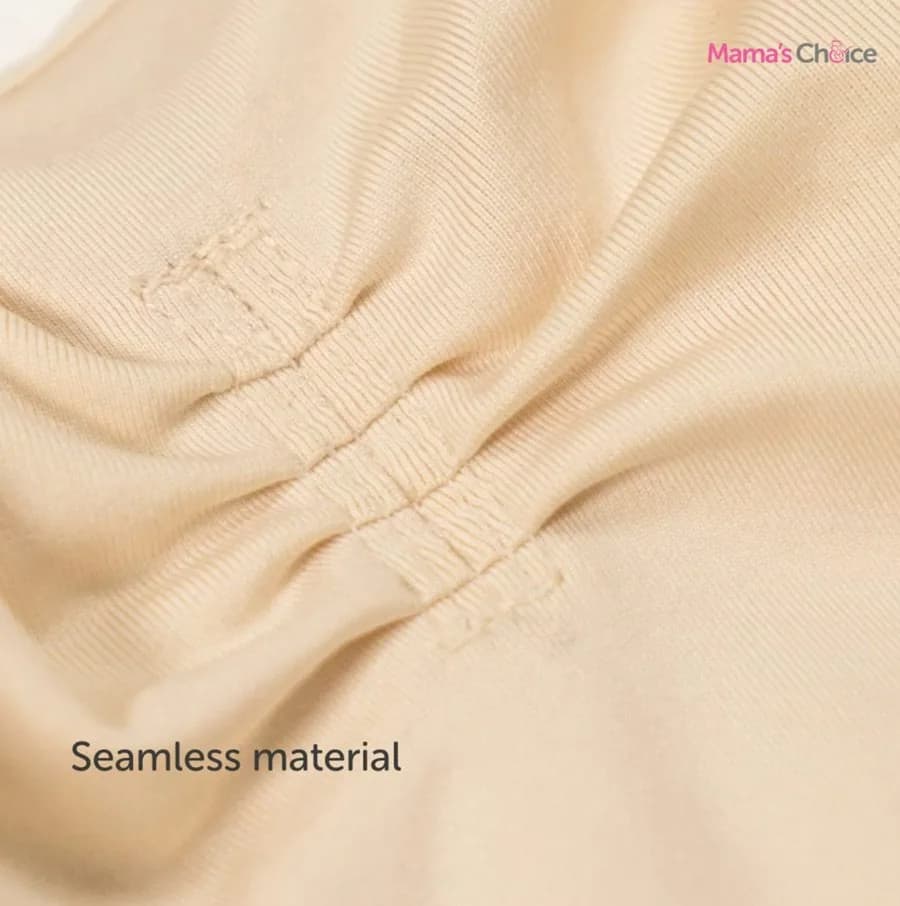
Look for a high proportion of nylon or polyester with elastane for stretch, or a cotton blend if you prefer natural fibres against the skin. Seamless styles show less under thin tops. Pale colours show damp patches, so mid tones are kinder.
Buy two and rotate them. Washed bras here take a full day to dry indoors during a wet week, and a bra that goes on slightly damp over a nursing pad is how skin trouble starts. Our piece on preventing leaks covers the pad side of the same problem.
Will it work with your pump?
Check before you pay. Openings differ in how far apart they sit, how much they stretch and whether the fabric grips the shield rim or slides off it.
Take your own flanges to the shop, or hold them against the bra in the fitting room. If you buy online, read the opening measurement rather than the brand compatibility list. Bras bundled with one pump brand are usually cut for that brand's shields, and tying your bras to a manufacturer means replacing everything the day you change pumps.
Flange size matters more than the bra. A shield that pinches is a common cause of sore nipples, and the NHS is clear that expressing should not be painful. Lactation consultants at KK Women's and Children's Hospital and the National University Hospital will check sizing along with positioning, and your polyclinic can refer you.
What changes when you return to work?
Government-Paid Maternity Leave entitles eligible working mothers in Singapore to 16 weeks under the scheme the Ministry of Manpower administers, so many mothers are expressing at work by around the fourth month. Sort the logistics before the first morning.
Find the nursing room, or ask for a lockable meeting room. Pack a cooler bag and follow HealthHub's storage guidance for how long milk keeps in an office fridge. Keep spare parts in your drawer. The CDC advises rinsing and washing pump parts after every use and air drying them on a clean surface, which is awkward in a shared pantry and worth planning rather than improvising. Pumping at work goes through the schedule in detail.
When is a bra the cause of your pain?
Pressure in one spot is the thing to watch. The NHS lists a bra that is too tight among the causes of a blocked duct, along with anything else that compresses part of the breast for hours.
Red flags are easy to feel. A tender lump that stays put for more than a day or two needs checking. A red, hot wedge of skin with fever or body aches suggests mastitis, which needs same-day care at a polyclinic or with your obstetrician. Our guide to clearing a clogged milk duct explains the earlier stage, and breastfeeding pain remedies sorts out which ache means what.
Buy one bra and live with it for a week before buying the second. Wear it for a full day with the pump you actually own, including a commute and an afternoon in aircon, because that is the test no size chart can run for you.
Frequently asked questions
- Do I actually need a pumping bra?
- No. Many mothers hold the flanges by hand and manage perfectly well, particularly if they only express occasionally. A hands-free bra earns its keep once you are expressing several times a day at work and want those twenty minutes back for email, a sandwich or a phone call home.
- What size should I buy while my breasts are still changing?
- Measure your ribcage rather than guessing from your pre-pregnancy size, and favour a soft wide band with several rows of hooks. Breast volume moves a great deal in the first two months and settles later, so a stretchy style bought once beats a rigid one bought twice.
- Can a bra cause a blocked duct?
- Pressure on one part of the breast can, and the NHS lists a bra that is too tight among the things that lead to a blocked duct. An underwire sitting in a crease, a band riding up, or a flange strapped in too hard will all do it. Nothing about expressing should hurt.
- Will a pumping bra fit any pump?
- Not reliably. Openings vary in position and stretch, and a bra sold alongside one brand of pump is often cut for that brand’s shields. Check the opening against the flanges you already own before buying, and avoid tying your whole kit to a single manufacturer.
Sources
- NHS — Breastfeeding: expressing breast milk
- NHS — Mastitis and blocked ducts: causes and when to get help
- CDC — How to keep your breast pump kit clean
- HealthHub (Health Promotion Board) — Expressing and storing breast milk
- Ministry of Manpower — Government-Paid Maternity Leave scheme
- KK Women’s and Children’s Hospital — Lactation services
Share this article
This article is for information only and is not a substitute for diagnosis or medical advice. Please talk to your doctor about your own situation.