
How to Deal With Postpartum Swelling and Oedema
Why your feet swell worse after birth than before it, what helps in Singapore’s heat, and the warning signs that mean care the same day.
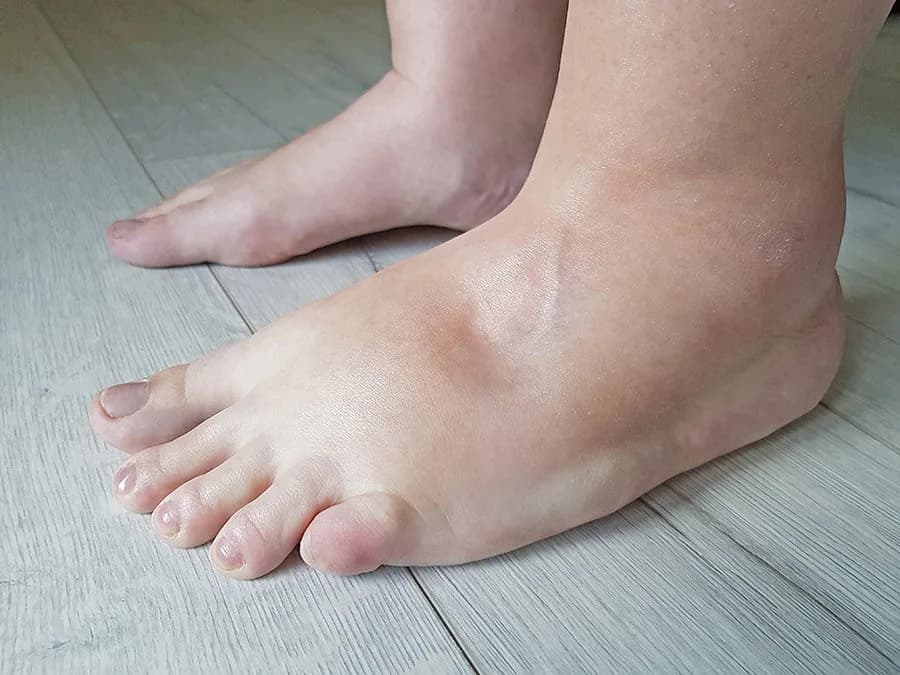
Your baby is out and your ankles have doubled. Many Mamas are surprised to find the swelling peaks after the birth rather than before it.
Postpartum swelling, or oedema, is the pregnancy fluid your body is still shedding, topped up by the drip you had during labour. It usually drains away over the first week or two through urine and sweat. Elevate your legs, keep moving, drink to thirst, and get sudden swelling with a headache or visual changes seen the same day.
Why do your feet and hands swell after birth?
You finished pregnancy carrying several extra litres of fluid, and it does not leave the moment the baby does. Hormones that encouraged your body to hold water take days to settle, and the circulation that was feeding a placenta has to rebalance.
Labour adds to the total. Fluid through a drip, an epidural, a caesarean and the hours spent lying still all push more water into the tissues, which is why the puffiest day is often the third or fourth rather than the day you delivered.
Gravity decides where it shows. Feet and ankles by evening, hands if you have been resting them, and sometimes the vulva or a caesarean wound edge. Postpartum pain covers the aches that tend to travel with it.
How long does postpartum swelling last?
Give it a week or two. You will notice yourself passing a lot of urine in the early days and sweating through the night, which is the body emptying out.
Rings come off first. Shoes take longer, and plenty of Mamas wear slippers or a size up for a month without anything being wrong.
The direction matters more than the amount. Swelling that is slowly improving is behaving. Swelling that appears suddenly, worsens after the first few days, or sits in your face and hands rather than your feet deserves a phone call rather than a wait.
When is swelling an emergency?
ACOG and the NHS both describe pre-eclampsia as a condition that can develop after delivery as well as before it. The symptoms to act on are sudden swelling of the face or hands, a severe headache that painkillers do not touch, blurred vision or flashing lights, pain under the ribs or in the upper abdomen, and vomiting. Any of those means care the same day. KK Women's and Children's Hospital and the National University Hospital both run urgent obstetric services, and your delivery hospital will have given you a number.
A clot looks different. The NHS lists swelling in one leg only, with pain, warmth or redness in the calf or thigh, as the pattern that needs urgent assessment. Breathlessness or chest pain with it is an emergency, so call 995 rather than booking anything.
Two legs the same, improving day by day, no headache: that is ordinary oedema.
What helps on a 33°C afternoon?
Heat makes it worse, since warm blood vessels dilate and more fluid leaves them. The practical answer is to do your moving early and your resting high.
Elevate your legs above the level of your heart for twenty minutes at a time, in a room with the aircon or the fan on, with your feet on cushions rather than on the sofa arm. Walk in the morning, or do your walking in a mall at noon. Flex your ankles while you feed, since the calf muscle is what pushes fluid back up. A cool shower genuinely helps for an hour.
Stand less. Queuing at an open-air market or standing on the MRT with a baby carrier is the position that pools fluid fastest, so take the seat when somebody offers it. Loose slippers beat shoes. Our guide to postpartum exercise sets out when gentle movement can become something more.
Do compression stockings work in this heat?
They work, and wearing them here takes some resolve. Graduated compression squeezes the ankle more firmly than the calf, which encourages blood back up the leg, and the NHS advice is to put them on first thing in the morning before fluid has had a chance to gather, and to take them off at bedtime.
Knee-length is the version most Mamas tolerate in this climate. Guardian, Watsons and Unity stock them, and the pharmacist can measure your ankle and calf so you get a size that compresses instead of pinching. Wash and rotate a second pair, because one pair in Singapore humidity is unpleasant by the third day.
Compression garments for your abdomen are a separate question with its own answers, and our piece on the postpartum corset deals with that.
Should you drink less water or eat less salt?
Drink normally. Going short on water will not drain the swelling, and if you are breastfeeding you will probably feel thirstier than you did while pregnant, especially in a climate that takes it out of you through your skin all day.
Salt is the lever worth pulling. The Health Promotion Board's long-running advice to cut back on sodium matters here for a specific reason, since a salty diet encourages the body to retain water. Instant noodles, canned soup, bak kut teh broth and a heavy hand with the chilli sauce all add up during a month when nobody is cooking carefully.
Eat protein, fruit and vegetables as you would normally. No food drains oedema, so treat anything sold on that promise with suspicion.
How does the confinement month change things?
Confinement puts you indoors for weeks, which cuts both ways. Rest is good for swelling and immobility is not, so get up and walk around the flat several times a day even when the advice you are getting is to stay in bed.
Some confinement practices restrict fans, aircon and cold showers, and some restrict plain water in favour of herbal drinks. Negotiate. Staying genuinely overheated in a Singapore flat makes you sweat, swell and sleep badly, and a fan on a low setting pointed away from you is a reasonable compromise with most nannies.
Ask your nanny to watch your legs with you. Someone in the house noticing that one calf has gone tight and red is a real safety net, and it is the sort of thing a tired mother misses on herself. Our article on postpartum hair loss covers another change that lands in the same weeks.
What does any of this cost in Singapore?
Less than you might fear. Polyclinic consultations are subsidised and handle the postnatal review, the blood pressure check and a referral if you need one, and the Ministry of Health's MediSave Maternity Package can be drawn on for delivery and the care around it.
Stockings are an out-of-pocket purchase, usually a modest one. Child Development Account money under the Baby Bonus Scheme can only be spent at Baby Bonus Approved Institutions, and some pharmacies are among them, so it is worth asking at the counter before you pay with something else.
Get your blood pressure taken at that postnatal visit even if the swelling has gone. It is a two-minute check, it is the one measurement that separates ordinary puffiness from the thing nobody wants to miss, and a reading on file gives the next doctor something to compare against.
Frequently asked questions
- How long should postpartum swelling take to go down?
- Most of it clears over the first week or two as your body sheds the extra fluid through urine and sweat, and ankles are usually the last to come back. Swelling that worsens after the first few days, or that arrives suddenly in the face and hands, is a different matter and needs checking.
- Are swollen feet a sign of pre-eclampsia?
- On its own, rarely. ACOG and the NHS describe the combination that matters: sudden swelling of the face or hands with a severe headache, blurred or flashing vision, pain under the ribs, or vomiting. Pre-eclampsia can appear for the first time after delivery, so get seen the same day.
- Do compression stockings help in Singapore’s climate?
- They can help, by supporting the circulation in your legs, and the NHS advises putting them on first thing in the morning before fluid has pooled. Knee-length ones are more tolerable in the heat than full-length. Guardian, Watsons and Unity all stock them, and a pharmacist can measure you.
- Should I drink less water to reduce the swelling?
- No. Cutting fluids will not drain the swelling, and breastfeeding in this climate leaves most women thirstier than usual. Drink to thirst, keep a bottle where you feed, and look at the salt in your meals instead.
Sources
- ACOG — Preeclampsia and high blood pressure in pregnancy and after birth
- NHS — Pre-eclampsia: symptoms and when to get help
- NHS — Deep vein thrombosis: symptoms and urgent advice
- NHS — Compression stockings: how to wear them
- HealthHub (Health Promotion Board) — Postnatal care and salt reduction
- KK Women’s and Children’s Hospital — Postnatal and urgent obstetric care
- Ministry of Health — MediSave Maternity Package
- Ministry of Social and Family Development — Baby Bonus Scheme and Child Development Account
Share this article
This article is for information only and is not a substitute for diagnosis or medical advice. Please talk to your doctor about your own situation.