
Breastfeeding vs formula feeding in Singapore
A plain look at what breastfeeding and formula feeding each ask of a mother in Singapore, from 16 weeks of maternity leave to expressing at work.
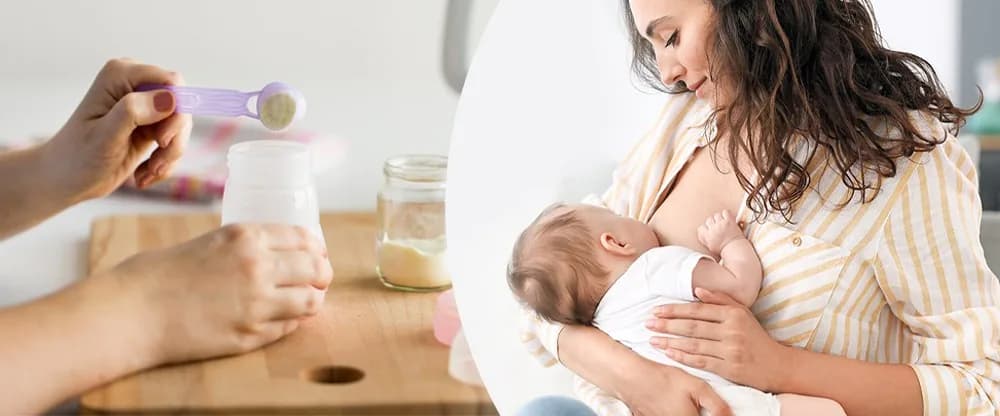
The World Health Organization and UNICEF both recommend exclusive breastfeeding for the first six months. That is the health advice, and it is one input into a decision that also involves your body, your job and your household. Both ways of feeding a baby work. Most of the differences are practical ones.
What do the health bodies actually recommend?
The World Health Organization recommends that babies are breastfed exclusively for six months, then given other foods alongside breast milk into the second year and beyond. UNICEF makes the same recommendation in its infant and young child feeding guidance.
That is the target. Reaching it is another matter, and the gap between the two is where most mothers live.
Nothing in that recommendation says a mother who formula feeds has failed. Supply problems, medication, surgery, a baby who cannot latch, a job that will not accommodate expressing, a mental health crisis in week three: all of these are real, and all of them end with a fed baby either way.
What does each one ask of you?
The nutritional comparison is well covered elsewhere. The comparison nobody writes down is the one about your days.
| What it asks | Breastfeeding | Formula feeding |
|---|---|---|
| Who can do a feed | You, unless you have expressed ahead | Anyone in the household |
| Night feeds | Every one of them is yours | Shareable, if someone else will get up |
| Money | Nothing for the milk itself | A tin every week or two from FairPrice, Guardian or online |
| Preparation | None at the breast | Boiled water, sterilised bottles, accurate measuring, every single time |
| Your body | Sore nipples early on, engorgement, leaking | Engorgement while your supply winds down |
| Leaving the house | Nothing to pack | A bag of kit and a plan for warm water |
| Back at work | Expressing and storing milk in an office fridge | No change to your working day |
| Medication | Most are compatible, a few need checking | Unaffected |
| The hard part | The first fortnight | Getting the preparation right in the middle of the night |
Read down the column that worries you more. It usually shows which would be harder for your household.
What breastfeeding costs you
The milk is free. The rest is not.
The first fortnight is genuinely hard for most mothers. Cracked nipples, a baby who feeds every ninety minutes, and the specific loneliness of 3am. Our guide to why breastfeeding hurts covers the causes, because almost all of that early pain has a fixable reason behind it.
Then there is the arithmetic of being the only person who can do it. Eight to twelve feeds in twenty-four hours for a newborn means you are never more than a couple of hours from the next one. Partners can do diapers, burping and settling. They cannot do that.
Against it sits a body of evidence worth knowing. The CDC states that breastfeeding lowers a mother's risk of high blood pressure, type 2 diabetes, ovarian cancer and breast cancer. Our piece on the benefits of breastfeeding goes through what is established for babies as well.
What formula feeding costs you
Formula is a regulated food, and modern infant formula is designed to meet a baby's nutritional needs. The cost is in money and in process.
A tin at FairPrice, Guardian or Watsons is a recurring line in the household budget for roughly a year, and prices vary a lot between brands and stages. Buying the premium tin does not buy a better baby.
The process matters more than people expect. The NHS guidance on making up infant formula is specific about using water that has been boiled and left to cool, making each feed fresh, measuring the powder accurately and sterilising everything. Scooping an extra half-measure "for a good night" is how babies get constipated and dehydrated. Our bottle feeding guide covers the practical side.
In this climate there is one more thing. A made-up bottle left out in a kitchen at 30°C goes off faster than the same bottle would in a cooler country. Make it when you need it, and throw away what your baby does not finish.
How does 16 weeks of maternity leave change this?
More than any health guidance does.
Eligible mothers in Singapore receive 16 weeks of Government-Paid Maternity Leave under the scheme administered by the Ministry of Manpower. Count it out and you are back at your desk at around four months, with two months still to go before the six-month mark the World Health Organization recommends.
That is the squeeze. Carrying on means expressing at work, which means a private space, a fridge, a cooler bag for the commute and a manager who does not schedule meetings over your breaks. Some offices here are good at this. Some are not, and finding out which yours is before you go on leave is worth an awkward conversation in month seven of pregnancy. Our guide to expressing at work covers the logistics.
Mothers who move to formula at four months are often responding to that squeeze rather than to anything about milk.
What about doing both?
Mixed feeding is what a lot of Singaporean households actually do. It rarely gets much attention, because the public conversation is set up as a choice between two camps.
Breast when you are together, formula when you are apart, is the common shape. It survives the return to work, grandparents doing daycare, and infant care drop-offs. Supply does respond to demand, so each formula feed you add will reduce how much milk you make over time.
Introducing one bottle a day a few weeks before you return to work gives your baby time to learn it. Leaving it until the Sunday night before is a bad evening for everyone.
Where to get help before you decide
Decide this with information rather than with the pressure in your WhatsApp family group.
KK Women's and Children's Hospital and the National University Hospital both run antenatal classes and lactation services, and both see mothers after discharge. Your polyclinic can refer you and will see your baby for weight checks either way. HealthHub, the Health Promotion Board's health portal, carries the official guidance and lists support services.
A confinement nanny will have strong views. Many are excellent on settling, winding and keeping you fed. On feeding decisions their advice reflects what worked in the households they have served, which may or may not match yours.
Questions to settle in the first week
- Who gets up for the 3am feed, and does that change at weekends
- Whether anyone at home will quietly undermine the plan you have chosen
- What your workplace can offer in the way of a private space and a fridge
- Which number you ring when something goes wrong on a Sunday
Write the answers down while you are still pregnant and tired in the ordinary way. Your newborn-week self will thank you, because at that point every decision feels permanent and almost none of them are.
Frequently asked questions
- Is formula feeding bad for my baby?
- No. The World Health Organization and UNICEF recommend exclusive breastfeeding for the first six months, and that is guidance aimed at populations rather than a verdict on one family. Infant formula is a regulated food designed to meet a baby's nutritional needs. What matters most is making it up correctly and safely every time.
- How long is maternity leave in Singapore?
- Mothers who meet the eligibility conditions receive 16 weeks of Government-Paid Maternity Leave under the scheme administered by the Ministry of Manpower. That takes most women to around the four-month mark. It is also why so many feeding plans change at exactly that point.
- Can I breastfeed and use formula?
- Plenty of mothers here do. Mixed feeding usually means the breast when you are together and formula or expressed milk when you are apart. Supply responds to demand, so every formula feed added tends to reduce how much milk you make. Decide it deliberately rather than drifting into it.
- Does breastfeeding have health benefits for the mother?
- The CDC states that breastfeeding lowers a mother's risk of high blood pressure, type 2 diabetes, ovarian cancer and breast cancer. Those are risks measured across populations. No individual mother is promised any of it.
- Where can I get feeding advice before the birth?
- KK Women's and Children's Hospital and the National University Hospital both run antenatal classes and lactation services, and your polyclinic can refer you. HealthHub, the Health Promotion Board's health portal, lists breastfeeding support alongside its antenatal material.
Sources
- WHO — Infant and young child feeding recommendations
- UNICEF — Breastfeeding and infant and young child feeding
- CDC — Breastfeeding and maternal health
- NHS — Bottle feeding and making up infant formula safely
- Ministry of Manpower — Government-Paid Maternity Leave
- HealthHub (Health Promotion Board) — Breastfeeding support services
- KK Women's and Children's Hospital — Antenatal and lactation services
- National University Hospital — Breastfeeding and lactation support
Share this article
This article is for information only and is not a substitute for diagnosis or medical advice. Please talk to your doctor about your own situation.